Toronto PRESTO Card Guide: TTC Fares & 47-Ride Cap (2026)
The first thing that trips you up in Toronto is transit. There’s a subway, there are streetcars, and the card is called PRESTO. If you’re used to Montreal’s OPUS card, it gets even more confusing — Toronto plays by a completely different set of rules.
This one guide sorts it all out: how to get a PRESTO card, the 2026 fares, the transfer rules, and why Toronto’s subway stops so often — written so it works whether you’re visiting for a few days or you’ve just moved to the city.
🎫 Getting & Loading a PRESTO Card · 💰 The Full 2026 Fare Table · 🎓 Every Discount, Rounded Up · 🔄 Subway + Train on One Card · 🗺️ Fare Zones, Explained · 🚇 Subway, LRT or Something Else? · ⏰ Why the Subway Keeps Stopping · 🎯 Which Fare Fits You · 🍁 Through Montreal Eyes · ❓ Frequently Asked Questions
🌿 The Short Version
- A PRESTO card costs $4. You can buy one right away at any TTC station fare machine or Shoppers Drug Mart, and it’s free in your phone wallet (Apple or Google Wallet). One catch: Ottawa takes physical cards only.
- A single TTC ride is $3.30 with PRESTO or a tapped bank card, $3.35 in cash. Kids 12 and under ride free.
- One tap gives you unlimited transfers for 2 hours — no direction rules, no round-trip penalty. Cash is the only way to pay that misses out.
- Since September 2026, ride 47 times in a month and every ride after that is free. There’s no pass left to buy in advance.
- Switch between the TTC and GO trains or regional buses and you only pay once, thanks to the One Fare program.
- Toronto’s subway really is a full metro — and construction plus signal trouble mean weekend closures and delays are routine. Checking the official alerts before you leave has to become a habit.
- The TTC is one flat fare with no zones across the whole city. Distance-based pricing is only a GO thing.
- Youth, senior and student discounts only apply once you’ve set your fare type on the card first. An unconfigured card always charges the full adult fare.
🎫 The PRESTO Card: Toronto Transit’s $4 Key
PRESTO isn’t just Toronto’s card — it’s the transit card for the whole Greater Toronto and Hamilton Area and beyond. The TTC, GO trains, the UP Express to the airport, regional buses in Mississauga and York Region, even Ottawa’s OC Transpo — one card rides all of it. A physical card costs $4 and it’s non-refundable.
Getting one is easy:
- Fare vending machines inside every TTC subway station
- Any Shoppers Drug Mart location
- Online at prestocard.ca (mailed to you)
- The TTC Customer Service Centre above Davisville Station
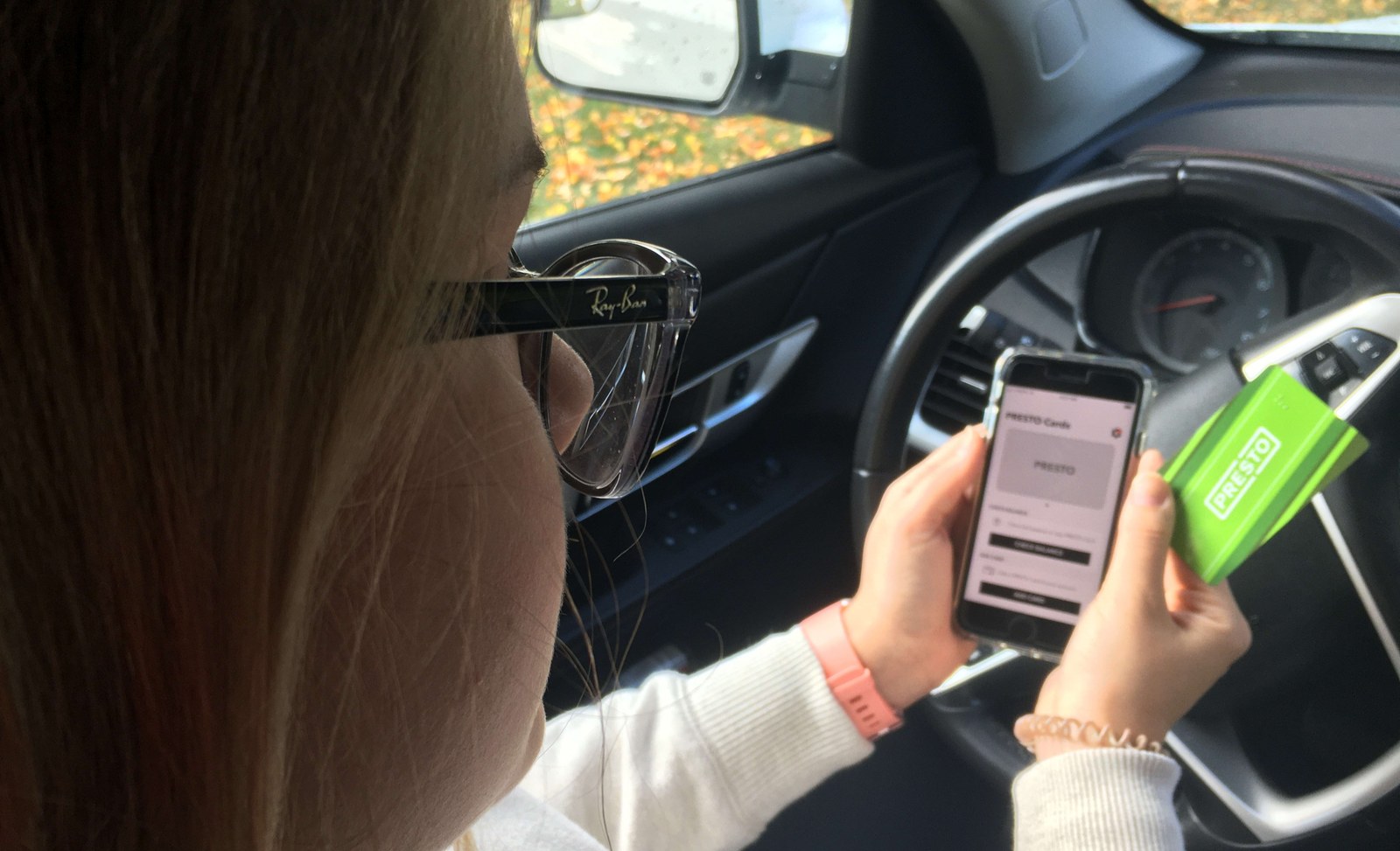
If you live on your phone, skip the plastic. A digital PRESTO card in Apple Wallet or Google Wallet is free. Just note that digital cards don’t work in Ottawa.
Load money at prestocard.ca, in the PRESTO app, at station machines or at Shoppers. Online loads start from as little as $0.05 and the balance caps at $1,000. You can also set up Autoload so the card tops itself up before it ever runs dry.
💡 Tip: the day you buy the card, register it at prestocard.ca. A registered card’s balance can be moved to a new card if you lose it — an unregistered card takes its balance with it.
💰 The Full 2026 Fare Table
TTC fares are the same on the subway, buses, streetcars and the new LRT lines — what you ride doesn’t change what you pay, and that’s very Toronto. Fares were also frozen for a third straight year in 2026.
| How you pay | Adult | Youth 13–19 | Senior 65+ |
|---|---|---|---|
| PRESTO card | $3.30 | $2.35 | $2.25 |
| Debit or credit card tap | $3.30 | $3.30 (adult fare) | $3.30 (adult fare) |
| Cash | $3.35 | $2.40 | $2.30 |
There’s one trap here. Tapping a credit or debit card directly is convenient, but youth and senior discounts don’t apply — everyone pays the full $3.30 adult fare. If you’re eligible for a discount, a PRESTO card set to your fare type is the answer.
Cash is worse still. It costs five cents more, and neither the 2-hour transfer window nor the monthly fare cap applies to cash. In Toronto, cash is simply the most expensive way to ride.
There are paper PRESTO tickets, too: $3.35 for one ride, $6.70 for two, $13.50 for a day pass. The 2-hour transfer works, but ticket rides don’t count toward the fare cap. Think of them as a visitor’s tool for a day or two, nothing more.
🎓 Discounts: Free Kids, Youth, Seniors, Students and Fair Pass
Kids ride completely free up to age 12. There’s no Montreal-style condition like “free only with a fare-paying adult,” and no card is needed at all.
Youth (13–19) and seniors (65+) get the discounted fares in the table once their fare type is set on their PRESTO card. In exchange, youth 16 and older and seniors must carry photo ID and show it when staff ask. Fare types for children can only be set in person, with proof of age, at Shoppers or a customer service centre.
Post-secondary students don’t get a per-ride discount. Instead there’s the post-secondary monthly pass at $128.15, and using it requires a TTC post-secondary photo ID card.
If you’re a lower-income Toronto resident, look at the Fair Pass. It’s a City of Toronto program: if you qualify, a PRESTO ride drops to $2.10 (36% off). You need to be 20 to 64, live in Toronto, and have an after-tax family income below 75% of the low-income threshold — and if you receive Ontario Works or ODSP, the income test is met automatically. Applications are at toronto.ca.
Put the TTC and GO side by side and the discount structure clicks. Every GO discount is a percentage off the standard adult single fare (gotransit.com).
| Who | TTC fare (PRESTO) | GO discount | Eligibility & proof |
|---|---|---|---|
| Children (12 and under) | Free | Free | No proof needed, ride without a card. Tall kids can get a Child Proof-of-Age Card |
| Youth (13–19) | $2.35 | 40% off the standard fare | Youth fare type set on PRESTO + photo ID if 16 or older |
| Post-secondary students (full-time) | No per-ride discount · monthly pass $128.15 | 40% off the standard fare | TTC: TTC post-secondary photo ID card. GO: GO Student ID (apply online, renew yearly) |
| Seniors (65+) | $2.25 | 55% off the standard fare | Senior fare type set on PRESTO + photo ID |
| Fair Pass (low income) | $2.10 (36% off) | Not applicable | Toronto resident · age 20–64 · meets the income test |
Even adults with no discount fare type save on GO: paying with PRESTO is already more than 15% cheaper than a standard GO ticket. Keep riding with the same payment method in a month and the savings jump from the 36th trip on — and from the 41st trip, rides are calculated as free (gotransit.com).
The single most common discount mistake is the fare type setting. Every PRESTO card starts life as an adult card. Child, youth and senior fare types have to be switched in person — bring government-issued ID to a Shoppers Drug Mart, a Loblaws, or the TTC Customer Service Centre at Davisville Station, and the discount applies from that moment on. The setting is one-and-done, except for students: the post-secondary fare type has to be set again every year, together with the photo ID card. The TTC post-secondary photo ID card itself is issued at the TTC Photo Centre for $5.25 (cash only).
GO student discounts have one extra step. First apply online at gotransit.com for a GO Student ID, then take the voucher it gives you to a Shoppers or customer service centre to set the student fare type on your card — that’s when the 40% kicks in. And the discount is full-time students only. Part-time students can’t even apply.
Montreal runs on the same logic. STM student discounts were also restricted to full-time students at recognized Quebec institutions. Toronto’s version is the same idea: “student” alone doesn’t open the discount — institution, full-time status and proof all have to line up. If you don’t qualify, assume there’s no discount.
🧮 Ride 47 Times and the Rest of the Month Is Free — Fare Capping
On September 1, 2026, Toronto transit changed for good. The era of buying a pass in advance ended, replaced by fare capping — an automatic ceiling that kicks in as you ride.
The math is simple. Keep tapping the same PRESTO card or the same payment card, and the moment you reach 47 paid rides in a calendar month, every ride until month-end is free. At the adult fare, 47 × $3.30 = $155.10 becomes the ceiling on a month of transit. The counter resets on the 1st of every month.
In the very first month, September 2026, about 60,000 riders hit the cap and took 595,000 free rides, saving $1.8 million between them, according to the TTC.
Three things to watch. First, cash and PRESTO tickets don’t count toward the 47. Second, alternating between a physical card and your phone wallet card can split the count, so stick to one method per month. Third, the cap is exactly why most monthly passes were discontinued — what remains on sale is the 12-month pass ($143 per month) and the post-secondary monthly pass.
💡 Tip: commuting both ways on weekdays alone gets you past 40 rides a month. Add a weekend trip or two and you’ll hit the cap — the old “should I buy a pass this month?” debate is simply gone.
🔄 Subway + Train, One Card — Transfers and How One Fare Actually Settles
Short answer: you do not need separate cards for the subway and the train. One PRESTO balance rides the TTC subway, GO trains and the UP Express. What differs isn’t the card — it’s how the fare is calculated. The TTC charges a flat fare per boarding, GO charges by distance, and the one card in your pocket sorts out the split by itself.
Inside the TTC, your first tap opens two hours of unlimited transfers. Subway to bus, bus to streetcar, as many changes as you like, no extra charge. The big difference from Montreal: there’s no direction rule. Riding back the way you came, inside the two hours, is free too.
Go regional and the Ontario One Fare program takes over. It launched in 2024, Ontario has announced a two-year extension, and it’s very much alive today.
- TTC ↔ GO trains: whichever you ride first, the TTC leg is effectively free. Get off GO and transfer to the TTC and no TTC fare is charged; ride the TTC first and your TTC fare is refunded when you tap onto GO within 2 hours.
- TTC ↔ Mississauga (MiWay), York Region (YRT), Brampton and Durham regional buses: transfer within 2 hours of your first tap and the second agency’s fare is free.
- There’s one condition: the whole trip has to be tapped with the same PRESTO card or the same payment card. Cash and PRESTO tickets are outside the program.
One exception to know: the UP Express to the airport is not part of One Fare. The airport train is always paid separately.
So how does the money actually move? Direction by direction:
- TTC → GO: you pay $3.30 on the TTC first. Tap onto GO within 2 hours and the full TTC fare is refunded, so the TTC leg ends up free. Onward transfers stay free for 3 hours from your first GO tap.
- GO → TTC: you only pay the GO fare. Tap onto the TTC within 3 hours of your first GO tap and the TTC fare is never charged at all.
- TTC ↔ regional buses (MiWay · YRT · Brampton · Durham): transfer within 2 hours of the first tap and the second agency rides free.
There are exactly two conditions: tap with the same card, the same payment method, from start to finish — and tap off when you leave a GO train. Cash, PRESTO tickets and GO e-tickets get no One Fare. If your TTC leg was paid with a TTC pass like the 12-month pass, no GO transfer discount stacks on top, and a free TTC ride taken after GO doesn’t count toward the 47-ride cap either.
🗺️ Fare Zones: Downtown Toronto Has None
If you’ve ever picked the wrong zone in Montreal and had to buy a second ticket, Toronto cuts that worry in half. Here’s the structure.
The TTC is one single fare zone for the entire city of Toronto. Ride end to end, change between subway, bus and streetcar on the way — it’s still $3.30. Even the 900 bus to the airport stays inside the Toronto fare area, so there’s no extra charge (ttc.ca). And when a TTC bus slips just past the city line, the flat fare still applies as long as you’re on a TTC vehicle.
GO is the opposite. GO fares are set by the distance between your start and end fare zones (gotransit.com). That’s why you tap on and a minimum fare comes off, then tap off and the real zone fare settles. A short hop inside Toronto and a long haul to Niagara are priced completely differently for exactly this reason. For an exact fare, the trip planner at gotransit.com with your start and end stations is the reliable way.
The regional buses are flat-fare inside their own cities, too — Mississauga (MiWay), York Region (YRT), Brampton, Durham. The fare system changes when the city changes, but with One Fare wiping out the second fare at transfer time, you effectively pay once.
And the card itself ranges well past Toronto. PRESTO works across 11 transit agencies, from the GTHA (Greater Toronto and Hamilton Area) all the way to Ottawa (prestocard.ca). The balance is shared — just remember that fare rules and discount conditions are set agency by agency.
Digital (mobile wallet) PRESTO cards cannot be used in Ottawa. If Ottawa is on your itinerary, bring a physical card.
Set it next to Montreal and the contrast is sharp. Montreal starts with Zone A downtown, then splits into B, C and D as you head outward, and your ticket has to cover every zone you cross. Toronto bundles the whole city into one zone-free fare and leaves distance math to GO alone. The detailed zone comparison is in the Montreal section below.
🚇 Metro, LRT, or What Exactly? — Toronto’s Lines, Sorted
This is where almost everyone gets confused at first. The short version: the TTC subway is a true metro. What Canada calls a “subway” is exactly a full urban metro, like Seoul’s. Toronto just mixes in several other kinds of rail, which is why the names alone don’t tell you what you’re boarding.
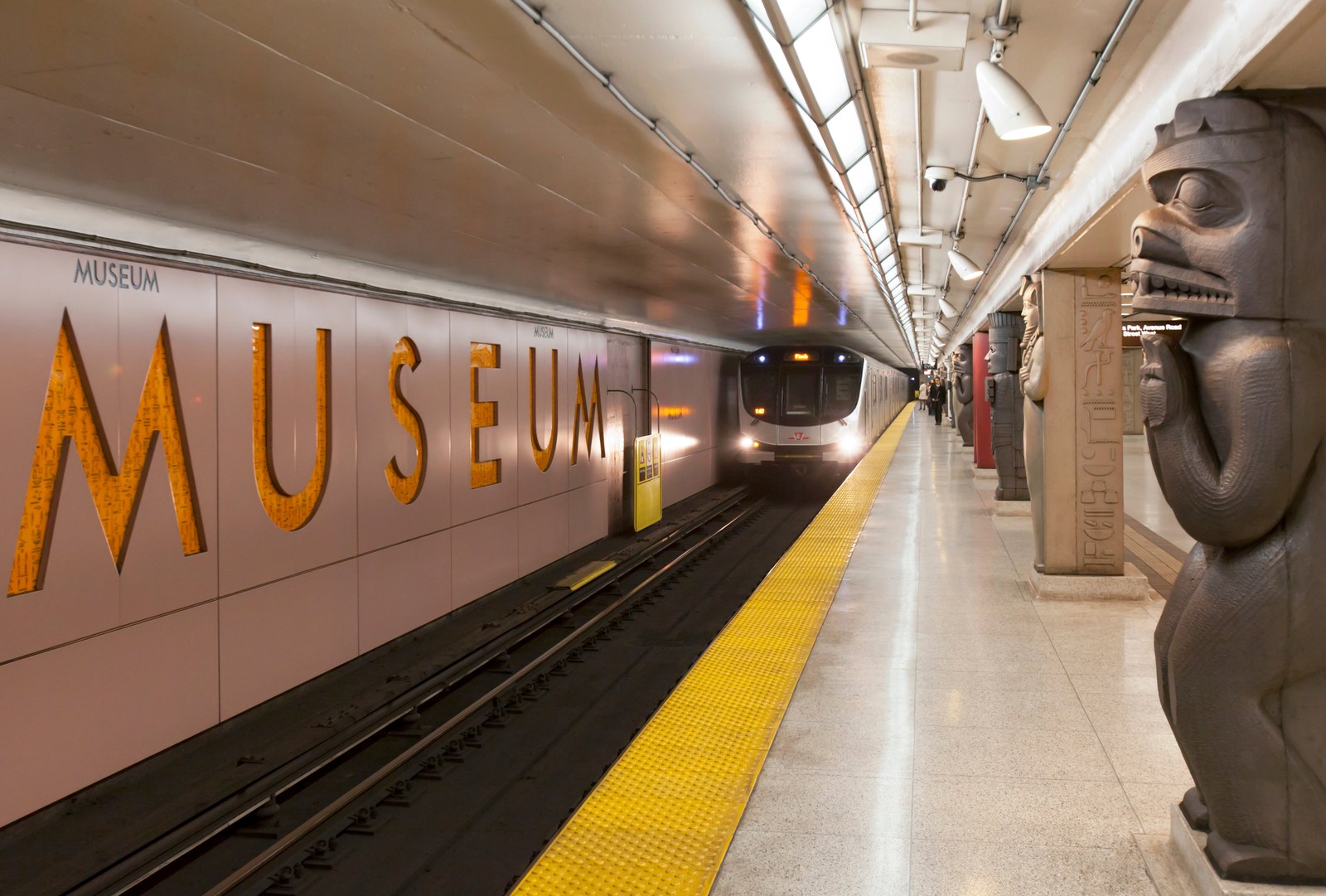
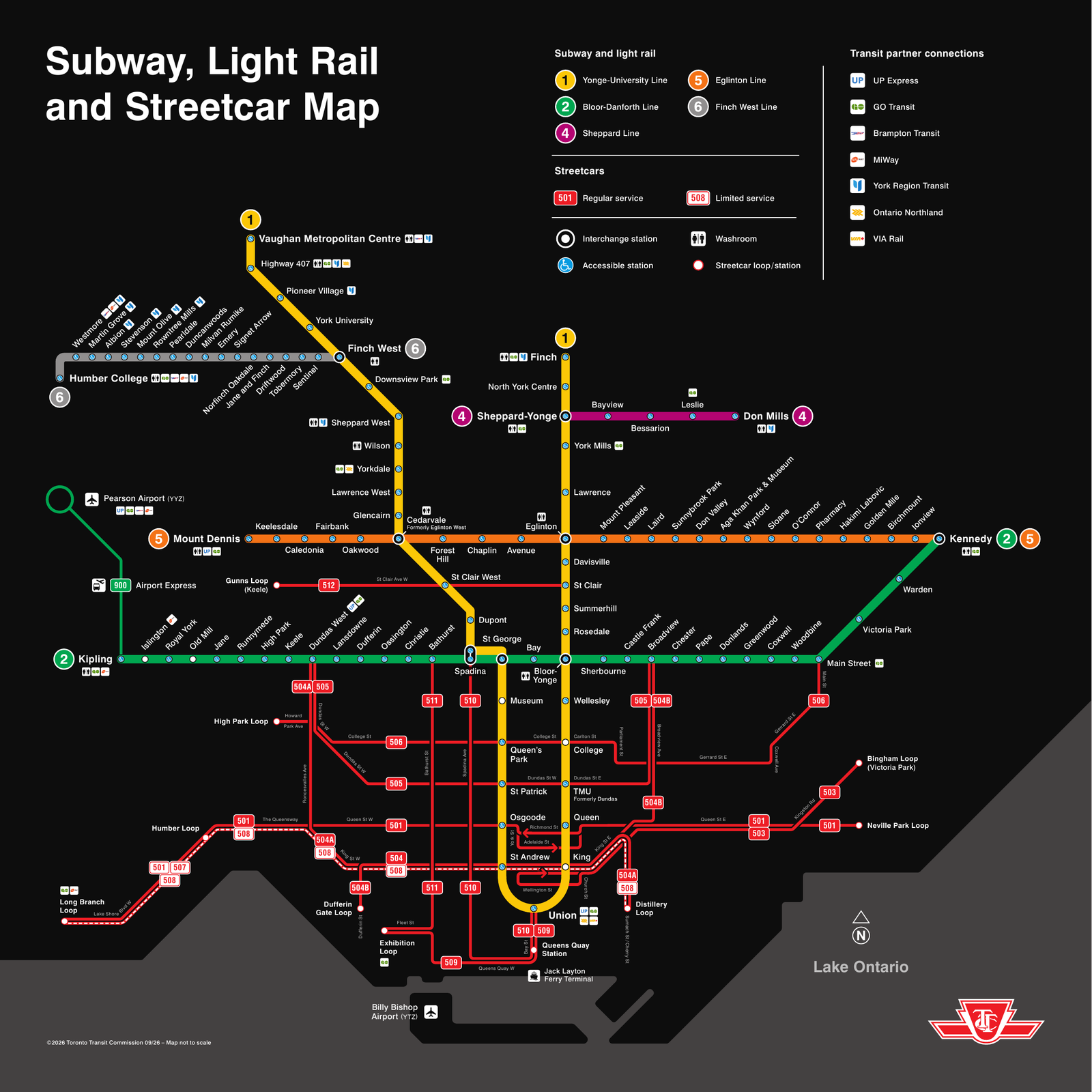
| Line | Type | Notes |
|---|---|---|
| Line 1 Yonge-University | Metro (subway) | The U-shaped spine, Finch to Vaughan |
| Line 2 Bloor-Danforth | Metro (subway) | The east–west spine, Kipling to Kennedy |
| Line 4 Sheppard | Metro (subway) | A short stub, 5 stations |
| Line 3 Scarborough | Closed | Service ended November 2023, replaced by buses |
| Line 5 Eglinton | Light rail (LRT) | Opened February 2026, underground + surface mix |
| Line 6 Finch West | Light rail (LRT) | Opened December 2025, mostly surface |
Don’t panic when Line 3 is missing from the map. Line 3 Scarborough closed for good in November 2023. Buses cover the corridor now.
The two new lines, 5 and 6, aren’t subways — they’re light rail. Line 5 Eglinton opened in February 2026 and runs underground through the core, on the surface further out. Line 6 Finch West, opened in December 2025, is surface light rail. On both lines you don’t pay on board: you tap on the platform before you board, and that tap is your proof of payment.
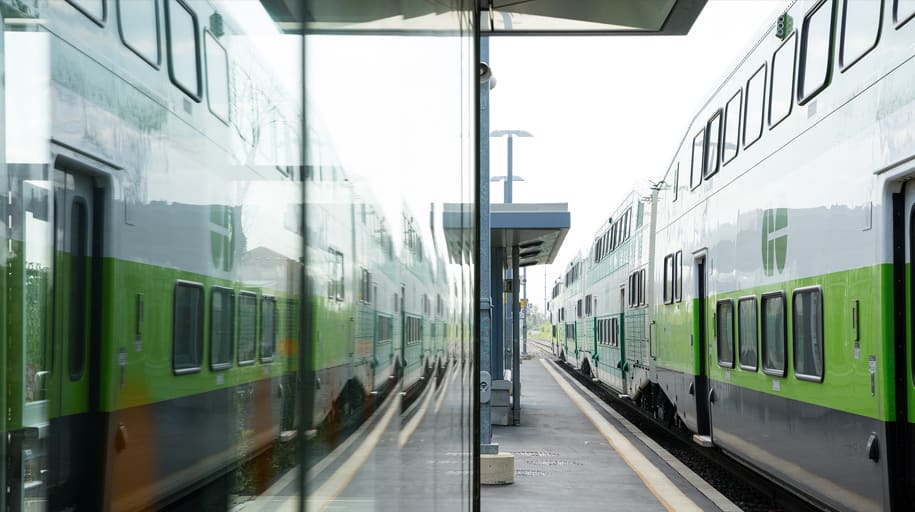
So what is GO Train, then? It’s the commuter rail web centred on Union Station that ties together the whole Greater Toronto Area — the closest cousin of a metropolitan commuter railway. Fares are distance-based, which is why tapping on AND tapping off is mandatory. Forget to tap off and you’re charged the maximum fare.
Two more to keep straight. The UP Express is the dedicated airport train between Pearson Airport and Union Station, about 25 minutes, and $9.25 one way for an adult on PRESTO. A streetcar is a tram running on downtown streets — routes like 501 Queen are the classics. Fares work exactly like the rest of the TTC.
⏰ The Subway That Keeps Stopping — Delays, and How to Live With Them
Ask anyone who lives in Toronto and you’ll hear the same line: “The TTC subway stops all the time.” It’s not an exaggeration. The TTC publishes its own real-time performance, and on the day I checked (November 8, 2026) it sat at about Line 1 at 81% and Line 2 at 84%. The numbers move day to day, but the plain reading is that roughly two trains in ten aren’t running on time.
There are two big causes. The first is planned construction. The system is old, so the TTC closes entire stretches on weekends to work on them. The very week I wrote this, a downtown stretch of Line 2 was closed all weekend, and another closure was already posted for the weekend after. Shuttle buses replace trains on closed stretches, but a bus on city streets is far slower than a subway. The second cause is the unexpected: signal trouble, a person on the tracks, a fire in a station — any one of them can freeze a whole section at once. A track fire that shut the western part of Line 2 for days made the TTC’s own official news, so this is documented, not rumour.
Which is why seasoned Toronto riders do this:
- For anything that matters, leave at least 20–30 minutes of buffer. More on Monday mornings and in weekend construction season.
- Before you head out, check the Live Service Alerts and the Live Map at ttc.ca — they show exactly which stretches are closed today.
- Follow @ttcnotices on X (Twitter), or set up MyTTC email alerts for the lines you actually use.
- Buses and streetcars show live positions on TrackTTC (bustime.ttc.ca) — including where your shuttle bus actually is.
- When a section stops, following staff directions to the shuttle bus is usually fastest. Waiting for the next train often isn’t the answer.
🎯 Which Fare Fits You?
- Visiting for 2–3 days: put the free digital PRESTO in your phone wallet and pay as you go. The 2-hour transfer window is generous, so the total comes out lower than you’d expect.
- Staying a week or more, moving daily: it’s still PRESTO. There’s effectively no pass left to buy (the $13.50 day ticket only wins on days you’d ride four-plus times).
- Living and commuting in Toronto: keep tapping the same card. Hit 47 rides and the rest of the month is automatically free — no pass math required. If you truly ride long distances every single day, compare against the 12-month pass ($143 per month).
- Regional commuting with GO: One Fare makes the TTC leg free, so only the GO fare needs your attention. Just don’t forget to tap off.
- Travelling with kids: 12 and under is free, so no card needed for them. From 13, set up a youth-fare PRESTO.
✅ Before You Ride: The Checklist
- Buy a PRESTO, register it on the spot — lost-balance protection only covers registered cards.
- Discount rider (youth or senior)? Fare type set on the card + photo ID in your pocket. The two go together.
- Tapping a bank card is easy, but youth and senior discounts don’t stick to it. Discount riders: PRESTO is the answer.
- Cash gets neither transfers nor the cap. In Toronto, a card is the default.
- Tap off on GO trains; tap before boarding on Lines 5 and 6. Memorize those two and fines stop being a worry.
- Riding the subway on a weekend? Check that week’s closure notice first.
🍁 Through Montreal Eyes: How Is This Different from OPUS?
Live in Montreal, land in Toronto, and it’s hard to believe two Canadian cities built transit cards this differently. The big differences:
Start with the zones, side by side. Montreal’s ARTM zones look like this (official ARTM fare table, as of July 2025).
| ARTM zone | Covers | Single ride (all modes) | Monthly (all modes) |
|---|---|---|---|
| Zone A | Central Montreal | $3.75 | $104.50 |
| Zones A · B | + Laval · Longueuil | $5.00 | $164.50 |
| Zones A · B · C | + North and South Shore suburbs | $7.00 | $200.50 |
| Zones A · B · C · D | + exo sections outside the ARTM area | $9.50 | $275.50 |
In Montreal your ticket has to cover every zone from where you start to where you end. On the TTC, that concept simply doesn’t exist.
- The card itself: PRESTO $4 vs OPUS $6 — and PRESTO is free if you put it in your phone wallet.
- A single ride: Toronto $3.30 vs Montreal Zone A $3.75. Toronto is a little cheaper.
- Transfers: Toronto gives you 2 unlimited hours, round trips included. Montreal gives 120 minutes too, but riding back the way you came isn’t allowed.
- Riding a lot: Montreal makes you buy a monthly pass in advance. Toronto caps you automatically at 47 rides — nothing to decide.
- Kids and seniors: Toronto makes 12-and-under unconditionally free, but seniors pay $2.25. Montreal’s biggest difference is at the other end: residents 65+ ride free inside Zone A.
- Getting to the airport: Toronto has the dedicated UP Express train ($9.25); Montreal has the 747 airport bus.
- Zones in the city: Montreal’s ticket changes across Zones A, B, C and D. The TTC has no zones at all — one fare to the end of the line. In Toronto, only GO prices by distance and zone.
- Student discount rules: both cities demand “full-time + recognized institution.” Montreal’s STM discount is for full-time students at recognized Quebec institutions; Toronto’s GO discount needs full-time Ontario college or university status plus a GO Student ID.
- One card’s reach: PRESTO works across Ontario, all the way to Ottawa. OPUS is Montreal-area only.
Need the Montreal guide first? Start with the complete STM and OPUS card guide for Montreal.
Toronto transit looks complicated on the map, but the rules are simple. Register one card, transfer on the same card, and tap once more when you get off a GO train. Add one habit — checking the alerts for the days the subway stops — and you’ll waste far less time on Toronto’s streets.
* Fares and policies in this guide were verified in November 2026; announced changes, like the fare-cap ride count, may still shift. Double-check the latest at ttc.ca and prestocard.ca.
Safe travels around Toronto 💛
— J.
❓ Frequently Asked Questions — The Ones Google Gets Asked Most
Q. Do I really need a PRESTO card? Can’t I just tap my credit card?
A. You can tap a credit or debit card on the TTC, GO and the UP Express, and the TTC fare is the same $3.30. The difference is discounts: a bank card charges everyone the adult fare, so youth and senior discounts don’t apply — and fare type settings, lost-card balance protection and GO default-trip settings are PRESTO-only features. If you’re discount-eligible or ride often in Toronto, PRESTO wins.
Q. Where do I buy a PRESTO card, and how much is it?
A. A physical card is $4. Buy it at any TTC station fare machine, at Shoppers Drug Mart and Loblaws, or online at prestocard.ca (shipping takes 7–10 business days). The digital card for your phone wallet is free.
Q. How much is a Toronto subway ride?
A. $3.30 with PRESTO or a card tap, $3.35 in cash. The price includes unlimited transfers across subway, bus and streetcar for 2 hours from your first tap. Cash doesn’t get the transfer window.
Q. How do I check my balance?
A. The PRESTO app and website show it right away. Station fare machines show it too, and the reader screen displays your balance when you tap. By phone: 1-877-378-6123.
Q. If I lose my card, is my balance gone?
A. Not if the card was registered. Report it right away and your balance, passes and fare type settings can all move to a new card (a new card is $4, and the block can take up to 24 hours to take effect). An unregistered card has no balance protection, so register the day you buy it.
Q. There’s a date printed on the back of my card. Does it expire?
A. PRESTO cards no longer expire. You can keep using the card after the printed date, and your balance stays intact.
Q. Can two people share one card at the same time?
A. Not at once — one tap is one person’s fare, so each rider needs their own card. Lending your card when you’re not riding is fine, but a card set with a youth or senior fare type can only be used by the person who qualifies for it.
Q. Up to what age do kids ride free?
A. Up to age 12, kids ride free on both the TTC and GO. No card, no ticket. Youth fares start at 13.
Q. Cheapest way from Pearson Airport to downtown?
A. The TTC 900 express bus + subway combo, $3.30 (the bus reaches Kipling Station in 20–25 minutes, then the subway in). The UP Express is faster — about 25 minutes to Union Station for $9.25 — but it’s outside One Fare, so transferring to the subway costs another fare.
Q. I forgot to tap off my GO train. Now what?
A. By default you’re charged the maximum fare. The missed tap-off amount is then deducted at the start of your next GO trip (gotransit.com). If you ride the same route daily, set your default trip in the PRESTO app and you won’t need the tap-off at all.
Q. What happens if my balance runs too low?
A. Since March 2026, a registered card won’t tap at all if the balance can’t cover the full local fare. On GO, if the balance comes up short when your fare settles at tap-off, the card goes negative and can’t be used on any transit agency until you top up. Autoload is the safe setting.
Q. Does the 47-ride cap count any kind of riding?
A. The rides only add up if you keep using the same PRESTO card or the same payment card. Mix a physical card with a phone wallet and they’re counted separately; cash and PRESTO tickets don’t count at all. The counter resets on the 1st of each month.
Q. Does this card work in Ottawa too?
A. A physical PRESTO card does — you can ride Ottawa’s OC Transpo on the same card and the same balance. But digital (mobile wallet) PRESTO cards cannot be used in Ottawa. Heading to Ottawa? Make sure a physical card is in your pocket.
Get the Free Canada Savings Checklist
Join the newsletter — get the free PDF checklist and weekly Canada savings tips in your inbox.
Read Next


Some links in this post are referral or affiliate links. If you sign up or buy through them, I may receive a bonus or commission at no extra cost to you. It helps keep this blog running — thank you!