Communauto vs Turo Montreal: My Car-Free Guide (2026)
Last updated: November 5, 2026
Some cities you can survive without a car. Montreal is almost one of them — the metro, the buses, BIXI in summer, and walking everywhere in between. Almost. There were still days when I needed four wheels: a Costco run that no one can carry home by hand, furniture that won’t fit in a taxi, a weekend trip out of the city.
In my first two car-free years, I used every service I could find — Communauto and Turo covered all of that for me.
🇫🇷 Vous lisez le français ? Lisez la version française ici →
Bonjour! It’s J.
This is a genuine self-purchased review.
📘 Want the full Communauto deep dive? I just published a complete Communauto Montreal guide — every plan, the signup steps, FLEX tricks and the snow-season freebies, all in one place.
📋 In this guide:
🌿 Quick Take
- My rule after two car-free years in Montreal: Communauto for quick city trips, Turo for full-day and weekend trips.
- Communauto: station cars you book ahead, or free-floating FLEX cars by the minute. Plans run from free (Open, $14.25/hr) to Value Extra ($30/month, $3/hr, max $23/day); Value plans need a $500 refundable deposit.
- Turo is peer-to-peer rental booked by the day — no membership, prices set by each host, and drivers must be 23+ in Canada.
- Insurance is built into both — and credit-card rental coverage generally does not extend to car-sharing or peer-to-peer rentals.
- Errands under 3 hours: take FLEX. A planned half or full day: reserve a station car — on a Value plan it’s usually the cheapest seat in town.
- Prices checked Oct 12, 2026 — verify before you book.
🚗 1. My Two-Car Life Without a Car
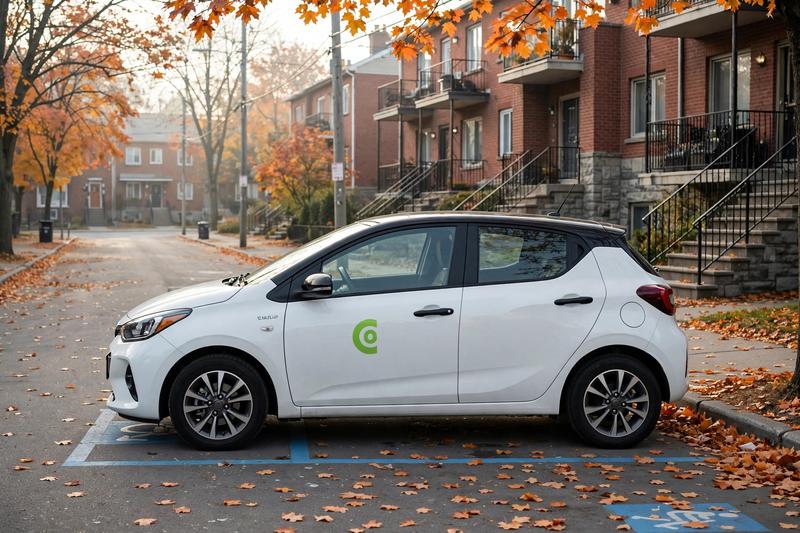
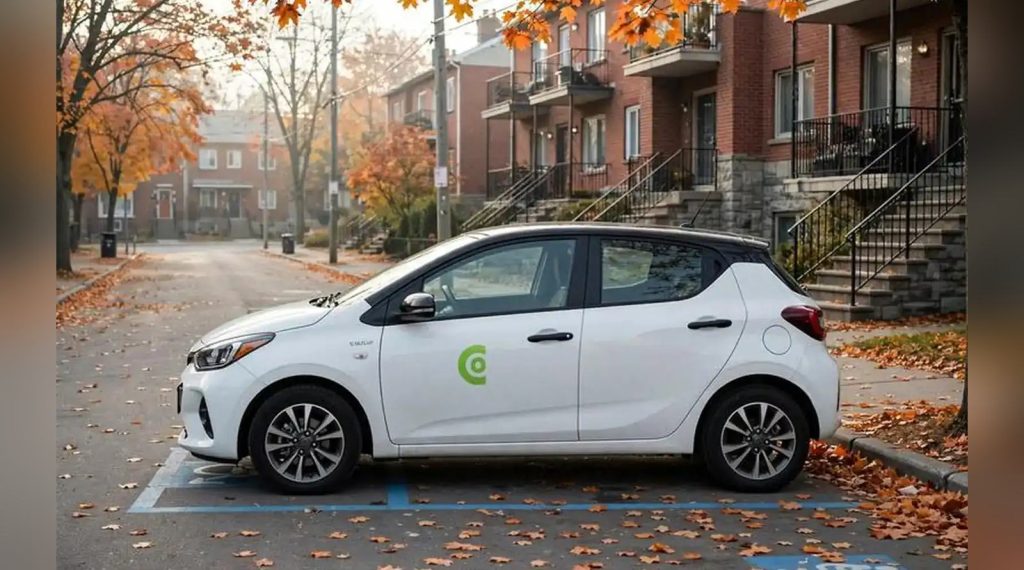
Here’s how I split it, and it’s how I’d tell any newcomer to split it: Communauto for quick city trips, Turo for full-day or weekend trips. Communauto cars are everywhere in central Montreal — you book one, drive, return it, and the gas, insurance and maintenance are already included in the rate. Turo is the peer-to-peer marketplace: real people’s cars, listed with photos, prices and reviews, booked by the day.
No membership, no commitment — just one trip at a time.
🔄 2. Communauto in 60 seconds
Station vs FLEX: one membership, two ways to drive. Station cars you book ahead and return to the same station — the cheapest for planned errands. FLEX cars float free: grab one on the app, drop it anywhere in the zone, billed at whichever rate is cheaper. Full how-it-works in my complete Communauto guide.
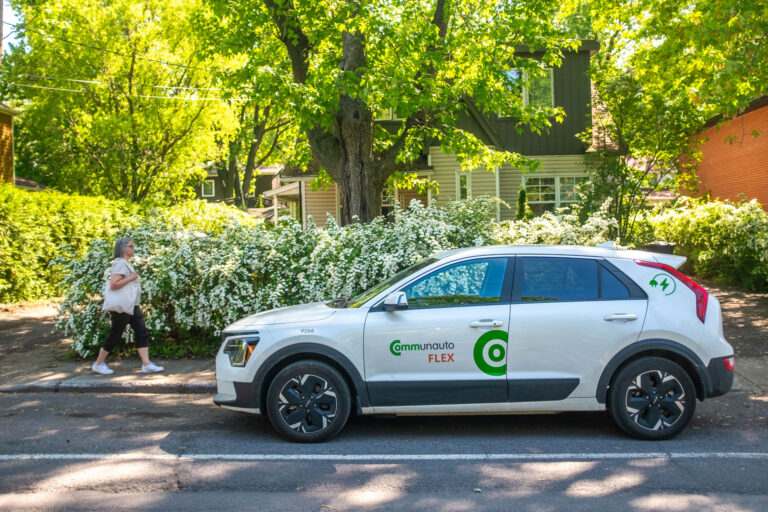
Pricing snapshot: plans run from free (Open, $14.25/hr, 75 km included) to Value Extra ($30/month, $3/hr, max $23/day), with Value plans requiring a $500 refundable deposit. All 2026 rates and the math in the complete guide.
Signup essentials: a valid full driver’s licence (Quebec Class 5 — newcomers get six months on a foreign licence before needing a local one). Here’s exactly how to exchange a Korean licence. Step-by-step signup in the complete Communauto guide.
🚙 3. Turo in Quebec: The Peer-to-Peer Option
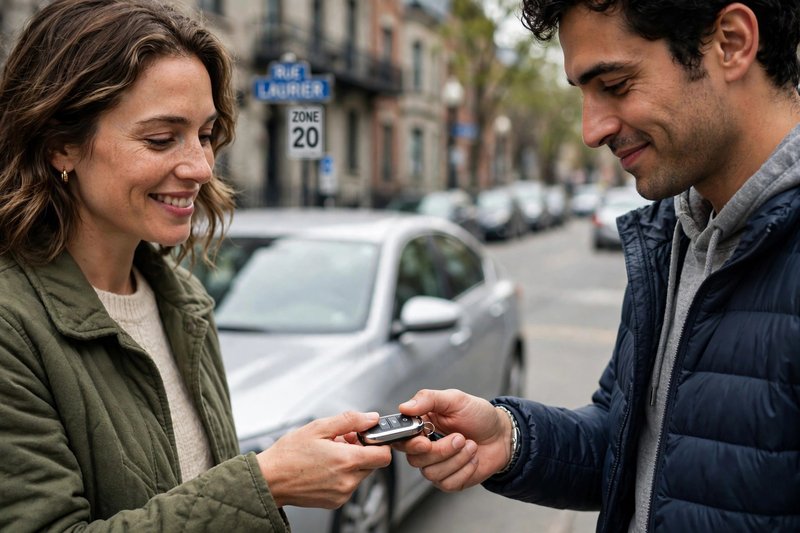
Turo is the “Airbnb of cars”: individual owners list their vehicles with photos, prices, reviews and house rules, and you book by the day or longer. Turo owns no cars — hosts set their own prices, availability and delivery options.
The rules in Canada: you must be 23 or older (per Turo’s official help pages — higher than the US minimum), hold a valid driver’s licence (guests from outside Canada can generally use their home-country licence; an International Driving Permit is a good idea if your licence isn’t in English or French), and pass a quick approval on your first booking — usually instant. Each listing shows its own “Distance included” per day; some hosts offer unlimited distance.
Pricing is where Turo differs from everything else: every host sets their own daily rate, so there is no fixed price list. What you see at checkout is the trip price + the protection plan you choose + delivery fee if any + taxes. Most hosts offer discounts for trips of 3+, 7+ or 30+ days.
Many hosts offer delivery to your address or to the airport for a fee they set — convenient if you need the car brought to you.
Cancellation: you can cancel free and get a full refund up to 24 hours before your trip starts — unless you took the non-refundable trip discount at booking. Booked with less than 24 hours’ notice? You get one free hour after booking to change your mind (per Turo’s official policy pages, as of October 2026).
⚖️ 4. Which One When — My Practical Rules
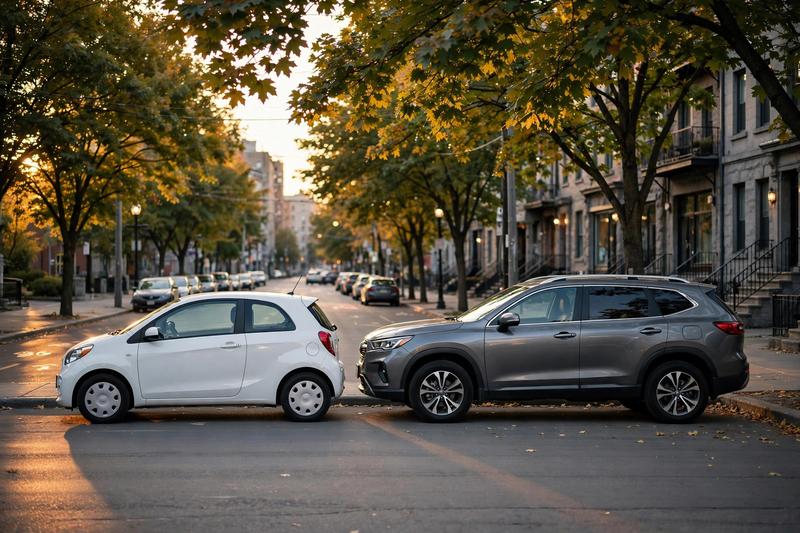
💡 Which one when — my practical rules
I ran this decision tree for two car-free years — and I still use it on the days my own car can’t cover everything:
- Errands under 3 hours in the city → FLEX. No planning, per-minute billing, drop it anywhere in the zone. A grocery or hardware run rarely costs more than a taxi both ways.
- A weekend IKEA assembly day on Value Extra: $23 day-max plus 31¢/km.
- Full day+, specific car type, or out of town → Turo. Need an SUV for the Laurentians or a minivan for a family trip? Turo’s selection beats any fleet — and long-trip discounts help.
- One rule of thumb: Communauto is cheapest while you stay inside the city and return the car; Turo wins the moment you need the car for a whole day or you care which car it is.
❄️ Winter bonus: free FLEX after big snowstorms
After big snowstorms Communauto sometimes makes FLEX cars free — details in my complete Communauto guide.
🛡️ 5. The Insurance Question — Don’t Overthink It
⚠️ Credit-card rental insurance doesn’t cover car-sharing
When I had no car and first signed up for these services, insurance confused me more than anything else. I had a credit card with “rental car coverage” and assumed it would handle everything. It doesn’t — not here. And honestly? It doesn’t matter, because the insurance is already baked into what you pay.
With Communauto, you’re automatically covered by their own auto insurance from the moment you drive — collision and third-party liability included ($5 million liability for Quebec-based cars — as of Oct 2026, confirm on Communauto’s official FAQ). You don’t need personal car insurance at all. What you do pick is a Damage Protection Plan: it caps your out-of-pocket cost per incident at $0, $350, or $750 in Quebec — charged even if the accident wasn’t your fault.
The default $750 option costs $1.25 at the start of each trip plus 55¢/hour (capped at $5/day); the $350 and $0 options run $115 and $150 per driver per year. (Source: Communauto Quebec fee schedule, effective June 15, 2026; taxes extra.) If your credit card includes collision damage insurance, it can reduce that annual fee to $40 — but it never replaces Communauto’s liability coverage, which every member carries.
Turo works the same way in spirit. At checkout you choose one of three protection plans — Premier, Standard, or Minimum — and its cost is part of your trip price. Every plan in Canada includes $2 million in liability insurance (via Economical Insurance in Quebec, per Turo’s official pages).
The only real difference is your out-of-pocket limit for damage to the car: $0 with Premier, $500 with Standard, up to $3,000 with Minimum — regardless of fault (as of Oct 2026 — confirm on Turo’s official pages). Exact plan prices vary by trip and show up at checkout.
So here’s what I wish someone had told me on day one: skip the credit-card insurance math. On both platforms the insurance question was already answered before I picked up the keys — all I had to decide was how much of the deductible risk I wanted to keep.
❓ FAQ
Communauto or Turo — which is cheaper for a weekend trip?
For a standard weekend (2 days, ~200 km), Communauto’s station-based rates usually win. Turo becomes competitive for specialty vehicles or when Communauto cars are all booked — which happens on long weekends.
Can I use both with the same driver’s licence?
Yes. Both accept a valid Quebec (or reciprocal foreign) licence. Turo may ask for additional verification on your first booking.
Do I need my own car insurance for either?
No. Communauto includes liability and collision coverage in every trip; Turo includes liability in every protection plan. Your credit card’s rental coverage generally does not apply to car-sharing.
Which one did you actually use more?
Communauto, by far — for the first two car-free years it was my default. Turo filled the gaps: bigger cars, specific dates, last-minute needs.
Happy saving 💛
— J.
Educational information only — not financial advice.
🍰 You May Also Like
- Globe Car Rental Montreal: Rates, Tips & Free Insurance
- Credit Card Purchase Protection + Warranty Canada (2026)
- Free Car Sharing in Montreal: 11 Official Tips (2026)
If you’re new in Montreal and car-free, you don’t need to stay car-free — you need these two bookmarks. Have you tried Communauto or Turo here? Tell me in the comments — I read every one.
Passez une belle journée !
—
Get the Free Canada Savings Checklist
Join the newsletter — get the free PDF checklist and weekly Canada savings tips in your inbox.
Read Next


How do you save on this? Share your own tip in the comments — I'd love to hear it!
Some links in this post are referral or affiliate links. If you sign up or buy through them, I may receive a bonus or commission at no extra cost to you. It helps keep this blog running — thank you!