[Fortune 4-Panel] 4 Kitchen Rituals That Keep the Heart of the Home Clean (Series ⑱)
Bonjour! It’s J.
Every home has a heart, and in most homes it beats in the kitchen. Before the recipes, before the gatherings — a clean, well-kept kitchen is what everything else is cooked on. Today, four small kitchen rituals grounded in hygiene science, not superstition.
🌿 Quick Take
- ① Retire the sponge on schedule — the dirtiest tool in the house
- ② Four degrees is the safety line — a fridge thermometer tells the truth
- ③ Cook with the hood on, always — cooking fumes belong outside
- ④ Separate boards, hot-water washing — raw and ready never share a surface
🧽 ① The Sponge Is the Dirtiest Thing You Own
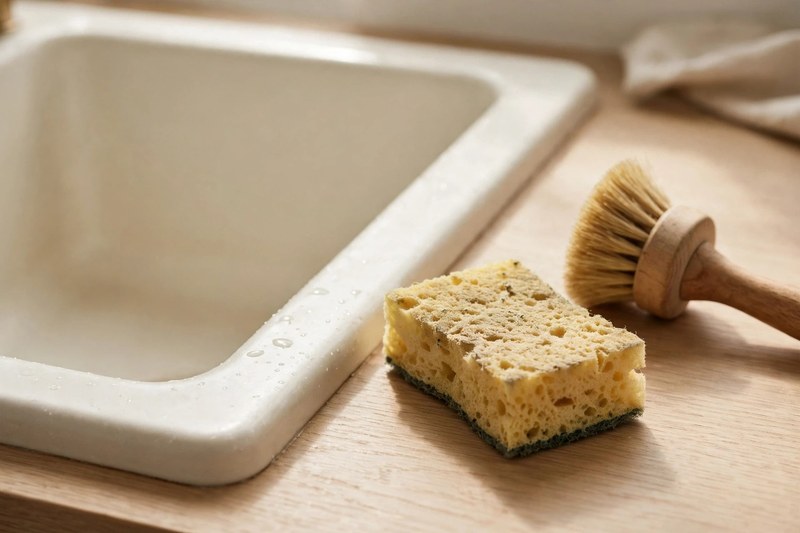
It wipes every plate, every counter, every spill — and that is exactly the problem. The warm, wet, food-fed sponge is the most densely colonised object in your kitchen. Treating it as a consumable, not a fixture, is the first ritual.
- Replace it on a schedule, not on a smell. By the time a sponge smells tired, its bacterial load is already enormous. A weekly or fortnightly swap is cheap insurance.
- Wring it dry and stand it up. A sponge left in a wet puddle stays in the exact conditions bacteria love. Squeezed dry and aired between uses, it colonises far more slowly.
- Give raw spills their own tool. Juice from raw meat or poultry never meets the everyday sponge — use a brush or disposable paper, then wash hands and surface with hot, soapy water.
✨ The principle behind it: When researchers sequenced 14 used kitchen sponges, they found 362 bacterial types, with local densities reaching 5.4 × 10¹⁰ cells per cubic centimetre — and sponges their owners cleaned regularly were not cleaner; some potentially pathogenic species were proportionally more common in them (Egert et al., 2017, Scientific Reports). Washing a sponge is not a reset. Replacing it is.
🌡️ ② Four Degrees Is the Safety Line
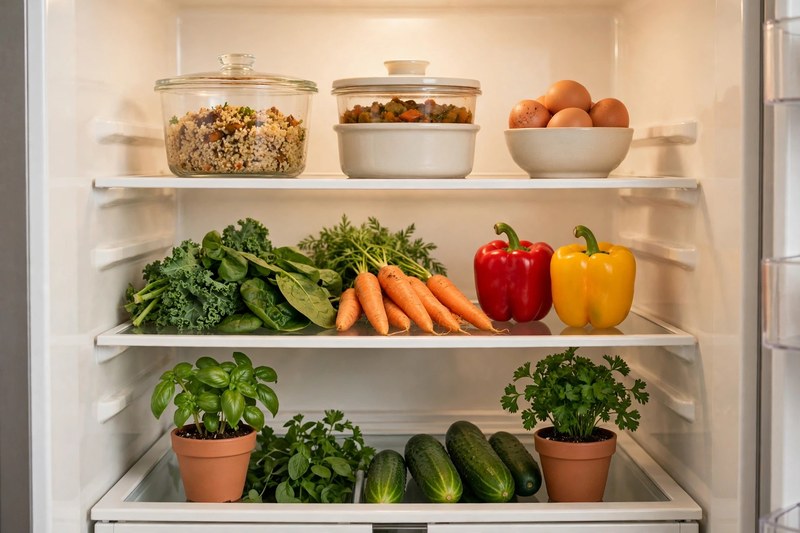
The fridge dial is a promise you cannot feel. Above 4°C (40°F), cold-loving bacteria such as Listeria get their chance to grow — quietly, in food that still looks and smells fine. One small thermometer turns the guess into a fact.
- Measure, don’t trust the dial. A small fridge thermometer costs almost nothing. Check it weekly: at or below 4°C (40°F) for the fridge, −18°C (0°F) for the freezer.
- Covered, labelled, dated. Ready-to-eat food keeps safest in shallow covered containers. The longer it sits, the more opportunity bacteria have — when in doubt, let it go.
- Raw below, ready above. Raw meat and seafood live on the lowest shelf, in a tray that catches drips, so nothing can fall onto food that will be eaten as-is.
✨ The principle behind it: The U.S. Food and Drug Administration’s food-storage guidance sets the line plainly: keep the refrigerator at or below 40°F (4°C) and the freezer at 0°F (−18°C), because the longer ready-to-eat food is stored — especially above that temperature — the more opportunity Listeria has to grow (FDA, “Are You Storing Food Safely?”). Cold is not a feeling. It is a number, and 4 is the number.
🌬️ ③ Cook With the Hood On, Always
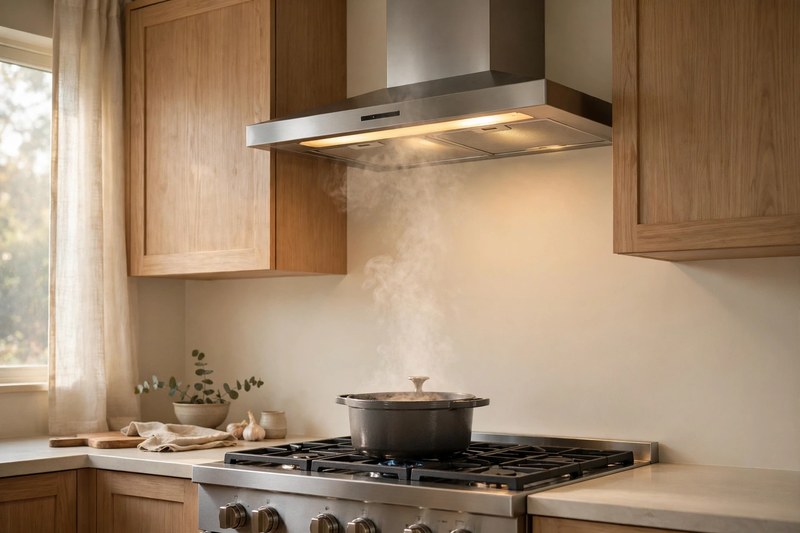
What rises off a gas flame is not just steam and good smells. Burning gas releases nitrogen dioxide, an invisible irritant that does not stay in the kitchen — it drifts to the bedrooms and lingers for hours. The hood is not an accessory; it is part of cooking.
- Hood on before the flame. Switch the hood on when you light the burner, not when the pan starts smoking. Capture at the source beats chasing fumes around the house.
- Vent outside if you possibly can. A hood that exhausts outdoors removes pollutants from the home; a recirculating one mostly filters grease and returns the air — and the gases — to the room.
- Back burners help the hood help you. Cooking on the rear burners puts the plume under the hood’s capture zone, where it can actually be pulled away.
✨ The principle behind it: In a U.S. study combining measurements in more than 100 homes with modelling, routine gas and propane stove use raised long-term nitrogen dioxide exposure by an average of 4.0 ppb, bedroom concentrations could pass health benchmarks within an hour of cooking and stay elevated for hours after the stove was off — and range hoods that vented outdoors cut time-averaged kitchen NO₂ by an average of 35% (range 10–70%) (Kashtan et al., 2024, Science Advances). The flame cooks the food. The hood protects the house.
🔪 ④ Boards, Knives and the Hot-Water Rule

Cross-contamination rarely looks dramatic. It looks like salad chopped where the chicken was — one shared board, one shared knife, and bacteria invited to a meal they were never cooked out of. Separation is the whole ritual.
- Two boards, two jobs. One board for raw meat and seafood, another for vegetables, bread and everything eaten raw. Different colours or materials make the rule effortless.
- Hot water and detergent, every time. Boards and knives that touched raw food get washed in hot, soapy water before they touch anything else — no exceptions for “just a quick slice.”
- Retire the deeply scarred board. Knife grooves shelter bacteria where washing cannot easily reach. A board carved into a roadmap has done its service; thank it and replace it.
✨ The principle behind it: In controlled experiments, fewer bacteria were generally recovered from wooden blocks than from plastic ones — a clean wooden surface absorbed the applied bacteria within 3–10 minutes so they could no longer be recovered from the surface — while heavily knife-scarred plastic boards, especially with chicken fat present, resisted manual washing; hot water with detergent generally did remove the bacteria (Ak, Cliver & Kaspar, 1994, Journal of Food Protection). The material matters less than the management: separate the jobs, wash hot, and mind the scars.
Four small rituals, one kitchen. Sponge replaced, fridge at four, hood on, boards apart — and the heart of the home stays clean enough for everything cooked in it, and everyone gathered around it, to thrive.
💡 J’s Tip — Start with the thermometer. Of the four rituals, the fridge thermometer is the one that takes two minutes and tells you the truth today. Put one in this week, check your number against 4°C — then let the sponge, the hood and the boards follow, one ritual at a time.
Wishing you a beautiful day.
If the kitchen is in order, keep the rhythm going — the room where water does the work, the doorway that sets the tone, and the windows that bring the light:
🚿 Water, Working Clean
The bathroom runs on water all day — keep it on your side: 4 Bathroom Rituals That Keep Water Working for You (Series ⑲)
🚪 The Doorway Decides
Four small entryway rituals that welcome good luck home: 4 Entryway Rituals That Welcome Good Luck Home (Series ⑮)
🪟 Light Changes Everything
Morning air, clean glass and a chair in the sun patch: 4 Window & Light Rituals That Brighten a Home’s Space Energy (Series ⑯)
Happy living 💛 — J.
💌 You May Also Like
Get the Free Canada Savings Checklist
Join the newsletter — get the free PDF checklist and weekly Canada savings tips in your inbox.
Read Next


Some links in this post are referral or affiliate links. If you sign up or buy through them, I may receive a bonus or commission at no extra cost to you. It helps keep this blog running — thank you!