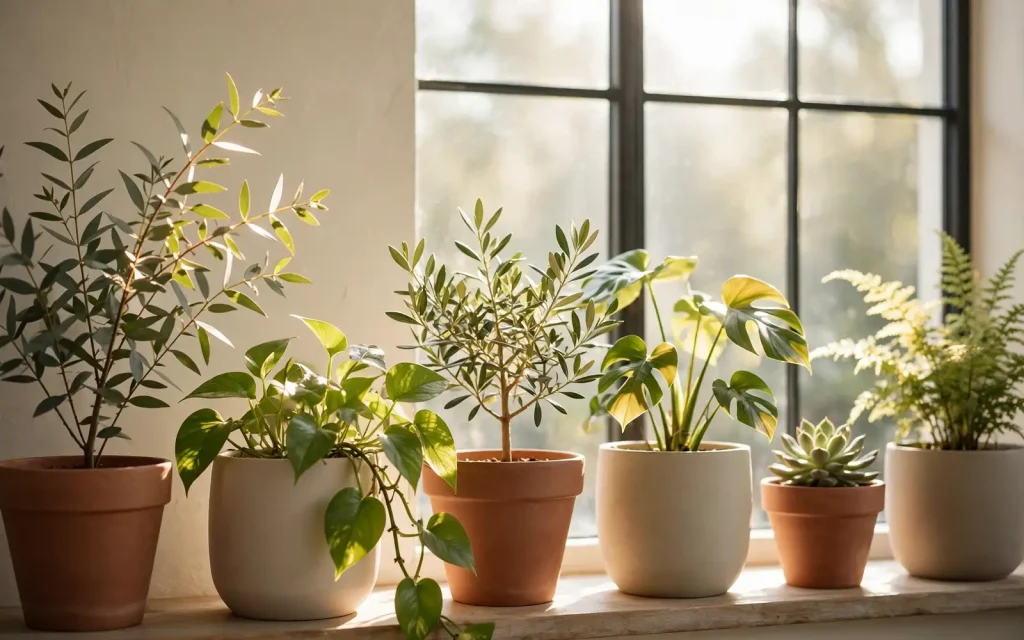
[Fortune 4-Panel] 4 Plant Rituals That Green a Room Honestly (Series ㉒)
Bonjour! It’s J.
A room with something green and living in it simply feels luckier. But feelings deserve honest footnotes — today’s four panels keep the love of houseplants and retire the myths around them, so what you bring home is a plant, not a promise it cannot keep.
🌿 Quick Take
- ① The air-purifying myth, gently retired — ventilation does that job
- ② A dry surface starves the gnats — it is the wet soil, not the plant
- ③ Caring for plants calms the carer — small study, real signal
- ④ Light first, then the plant — choose the species for the corner you have
🪴 ① The Air-Purifying Myth, Gently Retired
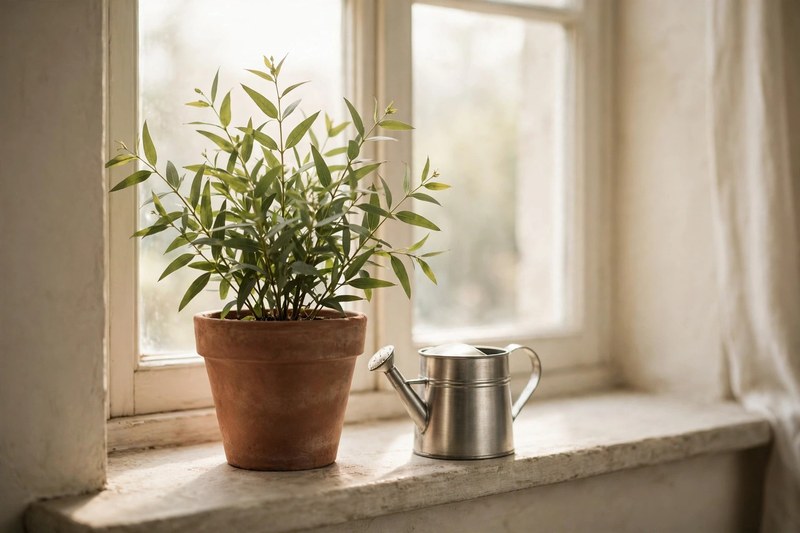
Somewhere along the way, a famous 1989 space-agency study turned “plants absorb some compounds in a sealed chamber” into “this fern is cleaning your living room.” It is a beautiful story. In a real room, with real air moving through it, it does not hold. Retiring it kindly makes room for what plants genuinely do.
- Keep the plant; drop the job description. Your pothos is décor, company and a small daily pleasure. It is not an appliance, and it never signed up to be one.
- Ventilation is the air cleaner. An open window, a kitchen fan, fresh air exchanged regularly — ordinary ventilation removes indoor pollutants at rates a shelf of plants cannot approach.
- Buy for the eye and the heart. Choose the plant you will enjoy looking at and caring for. That benefit is real, it is daily, and unlike the purifying claim, nobody has had to retract it.
✨ The principle behind it: Re-analysing twelve chamber studies and 196 results, researchers found a potted plant’s median clean air delivery rate was just 0.023 m³/h — to match the pollutant removal that ordinary ventilation already provides, a room would need somewhere between 10 and 1,000 plants per square metre of floor (Cummings & Waring, 2020, Journal of Exposure Science & Environmental Epidemiology). The plant’s place was never the air. It is, as the next panels show, closer to the mind.
💧 ② A Dry Surface Starves the Gnats
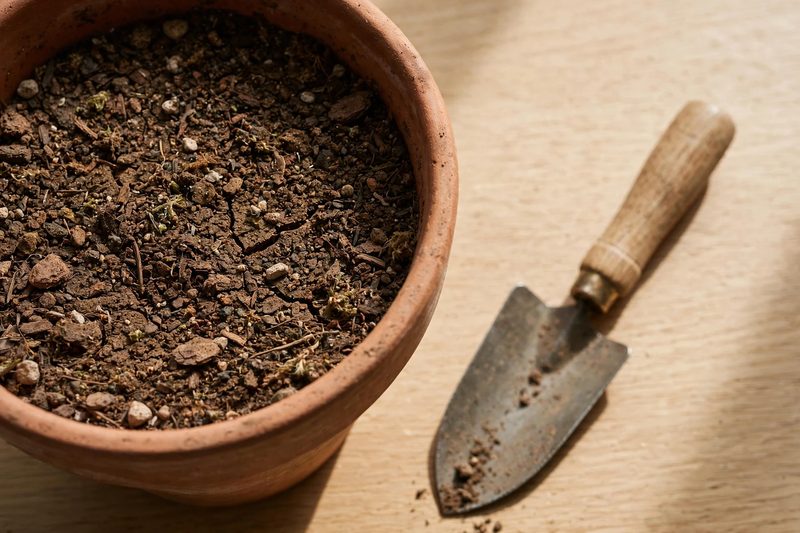
Tiny black flies hovering over a beloved plant feel like a betrayal. They are not — they are a watering report. Fungus gnats do not live on your plant; their larvae live in the top layer of soil that never gets to dry. Change the surface, and you change the population.
- Let the top dry between waterings. The larvae live in the upper 1–2 inches of mix, feeding on fungi, algae and organic matter. A surface that dries out between drinks is a neighbourhood they cannot raise a family in.
- Water by need, not by calendar. A fingertip in the soil beats a standing Saturday appointment. Most houseplants prefer a real drink followed by a real dry-down over constant sipping.
- Empty the saucer. A pot standing in its own runoff keeps the whole column wetter than you think. Drain it, tip the saucer, and let the plant finish its drink like everyone else — then put the glass away.
✨ The principle behind it: University of Georgia Extension guidance on fungus gnats is direct: excessively high moisture in the potting media is the primary reason fungus gnats abound, and letting the soil surface dry between waterings brings numbers down (Morgan & Suiter, 2022, University of Georgia Extension, Circular 1250). No sprays, no folklore — just a drier top inch, patiently kept.
🌱 ③ Caring for Plants Calms the Carer
If the plant is not cleaning your air, what is it doing on your desk? Something quieter and better documented than the myth suggested: the minutes you spend repotting, pruning and wiping leaves appear to settle the person doing the caring. The ritual is the benefit.
- Make care a small ceremony. Repotting day, a weekly leaf-wipe, turning the pot a quarter each Sunday — unhurried, hands-on minutes, phone in another room.
- Touch is the active ingredient. The research compared hands-in-soil work with screen work, not looking at a plant with owning one. Watering, trimming and transplanting are the practice; the plant is the partner.
- Keep the claim the size of the evidence. The study below is small and specific — a promising signal, honestly labelled, is worth more than a grand promise. Enjoy the calm; let science keep catching up.
✨ The principle behind it: In a randomised crossover experiment, young adults who spent time transplanting an indoor plant reported feeling more comfortable, soothed and natural than after a computer task — and a sympathetic nervous system indicator (log[LF/(LF+HF)]) fell significantly by the end of the plant task, alongside diastolic blood pressure (Lee et al., 2015, Journal of Physiological Anthropology). The honest footnote, printed on purpose: the sample was 24 young men, so treat this as an encouraging small study, not a universal law.
☀️ ④ Light First, Then the Plant
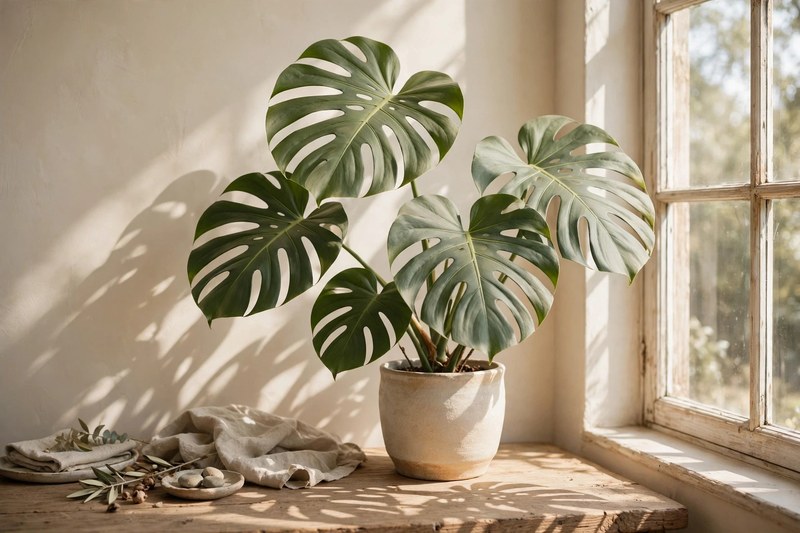
Most “difficult” houseplants are not difficult. They are misplaced — a sun-lover exiled to a dim hallway, blamed for fading. Read the light in the corner first, then choose the plant that evolved for exactly that light. The order is the whole secret.
- Audit the corner honestly. Ordinary office-level brightness — around 500 lux — is a real, survivable habitat for the right species. A north-facing shelf and a south-facing sill are different countries; plant for the one you have.
- Shade-tolerant is a superpower. Golden pothos, peace-plant relatives and compact monsteras are bred by evolution for forest floors. In dim rooms they are not the compromise choice; they are the correct one.
- More light buys more growth. Surviving and flourishing are different settings. If you want lush, fast growth rather than quiet endurance, move the plant toward the window — growth rate answers light more than it answers fertiliser.
✨ The principle behind it: In growth-chamber research simulating workplace lighting, three common ornamental species — Epipremnum aureum, Pachira aquatica and Rhaphidophora tetrasperma — maintained growth for 191 days at just 6.8 µmol m⁻² s⁻¹ (about 500 lux) for nine hours a day, while higher light (20.1 µmol m⁻² s⁻¹ over 18 hours) measurably improved relative growth rate (Sugano et al., 2024, Scientific Reports). Dim corner, right species: a workable plan. Dim corner, wrong species: a slow goodbye.
Four small rituals, one greener room. No purifying miracles, no gnat invasions, care that calms the carer, and every plant standing in light it can actually live on — that is greenery with its feet on the ground.
💡 J’s Tip — Start with one plant, placed properly. Pick the brightest spot you actually have, choose a shade-tolerant species if it is not by the window, and let the top of the soil dry between waterings. One thriving plant teaches you more — and cheers a room more — than five struggling ones bought on a myth.
Wishing you a beautiful day.
If your green corner is honest, the closet and the windows are waiting — a seasonal reset, and the light every plant is asking for:
🧥 A Closet Ready for the Season
Wash before storing, sixty degrees for bedding, and cedar kept honest: 4 Closet Rituals for the Changing Season (Series ㉑)
🪟 Windows, Light, Honest Air
The window rituals behind every thriving plant corner: 4 Window & Light Rituals That Brighten a Home’s Space Energy (Series ⑯)
❄️ A Sealed-Up Home, Breathing
Winter’s air has its own rules — 4 Winter Rituals for a Sealed-Up Home (Series ⑳)
Happy living 💛 — J.
💌 You May Also Like
Get the Free Canada Savings Checklist
Join the newsletter — get the free PDF checklist and weekly Canada savings tips in your inbox.
Read Next
Some links in this post are referral or affiliate links. If you sign up or buy through them, I may receive a bonus or commission at no extra cost to you. It helps keep this blog running — thank you!