
[Fortune 4-Panel] 4 Sound Rituals for a Quieter Home (Series ㉓)
Bonjour! It’s J.
Every home has a sound, whether you chose it or not. The hum, the chimes, the street through the glass — together they set the pace your body keeps, day and night. Today, four sound rituals for a quieter home — measured in decibels, not wishes.
🌿 Quick Take
- ① Night has a number — the WHO night-noise target is 40 decibels
- ② The street comes through the window — seals, curtains, and soft furnishings
- ③ Fewer chimes, lower stress — check in batches, not all day
- ④ Let nature do the talking — birdsong over background noise
🔇 ① Night Has a Number: 40 Decibels
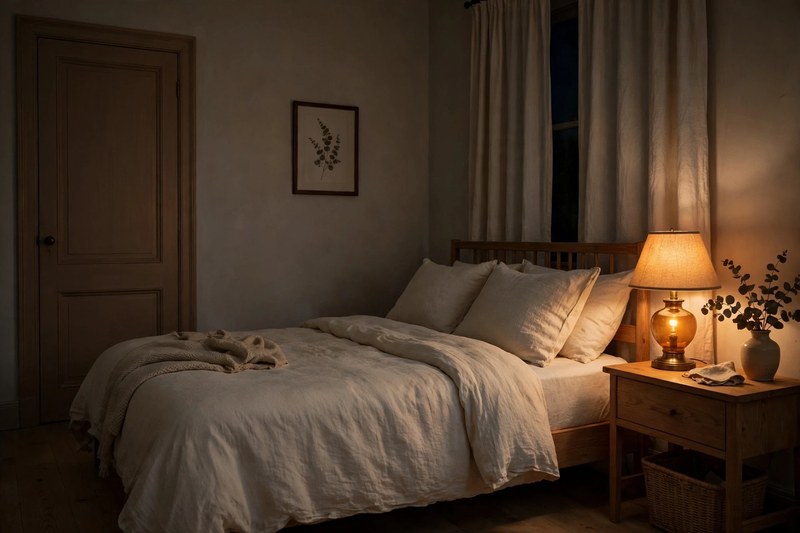
Quiet is not a personality trait — it has a target value. If your nights feel louder than they should, you are probably not imagining it: the official guideline for a good night is surprisingly low.
- Close the bedroom door — and seal its gap. A door shuts out hallway noise; a simple draft seal along the bottom edge closes the slit that sound slips through. It is the cheapest decibel you will ever buy.
- Move the bed off the street wall. Even one metre of distance and a bookshelf or wardrobe against the noisy wall softens what reaches your pillow.
- Measure once, honestly. A free sound-meter app will not match a laboratory instrument, but one evening reading tells you whether your bedroom sits near the target — or far above it.
✨ The principle behind it: The World Health Organization’s Night Noise Guidelines for Europe (2009) set the outdoor night-noise target at 40 dB (Lnight,outside), with an interim target of 55 dB where the lower value is not yet feasible. Above 40 dB, the guidelines note, effects such as self-reported sleep disturbance begin to be observed. Your ears are not fussy — the benchmark itself is that low.
🪟 ② The Street Comes Through the Window

Most homes do not have a noise problem — they have a window problem. The glass is the thinnest wall you own, and whatever the street is doing, it does a quieter version of it in your room.
- Seal first, decorate second. Check the window frame for gaps and worn weatherstripping. Sound, like cold air, enters through cracks long before it comes through glass.
- Heavy curtains on the street side. Thick, lined curtains hung wide of the frame add a soft layer between the road and the room — modest, but real, and they earn their keep every night.
- Soften the room itself. A woven rug, cushions, upholstered chairs, a full bookshelf — soft surfaces absorb the sound that does get in instead of bouncing it around bare walls.
✨ The principle behind it: In the systematic review prepared for the WHO Environmental Noise Guidelines for the European Region (2018), van Kempen and colleagues pooled the epidemiological evidence on traffic noise and health: at population level, the relative risk of ischaemic heart disease rose by about 8% for every 10 dB increase in road-traffic noise above an Lden of 53 dB. That is an exposure pattern across large populations, not a prediction about any one person’s risk — but it is a solid reason to treat the bedroom window as part of your health, not just your view.
📵 ③ Fewer Chimes, Lower Stress

Not all noise is measured in decibels. A phone that chimes forty times a day keeps the nervous system on call — each ping is small, but the shift never ends.
- Batch the inbox. Turn off mail and app notifications, and check messages at set times instead — three chosen check-ins a day is a calm place to start. The world survives the gaps remarkably well.
- Face down at the table. Phone face down, screen dark, during meals and tea. A visible phone invites glances; a quiet one lets a conversation finish its sentences.
- Charge it outside the bedroom. The hallway or the kitchen counter. The last chime of the day should not be the last sound of the day.
✨ The principle behind it: In a two-week crossover study with 124 adults, Kushlev & Dunn (2015, Computers in Human Behavior) had participants limit how often they checked email to three times a day for one week and check as often as they liked in the other. Daily stress was significantly lower in the limited-checking week. The inbox did not get quieter — the checking did, and that was enough.
🐦 ④ Let Nature Do the Talking
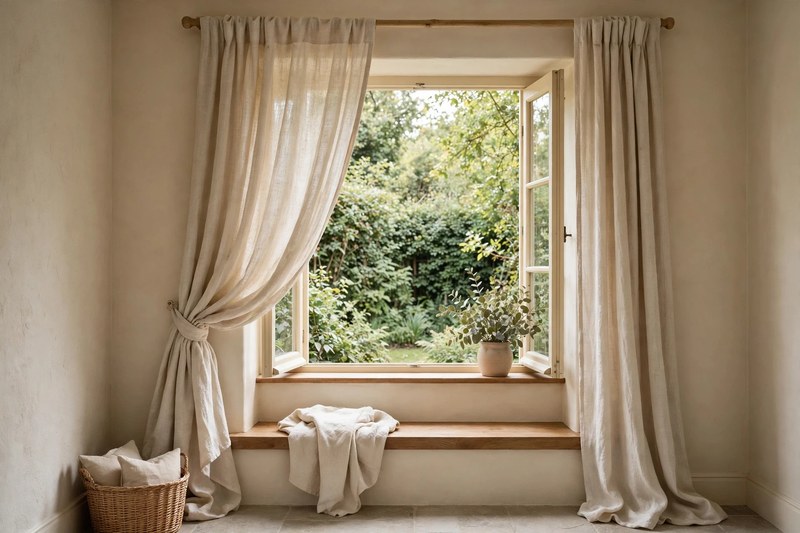
A quieter home is not a silent one. The goal is to choose your soundscape: less traffic, fewer chimes — and more of the sounds a body actually unwinds to.
- Open the garden-side window. When the street side is loud and the garden side is not, let the house breathe from the green direction — leaves and birdsong instead of engines.
- Swap the background. If a screen or radio usually fills the silence, try a nature-sound recording at low volume — a stream, rain on leaves, morning birds. Background is a choice, so choose the kind one.
- Sit with it for five minutes. Tea by the open window, no phone. A soundscape only works if you are sometimes still enough to hear it.
✨ The principle behind it: In a laboratory study, Alvarsson, Wiens & Nilsson (2010, International Journal of Environmental Research and Public Health) gave 40 participants a stressful mental-arithmetic task, then played either nature sounds — a fountain and birdsong at 50 dB — or environmental noise during recovery. Skin-conductance levels tended to recover faster with the nature sounds; the authors’ own wording is “tended,” and heart-rate variability showed no such effect. Read it honestly: a tendency in a small study, not a treatment — but a gentle, low-cost nudge in the right direction.
Four small rituals, one quieter home. A door that seals, a window that holds the street back, a phone that chimes less, and birdsong where the noise used to be. A quieter home will not change your luck — it changes your nights, and nights change everything else.
💡 J’s Tip — The one-minute sound audit. Tonight, sit in your bedroom with the door closed and just listen for one full minute. Name every sound you can hear. The loudest one you can actually change — a door gap, a chime setting, a window left cracked to the street — is your first ritual. Fix only that one this week.
Wishing you a beautiful day.
If your home is sounding calmer, its green corner and its nights are the natural companions — what plants can honestly do, and how the bedroom restores you:
🌿 Green, Honestly
What a plant can — and cannot — do for a room, told straight: 4 Plant Rituals That Green a Room Honestly (Series ㉒)
🌙 Nights That Restore
Once the sound is right, the rest of the night ritual follows — 4 Bedroom Rituals for Nights That Restore Your Luck (Series ⑰)
❄️ A Sealed-Up Home, Breathing
Winter’s air has its own rules — 4 Winter Rituals for a Sealed-Up Home (Series ⑳)
Happy living 💛 — J.
💌 You May Also Like
Get the Free Canada Savings Checklist
Join the newsletter — get the free PDF checklist and weekly Canada savings tips in your inbox.
Read Next


Some links in this post are referral or affiliate links. If you sign up or buy through them, I may receive a bonus or commission at no extra cost to you. It helps keep this blog running — thank you!