Never Miss Peak Fall Foliage in Canada — A Guide to Québec’s Fall Colour Map
Last updated: November 5, 2026
Bonjour! It’s J. — It’s foliage season in Québec — the most beautiful time of the year here. If you want to see Canada’s fall colours at their true peak, timing is everything. 🍁
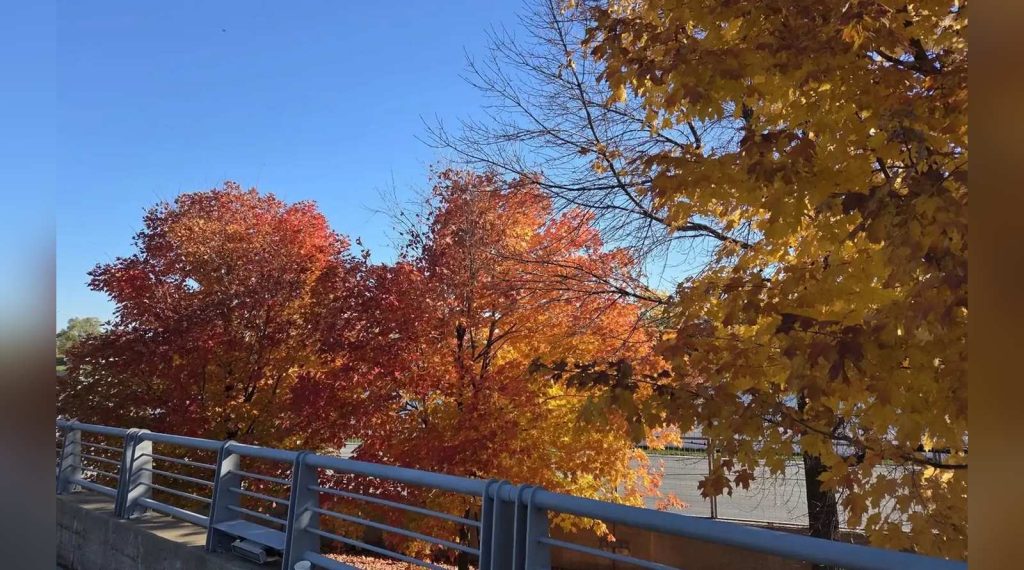
After 9 years in Québec, I can tell you that fall here is nothing short of magical. The transformation usually begins in late September in the northern regions and moves southward, with peak colors typically arriving between late September and mid-October depending on where you go. The Laurentian mountains turn first, followed by the Eastern Townships and the areas around Montréal.
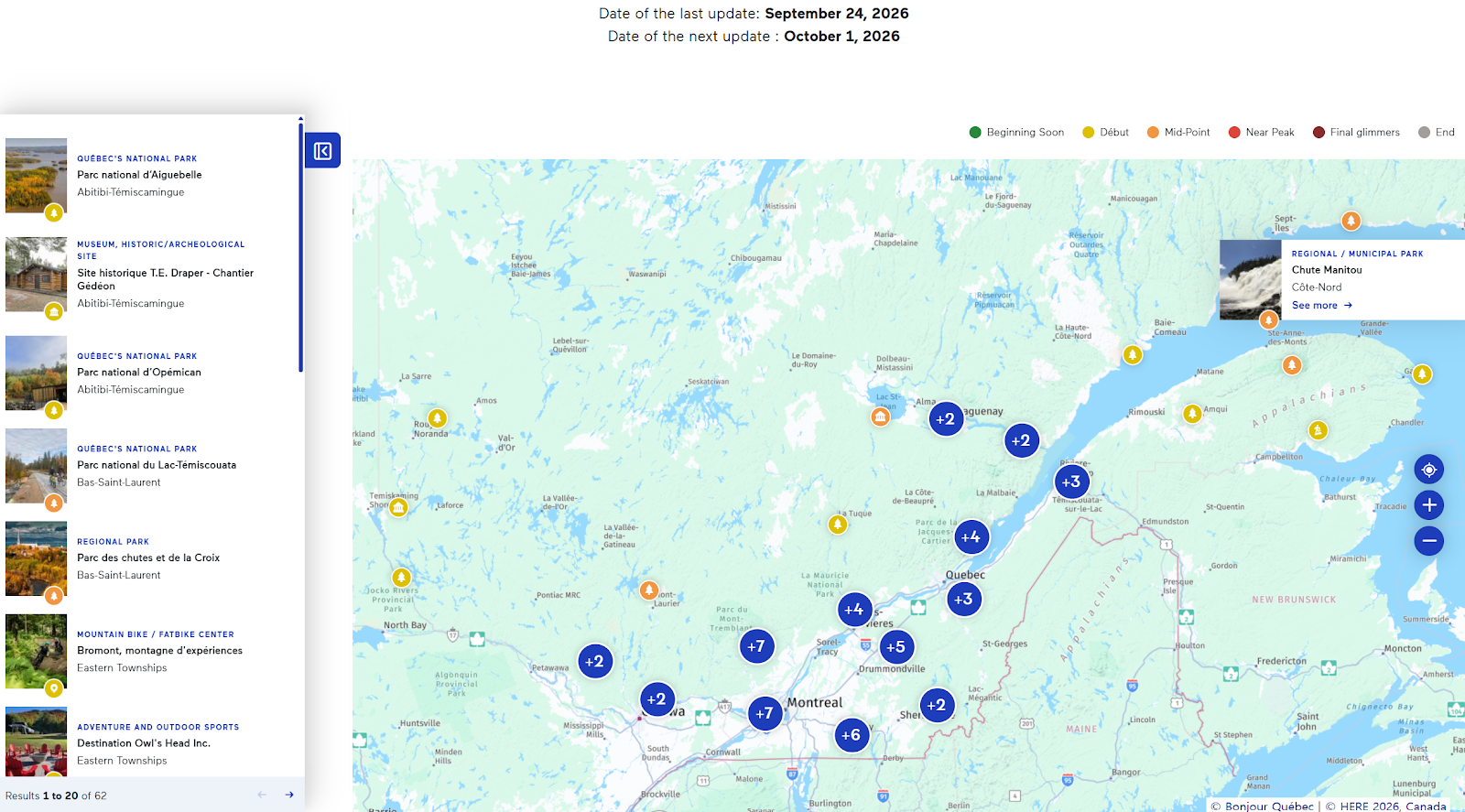
Québec’s official tourism site, Bonjour Québec, publishes a fall-colour evolution map that is updated every week.
(Last update: September 24, 2026; next update: October 1, 2026)
🌿 Quick Take
- Québec’s peak fall colour runs late September to mid-October, moving north to south — the Laurentians turn first, then the Eastern Townships and Montréal.
- To predict the peak, combine three things: the Bonjour Québec colour map (updated weekly), cool nights after sunny days, and elevation — higher turns earlier.
- The foliage map colour-codes 62 locations, including national and regional parks, from “Beginning Soon” to “End.”
- If your area is approaching peak, don’t wait for the “perfect” weekend — go now.
🍁 Why Quebec’s Fall Colours Are So Dramatic — A Little Science
After years of chasing peak colour, I finally looked up why Quebec does autumn better than almost anywhere else. It comes down to three things: geography, weather, and the right trees.
Geography first. Colour moves north to south and from higher to lower elevations — northern areas and mountain tops turn first, which is why Mont-Tremblant peaks before Montreal does. The shortening autumn daylight is the main trigger that tells trees to start shutting down for winter, and it arrives like clockwork every year.
Then the weather. Quebec’s classic October pattern — warm sunny days, cool crisp nights — is exactly what intensifies red pigments. Here is the science in a nutshell: green comes from chlorophyll, which trees dismantle each fall to reclaim nutrients. Yellows and oranges come from carotenoids, present in the leaf all along but hidden under the green. The brilliant reds, though, are anthocyanins that maples manufacture fresh each autumn — widely believed to act as a kind of leaf sunscreen. Big day–night temperature swings are known to boost that red production, while rainy, overcast stretches tend to dull it.
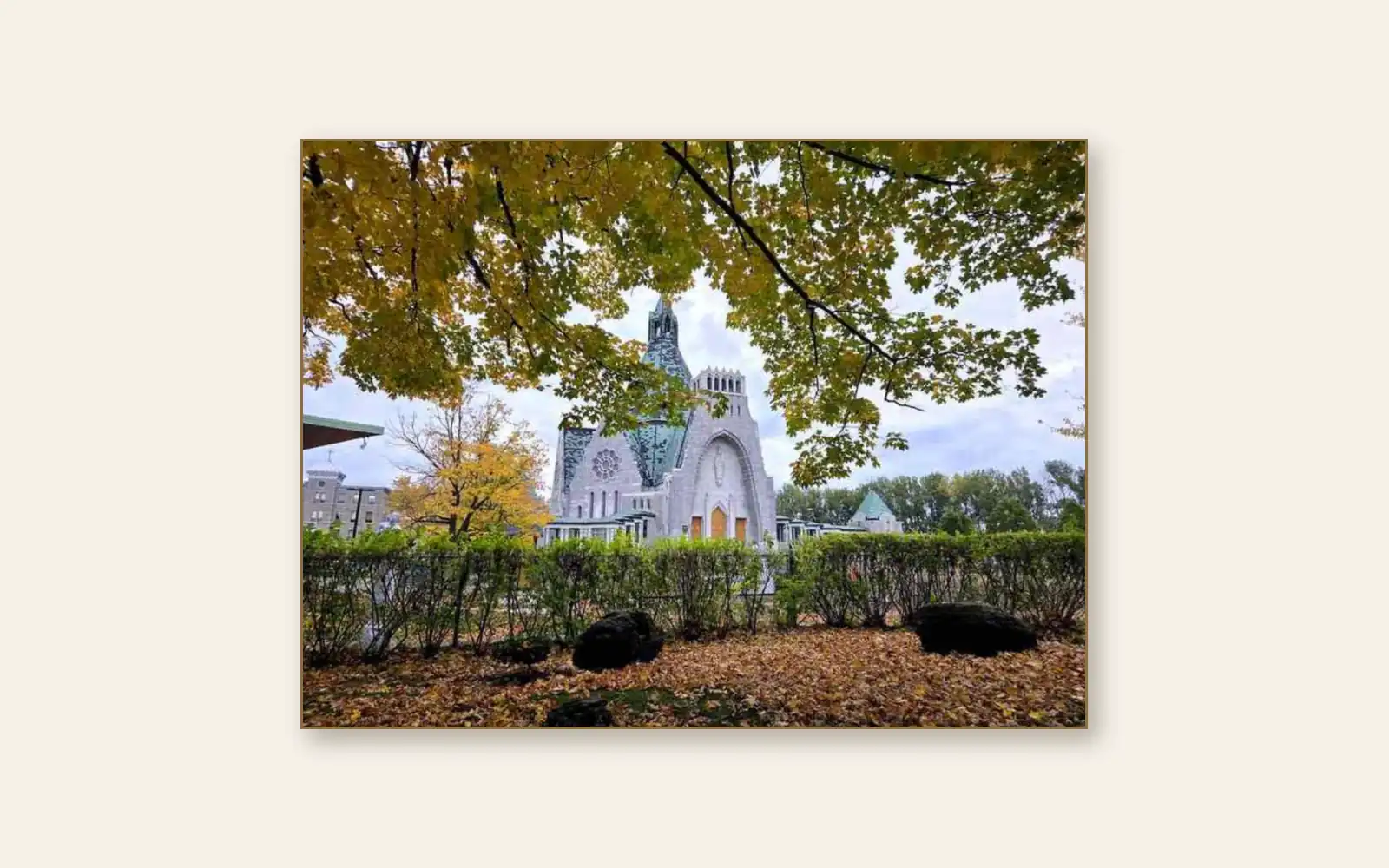
And the trees. Quebec’s forests are rich in sugar maples, the species behind the most spectacular reds, oranges, and golds. Different species also keep different calendars: birches and poplars typically flash yellow early (often late September), sugar maples peak in early to mid-October, and oaks linger into late October with russet and bronze tones.
How I predict peak: I combine three things — the Bonjour Quebec map below, a stretch of cool nights after sunny days, and elevation (higher = earlier). A dry summer or an early hard frost can mute the show, while a calm spell lets it linger. When all three line up, that is the week I clear my schedule.
My favorite foliage spots near Montréal
| Spot | From Montréal | Why go |
|---|---|---|
| Mont-Tremblant & the Laurentians | ~1.5 hours north | Layers of red, orange, and gold mountain views; scenic Route 117 villages along the way |
| The Eastern Townships | 1–1.5 hours southeast | Rolling hills, vineyards, covered bridges — plus wine tastings |
| Charlevoix | 4–5 hours northeast | Mountains meeting the St. Lawrence in fall colour — worth a weekend (I’m planning my own trip there in early October!) |
How to read the foliage map
- Each region’s foliage stage is colour-coded: Beginning Soon / Début / Mid-Point / Near Peak / Final glimmers / End
- 62 locations at a glance, including national parks and regional parks
📸 Photography tips
Overcast days can actually be great too, as the soft light brings out the rich colors without harsh shadows. Don’t forget to look down as well as up: fallen leaves on forest paths and reflections in lakes make stunning shots.
🧥 What to wear
October weather in Québec can be unpredictable — a beautiful sunny afternoon can turn chilly very quickly, especially in the mountains. Comfortable walking shoes are a must if you plan to hike. And bring a thermos with something warm — there’s nothing better than hot coffee with a view of fall colors.
Tips for planning your foliage trip
- Peak foliage in Québec, Canada usually falls between late September and mid-October, and timing varies by region
-
💡 Tip: Before your trip, check the map for areas marked “Near Peak” and build your itinerary around them — that’s how you catch the colours at their very best.
- I’m planning my own Québec trip in early October, so I’ve been checking this map constantly
-
💡 Tip: If you’re driving from Montréal, try to leave early in the morning to avoid traffic — especially on weekends, when everyone has the same idea! Popular spots like Mont-Tremblant can get crowded, so weekday visits are ideal if your schedule allows. And always check the weather forecast: rain the day before can actually make the colors pop, but heavy wind can strip the leaves early.
Foliage map: https://www.bonjourquebec.com/en-ca/explore/seasons/fall
(Images: bonjourquebec.com)
🗓️ The Peak Calendar, Region by Region
The dates slide by a few days every year, but the big movement stays the same. Lay this calendar over the colour map before you set out.
| Region | Peak (approx.) | The highlight |
|---|---|---|
| Laurentians · Mont-Tremblant | Late September to early October | The first — and the most spectacular — mountain colour |
| Charlevoix | Early to mid-October | Coloured mountains + the St. Lawrence River |
| Montréal | Mid-October | The parks and riverbanks are plenty |
| Eastern Townships | Mid to late October | The oaks hold on the longest |
The key point: peak is a state, not a date. Within a single region, the valley and the ridge don’t turn at the same time, and a spell of wind and rain can shorten the peak by several days. So I look at the calendar first, the map second, and the week’s weather on top of everything. After three or four days of clear days and cool nights, the weekend that follows is usually the best of the year.
🌧️ What If It Rains During Peak Week?
A rain forecast during peak week is disappointing in advance — but remember this: rain itself doesn’t damage the colours. What brings the leaves down is the wind; what dulls the colours is a run of grey days. On the contrary, wet foliage looks deeper and more saturated, and some photographers deliberately aim for the morning after the rain. The real threat is strong wind right at the very end of peak, which brings leaf-fall forward. If peak is approaching and the weekend looks rainy, go on a weekday, before the rain: the colours won’t wait, but rain is less of an enemy than we think. One last marker for reading the map: when the “Near Peak” stage appears for your region, the week in play is this one — not the following weekend — because the move up to “Peak” rarely takes more than a few days.
One last tip from experience: fall color season is short — sometimes just two to three weeks at peak in any given spot. Go now. Some of my most beautiful foliage memories are from spontaneous weekday drives when the light was just right and the crowds were nowhere to be seen.
Wishing you a beautiful day 💛
— J.
🧮 The Season, Counted
Count the season and it stops feeling like luck. The Bonjour Québec map tracks 62 locations through six colour-coded stages, from Beginning Soon to End, and it is redrawn every week — the update noted at the top of this page steps from September 24 to October 1, exactly seven days. Sixty-two dots, six stages, one refresh a week: that is the entire instrument panel.
The whole provincial show runs about five weeks, from the first northern colour in late September to the last oaks holding on in late October — but any single spot holds its true peak for only two to three of those weeks. Inside that window the species run on staggered clocks: birches and poplars flash yellow first, sugar maples carry early to mid-October, and the oaks close the season in russet and bronze.
Which is why one tank of gas can buy you peak more than once. Mont-Tremblant, about 1.5 hours north, peaks first; Montréal follows in mid-October; the Eastern Townships, 1 to 1.5 hours southeast, hold on the latest — with Charlevoix, 4 to 5 hours northeast, for anyone making a weekend of it. Chased in that order, the same driver gets roughly three peak weekends out of one short season. The map’s 62 dots are not 62 separate trips. They are one wave moving south — and you only have to stand in its path two or three times.
🌐 This post is also available in French: Ne ratez plus le sommet des couleurs d’automne au Québec — le guide de la carte des couleurs.
If you prefer reading in French, I’ve also published the full French edition of this review: Ne ratez plus jamais le sommet des couleurs d’automne au Québec : le guide de la carte des couleurs.
If you prefer reading in Korean, I’ve also published the full Korean edition of this review: 퀘벡 단풍 절정, 놓치지 마세요 | 단풍 색상 지도 읽는 법과 절정 타이밍 잡는 법.
You May Also Like
Get the Free Canada Savings Checklist
Join the newsletter — get the free PDF checklist and weekly Canada savings tips in your inbox.
Read Next

Some links in this post are referral or affiliate links. If you sign up or buy through them, I may receive a bonus or commission at no extra cost to you. It helps keep this blog running — thank you!