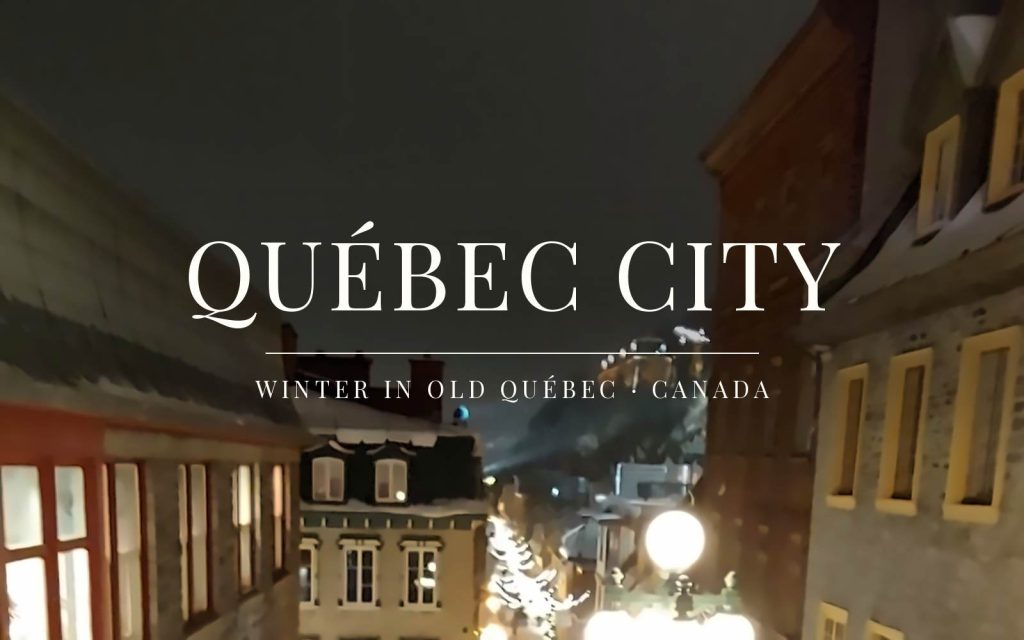
Québec City in Winter — A Snowy Old Town Walk from Petit-Champlain to Château Frontenac
Bonjour! It’s J. — and in winter, Québec City turns into a Christmas card you can walk through.
Old Québec (Vieux-Québec), the city’s historic core, was designated a UNESCO World Heritage Site in 1985. Founded by Samuel de Champlain in 1608, the old town is built on two levels: the walled Upper Town (Haute-Ville) on top of the cliff, and the Lower Town (Basse-Ville) along the river below. When winter arrives, snowflake garlands stretch across the lanes, little Christmas trees appear outside every shop, and warm light spills over snowy rooftops and stone façades. According to the official tourism board, the old town’s holiday decorations stay up from late November to mid-January. This post pulls together a winter walking route — with my photos — from Petit-Champlain up to the Château Frontenac.
I’ve been to Québec City in all four seasons, and I make the trip three or four times a year. When I go on my own I’m never in tourist mode and hardly take any photos — the pictures in this post exist because my parents came to visit Montréal, and I took them along and photographed them there. Of all the seasons, this city is at its most beautiful in winter. The autumn maples are lovely too, of course, but what I really recommend is the night streets in the middle of winter.
✔ Quick Take
- Old Québec is a UNESCO World Heritage Site (1985) — and the only walled city in North America north of Mexico with its fortifications intact.
- The star of a winter evening is Petit-Champlain, often counted among the oldest commercial streets in North America.
- Between Lower and Upper Town, choose the Breakneck Steps (1635) or the funicular, running since 1879.
- Château Frontenac (opened 1893) and the wooden boardwalk of Dufferin Terrace anchor the view.
- The Carnaval de Québec, one of the world’s largest winter carnivals, runs from late January to mid-February (next edition: February 5–14, 2027, per the official tourism board).
✨ Petit-Champlain — One of North America’s Oldest Commercial Streets, Dressed for Winter
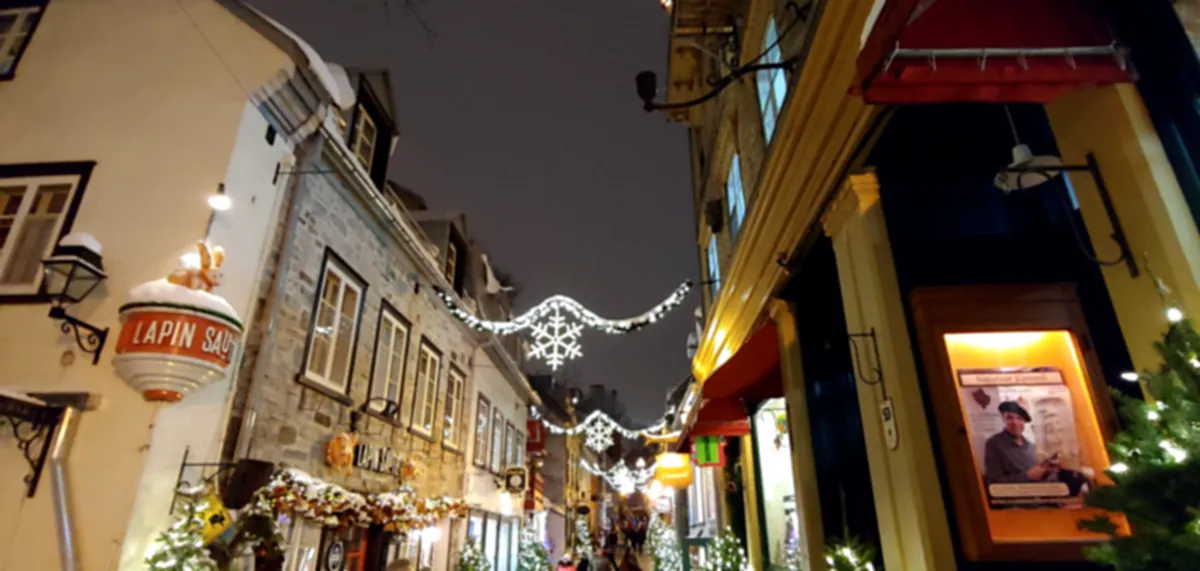
Start in the Lower Town, on Rue du Petit-Champlain. Tucked against the cliff of Cap Diamant, this narrow pedestrian lane is often described as one of the oldest commercial streets in North America. Stone buildings from the 17th and 18th centuries stand shoulder to shoulder, filled with boutiques, galleries, restaurants and cafés.
On a winter night, garlands of snowflake lights arc over the street and each storefront wears its own small Christmas tree or wreath. The projecting sign in my photo belongs to Le Lapin Sauté, one of the street’s beloved institutions. With fresh snow glowing under the lights on the cobblestones, the whole street feels like walking into a storybook village.
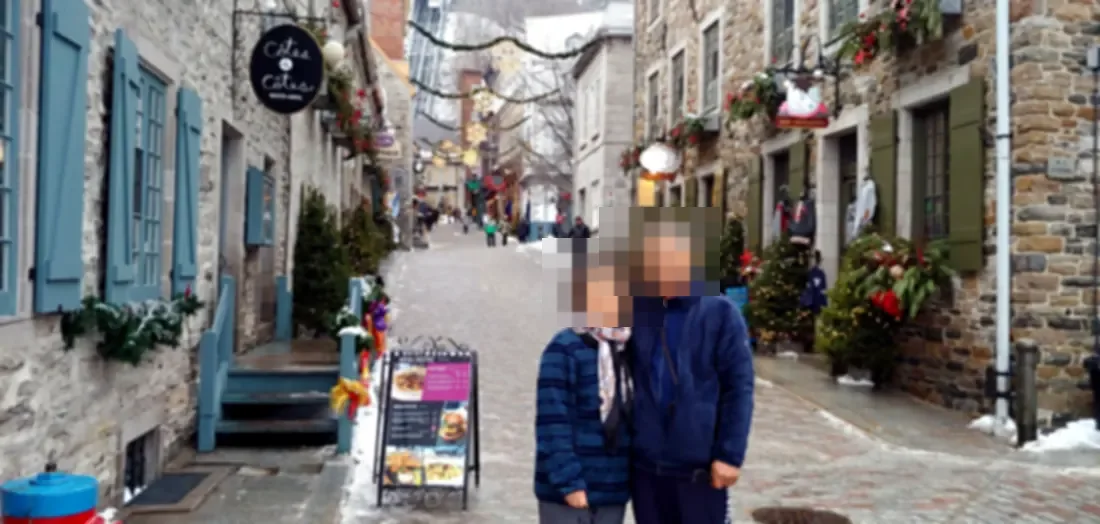
Daytime shows the street’s other face. This second photo was taken at the southern end, by the bistro Côtes à Côtes on the corner of Rue Saint-Pierre — look up and you can spot the funicular track crossing overhead. Come after dark for the sparkle; come back in daylight if you want to take in the stonework and architecture at a slower pace.
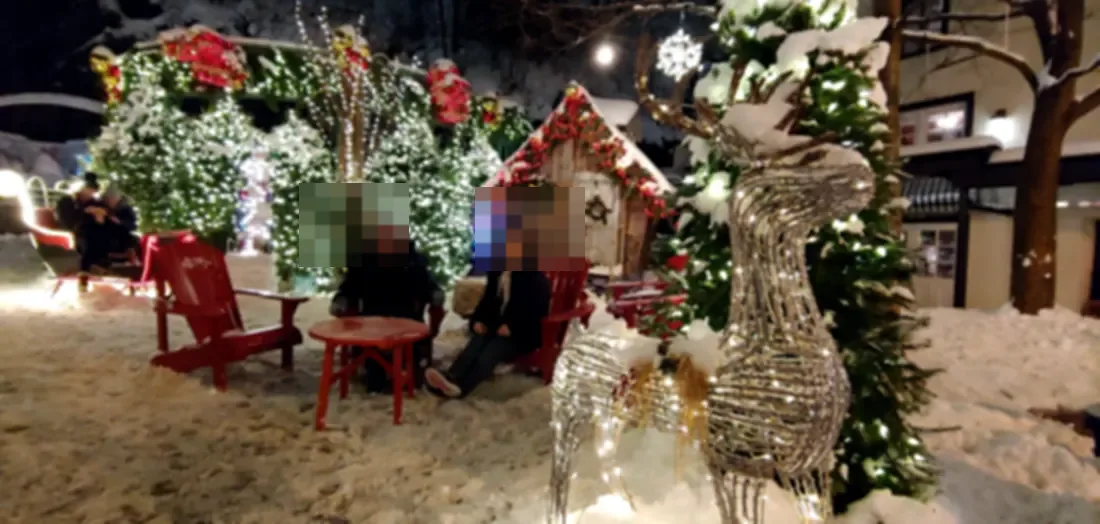
📸 Photo Stops Everywhere — Sleighs, Reindeer and Snowflake Lights
In winter, the Petit-Champlain area sprinkles photo installations along the street: a glowing reindeer sculpture, red Adirondack chairs, a tiny decorated cabin. They are busy little spots, and for good reason — Québec City’s official tourism board names the stretch from Petit-Champlain to Place-Royale one of the city’s top Christmas-lights routes.
💡 Tip: the prettiest light photos come right after sunset, while there is still a wash of blue in the sky. Shooting without a tripod? Step close to a shop window — the extra light helps keep night shots crisp.
🪜 The Breakneck Steps and the Funicular — Moving Between Two Towns
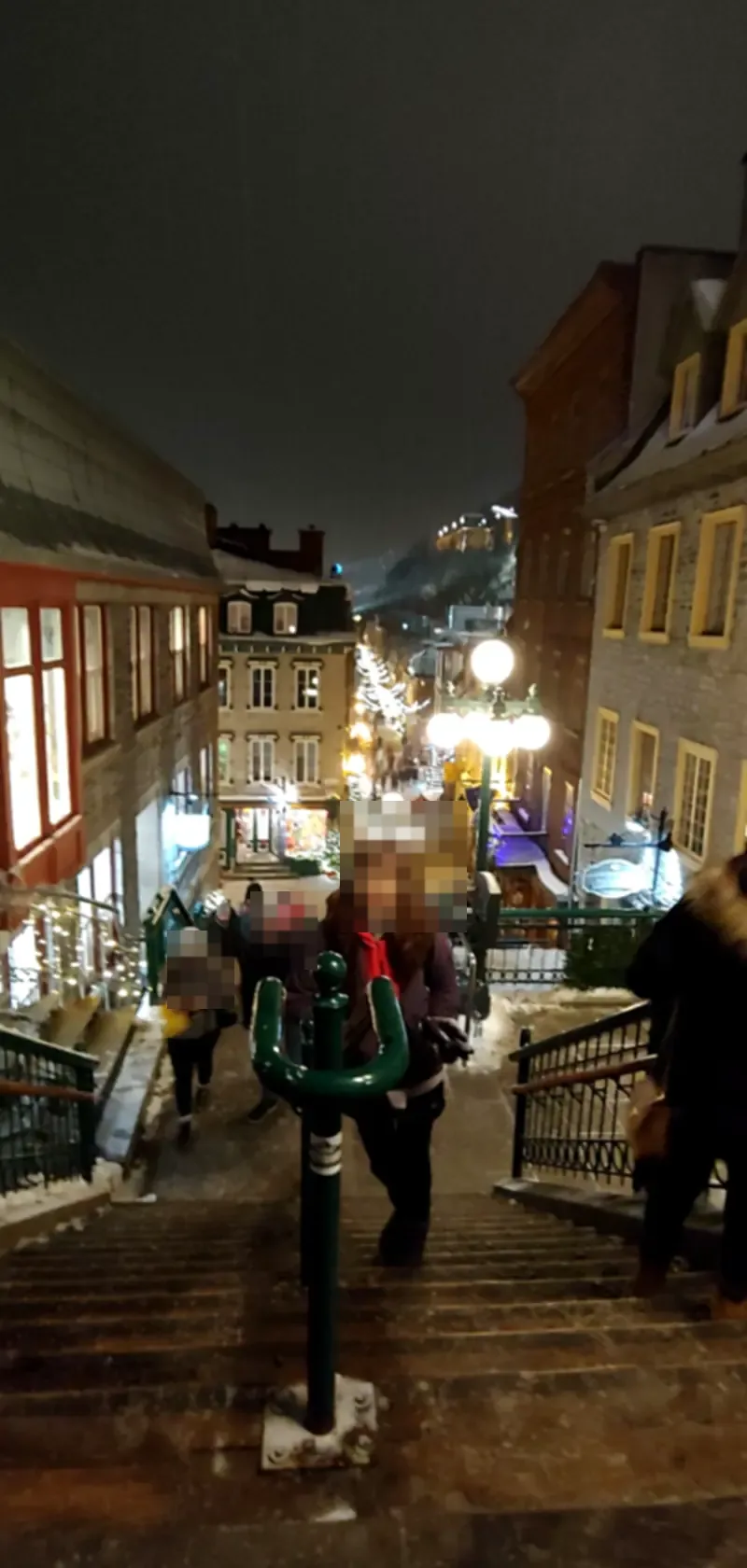
There are two ways up to the Upper Town. The first is the Escalier Casse-Cou — the “Breakneck Steps.” Built in 1635, they are known as the oldest stairway in Québec City. The name warns you honestly: they are steep. But the view back down over Petit-Champlain from the top, like the one in my photo, is the reward.
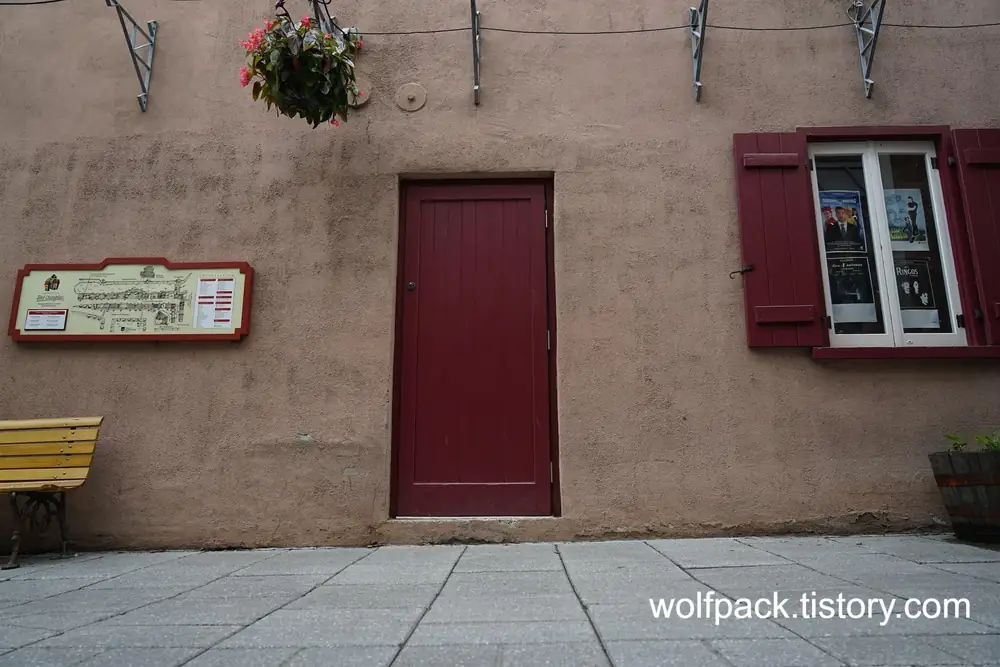
At the bottom of the steps stands a door that Korean visitors simply cannot walk past: the red door from the drama Goblin, the one Kim Shin and Ji Eun-tak step through to arrive in Québec. In real life it is an ordinary emergency exit of a small theatre nearby — yet for a long while, virtually every Korean and Asian traveller passing by stopped in front of it for a photo. Travellers who had never seen the drama would look on, bewildered, and ask what on earth was there.
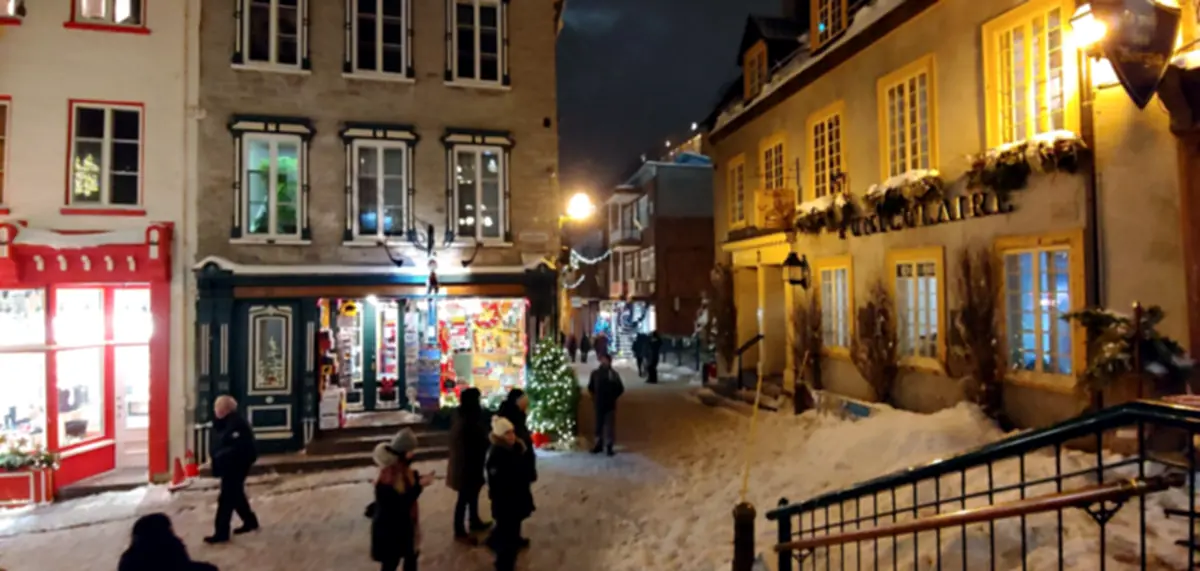
The easier option is the funicular. Running since 1879, it climbs about 64 metres at a 45-degree angle. Its lower station sits inside the Louis Jolliet House on Rue du Petit-Champlain — the building marked “FUNICULAIRE” in my photo — and the top station lands you right beside Dufferin Terrace. When the steps are icy, the funicular is by far the kinder choice. The fare is small, but it changes from time to time, so check the official information before you go.
🏨 Dufferin Terrace and Château Frontenac — The Face of the City
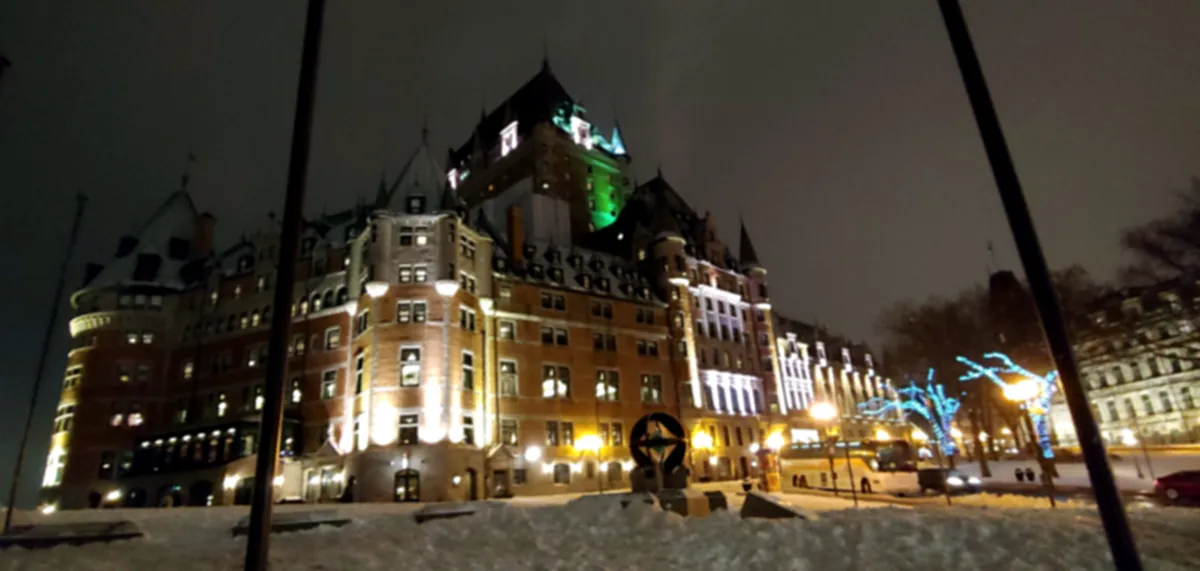
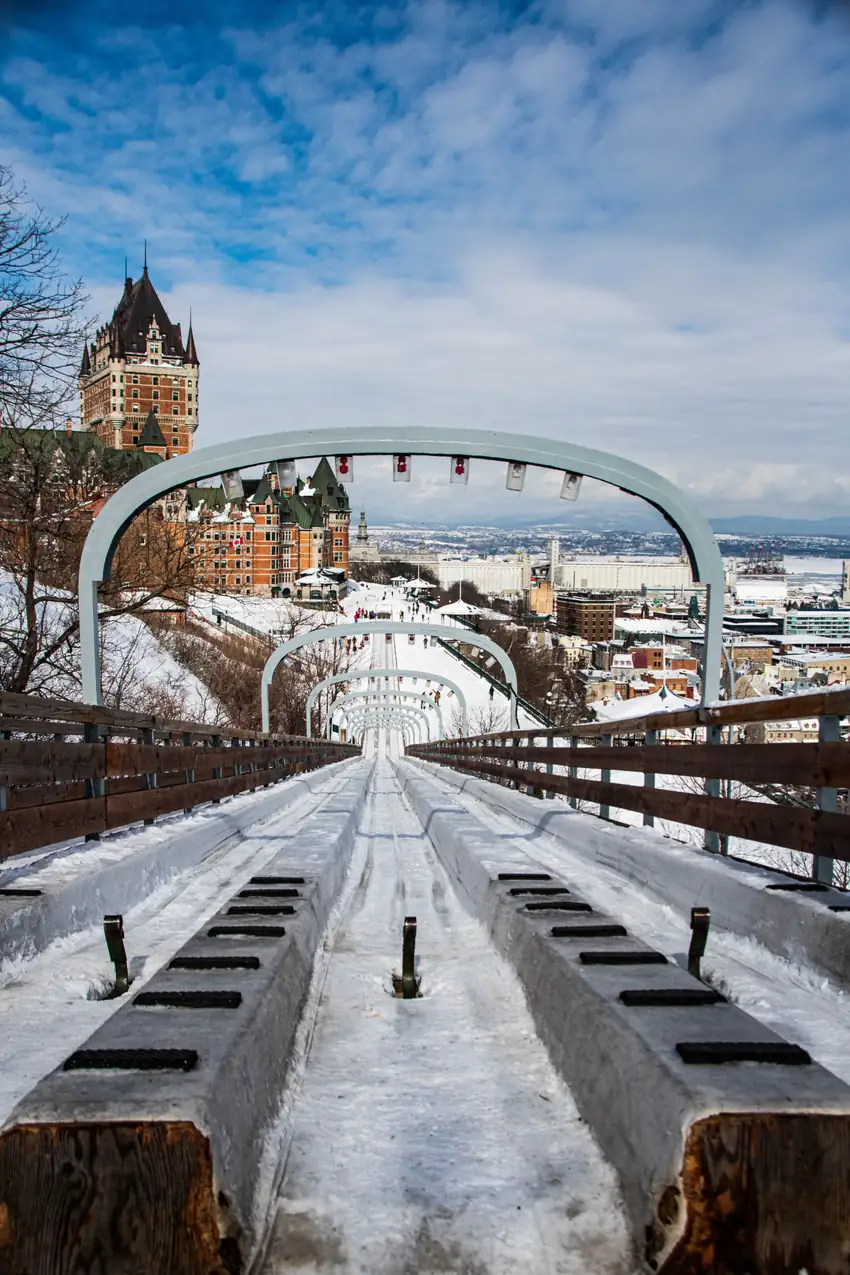
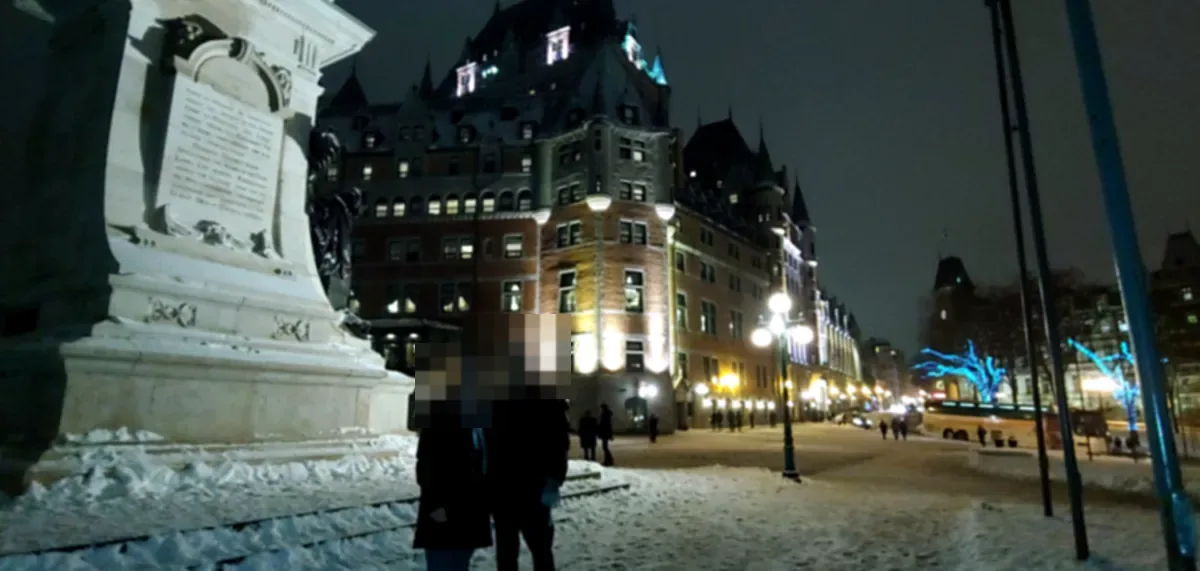
At the top of the cliff waits the face of Québec City: Fairmont Le Château Frontenac. Opened in 1893, this château-style railway hotel was built by the Canadian Pacific Railway to a design by American architect Bruce Price, and named for the Count of Frontenac, a 17th-century governor of New France. It is often called the most photographed hotel in the world — and lit up at night above the snow, it earns the title. My photo shows it from the Dufferin Terrace side.
Running along the cliff edge in front of the hotel is Dufferin Terrace (Terrasse Dufferin), a wooden boardwalk inaugurated in 1879 and about 430 metres long. Below it open the St. Lawrence River and the shores of Lévis across the water. At the terrace’s northern end stands the monument to Samuel de Champlain, the city’s founder. The statue, by sculptor Paul Chevré, was erected in 1898 — and the classic shot here frames the Château rising behind the monument’s inscribed base, exactly as in my photo.
In winter the terrace gains one more landmark: the Au 1884 toboggan slide, set up beside the Château Frontenac. Running since 1884, it sends wooden toboggans down three icy lanes at up to 70 km/h. It usually operates from mid-December to mid-March, weather permitting — an easy addition to a winter night walk. This is no mere lookout point; there is more to do here than you would expect.
🗺️ Place d’Armes and Rue Saint-Jean — The Rest of the Upper Town
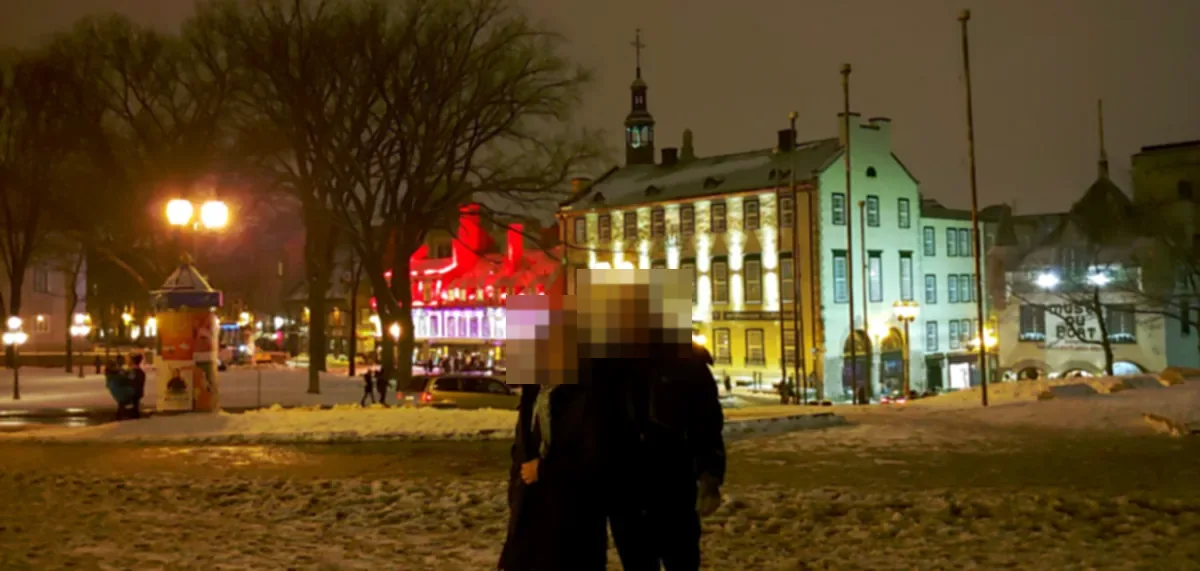
The square in front of the Château is Place d’Armes. In my photo, the building signed “INFORMATION TOURISTIQUE” is the tourist information office, and beside it stands the Musée du Fort. On winter nights, the building across the square glows red — a completely different mood from the Château postcards.
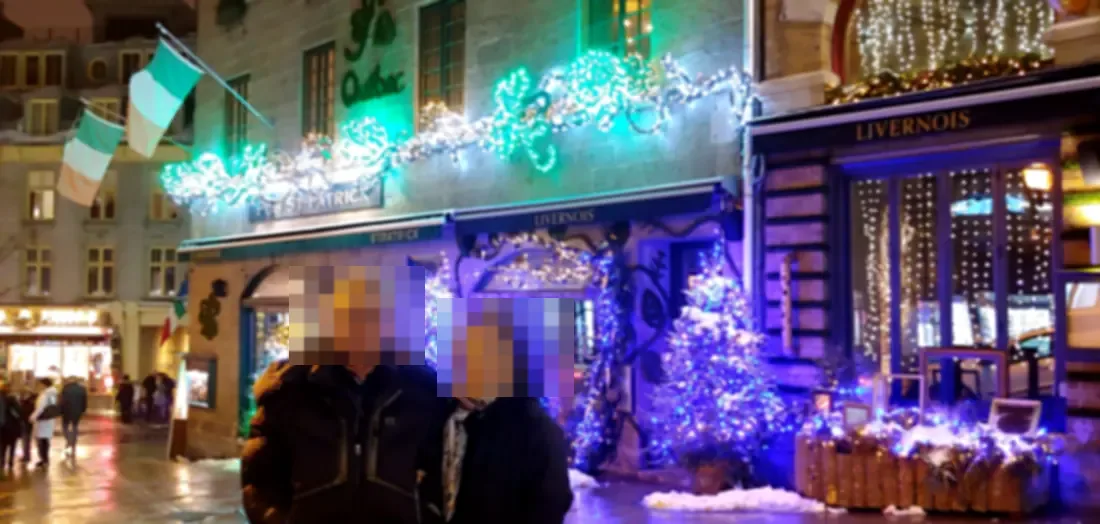
Don’t skip Rue Saint-Jean, the Upper Town’s main commercial street, lined with restaurants, pubs and shops. The star of my photo is Pub Saint-Patrick, an Irish pub dressed in green lights; right next door is the restaurant Livernois. It makes an easy, lively place to end an old-town walk with dinner.
| Place | Where | Why stop |
|---|---|---|
| Rue du Petit-Champlain | Lower Town, foot of the cliff | Among North America’s oldest commercial streets; winter lights |
| Breakneck Steps | Top of Petit-Champlain | Built 1635 — the city’s oldest stairway |
| Funicular | Lower station: Louis Jolliet House | Running since 1879; lands beside Dufferin Terrace |
| Dufferin Terrace | In front of Château Frontenac | ~430 m boardwalk with river views |
| Château Frontenac | Upper Town, atop Cap Diamant | Château-style hotel opened in 1893 |
| Place d’Armes | Square by the Château | Tourist information office · Musée du Fort |
| Rue Saint-Jean | Upper Town centre | Restaurants and pubs along a lively street |
📍 View Old Québec on Google Maps
My recommended way to do it: by day, take your time with the Notre-Dame Basilica-Cathedral — home to the only Holy Door in North America — the church below the steps, and the old town’s historic sites scattered through the streets. Then, once the sun goes down, stroll the night streets glowing with Christmas atmosphere. The lights stay beautiful all winter, long after Christmas — well worth coming just for an evening walk.
Planning a longer Québec road trip? Pair this walk with my Verger Labonté apple orchard day trip and the Oka National Park guide — different seasons, same pleasure of walking Québec at street level.
🎭 Going in Winter — Carnival Season and Dressing for It
Nothing heats up a Québec City winter like the Carnaval de Québec. First held in 1894 and an annual tradition since 1955, it is one of the largest winter carnivals in the world, fronted by Bonhomme, its snowman mascot. Expect an ice palace, night parades and the famous canoe race across the frozen St. Lawrence. The next edition runs February 5–14, 2027, according to the official tourism board — see the official Carnaval page for the program. Visiting over the holidays instead? The old town’s decorations and Christmas-market atmosphere are reason enough on their own (market dates change yearly, so confirm before you go).
Dress one layer warmer than you would for Montréal. The old town means snowy cobblestones and icy stairs, so winter boots with real grip are close to essential — and on Dufferin Terrace, where the river wind hits you head-on, a scarf and gloves decide how long your walk lasts.
❓ Frequently Asked Questions
Q. When is the best time to visit Québec City in winter?
A. The old town’s Christmas decorations and lights peak from late November to mid-January, and the Carnaval de Québec runs from late January to mid-February. For snowy streets plus lights together, aim for December to February.
Q. How do I get from Petit-Champlain up to Château Frontenac?
A. Climb the Breakneck Steps on foot, or ride the funicular (running since 1879), which drops you right beside Dufferin Terrace. In icy weather, the funicular is the safer, easier choice.
Q. How far is Québec City from Montréal?
A. Roughly three hours by car. VIA Rail trains also make the trip, which pairs nicely with a walking-only visit to the old town if you’d rather skip winter driving.
Q. Is it a good walk with kids?
A. Yes — the neighbourhood is built around photo stops and light displays. Just plan for serious cold after dark and slippery cobblestones and steps; warm layers and grippy footwear matter even more for kids.
※ Festival dates, funicular fares and other changeable details were checked against official information in November 2026. Please re-check official channels before your visit.
Happy winter wandering 💛
— J.
When is the best time to visit Québec City in winter?
The old town’s Christmas decorations and lights peak from late November to mid-January, and the Carnaval de Québec runs from late January to mid-February. For snowy streets plus lights together, aim for December to February.
How do I get from Petit-Champlain up to Château Frontenac?
Climb the Breakneck Steps on foot, or ride the funicular (running since 1879), which drops you right beside Dufferin Terrace. In icy weather, the funicular is the safer, easier choice.
How far is Québec City from Montréal?
Roughly three hours by car. VIA Rail trains also make the trip, which pairs nicely with a walking-only visit to the old town if you’d rather skip winter driving.
Is it a good walk with kids?
Yes — the neighbourhood is built around photo stops and light displays. Just plan for serious cold after dark and slippery cobblestones and steps; warm layers and grippy footwear matter even more for kids.
📚 You May Also Like
- Oka National Park, Done Right — Beach, Glamping, Cycling and Day Trips
- KOA Campgrounds Explained — Tiers, KOA Rewards, and My Go-To Near Montreal
- Canada National Parks Pass Guide — Discovery Pass Prices & How It Compares to Sépaq
Get the Free Canada Savings Checklist
Join the newsletter — get the free PDF checklist and weekly Canada savings tips in your inbox.
Read Next
Some links in this post are referral or affiliate links. If you sign up or buy through them, I may receive a bonus or commission at no extra cost to you. It helps keep this blog running — thank you!