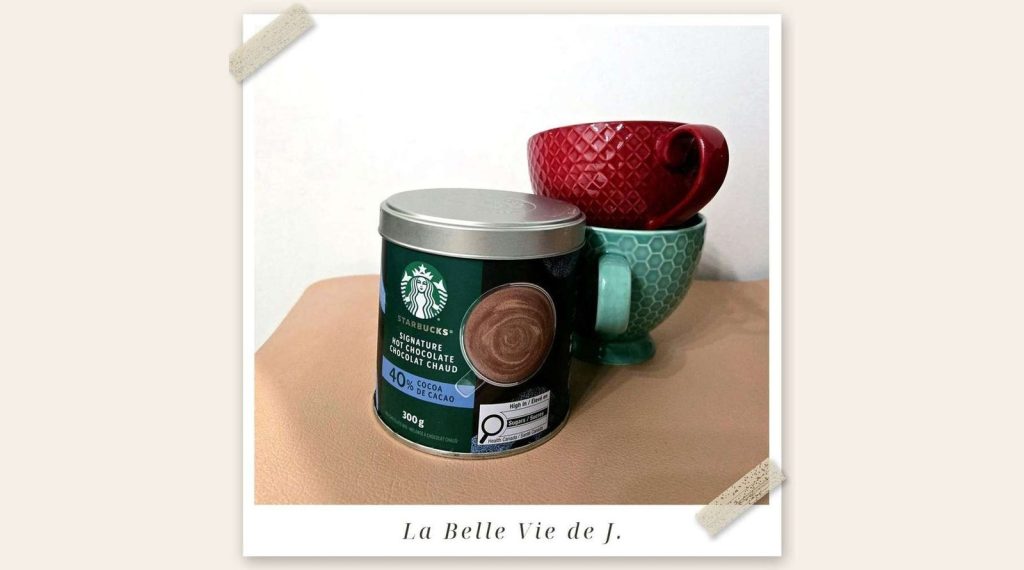
Starbucks Signature Hot Chocolate Review: Honest Label Check
Last updated: November 6, 2026
Some evenings in Montréal, when the light goes at four and the rain won’t quit, coffee feels like the wrong answer. That’s when this tin comes out. This is the hot chocolate I actually keep at home and actually drink — my own money, my own mug. So before I tell you I like it, let me do what I always do: turn the tin around and read the label out loud.
🌿 Quick Take
- The hot chocolate that actually lives in my kitchen — Starbucks Signature, 40% cocoa, 300 g tin
- The label, honestly: ingredient #1 is powdered sugar, 17 g of sugar per mug — a dessert drink, and it says so
- Taste: moderately sweet with a deeper cocoa flavour than Carnation — a coffee lover’s profile
- Too sweet as written? Three spoons instead of four, or stretch it with unsweetened cocoa
🔍 What’s in the Tin
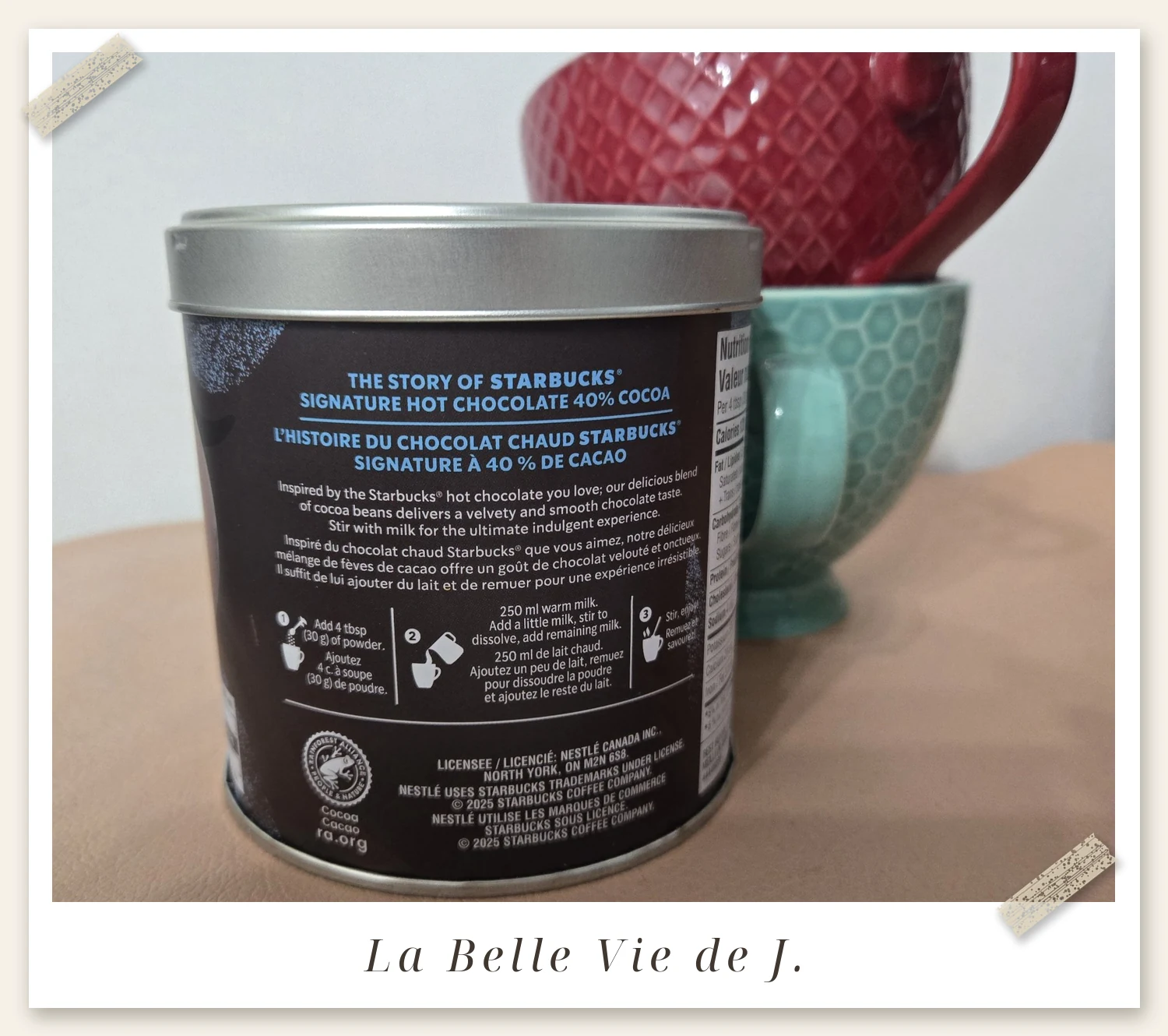
Starbucks Signature Hot Chocolate, 40% cocoa, 300 g tin. It’s made under licence by Nestlé Canada, and the cocoa is Rainforest Alliance certified — a real point in its favour. Official website
Making it is as simple as it gets: 4 tablespoons of powder, 250 ml of warm milk, stir. Done.
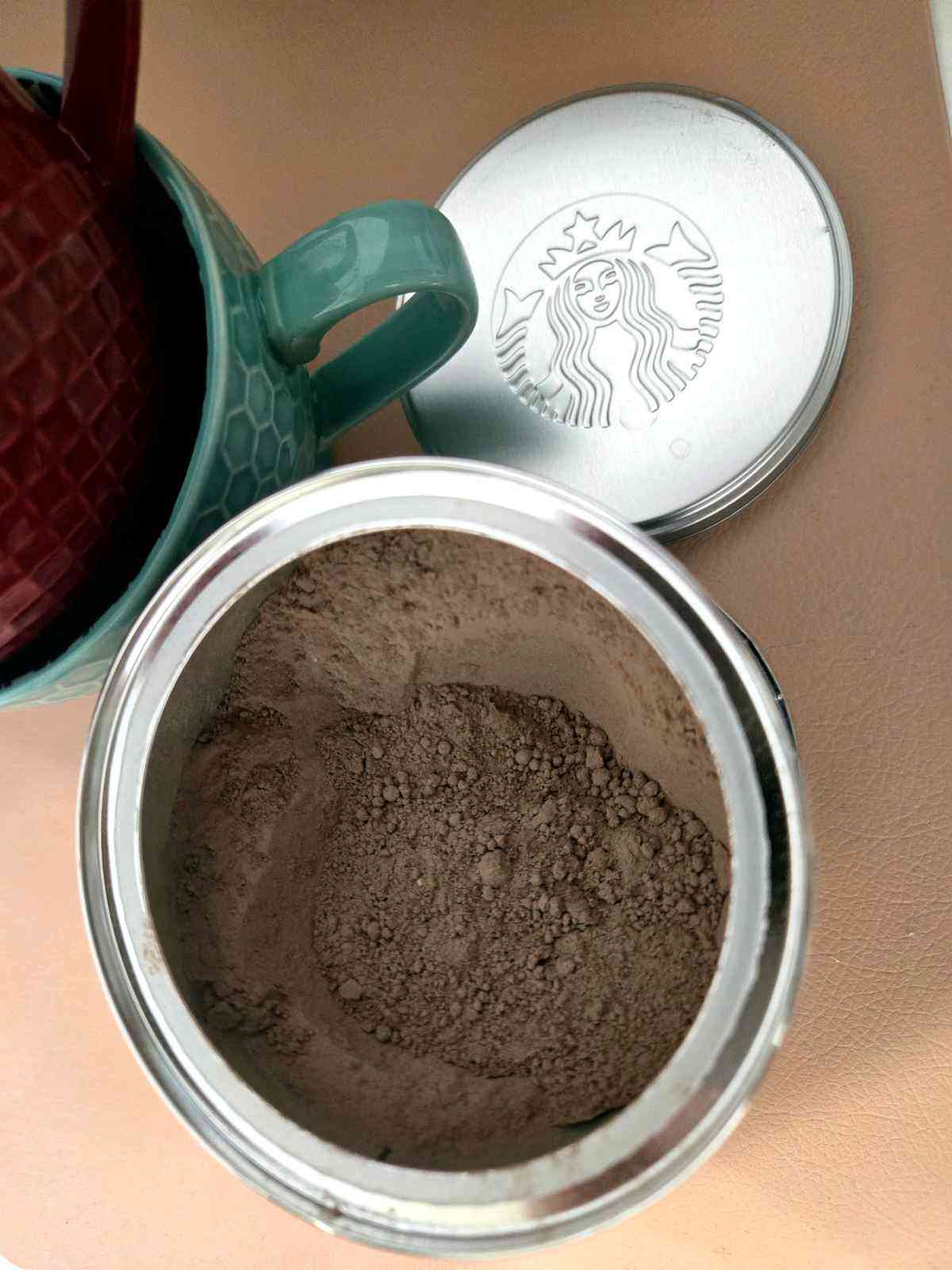
🧾 The Honest Label Check
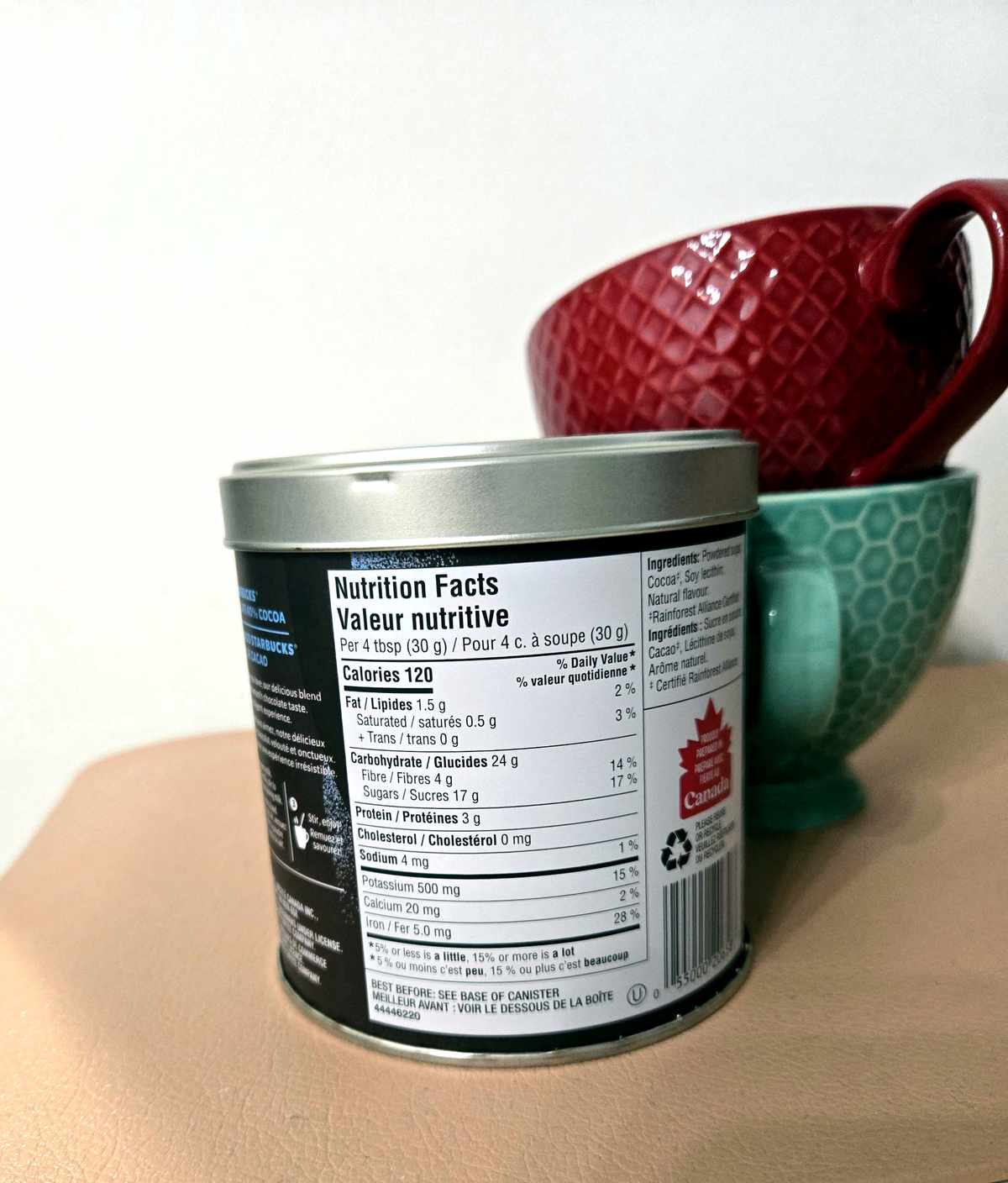
Here’s the part most reviews skip. Per 4 tablespoons (30 g): 120 calories, 17 g of sugar, 4 g of fibre, 3 g of protein, potassium 500 mg (15% of your day), and iron 5.0 mg (28%). That potassium and iron are genuinely decent for a treat drink.
Now the not-so-pretty part — and I’d rather tell you myself: the first ingredient on the list is powdered sugar. Not cocoa. Sugar. Health Canada’s front-of-package label says it plainly too: “High in sugars.” So yes, this is a dessert drink, not a health drink, and in my cinnamon-or-cocoa guide I warned about exactly this kind of mix. I still drink it — but I drink it knowing what it is.
The good: real cocoa flavour base (a cocoa share higher than many mixes), Rainforest Alliance certified cocoa, simple ingredient list, potassium and iron numbers that aren’t nothing.
The not-so-good: sugar is ingredient #1 — a full dessert-level load in every mug — and it’s sweetened for you — you can’t unsweeten a mix.
Taste? Moderately sweet — properly sweet, but not a sugar bomb — with a noticeably deeper cocoa flavour than the Carnation hot chocolate mix I grew up on. And as someone who loves coffee, that deeper, less-sweet profile lands just right for me: it drinks closer to the cocoa side of a mocha than to a candy bar.
🥄 How I Make It Less Sweet
- Three spoons, not four. The tin says four tablespoons; three still tastes like hot chocolate, with noticeably less sugar.
- Stretch it with unsweetened cocoa. Two spoons of the mix + one spoon of plain unsweetened cocoa powder = deeper chocolate, less sweet.
- Milk matters. Warm milk (not water) carries the flavour, so the smaller amount still feels rich.

🧮 The Arithmetic of One Tin
Run the numbers and the tin reads differently. It’s a 300 g tin and one serving is 30 g (4 tablespoons), so made as directed you get exactly 10 mugs. Cut it to my 3 tablespoons (about 22.5 g) and the same tin stretches to roughly 13 mugs, while the sugar per mug drops from 17 g to about 12.8 g — nearly a quarter of the sugar gone, with the flavour density intact. That’s the balance point that keeps this tin in my kitchen. The honest flip side: label numbers like potassium 500 mg and iron 5.0 mg are per serving too, so a smaller serving trims those by the same proportion.
The same numbers, as a table:
| Measure | Number |
|---|---|
| The tin | 300 g |
| One serving, as directed | 30 g (4 tbsp) = 10 mugs |
| My method | 3 tbsp (about 22.5 g) = roughly 13 mugs |
| Sugar per mug | 17 g → about 12.8 g |
| Per serving | 120 kcal · potassium 500 mg · iron 5.0 mg |
👥 Who I’d Recommend It To — and Who I’d Not
Try it if: you want a café-style hot chocolate at home without any fuss, you like your drinks properly sweet, you’re a coffee lover who prefers deeper flavours over sugary ones, or you’re stocking the cupboard for cold evenings and guests.
Skip it if: you’re watching sugar for diabetes or diet reasons (the sugar in each mug adds up fast), you prefer dark, bitter chocolate, or you sweeten your own drinks — plain unsweetened cocoa powder gives you the wheel.
✅ Before You Buy: Five Checks on the Back of the Tin
- Read the first ingredient, not the front of the tin — on this one, it’s powdered sugar.
- Find the sugar grams per serving: that number, not the word “signature,” decides nightly habit or occasional dessert.
- Check that the cocoa percentage is printed — this one prints 40%, and the cocoa carries the flavour.
- Look for Health Canada’s “High in sugars” front-of-package mark — and believe it.
- Do the spoon math before you judge the tin: three spoons stretch it to roughly 13 mugs.
💛 My Verdict
This tin stays in my kitchen because it’s honest comfort: easy, warm, and sweet in the way hot chocolate is supposed to be — as long as you read it as dessert, not as a daily health habit. Read the label, adjust the spoons, and enjoy it on the dark evenings. That’s exactly what I do.
More cozy-cup reading: my cinnamon & cocoa guide for dark Montréal days.
Before you go, you might also find my guides on Darphin Intral Rescue Serum Review and Midea Neo Air Fryer Toaster Oven Review useful.
One more worth reading: my notes on LE LABO Rose 31 Shower Gel.
☕ What “40% Cocoa” Actually Means
The cocoa percentage on a hot chocolate mix matters more than people think. It tells you what share of the powder is cocoa, and many mixes on the shelf are mostly sugar with cocoa at flavouring level. At this level, the weight tips toward the cocoa side, which is why this drinks bittersweet-supported rather than just sweet. For contrast: European café-style hot chocolate is made by melting actual dark chocolate into milk — far thicker and richer — while North American instant mixes are cocoa-powder based, lighter and faster, with the depth set by that cocoa share. That’s exactly why this tin tastes deeper than Carnation, and also why you shouldn’t expect the bitterness of real dark chocolate from it.
🫙 Storing the Tin Matters More Than You’d Think
Cocoa powder drinks in moisture and odours. Keep the lid sealed tight in a cool, dry cupboard — not beside the stove where temperatures swing, and not above the sink where the air is damp. And never dip a wet spoon into the tin: moisture clumps the powder and dulls the aroma fast. Scoop with a dry spoon and close it right away, and the last mug tastes like the first. After opening, judge by aroma rather than the printed date; once the cocoa smell fades, the powder does better in baking than in the mug. One more serving note: this tin is a good one to bring out for guests. It’s quick to make, so the conversation never stalls, and my lighter method lets you tune each mug — three spoons for rich, two and a half for light.
🏷️ How to Read Any Hot-Chocolate Label in 30 Seconds
Everything I did with this tin works on any mix on the shelf. Four checks, in order:
- Read the first ingredient, not the front of the tin. Ingredients are listed by weight, so whatever comes first is what you’re mostly drinking. Here, that’s powdered sugar — the tin tells on itself if you turn it around.
- Find the sugar grams per serving. This one carries the full sugar load you saw on its label above. That number, not the word “signature,” decides whether it’s a nightly habit or an occasional dessert.
- Check the cocoa percentage. At this tin’s percentage, the cocoa actually carries the flavour. A mix that won’t print a percentage is usually asking the sugar to do the talking.
- Look for the front-of-package mark. Health Canada’s “High in sugars” label is printed right on this tin. When a product carries it, believe it — and portion accordingly, the way I do with three spoons.
📆 A Week of Mugs, in Sugar
One mug feels small; a week of mugs is the honest unit. Made as directed — four tablespoons, 120 calories at the label’s sugar count — a mug every evening adds up to 119 g of sugar and 840 calories a week, before anything else you ate that day. Switch to my three-spoon version and the same week lands at roughly 90 g of sugar and about 90 calories a mug, because three spoons is three-quarters of the serving the label describes. Nothing about the ritual changes: same tin, same warm milk, same dark-evening comfort. The arithmetic is the whole point of this review — a dessert you’ve measured is a dessert you can keep.
📚 You May Also Like
- MINIX P100 Review: The 100W Charger My Husband Picked
- 6 Best Cashback Sites 2026 | Get Paid Twice on Every Purchase
- Au Kouing Amann: The Giant Kouign-Amann Cake That Became My #1 Montreal Bakery (2026)
❓ Frequently Asked Questions
How much cocoa is in the Starbucks Signature Hot Chocolate mix?
40% cocoa — I confirmed it on the actual product label. It’s a moderately sweet, deeper-tasting mix rather than an intense dark one.
How many calories are in Starbucks Signature Hot Chocolate mix?
120 kcal per 4 tablespoons, with the sugar count on the 300 g tin’s label. It makes a rich cup without being overly sweet.
How does it compare to Carnation hot chocolate?
Deeper and a little more grown-up — moderately sweet, with more cocoa depth than Carnation’s mix, which tastes lighter and sweeter to me.
— J.
Get the Free Canada Savings Checklist
Join the newsletter — get the free PDF checklist and weekly Canada savings tips in your inbox.
Read Next

How do you save on this? Share your own tip in the comments — I'd love to hear it!
Some links in this post are referral or affiliate links. If you sign up or buy through them, I may receive a bonus or commission at no extra cost to you. It helps keep this blog running — thank you!