
Cinnamon Coffee for Dark Days: A Cozy Montréal Mood Ritual
Last updated: November 5, 2026
Bonjour! It’s J. — nine years in Canada, and Montréal’s dark season still gets to me every single year. What gets me through it is a tiny ritual — cinnamon in coffee.
You know the stretch I’m talking about. By mid-October, the rain taps on the window more days than not, the sun gives up before supper, and somewhere around 4 p.m. the whole apartment feels grey — including me. My hands are cold, my shoulders are up around my ears, and I catch myself standing in front of the fridge looking for something sweet I don’t actually want.
I’ve learned that fighting this season head-on doesn’t work. What works is smaller: warm cup, warm light, warm hands. And my favourite of all of them costs almost nothing — a pinch of cinnamon in my coffee. (If cinnamon isn’t your flavour, stay with me: there’s a cocoa track further down, and it may suit you even better.)
🌿 Quick Take
- A pinch of cinnamon makes coffee taste sweeter and warmer — many of us can then skip or cut the sugar.
- Cinnamon has real research behind it, but the effects are modest. It is a spice, not a medicine.
- For a daily habit, Ceylon cinnamon is the safer pick (far less coumarin than common cassia).
- Not a cinnamon person? Take the cocoa track instead — real unsweetened cocoa, in your coffee mocha-style or as a proper hot cocoa, with only a fraction of coffee’s caffeine.
- Health Canada’s caffeine guide: up to 400 mg/day for healthy adults, 300 mg/day in pregnancy.
- Coffee isn’t for everyone — ginger tea, golden milk, hot cocoa, and the right herbal tea for your body can do the same cozy job.
☕ 1. Why Cinnamon in Coffee Just Feels Good
Part of it is pure comfort. Cinnamon’s aroma is the smell of baking, holidays, and every café that ever made you slow down — your brain files it under “safe and warm” before you’ve taken a sip. The flavour does something clever, too: cinnamon is naturally sweet-tasting, so a coffee dusted with it often feels sweeter, and many people find they can drop a spoon of sugar without missing it. If you’re watching your weight or your blood sugar, that swap — spice instead of syrup — quietly adds up over a whole winter.
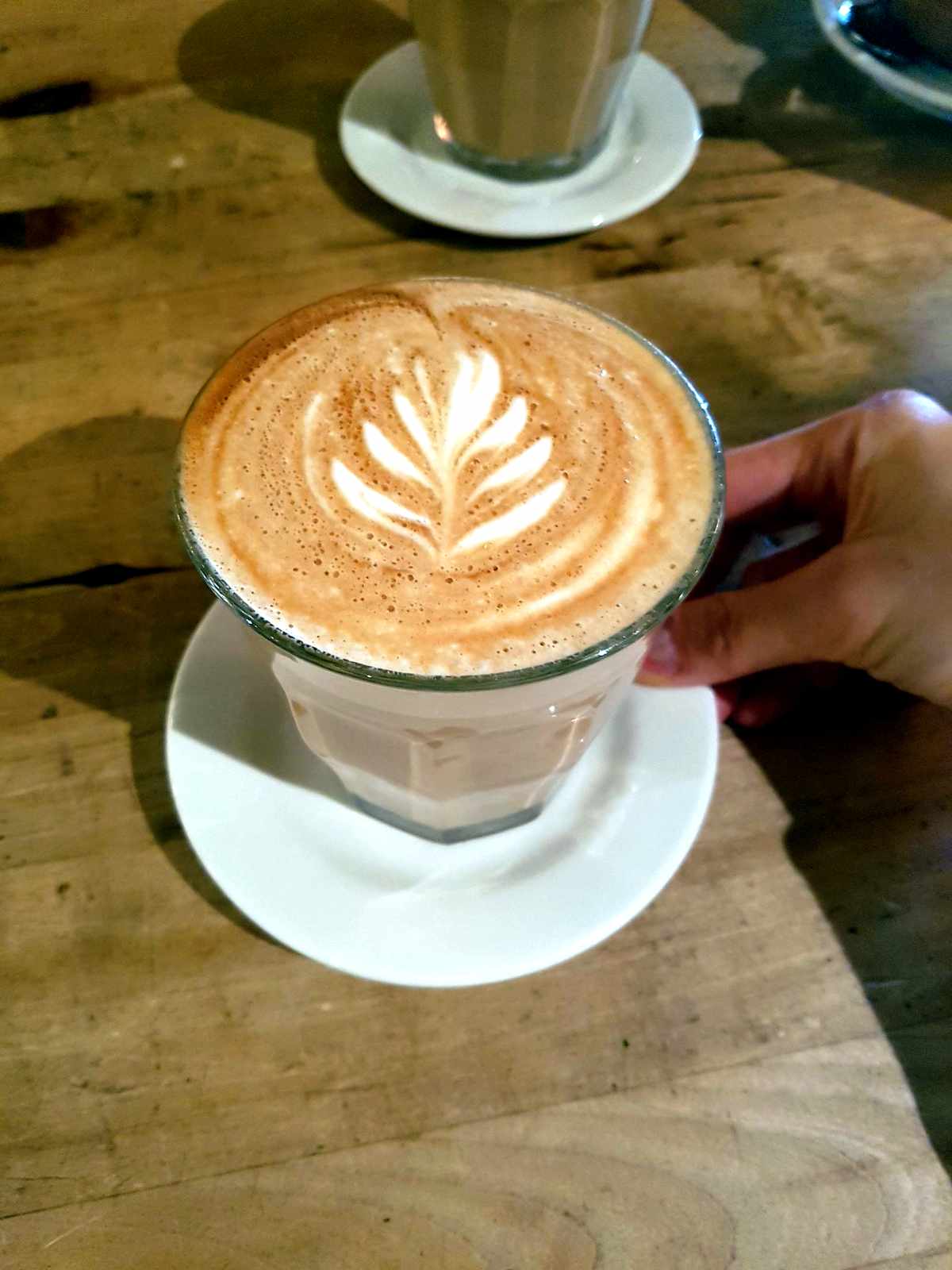
Then there’s the warmth itself. A hot drink raises your comfort in a cold apartment in a way that’s hard to explain and easy to feel. Add the gentle lift of caffeine, and that grey 4 p.m. slump becomes… manageable. Not magical. Just softer around the edges.
My way: about a quarter teaspoon of cinnamon whisked into a mug of coffee, sometimes with a drop of milk. Start with a pinch — too much and it turns gritty and bitter.
🌿 2. What Cinnamon Can (and Can’t) Do — Honestly
Cinnamon is one of the most studied kitchen spices, especially for blood sugar, so let’s be straight about what the research actually says.
What’s known: Several meta-analyses of clinical trials found that cinnamon was associated with modest reductions in fasting blood sugar in people with type 2 diabetes. Results for HbA1c (the 3-month average) are mixed — some analyses show a small improvement, others are inconclusive. In plain words: the effect, if any, is small and varies a lot from person to person. Cinnamon is not a substitute for medication, ever.
Key reference: Allen et al. (2013), Annals of Family Medicine — cinnamon use in type 2 diabetes: an updated systematic review and meta-analysis.
Ceylon vs. cassia — the part that actually matters for a daily habit: Most supermarket cinnamon is cassia, which is higher in a compound called coumarin. In large amounts over time, coumarin can stress the liver. European food-safety guidance sets a tolerable daily intake of 0.1 mg of coumarin per kg of body weight, and a single teaspoon of cassia powder can use up most of a smaller adult’s daily allowance. Ceylon cinnamon (“true cinnamon”) contains only a trace of coumarin by comparison, which is why it’s the sensible choice if cinnamon is going into your cup every day. A reasonable kitchen rule: keep cassia to under a teaspoon a day, or switch to Ceylon and don’t worry about it.
Interactions worth knowing: Researchers have also flagged that cinnamon’s main compound, cinnamaldehyde, may affect how the body processes some medications, and cassia’s coumarin is a reason for extra care if you take blood thinners (such as warfarin). If you take diabetes medication, treat cinnamon as a food, not a supplement — concentrated doses could, in theory, push blood sugar lower than expected alongside your medication. Normal cooking amounts are a different story from capsules and extracts.
🩺 3. Who Coffee + Cinnamon Suits — and Who Should Be Careful
| Your situation | Coffee + cinnamon? | What to keep in mind |
|---|---|---|
| High blood pressure | Enjoy, with awareness | Caffeine can raise blood pressure temporarily (for up to a few hours, mainly in people who don’t drink it regularly). Health Canada’s ceiling for healthy adults is 400 mg of caffeine a day — roughly 4 cups of brewed coffee. If your pressure is uncontrolled, ask your doctor what your personal limit should be. |
| Low blood pressure / dizzy spells | Don’t self-treat with coffee | Caffeine’s lift is short-lived and unreliable. If you often feel faint, that’s a conversation for a clinician, not an extra espresso. |
| Diabetes or pre-diabetes | The cinnamon part may help a little; watch the sugar part | Research suggests modest blood-sugar support from cinnamon, but a sweetened latte will overwhelm it. Unsweetened + cinnamon is the smart version. If you use glucose-lowering medication, don’t add cinnamon supplements without telling your doctor. |
| Taking blood thinners | Culinary pinch: usually fine; daily heaping spoonfuls: ask first | Cassia cinnamon’s coumarin is the concern at high, daily doses. Ceylon is the lower-risk option; mention any daily spice habit to your pharmacist. |
| Pregnant or breastfeeding | Keep caffeine ≤ 300 mg/day | That’s Health Canada’s guidance (about two 8 oz cups of coffee). Small culinary amounts of cinnamon are generally considered fine; avoid cinnamon supplements and essential oils unless your provider says otherwise. |
| Insomnia or anxiety | Morning only | Caffeine can still disturb sleep when it’s consumed within about 6 hours of bedtime — for many of us, an early-afternoon cutoff works better. If coffee makes you jittery or wired, the decaf and tea options below are genuinely just as cozy. |
🍫 4. The Cocoa Track — and Other Warming Drinks When Coffee Isn’t Your Friend
The ritual matters more than the caffeine. And for some of us — cinnamon gives you a headache, or its flavour just isn’t your thing, or you’d rather stay on the careful side of the cassia question — the answer is cocoa. It deserves more than a passing mention, so here is the whole second track.
Two ways to drink it:
- Mocha-style, in your coffee: A teaspoon of unsweetened cocoa powder whisked into hot coffee (a splash of milk first helps it blend smoothly). You get cocoa’s deep, roasted flavour and its compounds, while the coffee’s caffeine does the lifting. Taste before you sweeten — cocoa and coffee together already read as “dessert” to your brain.
- Real hot cocoa: Unsweetened cocoa powder in hot milk or oat milk, sweetened by you, to your taste — a teaspoon of sugar or maple syrup, not whatever is hiding in a mix. This is the evening version: warm, rich, and gentle, and it works beautifully with a cinnamon stick stirred in — or completely without one.
Why cocoa feels like a mood food — honestly: Cocoa’s main stimulant is theobromine, a much gentler cousin of caffeine. At the amounts in a normal cup, research suggests it may contribute to chocolate’s pleasant lift — though at high supplement doses it can actually sour mood, so more is not better. Cocoa is also rich in flavanols, plant compounds studied for blood flow and brain effects; small trials are encouraging, but the largest trial of daily cocoa extract didn’t clearly improve overall thinking, and the link between cocoa and lower rates of low mood comes mostly from observational studies — people who eat dark chocolate differ from other people in lots of ways, so nobody can honestly say the cocoa caused the calm. A 2018 review of the research landed where I land: cocoa’s mood effect likely comes from its sensory pleasure — taste, warmth, ritual — together with its plant compounds. And yes, cocoa contains a little caffeine of its own: roughly 10–25 mg in a homemade mug (a coffee-shop hot chocolate can reach about 25 mg; a packet mix, around 5 mg), versus about 95 mg in a cup of coffee. Low, not zero — worth knowing if you are very caffeine-sensitive, or counting milligrams in pregnancy.
The mix trap: Pure unsweetened cocoa powder has essentially no sugar — with it, you are in charge of the sweetening. A sweetened hot-chocolate mix is the opposite: sugar is often the first ingredient, and a single serving can hide several teaspoons of it before the milk even goes in. Same cozy cup, completely different drink. If you buy mixes, read the label like it matters — for blood sugar, it does.
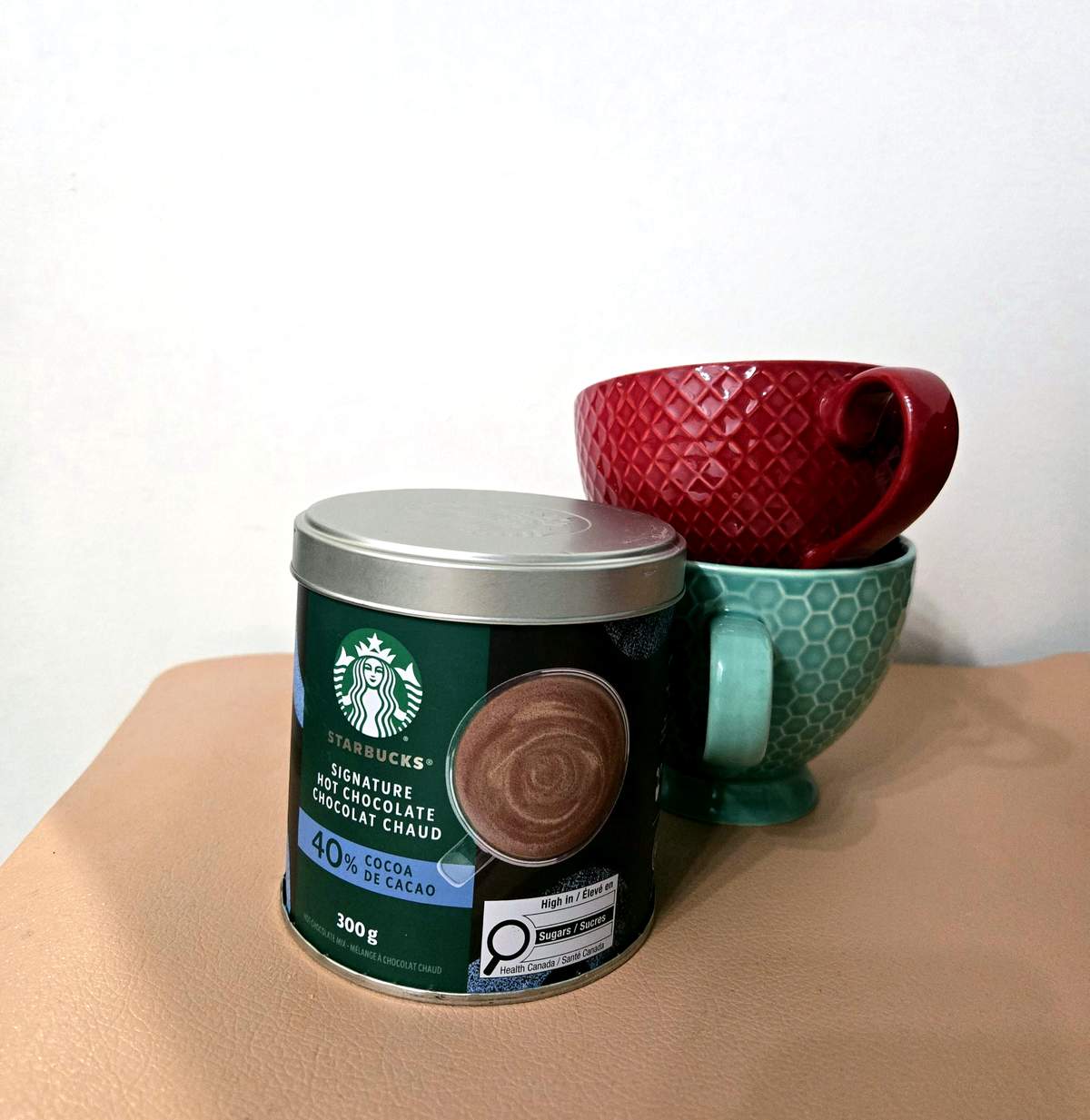
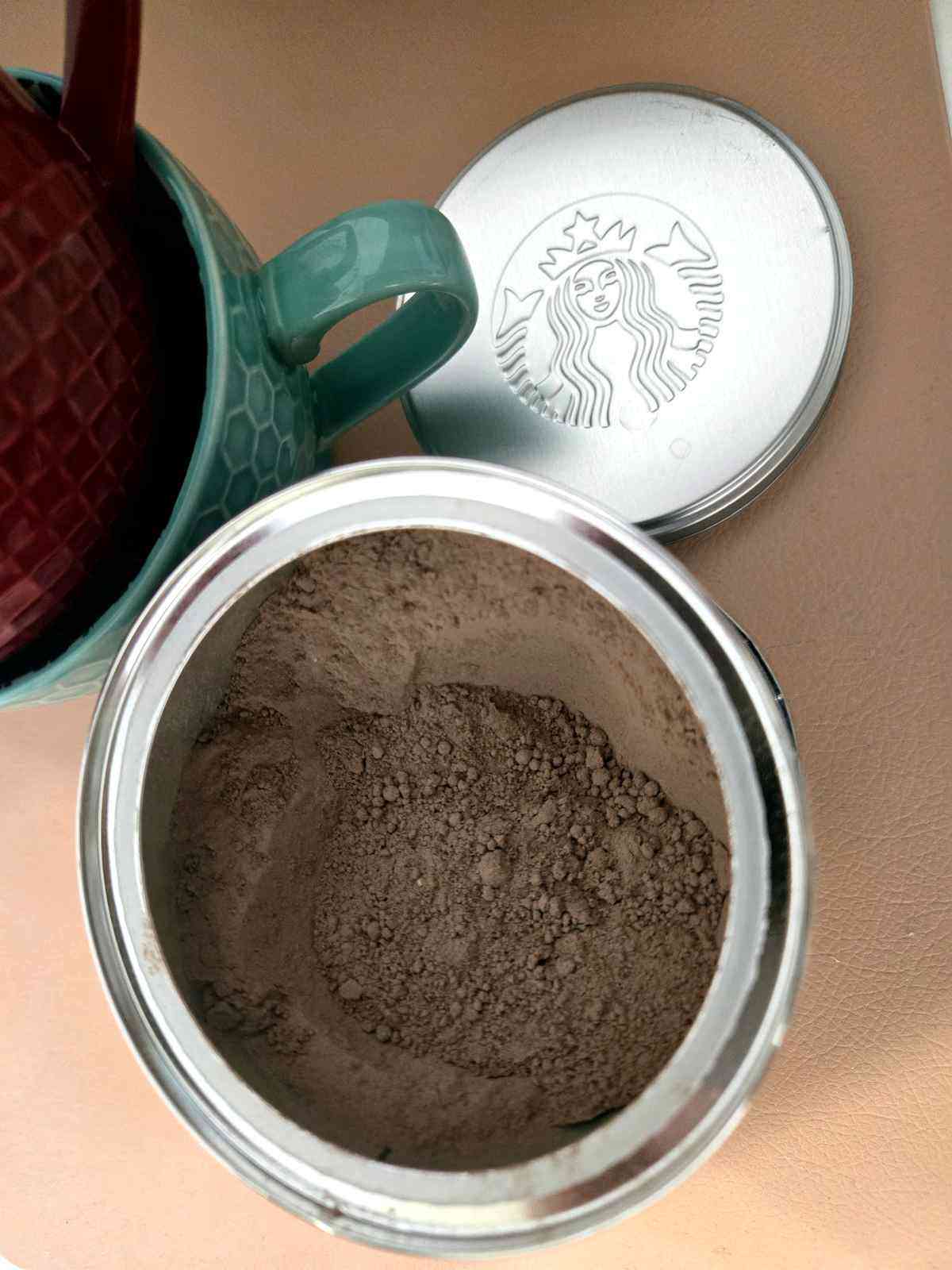
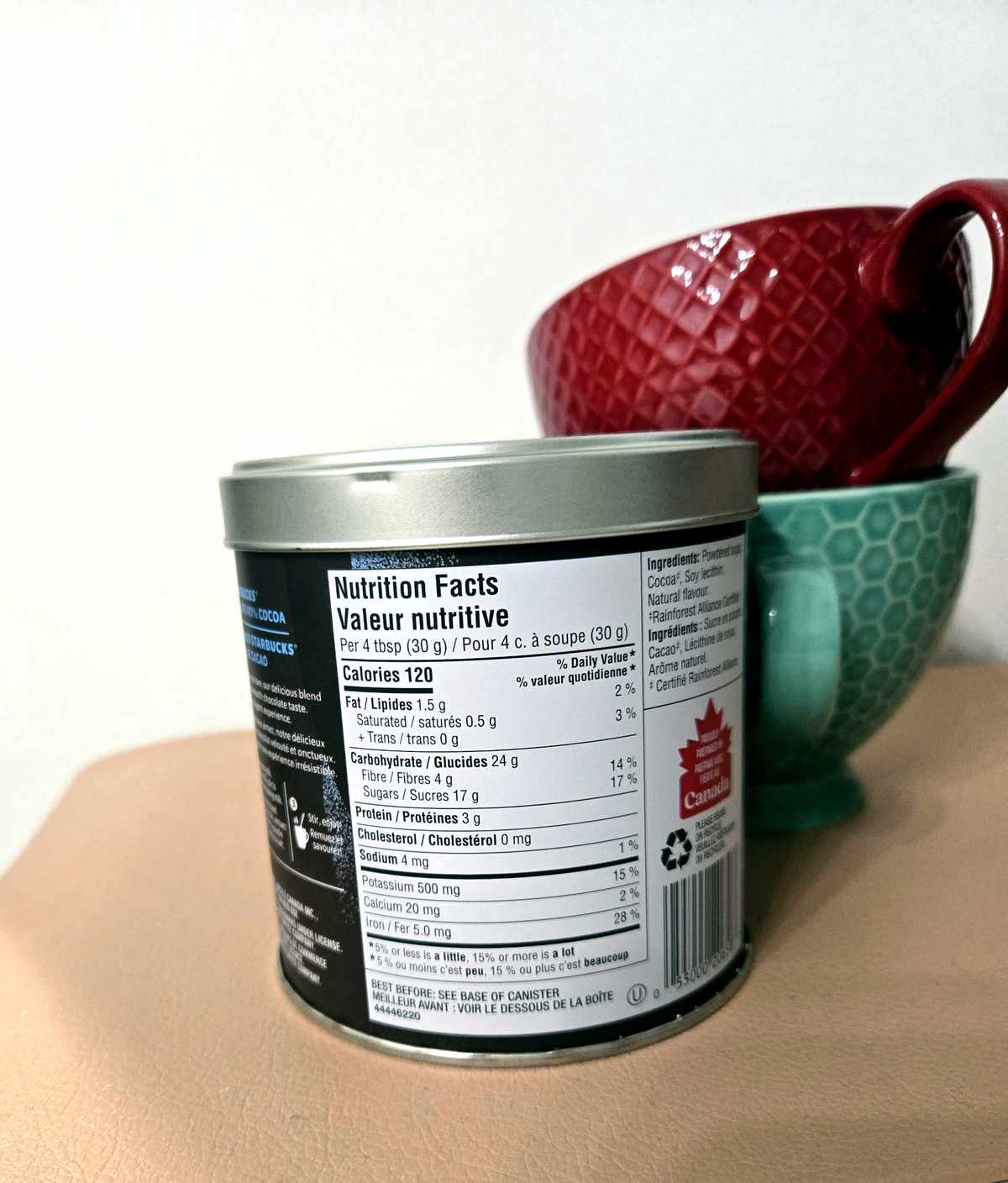
The one I actually keep at home: Full disclosure — my own shelf holds a mix. It’s the Starbucks Signature Hot Chocolate 40% Cocoa (300 g tin, made under licence by Nestlé Canada, with Rainforest Alliance certified cocoa), and yes, I drink it — stirred as the tin suggests, 4 tablespoons into 250 ml of warm milk. And this exact tin is the mix trap in person: the first ingredient is powdered sugar, and Health Canada’s “High in sugars” symbol sits right there on the front. One serving (4 tbsp / 30 g) has 17 g of sugar and 120 calories. To be fair to it, the same serving also brings 4 g of fibre, 3 g of protein, 500 mg of potassium (15% of a day’s worth) and 5.0 mg of iron (28%) — it’s a richer mix than most. I keep it as what it is: a treat, not a health drink. On days I want the ritual with less of the sugar, I drop to 3 tablespoons or stretch the mix with a spoon of unsweetened cocoa powder. Taste? Moderately sweet, with a deeper cocoa flavour than the Carnation mix I grew up on — and as a coffee lover, that deeper, less-sweet profile is exactly my taste. I gave this tin the full label-by-label treatment in my Starbucks Signature Hot Chocolate review — this post is the short version.
Cocoa’s fine print:
- Diabetes or watching sugar: Unsweetened cocoa itself is nearly sugar-free and fits easily. It’s the mixes — and the sugar you add by feel — that decide the cup. Measure it, at least until your hand learns the amount.
- Reflux: Chocolate is a classic heartburn trigger for many people: cocoa’s methylxanthines can relax the valve between the stomach and the esophagus, and US digestive-health guidance lists chocolate among the foods to avoid when reflux is frequent. If that’s you: smaller cups, earlier in the day, never right before lying down.
- Migraine: Some people swear chocolate sets off their migraines; controlled research is genuinely mixed, and a craving for chocolate can itself be an early symptom of an attack rather than its cause. This one is personal — your own food diary beats any article, including this one.
- Kidney stones: Cocoa is naturally high in oxalate — about 65 mg in a cup of hot chocolate. If you’ve had calcium-oxalate stones, treat a daily cocoa habit as something to discuss with your doctor. One helpful trick: drink it with milk, because calcium binds oxalate in the gut before it can reach the kidneys.
And the rest of the non-coffee rotation:
- Golden milk (turmeric latte): Warm milk or oat milk with turmeric, a pinch of black pepper and a little fat — both are traditionally paired with turmeric because they help the body absorb its key compound, curcumin, which has been widely studied for inflammation. Caffeine-free, gently spiced, and the colour alone is a mood lift.
- Fresh ginger tea: Just sliced ginger steeped in hot water. Ginger is well documented for easing nausea and supporting digestion, and its slow, spreading warmth is exactly what cold hands and feet are asking for.
- Masala-style chai: Black tea simmered with cinnamon, ginger, cardamom and cloves. Warming and wonderful — but it is a true tea, so the caffeine is real. How much? That deserves its own little table, right below.
How much caffeine is in tea, really? It depends on the plant, not the flavour. Every “true tea” — black, green, white — comes from the same plant, Camellia sinensis, and that plant makes caffeine. Herbal tisanes aren’t tea leaves at all, so they’re naturally caffeine-free. Per cup (250 ml / 8 oz), as of October 2026:
| Cup | Caffeine (approx.) |
|---|---|
| Brewed coffee (for comparison) | ~135 mg on average (100–170 mg depending on strength) |
| Black tea | 30–50 mg typical, up to ~80 mg brewed strong |
| Masala chai (black-tea based) | The black-tea range above — simmering it strong lands at the top, and the milk doesn’t remove any caffeine |
| Green tea · white tea | ~25–50 mg (white usually at the low end) |
| Rooibos · chamomile · peppermint · lemon balm · hibiscus · ginger | 0 mg |
Sources: Health Canada, “Caffeine in Foods,” and the Dietitians of Canada caffeine fact sheet (based on the Canadian Nutrient File). Leaf amount, water temperature and steep time move any cup up or down — treat these as honest ranges, not label promises.
Two traps worth knowing: café “chai lattes” and bottled teas vary wildly, and some “herbal” blends quietly include tea leaves or yerba mate — a genuinely caffeinated plant, at roughly 80 mg a cup — so if caffeine matters to you, read the ingredient list. And a cinnamon tea you make from the spice alone is caffeine-free; a blended or bottled one may be black tea in disguise.
That’s why my own rotation splits by the clock: chai and the true teas belong to the brighter part of the day, and after mid-afternoon I pour from the zero row — rooibos, fresh ginger, or one of the herbal cups in the next section, matched to your body.
🌼 5. A Tea for Your Body: Matching the Cup to the Constitution
This is the part I wish someone had handed me years ago. Herbal teas are gentle, but they are not all the same — and a few come with fine print.
| If you are… | Try this tea | Why | The fine print |
|---|---|---|---|
| Always cold hands & feet, sluggish circulation | Ginger tea or cinnamon tea | Traditionally “warming” spices; ginger is also well documented for digestion | On blood thinners? Ginger in supplement-level amounts has been flagged in case reports — culinary cups are a different matter, but mention a daily habit to your doctor. |
| Stressed, wired, sleeping badly | Chamomile or lemon balm | Chamomile is the classic wind-down tea; research suggests a small benefit for sleep quality and anxiety. Lemon balm has been studied for calmness, too | Chamomile is in the ragweed/daisy family — skip it if you have that allergy (rarely, reactions can be serious). Lemon balm: check first if you take thyroid medication. |
| Bloated or uncomfortable after meals | Peppermint tea | Peppermint relaxes the digestive tract and is a go-to for bloating and queasiness | Reflux? Skip it. Peppermint also relaxes the muscle between stomach and esophagus, and can make heartburn worse — this is the one everyone gets wrong. |
| Cutting caffeine, or pregnant | Rooibos | Naturally caffeine-free, rich-tasting, full of antioxidants; generally considered a pregnancy-friendly choice | “Herbal” products aren’t tightly regulated — in pregnancy, a quick check with your provider is still the wise move. |
| Watching your blood pressure (on the high side) | Hibiscus tea | In a well-known 6-week trial, 3 cups a day lowered systolic pressure by about 7 points in adults with mildly elevated readings; reviews since then agree the effect is real but modest | Because it can lower pressure: if yours already runs low, or you take blood-pressure medication, treat hibiscus as an active ingredient, not a soft drink — monitor and tell your doctor. Often advised to check before drinking it in pregnancy. |
One tea to pour with respect: licorice. It tastes wonderfully sweet and soothes the throat, but licorice root contains glycyrrhizin, which can raise blood pressure and lower potassium — Health Canada advises against it for people with high blood pressure, low potassium, or kidney or heart conditions, and a Canadian case report describes a hypertensive emergency linked to licorice tea. An occasional cup is one thing; a daily licorice habit is not a good idea for most of us.
🕯️ 6. Small Warm Things: The Rest of My Dark-Season Ritual
- Chase the light you have. In Canada, from roughly October to April, the sun’s angle is too low for our skin to make meaningful vitamin D — one reason low mood is so common here, and why many Canadians take a vitamin D supplement through the winter (Health Canada specifically advises a daily 400 IU supplement for adults over 50). If the heaviness lingers for weeks, please see a doctor — persistent low mood deserves real support, and options like light therapy exist.
- A short walk while it’s still light out. Even 15 grey minutes outside beat none; daylight through clouds still counts — and while the colours last, the Québec fall colour map shows you exactly where they’re peaking this week.
- Warmth on the body, not just in the cup. A hot shower, a heated blanket for the evening, wool socks before your feet get cold instead of after.
- One sweet thing, on purpose. A planned square of good chocolate beats the 9 p.m. pantry raid — guilt included at no extra charge.
- Lower the lights, keep the ritual. Tea at the same time every evening is a signal to your nervous system: the day is done.

None of this fixes a Montréal November. But a warm kitchen at 4 p.m. that smells of cinnamon — or cocoa — a cup that suits your body, and lights low and golden — that’s not nothing. Some days, that’s the whole day turned around.
I have a separate guide on Twinings Pure Peppermint Tea Review if you want to dig deeper before you decide.
Stay warm, friends 💛
— J.
This post shares general information and my own experience only; it isn’t medical advice. If you have a health condition or take medication, check with your doctor or pharmacist before making any spice, supplement, or herbal tea a daily habit.
📚 You May Also Like
- Starbucks Signature Hot Chocolate Review: Honest Label Check
- Never Miss Peak Fall Foliage in Canada — A Guide to Québec’s Fall Colour Map
- 5 Fall Foliage Spots in Montreal | Classic Autumn Walks Right in the City
❓ Frequently Asked Questions
Does cinnamon coffee have less caffeine than regular coffee?
Cinnamon itself has no caffeine — the caffeine still comes from the coffee. A standard cup of brewed coffee has about 95 mg of caffeine, so the gentler option for late in the day is a caffeine-free herbal tea: peppermint, chamomile, rooibos, and ginger teas are all 0 mg (Health Canada reference values, as listed in the article).
What does cinnamon coffee taste like?
Warm and cosy rather than sweet — the cinnamon softens coffee’s sharp edge and adds a bakery-like aroma. It’s become my small ritual for dark, grey days when I want comfort without a heavy dessert.
How do I make cinnamon coffee at home?
Add a cinnamon stick or a pinch of ground cinnamon while brewing, then finish with warm milk if you like it softer. The article walks through my exact method, plus a caffeine reference table for teas and coffee so you can time your last cup.
Get the Free Canada Savings Checklist
Join the newsletter — get the free PDF checklist and weekly Canada savings tips in your inbox.
Read Next


Some links in this post are referral or affiliate links. If you sign up or buy through them, I may receive a bonus or commission at no extra cost to you. It helps keep this blog running — thank you!