
[Fortune 4-Panel] 4 Secret Habits of People Blessed With Great Relationships (Series ②)
Last updated: November 5, 2026
Bonjour! It’s J. — Are some people just naturally blessed with great connections? Actually, good fortune in relationships starts with small habits, just like luck does. People with strong relationships aren't necessarily more talented or more outgoing — they just practice small daily habits that make others feel valued. Think about the people you love being around: chances are, they do these things naturally. The good news? These habits can be learned. Today, I'm sharing 4 secret habits of people whose relationships flourish.
🌿 Quick Take
- Greet First — one bright hello breaks the ice and sets a warm, open tone
- Listen Well — don’t interrupt; listen to the end and ask questions before giving advice
- Express Gratitude — say thank you right away, even for small help
- Keep Promises — show up on time, every time; consistency is the strongest predictor of trust
👋 ① Greet First
Great connections start with a greeting you offer first. It breaks the ice before awkwardness can build, and it signals that you're someone safe to talk to. One bright "hello" opens the door to good relationships. It sounds almost too simple, but the person who greets first sets the tone — warm, open, and approachable.
- Smile and greet first in the morning
- Make eye contact and use their name
- Check in often, even with small talk
✨ The principle behind it: Confucian tradition places courtesy (禮) among the core virtues — the first greeting is a small act of respect that costs nothing and opens everything. In yin-yang terms, greeting first is a gentle yang move: you extend energy outward instead of waiting for it. Social psychology agrees — warmth and approachability are the fastest predictors of being liked.
👂 ② Listen Well

People open their hearts to those who truly listen. In a world where everyone is waiting for their turn to speak, a good listener stands out immediately. The habit of listening attracts good fortune in relationships. When someone feels truly heard, they remember you — and they come back to you.
- Don't interrupt — listen to the end
- Nod and show empathy
- Ask questions before giving advice
✨ The principle behind it: Eastern philosophy often praises the receptive, listening mind — a kind of yin openness that makes room for others. Listening fully, without rehearsing your reply, is one of the rarest gifts in conversation. Modern research on active listening shows the same: people who feel heard rate the listener as more trustworthy and are more drawn to them.
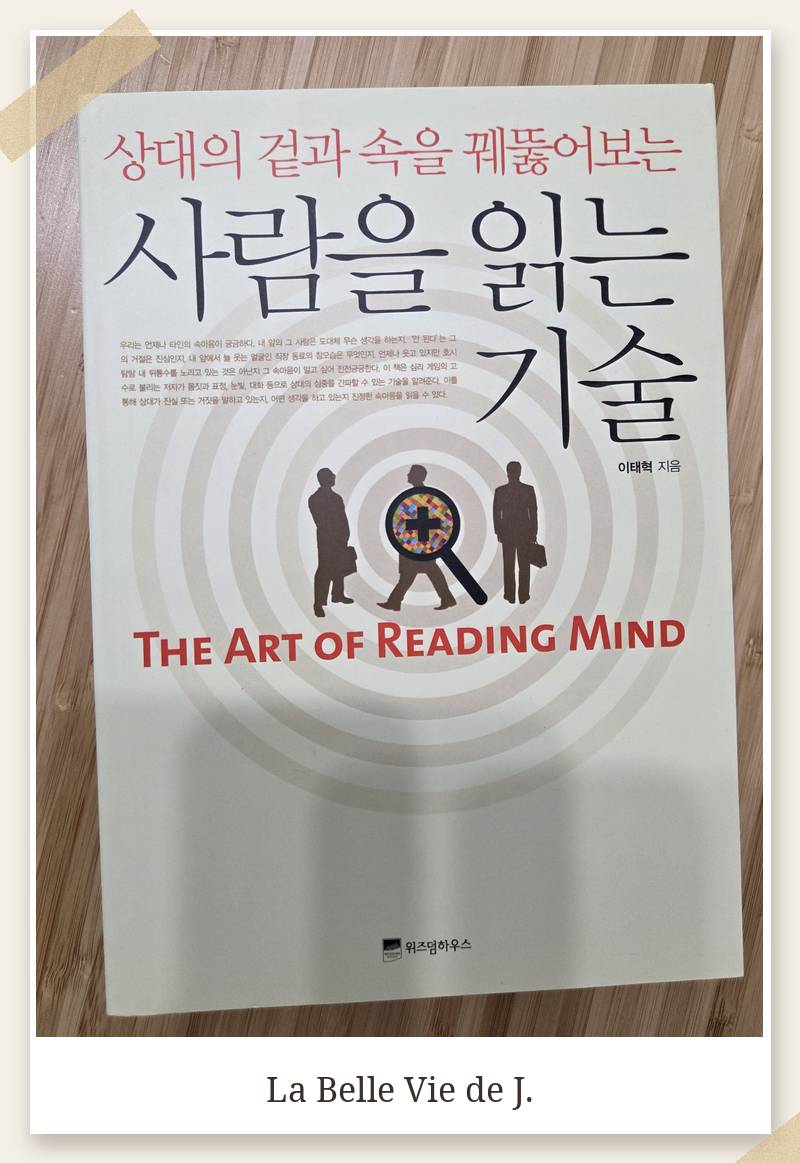
The next step after listening is reading. On my shelf sits a Korean book called The Art of Reading Mind (사람을 읽는 기술) by Lee Tae-hyuk (Wisdom House) — that’s the English line printed on its cover. It’s about reading the real feelings behind people’s words: their gestures, facial expressions, eyes, and the grain of the conversation itself. The signals it walks through, one by one, are exactly those. The moment an expression shifts. Where someone’s gaze settles. Posture and hand movements. The texture of what’s being said. What we can’t put into words leaks out there first — and noticing it is where reading begins. From the title alone, it might sound like a technique for seeing through people. In a relationship, it’s the opposite: whoever first notices the discomfort or quiet hurt that never made it into words gets to be kind first. A good listener’s real strength isn’t only in the ears. It’s in reading the face while listening. Shoulders tensing up behind an “I’m fine” — noticing that is the moment listening turns into relationship luck.
🙏 ③ Express Gratitude
People who sincerely thank others for even small help build a reputation as someone kind and thoughtful. That reputation travels — people recommend them, invite them, and trust them. They naturally gather good people around them. Gratitude is the fertilizer that grows relationships. A quick thank-you costs nothing, but it makes the other person's whole day.
- Say "thank you" right away
- Send thanks by text or note too
- Cultivate the mindset of giving back what you receive
✨ The principle behind it: Traditional thought describes giving and receiving as one continuous flow — gratitude keeps that circulation moving, and what circulates tends to return. There’s an old saying that virtue (德) quietly accumulates like interest. Relationship research echoes it: friends and partners who express appreciation regularly report stronger, longer-lasting bonds.
🤝 ④ Keep Promises

People who keep even small promises earn trust. When trust builds up, good connections follow naturally. It's not about grand gestures — showing up on time, every time, is what people remember.
- Arrive 5 minutes early for appointments
- Don't make promises you can't keep
- If you'll be late, let them know in advance
✨ The principle behind it: Trustworthiness (信) is counted among the five Confucian virtues — keeping your word is how character is built, one small promise at a time. In energy terms, reliability makes you a steady, predictable presence others can lean on. Psychology is blunt about this one: consistency, not grand gestures, is the strongest predictor of trust.
In the end, this is the kind of person people want to keep close. Cognitive psychologist Kim Kyung-il’s Don’t Lead — Make Them Want to Follow (이끌지 말고 따르게 하라, Jinseong Books; the copy on my shelf is the Korean original) uses psychology to explore the kind of person others choose to stay beside. It’s a leadership book, but it doesn’t have to be read as one. Relationship luck works the same way: people stay not with the person who drags them along, but with the one who feels easy to be around and easy to trust. And the everyday consistency of keeping your word is the firmest foundation of that “person people want to stay beside.”
🌱 Start Today: One Small Step
You don't need to master all four habits at once. Small habits compound. A month from now, you'll notice people responding to you differently: warmer smiles, longer conversations, more invitations.
And here's the deeper truth: these habits don't just attract other people — they change how you see yourself. When you greet first, listen well, thank sincerely, and keep promises, you become someone you're proud to be. That confidence is magnetic. People are drawn to those who are comfortable in their own skin.
Good relationships don't come from coincidence — they come from habits.
In the end, relationship luck isn’t something you’re born with — it’s built, by practicing how you read, listen, and speak. The three books woven through this post tell the same story: eyes that read the other person, a presence people want to stay beside, and words that never make an enemy.
Start small, stay consistent, and watch your circle grow.
Next time, I'll share 'Space Energy interior tips to boost your home's energy.'
Wishing you a beautiful day.
For a closer look, see my guide on [Fortune 4-Panel] 4 Morning Routines of People Who.
🚫 3 Habits That Leak Relationship Luck
Filling the bucket matters — but so does plugging the leaks. First, talking about people behind their backs: listeners instinctively do the math — “if they say this about them, they’ll say it about me.”
There’s a reason books like Sam Horn’s Tongue Fu! — which I keep in its Korean translation — are still read year after year: they teach you how to talk without turning the other person into an enemy. The concrete ways to soften your words are set out in my piece on the energy of words.
Second, leaving messages unanswered for days: being busy is forgivable, but a pattern of read-and-forgotten tells people exactly where they rank. Third, only ever receiving — help flows in, nothing flows back, and the scale quietly tips. The repayment doesn’t need to be grand: a check-in, a small kindness, a remembered detail restores the balance. Relationship luck is protected before it is earned.
📅 A One-Month Practice Plan
Don’t try to install all four habits at once. Layer one per week. Week 1, greetings — be the first to say hello in the elevator, the shop, the hallway. Week 2, listening — once a day, give up your turn to speak and ask one more question instead. Week 3, gratitude — say thank you out loud, the same day, at least once a day. Week 4, promises — write small promises down and keep every single one. By the end of the month the four start reinforcing each other: greetings open conversations, listening builds trust, gratitude raises the warmth, and promises set it in stone. Research collections like the Greater Good Science Center at UC Berkeley keep arriving at the same conclusion as the old wisdom: people stay close to those who make them feel valued.
🗣️ Steal These Sentences
If the habits feel abstract, borrow the words. For greetings: “Morning! How did you sleep?” — small, warm, specific. For listening: “Tell me more about that” does more than any advice. For gratitude: “That helped me more than you know” turns a quick thanks into something remembered. For promises: “I’ll send it by Friday — hold me to it” makes your reliability visible. Habits are just sentences and small actions, repeated until they become your reputation.
Start with whichever sentence feels easiest today.
Happy living 💛
— J.
💌 You May Also Like
Get the Free Canada Savings Checklist
Join the newsletter — get the free PDF checklist and weekly Canada savings tips in your inbox.
Read Next


Some links in this post are referral or affiliate links. If you sign up or buy through them, I may receive a bonus or commission at no extra cost to you. It helps keep this blog running — thank you!