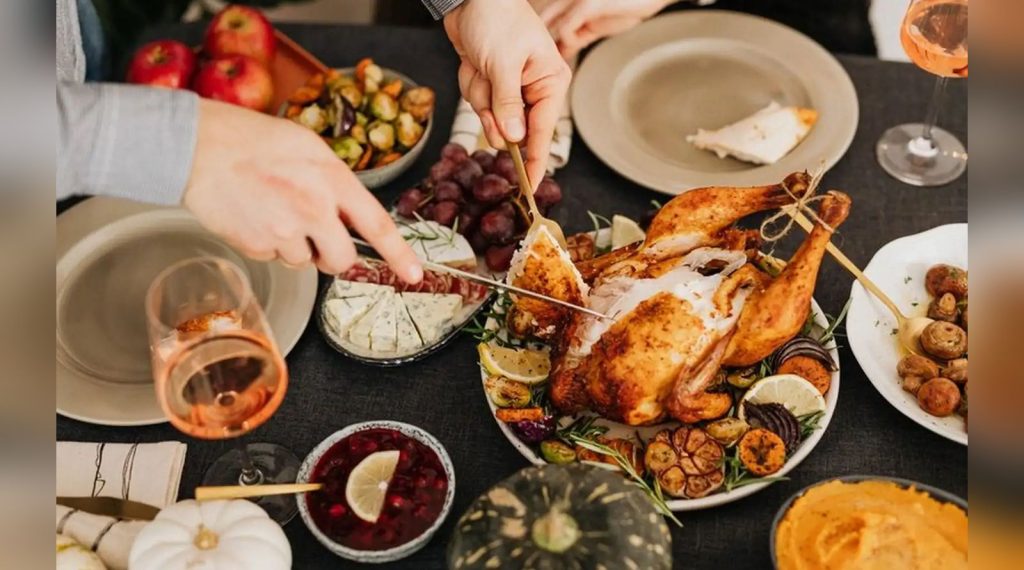
Canadian Thanksgiving 2026: The Complete Turkey Dinner Guide
Last updated: November 1, 2026
Bonjour! It’s J. — Canadian Thanksgiving is almost here — this year it falls on Monday, October 12, 2026. If you’re hosting dinner (or even just bringing one dish), now is the perfect time to start planning. A turkey dinner looks impressive, but honestly? It’s mostly about timing and temperature. Get those two right and you’ll look like a pro.
In this guide, I’ll walk you through everything: how to choose the right turkey size, thaw it safely, roast it juicy, plan budget-friendly sides, and handle leftovers like a champ. Let’s make this the easiest Thanksgiving you’ve ever hosted.
🌿 Quick Take
- Canadian Thanksgiving 2026 is Monday, October 12.
- Plan 1 lb (450 g) of turkey per person — that gives everyone a generous serving plus a little leftover.
- Thaw 24 hours per 4–5 lbs in the fridge — never on the counter.
- Roast at 325°F (165°C), target 165°F (74°C) internal, and rest 20–30 minutes.
- A meat thermometer beats any time chart.
📅 1. When Is Canadian Thanksgiving 2026?
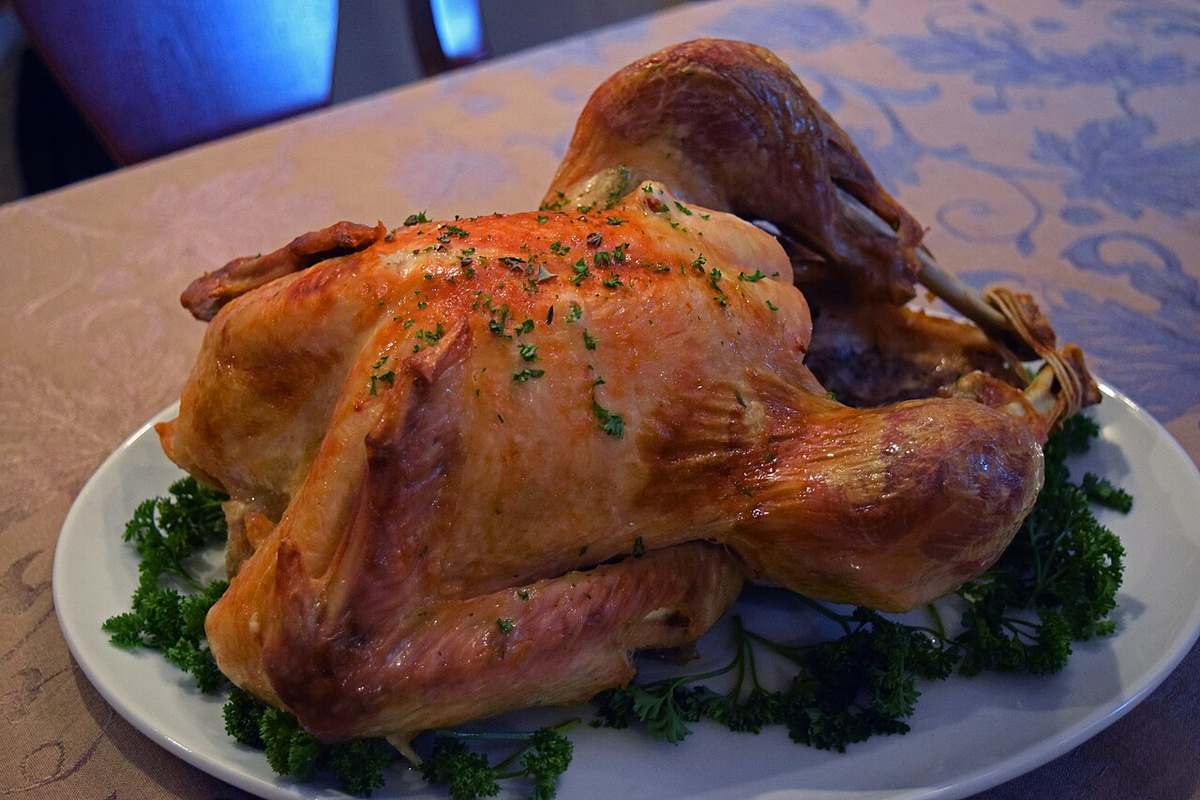
Canadian Thanksgiving is always the second Monday of October — October 12 this year. It’s different from American Thanksgiving, which is the fourth Thursday of November. Many Canadians cook the big dinner on Sunday and enjoy leftovers on the actual holiday Monday, so plan your schedule around what works for your family.
🦃 2. How Big a Turkey Do You Need?
The golden rule: about 1 pound (450 g) of turkey per person. That gives everyone a generous serving plus a little leftover. If your family loves leftovers (turkey sandwiches the next day are the best part, let’s be honest), go for 1.5 pounds per person.
| Guests | Turkey size |
|---|---|
| 4 guests | 6–8 lb |
| 8 guests | 12–14 lb |
| 12 guests | 18–20 lb |
❄️ 3. Thawing: The Step Everyone Rushes
Thawing is where most first-timers go wrong. Never thaw a turkey on the kitchen counter — room temperature is exactly where bacteria thrive. You have two safe options:
- Fridge method (best): Allow about 24 hours for every 4–5 lbs. A 16 lb turkey needs roughly 4 full days in the fridge. Start early!
- Cold water method (faster): Submerge the wrapped turkey in cold water, changing the water every 30 minutes. Allow about 30 minutes per pound.
Food safety experts warn about the “danger zone” between 4°C and 60°C (40°F–140°F) — the temperature range where bacteria multiply fastest. The fridge keeps the turkey safely below this zone the entire time, which is why it’s the gold standard.
🧂 4. To Brine or Not to Brine?
Brining is the secret behind those impossibly juicy turkeys at restaurants. You have two options: wet brine (soaking in salted water) or dry brine (rubbing salt directly on the bird). I prefer dry brining — it’s less messy, takes less fridge space, and gives you crispier skin.
The science is simple: salt changes the structure of the meat’s proteins through osmosis, helping the muscle fibres hold onto more moisture during cooking. A dry-brined turkey can retain noticeably more juice than an unbrined one.
🌡️ 5. Roasting: Time and Temperature
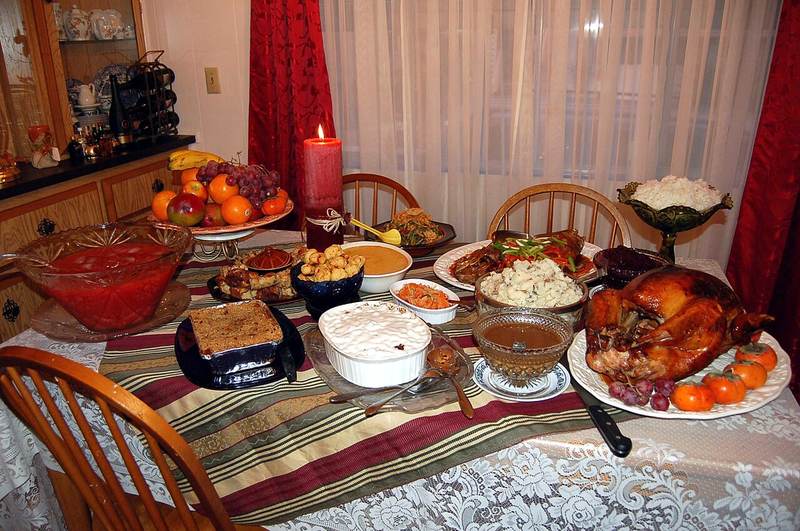
Roast at 325°F (165°C) and allow roughly 13–15 minutes per pound for an unstuffed turkey. But here’s the truth: time charts are estimates. Ovens vary, turkeys vary. The only reliable tool is a meat thermometer — the single best investment for any holiday cook.
- Insert the thermometer into the thickest part of the thigh, without touching bone.
- The USDA safe target is 165°F (74°C) internal temperature — that is the number that guarantees safety, no matter the bird’s size. Many experienced cooks pull the bird at 160°F (71°C) and let resting carryover (5–10°F) finish the job — just confirm it reaches 165°F before carving. For a stuffed bird, or when cooking for kids or elderly guests, cook to 165°F in the oven to be safe.
- Rest the turkey 20–30 minutes before carving. This is non-negotiable.
| Turkey size | Unstuffed at 325°F (165°C) | Stuffed at 325°F (165°C) |
|---|---|---|
| 12 lb | 2¾ – 3 hours | 3 – 3½ hours |
| 16 lb | 3½ – 4 hours | 4 – 4¼ hours |
| 20 lb | 4⅓ – 5 hours | 4¾ – 5¼ hours |
Estimates only — ovens vary. Trust your thermometer, not the clock.
🔥 High heat vs. low heat — which should you choose? This guide uses 325°F (165°C) as the baseline. Going hotter or cooler than that changes texture, timing, and margin for error — here is what happens either way. (The safe target stays 165°F internal either way.)
| 🔥 Hotter than 325°F (e.g. 375–425°F / 190–220°C) |
❄️ Cooler than 325°F (e.g. 275–300°F / 135–150°C) |
|
|---|---|---|
| Pros | Deeply browned, crispy skin; cooks about 25–30% faster than the baseline; oven frees up sooner for sides | Even gentler cooking from edge to centre; very juicy breast meat; extra forgiving — hardest to overcook |
| Cons | Breast can dry out before the legs finish; more splatter and smoke; needs close watching with a thermometer | Pale, soft skin unless finished with a hot blast; adds an hour or more to the cook; food-safety risk climbs if the bird lingers too long in the danger zone — keep it under 4 hours between 40°F and 140°F |
| Best for | Small birds (under 14 lb); crisp-skin lovers; when you are short on time and confident with a thermometer | When juiciness matters more than crunch; very large birds where even heat helps; only if you still get the bird through the danger zone quickly |
Why rest? During roasting, the heat pushes juices toward the centre of the meat. Resting lets those juices redistribute back through the bird. Cut too early and all that juice ends up on the cutting board instead of in your mouth.
🍽️ 6. Sides That Don’t Break the Bank
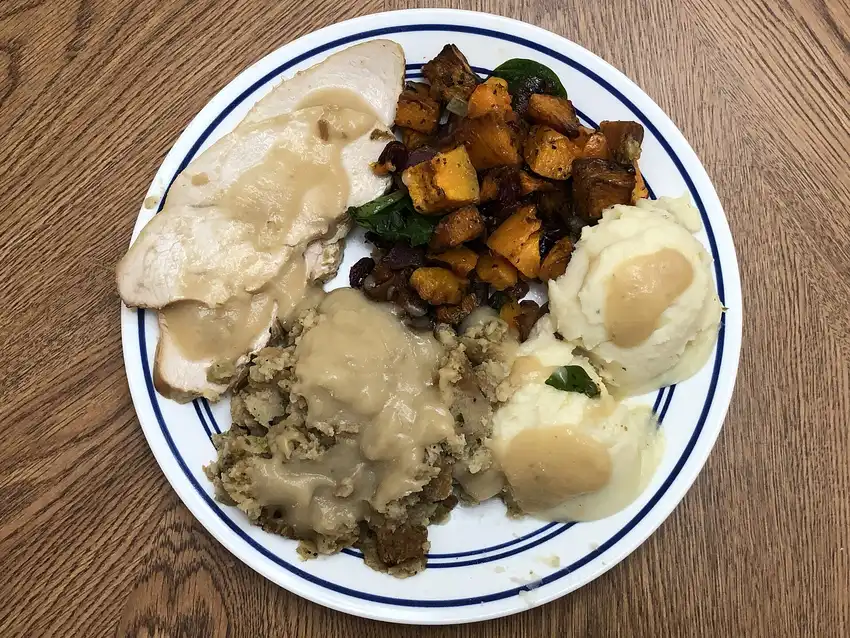
The turkey gets the glory, but sides are where the meal becomes a feast — and they don’t have to be expensive. My go-to budget-friendly lineup:
- Mashed potatoes: Cheap, filling, everyone loves them. Warm the milk and butter before mashing for the creamiest texture.
- Roasted root vegetables: Carrots, parsnips, and squash are at their cheapest in October. Toss with oil, salt, and thyme.
- Gravy from drippings: Free flavour! Use the pan drippings, whisk in flour, add stock. Restaurant-quality for pennies.
- Cranberry sauce from scratch: Just cranberries, sugar, water, and orange zest. Ten minutes on the stove.
- Simple stuffing: Day-old bread, onion, celery, herbs, and stock. Skip the fancy box mix.
📦 7. The Leftover Game Plan
Smart cooks plan for leftovers before the dinner, not after. Refrigerate all leftovers within 2 hours of serving — this is the food safety rule that matters most. Carve the remaining meat off the bones, store in shallow containers, and use within 3–4 days.
My favourite second-day ideas: turkey soup with the carcass (the carcass makes incredible stock), turkey pot pie, crispy turkey fried rice, and the classic Boxing-Day-style turkey sandwich with cranberry sauce. One turkey can easily feed you three times.
🔬 Expert Knowledge: The Science of a Juicy Turkey
Here’s what’s actually happening inside your oven. Turkey breast and leg meat are different muscles with different ideal temperatures — breast is lean and dries out fast, while legs have more connective tissue and benefit from slightly higher heat. This is why whole turkeys are tricky: by the time the legs are perfect, the breast can be overdone.
Two more science-backed facts. First, carryover cooking: the turkey’s internal temperature keeps rising 5–10°F after you take it out of the oven, as heat from the outer layers moves inward. Experienced cooks pull the bird at 160°F and let carryover finish the job — landing at the USDA-safe 165°F. Second, basting: constantly opening the oven door drops the temperature and extends cooking time. A dry-brined, well-rested turkey doesn’t need basting at all.
✅ 8. Your Thanksgiving Countdown Checklist
- 2 weeks before: Buy the frozen turkey. Plan your menu and guest list.
- 1 week before: Buy non-perishables, cranberries, and wine. Sharpen your carving knife.
- 4 days before: Start thawing in the fridge (for a 16 lb bird).
- 1–3 days before: Dry brine the turkey. Make cranberry sauce (it keeps well).
- Day before: Prep vegetables, make stuffing base, set the table, chill drinks.
- Thanksgiving day: Turkey in the oven early, sides in sequence, rest the bird, carve, and enjoy.
Thanksgiving dinner isn’t about perfection — it’s about gathering the people you love around one table. Plan ahead, trust your thermometer, and don’t forget to enjoy it yourself.
Wishing you a beautiful day.
Before you go, you might also find my guide on Holiday Prep Guide 2026 useful.
Get the Free Canada Savings Checklist
Join the newsletter — get the free PDF checklist and weekly Canada savings tips in your inbox.
Read Next


How do you save on this? Share your own tip in the comments — I'd love to hear it!
Some links in this post are referral or affiliate links. If you sign up or buy through them, I may receive a bonus or commission at no extra cost to you. It helps keep this blog running — thank you!