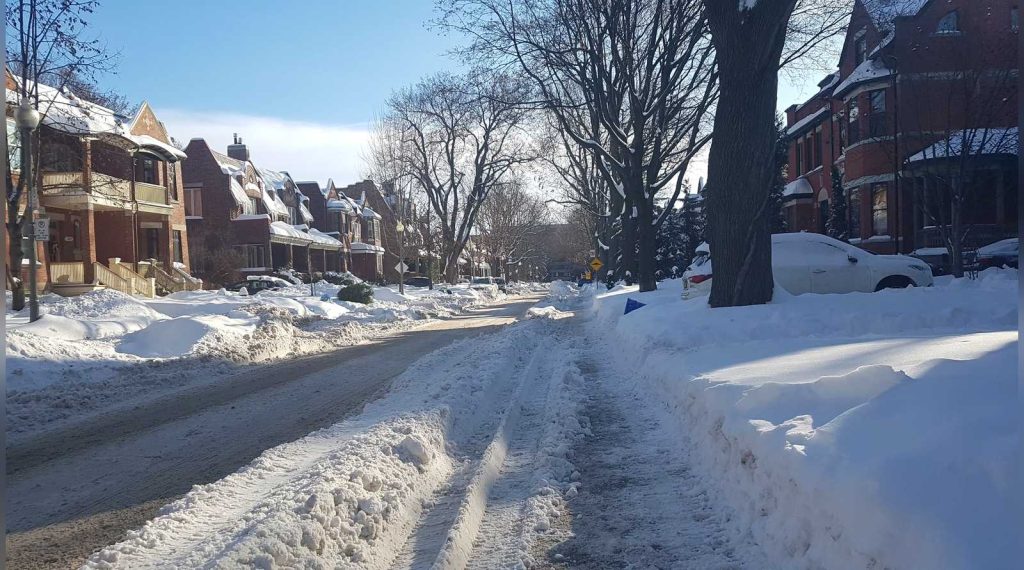
My Skin Survived -30°C Montréal Winter: Here’s My Barrier Routine
Last updated: November 7, 2026
Bonjour! It’s J. — 🥶 -30°C will destroy your skin barrier in days if you’re not prepared. After 9 winters in Montréal, I’ve figured out exactly what works — and what’s a waste of money. This is my real routine.
Quick Summary
- Your skin loses water faster in dry air — this is called TEWL (transepidermal water loss).
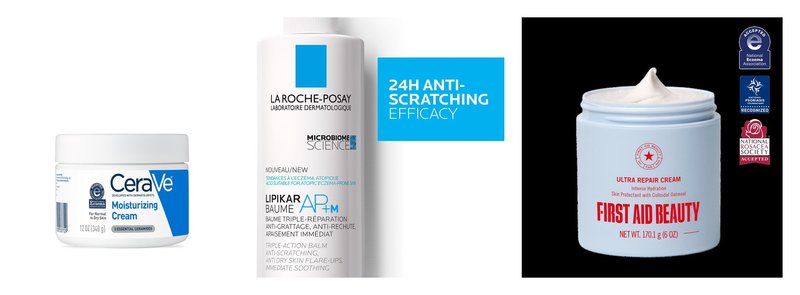
- My winter body staples: CeraVe Moisturizing Cream, La Roche-Posay Lipikar Baume AP+M, First Aid Beauty Ultra Repair Cream (all body-only for me).
- A humidifier helps, but it is not magic. Clean the tank or it grows things you don’t want.
- Cosmetics support the barrier; they don’t rebuild it like a procedure does. I’ll be honest about that at the end.
🌿 Quick Take
- Montréal winters drop indoor humidity to 15–25%; Health Canada recommends 30–50% indoors.
- A humidifier is the single highest-impact change you can make — not a serum.
- The method that works: humectant → emollient → occlusive, in that order, in thin layers.
- My winter body staples: CeraVe Moisturizing Cream, La Roche-Posay Lipikar Baume AP+M, First Aid Beauty Ultra Repair Cream.
- In deep winter I rinse with lukewarm water in the morning — no cleanser; a morning cleanse strips dry skin.
🧪 Why Winter Destroys Your Skin Barrier
Let me start with the science, because once you understand the mechanism, every product choice makes sense.
Your skin’s outermost layer, the stratum corneum, is often described as a brick wall. The skin cells are the bricks. The mortar between them is a mix of ceramides, cholesterol, and fatty acids. This wall keeps water in and irritants out.
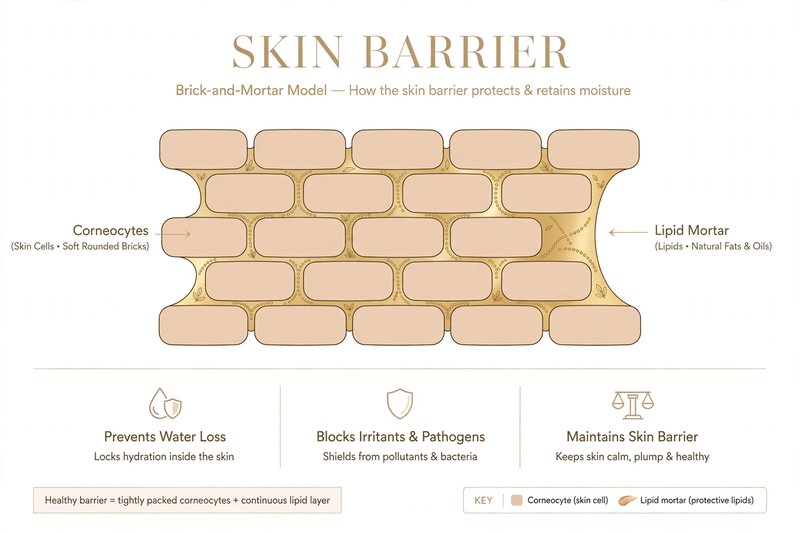
TEWL stands for transepidermal water loss — the rate at which water evaporates from your skin into the air. Dry air pulls water out faster. That’s it. That’s the whole story of winter skin.
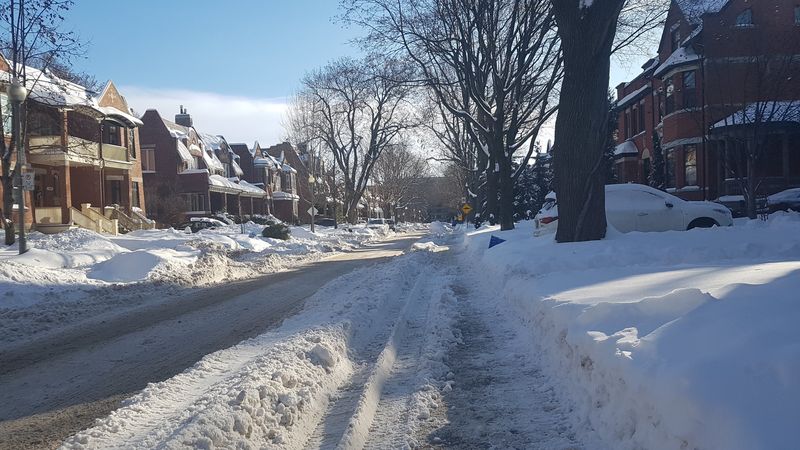
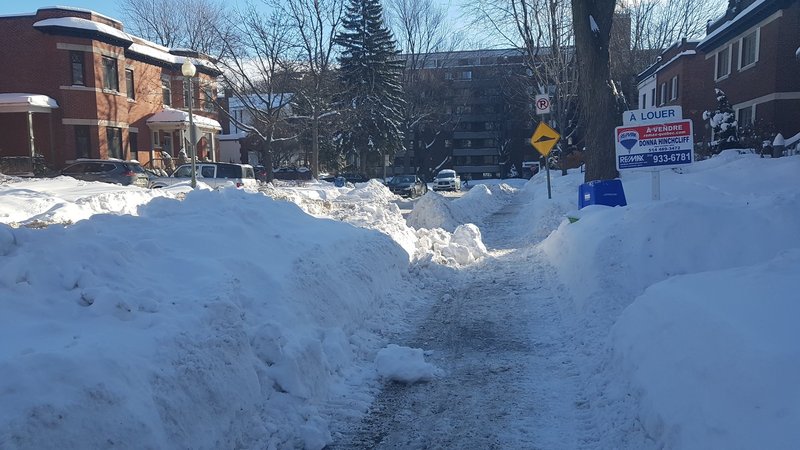
Now add Montréal’s specific cruelty. Outside: −20°C to −30°C with wind that strips every exposed centimeter. Inside: heating that drops indoor humidity to 15–25%. I measured this in my own apartment with a cheap hygrometer — 18% on a January morning. For reference, Health Canada recommends keeping indoor relative humidity between 30% and 50%.
Then there’s the hot shower problem. When it’s −25°C outside, a scalding shower feels like salvation. But hot water strips the natural oils from your skin faster than lukewarm water. Shorter, cooler showers. I know. I’m still working on this one myself.
💧 Humidifiers: Manage by the Numbers
Here’s the target: 30–50% indoor relative humidity, per Health Canada. Below 30%, your skin, lips, and eyes dry out and static electricity turns you into a human lightning rod. Above 50–55%, you invite mold and dust mites.
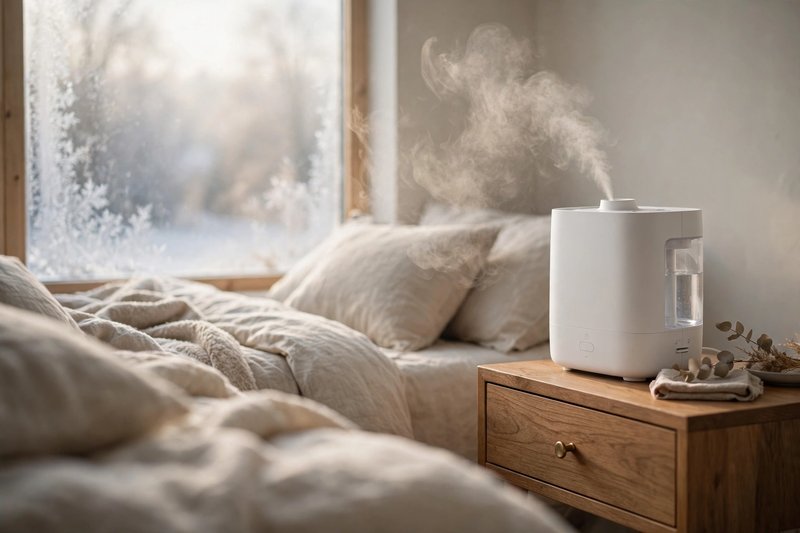
Two main types exist. Ultrasonic humidifiers are quiet and cheap, but they can leave white mineral dust on furniture if your tap water is hard — Montréal’s water is moderately hard, so I use distilled or filtered water. Evaporative humidifiers use a wick filter, cost a bit more to run, but don’t produce the white dust.
The part nobody tells you: clean the tank. A dirty humidifier tank grows mold and bacteria, and then you’re misting that into the air you breathe. Health Canada’s own guidance warns about this. I rinse mine every two to three days and do a vinegar soak weekly.
One honest caveat: a humidifier raises the humidity of one room, not your whole apartment, and it does nothing for the wind hitting your face outside. It helps — measurably — but it is not magic.
🧴 The 3-Layer Moisture System
Forget the 10-step routine. In deep winter, I think in three layers. Each layer has one job.
Layer 1 — Humectants: pull water in. Hyaluronic acid and glycerin attract water. Important detail most people miss: humectants pull moisture from wherever it’s available. In humid air, that’s the air. In dry 18% indoor air, a humectant alone can actually pull water out of your deeper skin layers. So never use a hyaluronic acid serum alone in winter without sealing it.
Layer 2 — Emollients: fill the cracks. Ceramides and cholesterol patch the “mortar” between your skin cells. This is where CeraVe earns its reputation — its formula centers on three essential ceramides. Does it rebuild your barrier like a medical treatment? No. Does it measurably reduce that tight, papery feeling? In my experience, yes. Official website
Layer 3 — Occlusives: lock it in. Squalane, shea butter, petrolatum. These sit on top and slow evaporation. This is the “slugging” idea without the TikTok theatrics — a thin occlusive layer at night is just physics.
The order matters: thinnest to thickest. My skin is thin, so I apply everything in thin layers, several times, rather than one thick coat. I keep small sizes in my bag, by my bed, and in the living room, and reapply through the day.
💦 Drinking Water and Skin: An Honest Word
You’ve heard “drink more water for better skin” a thousand times. Let me be straight with you: the relationship is indirect.
Your kidneys regulate your body’s water balance tightly. Drinking extra water beyond what your body needs doesn’t get routed to your skin like topping up a reservoir — the excess is excreted.
What is true: in a dry heated apartment, you lose more water through breathing and skin evaporation without noticing, so keeping up steady water intake through the day makes sense. Just don’t expect eight glasses to fix flaky shins. The humidifier and the three layers do far more for your skin than a water bottle does.
I include this because I’d rather tell you what’s real than what’s marketable.
🌙 My Actual Routine: Morning and Night
Everything below is what I actually use. Prices are in Canadian dollars, as of October 2026.
Morning
My skin is dry and thin; a morning cleanse strips what little oil built up overnight.
Then a hydrating essence, applied in two thin layers. I prefer liquid essences over toners — they sink in faster on my skin. (Personal preference, not science.)
Then my face routine, all in thin layers: essence × 2, then eye cream, then cream, and finally a moisture cream to seal everything in as a moisture barrier. Each layer is thin — my skin can’t handle one thick coat.
Night
Cleanse gently, essence, then body moisturizer: CeraVe Moisturizing Cream (body-only for me). In winter, this is the one. It’s the heaviest thing I own and the only thing that gets me through January nights. Around CA$24 for 454g at Shoppers Drug Mart, as of October 2026. In other seasons it feels too heavy on my thin skin — but winter is its season, and I mean that as the highest compliment.
For body: La Roche-Posay Lipikar Baume AP+M. I reviewed it in detail before, but the winter notes: it spreads smoothly with zero sting, the 75ml tube lives in my bag because it’s genuinely portable, and it’s excellent on calves — absorbs without that shiny, greasy film. If heavy creams bother you, this feels lighter than CeraVe while still doing the job. Around CA$16 for 75ml, as of October 2026.
Lips and knuckles get a petrolatum-based balm. Nothing fancy. Physics doesn’t care about branding at this layer.
Before you go, you might also find my guides on Layer Lab Barrier Moist Cream Review useful.
One more worth reading: my notes on Kiehl’s Ultra Facial Overnight Mask Review.
💬 J.’s Honest Talk: What Nine Winters Did to My Skin
Now the part I debated including. But honesty is the whole point of this blog, so here it is.
North American heating made everything worse. Most apartments and houses here heat with baseboard heaters — those long units under the windows warming air through natural convection upward. It is efficient at heating the room and devastating for humidity. The air gets so dry that my throat hurts in the morning and my skin feels like paper by February. Every single year.
My personal opinion, and I’ll own it as just that: Canada could really use Korean ondol floor heating. Radiant floor heat warms the room evenly without blasting dry air around. Better for skin, better for heating efficiency, better for comfort. If any builder is reading this — please.
Nine years ago, when I arrived in Montréal, people told me all the time that I had beautiful skin. I don’t hear that anymore. Nine winters happened. I believe the cause is the combination: brutal cold and wind half the year, and surprisingly strong sun the rest of it. Montréal summer UV is no joke — the sun here feels sharper than I expected, and I suspect years of it did quiet damage.
Here’s another honest admission: sunscreen and I have a troubled relationship. My skin breaks out from many sunscreens. I’ve tried mineral, chemical, hybrid — my skin is picky and I haven’t found “the one” yet. I know sun protection matters. I’m still searching. If you’ve found a sunscreen that survives reactive, thin skin, tell me in the comments.
And the biggest honesty of all: cosmetics have limits, and I act accordingly. Every time I visit Korea, I get Rejuran or Juvelook treatments. One session a year does more for my skin than twelve months of the best cosmetics ever could. That’s not a criticism of skincare — the daily routine matters, it’s what I write about — but I won’t pretend a cream competes with a procedure. Different categories. Different jobs.
One more thing, since readers always ask: I can’t name my clinic here — that would be advertising, and this isn’t an ad. But if you’re curious, message me. The branch I go to is set up for international patients with multilingual staff on-site, and prices are the same for Koreans and foreigners. Happy to share details privately.
Happy living 💛
— J.
You May Also Like
- PDRN: Does It Actually Work? An Honest Guide to Fall 2026’s Most Talked-About Ingredient
- I Replaced My CA$80 Moisturizer With This CA$24 One (Honest Review)
Wishing you a beautiful day.
Get the Free Canada Savings Checklist
Join the newsletter — get the free PDF checklist and weekly Canada savings tips in your inbox.
Read Next


Some links in this post are referral or affiliate links. If you sign up or buy through them, I may receive a bonus or commission at no extra cost to you. It helps keep this blog running — thank you!