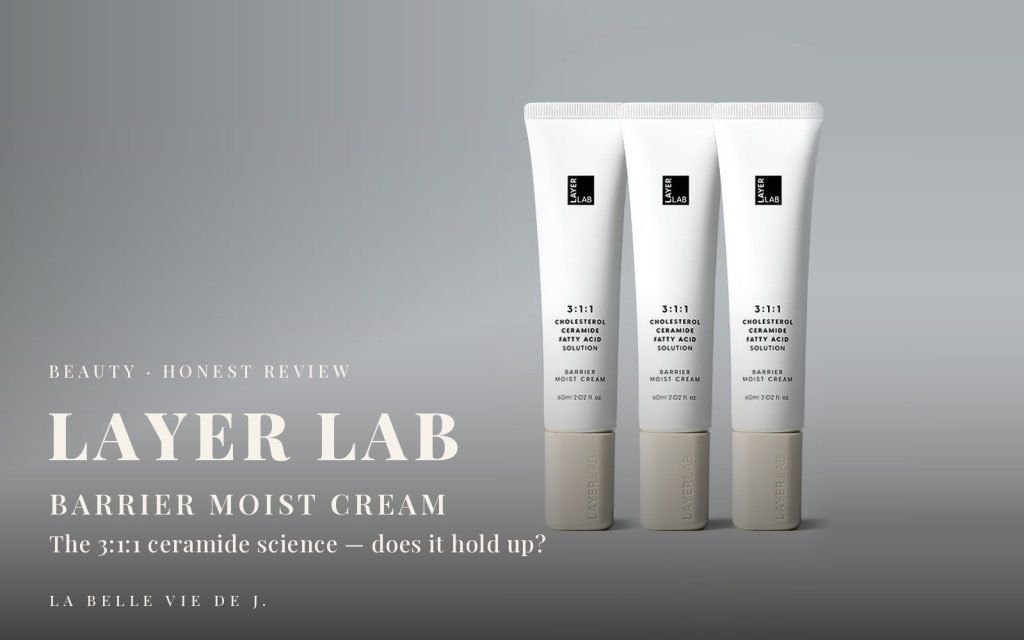
Layer Lab Barrier Moist Cream Review: The 3:1:1 Ceramide Science
Last updated: November 14, 2026
Bonjour! It’s J.
Quick Summary
- Product: LAYER LAB Barrier Moist Cream (60ml / 2.02 fl. oz.)
- Key formula: Cholesterol · Ceramide · Fatty Acid in a 3:1:1 ratio
- Claims: 47 moisturizing ingredients, “100-hour moisture barrier” (manufacturer claim)
- Functional cosmetic: anti-wrinkle (Korea MFDS classification)
- Made in Korea by Cosmax
- Verdict: Lighter than expected with a solid formula, but the square cap is a real flaw — mine no longer closes. Great for frequent thin layers; not enough alone for deep Canadian winter.
🌿 Quick Take
- LAYER LAB Barrier Moist Cream (60 ml, made in Korea by Cosmax) is built on a 3:1:1 cholesterol–ceramide–fatty acid ratio that mirrors the lipid proportions of a healthy skin barrier — the concept rests on genuine published barrier research.
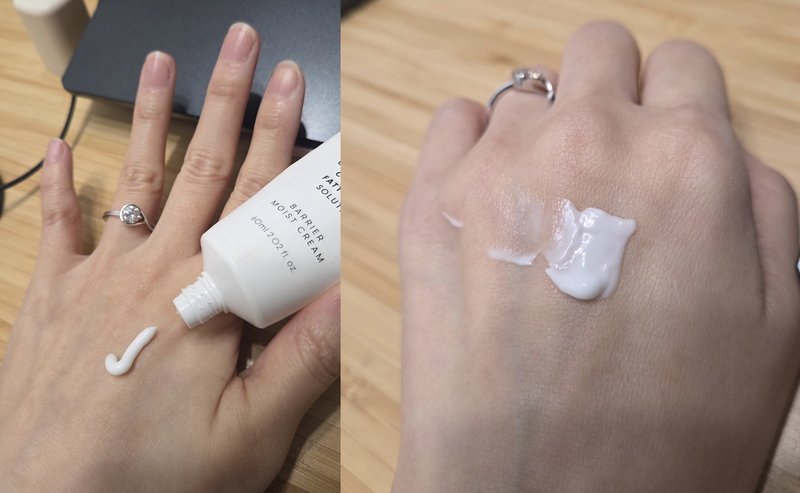
- In use it’s lighter than expected: it spreads smoothly, absorbs fast with no stickiness, and works best applied in frequent thin layers.
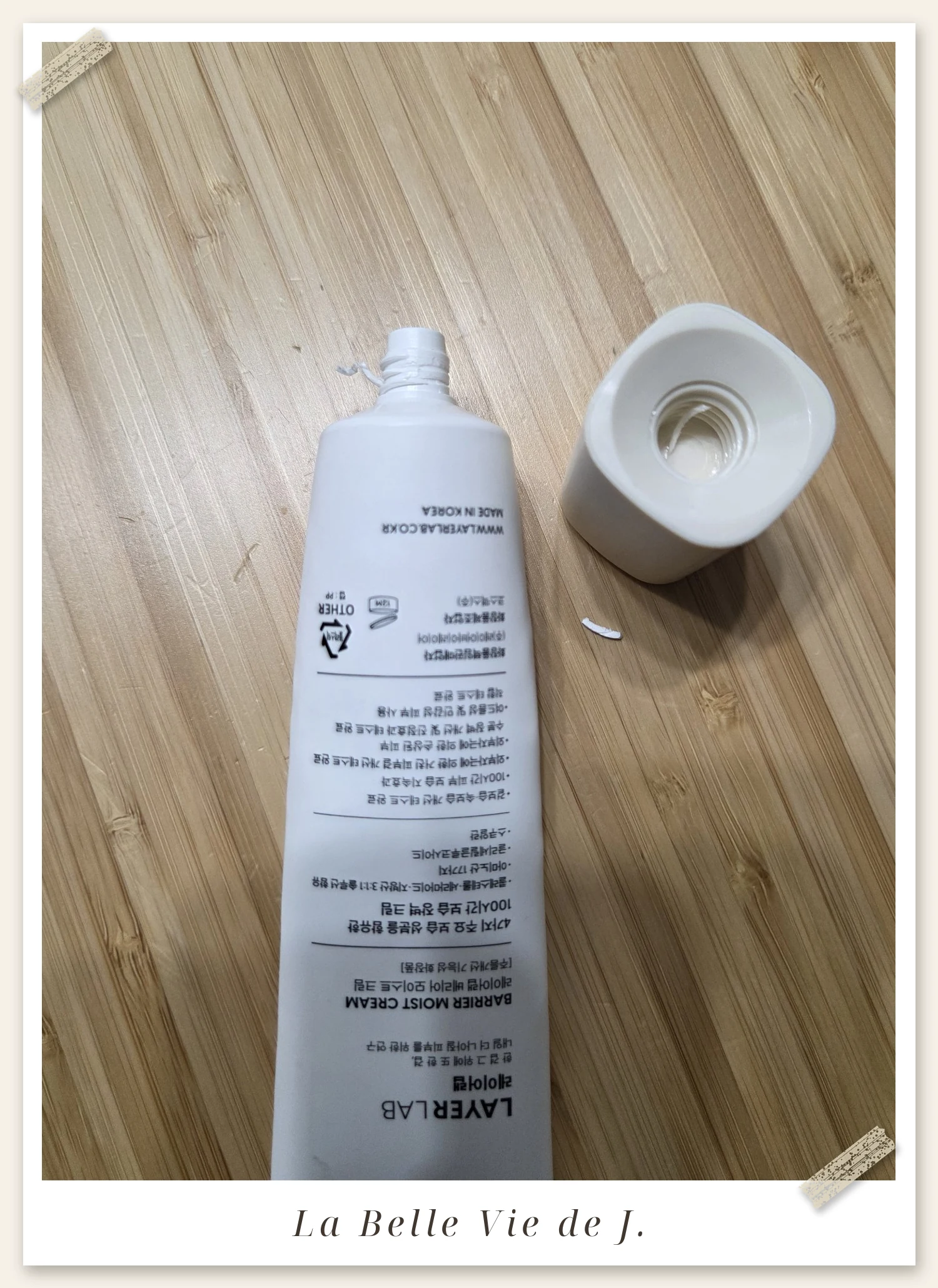
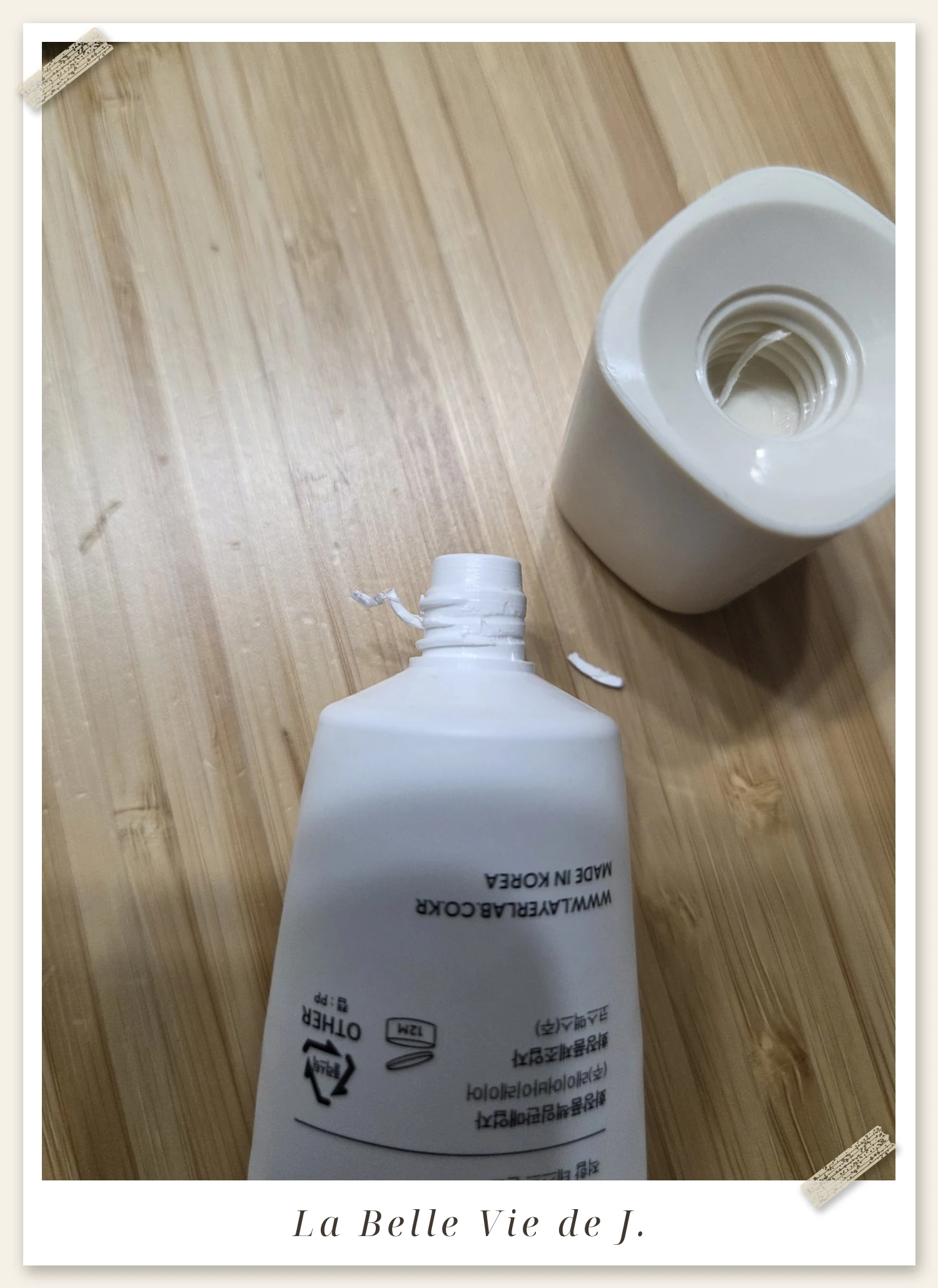
- The honest flaw: the square cap is badly designed — mine no longer closes properly.
- The “100-hour moisture” line is a manufacturer claim based on manufacturer-run tests, not 100 hours of real-life moisturizing — and the actual lipid concentrations aren’t disclosed.
- It’s an MFDS functional cosmetic for wrinkle improvement, not a medicine: great for everyday barrier care, but not enough on its own for deep Canadian winter.
📦 What Exactly Is This Cream?
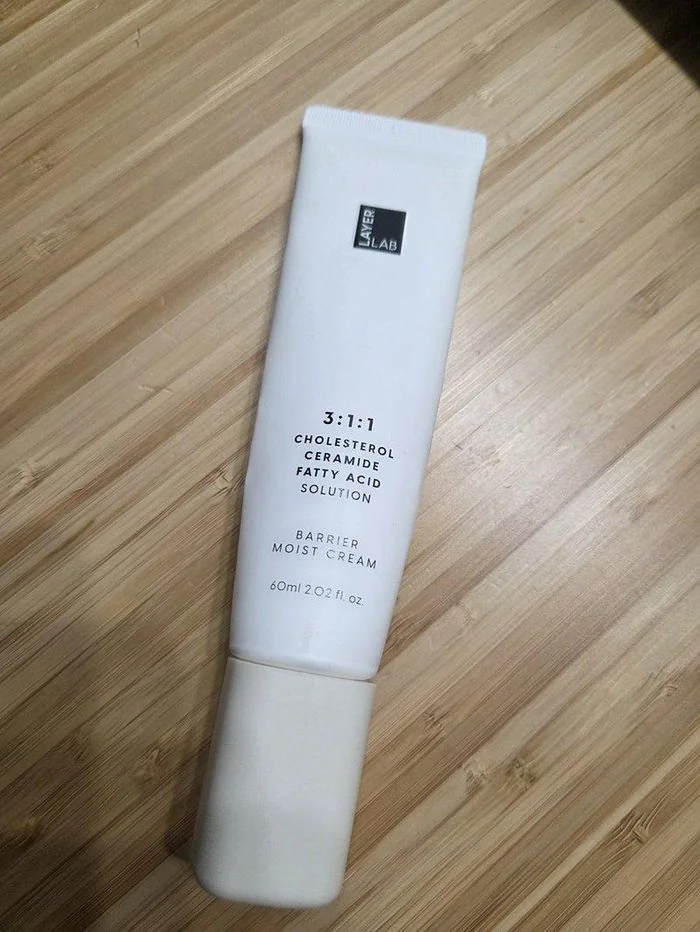
LAYER LAB Barrier Moist Cream is a Korean barrier-focused moisturizer. The packaging tells us the essentials: 60ml in a squeeze tube, manufactured by Cosmax (one of Korea’s largest OEM/ODM cosmetic manufacturers), and classified in Korea as a functional cosmetic for wrinkle improvement — a regulatory category under Korea’s Ministry of Food and Drug Safety (MFDS), not a drug approval.
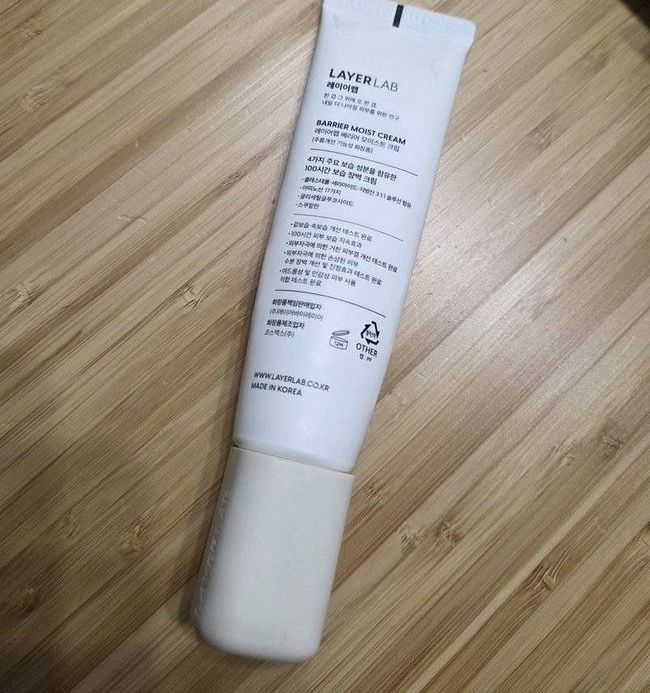
The front of the tube leads with its formula concept: “3:1:1 Cholesterol Ceramide Fatty Acid Solution.” The back lists the headline claims: 47 key moisturizing ingredients, a “100-hour moisture barrier cream,” plus amino acids (17 types), glyceryl glucoside, and squalane.
Before going further, one principle I apply to every review on this blog: cosmetics are cosmetics, not medicine. A cream cannot rebuild your skin the way a procedure or prescription can. What it can do — when the formula is sound — is support the barrier, reduce water loss, and keep skin comfortable. That is the lens for everything below.
🔬 The 3:1:1 Ratio: Real Science or Marketing?
This is the most interesting part of the formula, so let’s look at what the numbers actually refer to.
Your skin barrier — the stratum corneum — holds its cells together with a lipid matrix made mostly of three components: ceramides (roughly 50%), cholesterol (roughly 25%), and free fatty acids (roughly 10–15%). These are the natural proportions found in healthy skin.
Published dermatological research has tested what happens when you apply these lipids back in specific ratios. A widely cited study (Chamlin et al., published in the Journal of the American Academy of Dermatology) found that a mixture of ceramides, cholesterol, and fatty acids in a 3:1:1 ratio accelerated barrier recovery more effectively than the components applied alone or in other ratios. This is the study that K-beauty brands reference when they print “3:1:1” on packaging.
So the ratio is not invented marketing — it mirrors published barrier-lipid research. Two honest caveats, though. First, the research tested barrier recovery in controlled settings; a commercial cream contains these lipids at cosmetic concentrations alongside dozens of other ingredients, which is a different scenario from a lab mixture. Second, the exact concentrations of each lipid in this product are not disclosed on the packaging, so we cannot verify how closely the finished formula follows the studied ratio. The concept is sound; the execution details are the manufacturer’s.
🧪 Key Ingredients, Honestly Explained
Ceramide · Cholesterol · Fatty acids (3:1:1 solution): The barrier trio described above. These are emollients that fill the gaps between skin cells and reduce transepidermal water loss (TEWL) — the scientific term for moisture evaporating from your skin.
17 amino acids: Amino acids are components of the skin’s Natural Moisturizing Factor (NMF). In a cream, they act as humectants — they attract water. This is standard, well-understood cosmetic chemistry, not a breakthrough.
Glyceryl glucoside: A humectant with some published data on supporting aquaporin channels (the skin’s water transport proteins). Interesting ingredient, modest evidence base at cosmetic concentrations.
Squalane: A stable, skin-friendly emollient and light occlusive. Well tolerated by most skin types, including sensitive skin. One of the least controversial moisturizing ingredients in the industry.
“47 moisturizing ingredients”: This is a manufacturer count. It likely includes every humectant, emollient, and occlusive in the formula down to supporting roles. The number itself tells you little about efficacy — what matters is which ingredients are present at meaningful concentrations, and that information is not on the packaging. Treat the number as marketing framing, not a quality metric.
⏱️ About That “100-Hour Moisture” Claim
The packaging claims 100-hour moisture. Let’s be precise about what this means: it is a manufacturer claim, based on manufacturer-conducted testing. The back of the tube lists completed tests including a 100-hour skin moisture retention effect test.
What such tests typically measure is skin hydration (often via corneometer readings) at intervals after a single application, under controlled conditions. They do not mean the cream actively moisturizes for 100 hours in real life — washing, sweating, and environmental exposure all reset the clock. The honest reading: the formula showed prolonged hydration in the manufacturer’s own test protocol. Independent verification is not available, and I have not seen the test methodology.
✅ What Testing Has Been Done
According to the packaging, the following tests were completed:
- Inner and outer moisturization improvement test
- 100-hour skin moisture retention effect test
- Rough skin texture improvement test against external irritation
- Moisture barrier improvement and soothing effect test on damaged skin
- Suitability test for acne-prone and sensitive skin
Important framing: these are manufacturer-commissioned tests, which is standard practice in the cosmetics industry. They are not the same as independent peer-reviewed clinical trials. The acne-prone and sensitive-skin suitability test is a useful signal, but “suitable for” does not mean “will not cause breakouts for everyone” — individual reactions vary, and patch testing is always wise.
💧 Cosmetics Are Not Medicine: Keeping Expectations Honest
This cream is classified as a functional cosmetic for wrinkle improvement in Korea. That classification means it passed the MFDS notification requirements for that category — it does not mean it performs like a prescription retinoid or an in-office procedure.
No cosmetic cream, whatever its formula, can replicate what injectable skin boosters or clinical procedures do. I say this as someone who is direct about that distinction elsewhere on this blog. A good barrier cream earns its place by doing something real but bounded: keeping the barrier intact, reducing water loss, and keeping skin comfortable day to day. That is a meaningful job — it just isn’t a medical one.
🙋 My Experience
I got this tube last fall during a Korea visit. Jet-lagged, skin sensitized, I went out and the dry air hit hard — I needed something immediately. A family member handed me a brand-new, unopened tube of this.
First impression: lighter than I expected. It spread smoothly and absorbed fast — no stickiness, with an instant moisture boost. The sensation reminded me of lightly massaging baby lotion onto a baby’s skin after a bath: gentle, smooth, comforting. I didn’t notice any fragrance, which my sensitive skin appreciated. The ingredient list looked right on trend. I was satisfied from the first application.
I used it as my daily moisturizer. My habit is thin layers applied multiple times a day — I have thin skin and can’t do one thick layer — and this formula suits that perfectly. Reapplying never felt heavy or piled up.
On my skin, it was comfortable with good moisture. Honest caveat: it is not enough on its own for a Montréal deep winter. In −20°C stretches, I’d either switch to something heavier or reapply far more often.
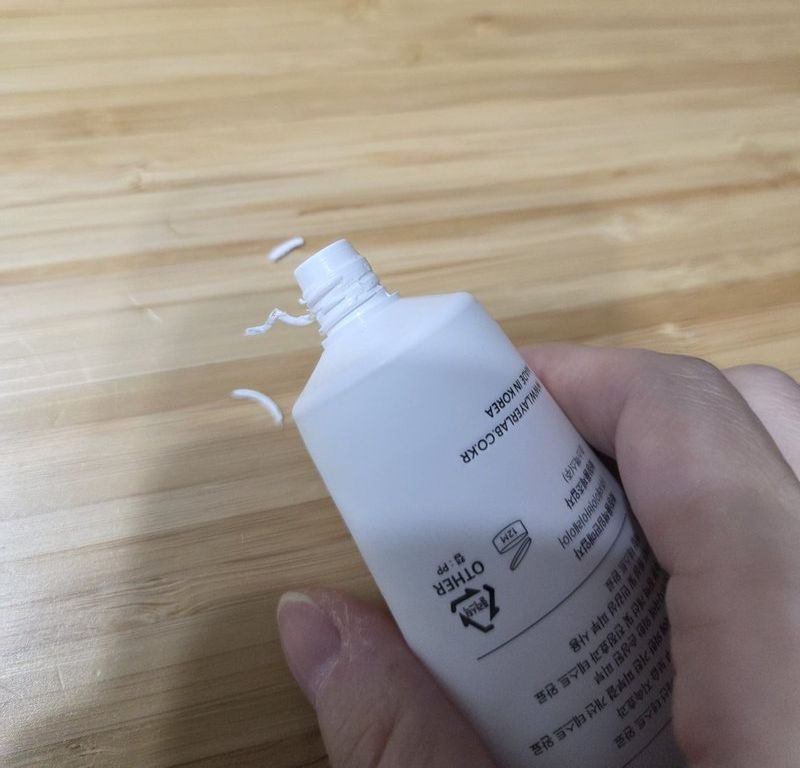
Now the real problem: the container. The square cap has a threading flaw. Little plastic spirals started shedding from the neck, and it got to the point where the cap no longer closes at all. I just rest it on top, store the tube upside down, and never move it. The tube format itself is excellent — hygienic, easy to control the amount — but the cap mechanism needs a redesign. This is a packaging fail, not a formula fail.
Would I repurchase? The formula, yes — but only if they fix the cap, and I’d wait for a sale or promo period. The quality inside the tube is good; the tube itself let it down.
🛒 Price & Where to Buy
I received this tube as a gift, so I don’t have a purchase price to report. For current pricing, check the brand’s official site or Korean retailers.
Brand website: www.layerlab.co.kr (as printed on packaging, as of October 2026).
Before you go, you might also find my guides on First Aid Beauty Ultra Repair Cream Review useful.
One more worth reading: my notes on Kiehl’s Midnight Recovery Cloud Cream Review.
📝 Verdict
The 3:1:1 ceramide-cholesterol-fatty acid concept rests on genuine published barrier research, which puts this cream’s formula story on firmer ground than most marketing claims. The ingredient list covers the three moisturizing mechanisms that matter — humectants to draw in water, emollients to fill the barrier, and occlusives like squalane to seal it.
What remains unverified: the actual concentrations of the barrier lipids, the methodology behind the 100-hour claim, and — most importantly — how it performs on real skin over time. Real use confirmed the formula’s promise — comfortable, layerable moisture — but also exposed a packaging flaw that undermines the whole experience.
Good for: People who prefer light, frequent layers; normal to slightly dry skin in mild cold; anyone who likes hygienic tube packaging.
Skip if: You need a heavy occlusive for extreme cold, or you travel with your skincare — this cap will not survive a bag.
Happy shopping 💛
— J.
🌐 This post is also available in French: Layer Lab Barrier Moist Cream : la science céramide 3:1:1 — and in Korean: 레이어랩 배리어 모이스트 크림 후기 — 3:1:1 세라마이드 과학.
If you prefer reading in French, I’ve also published the full French edition of this review: Layer Lab Barrier Moist Cream : la science céramide 3:1:1 tient-elle ses promesses?.
If you prefer reading in Korean, I’ve also published the full Korean edition of this review: 레이어랩 배리어 모이스트 크림 후기 | 3:1:1 세라마이드 과학, 진짜일까요?.
You May Also Like
- I Replaced My CA$80 Moisturizer With This CA$24 One (Honest Review)
- First Aid Beauty Ultra Repair Cream Review: My Go-To for Transitional Weather, Face to Body
- PDRN: Does It Actually Work? An Honest Guide to Fall 2026’s Most Talked-About Ingredient
Wishing you a beautiful day.
Get the Free Canada Savings Checklist
Join the newsletter — get the free PDF checklist and weekly Canada savings tips in your inbox.
Read Next
Some links in this post are referral or affiliate links. If you sign up or buy through them, I may receive a bonus or commission at no extra cost to you. It helps keep this blog running — thank you!