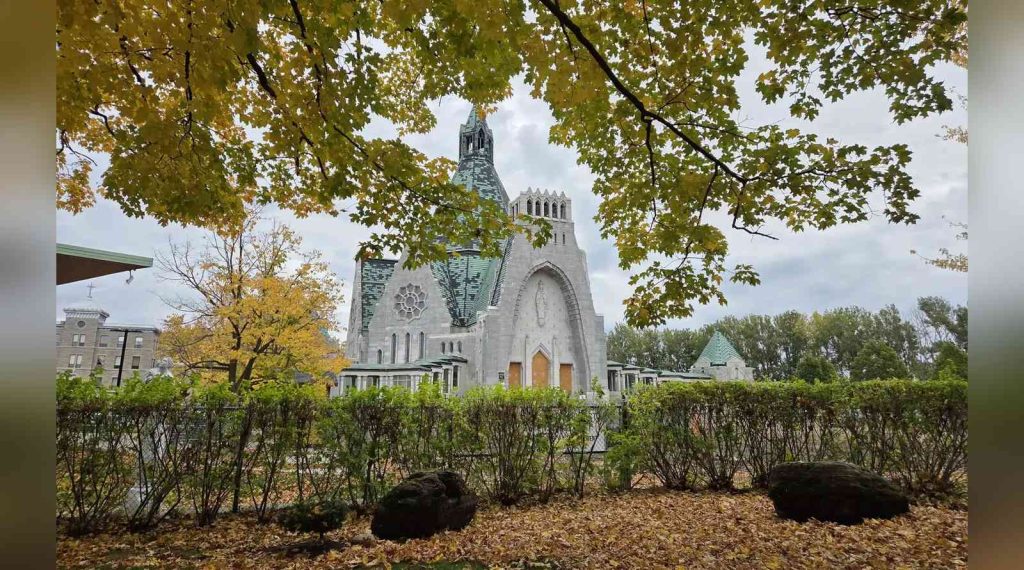
Notre-Dame-du-Cap: The Quiet Riverside Shrine I Visit Every Fall
Last updated: November 5, 2026
Bonjour! It’s J.
Real reviews — my own money, my own experience.
Québec’s most famous shrines come with crowds and tour buses. This one comes with golden maples, an empty garden path, and the St. Lawrence sliding quietly past — and it costs nothing to walk in. Notre-Dame-du-Cap, in Trois-Rivières, is Canada’s national shrine to the Virgin Mary. It is also, once or twice every fall, simply where I go. When I want autumn colour without the crowds — a slow walk, falling leaves, a river waiting at the end of the path — this is the place I recommend.
🌿 Quick Take
- Canada’s national shrine to the Virgin Mary — in Trois-Rivières, about halfway between Montréal and Québec City.
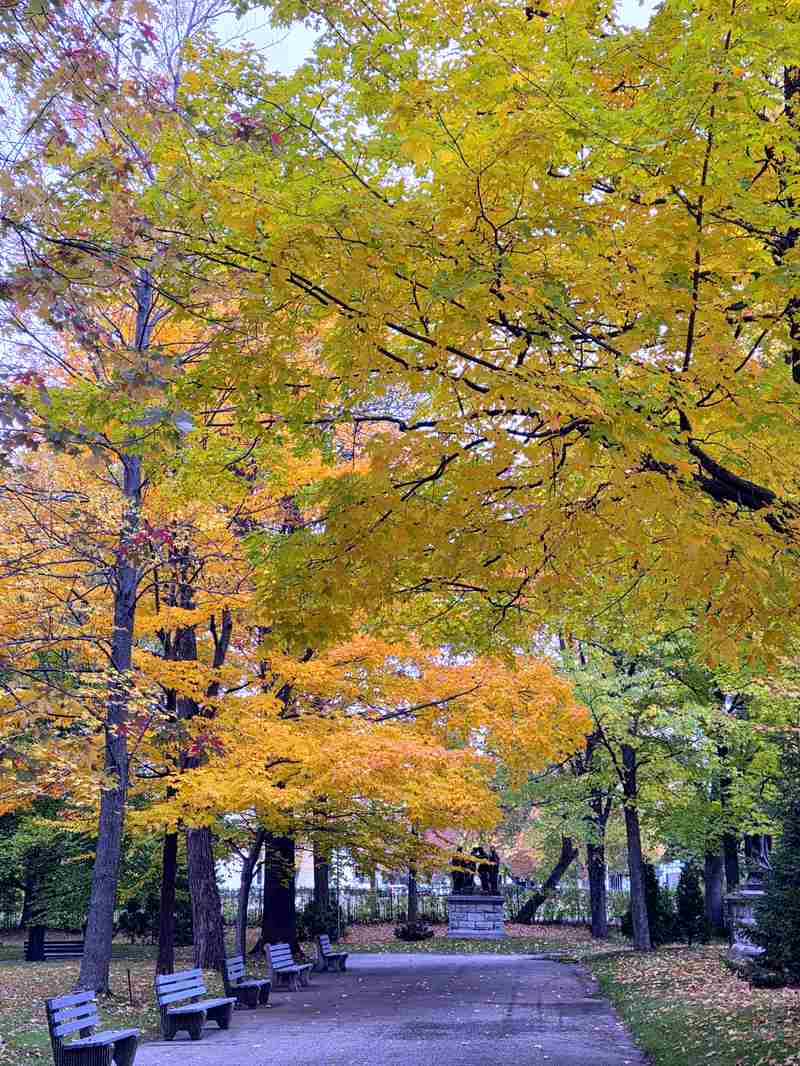
- The gardens are the real reason I come back: wide paths, benches, and golden maples — fall colour without the crowds.
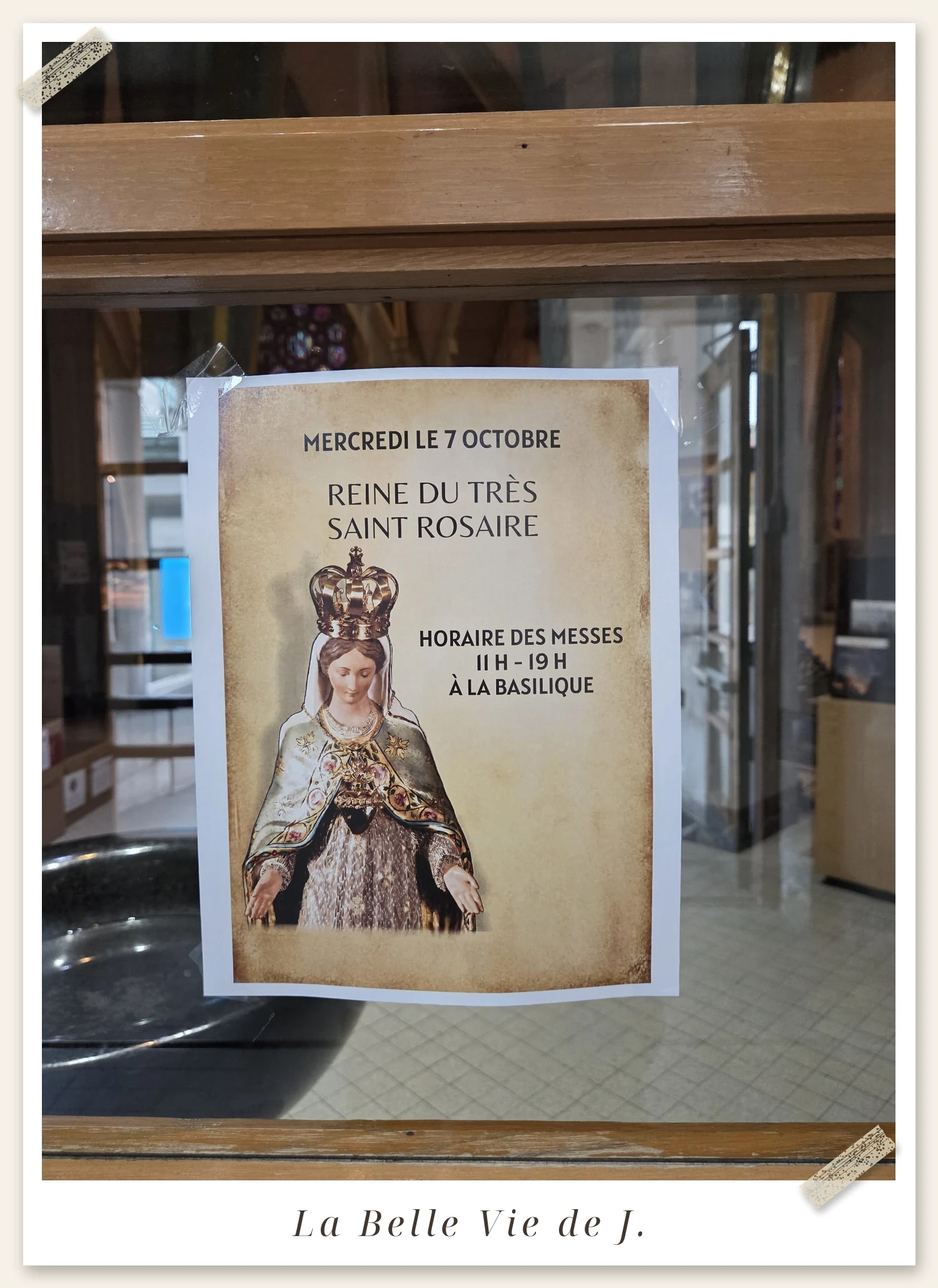
- At the heart of the grounds stands a small stone church built in 1720, where Mass is still celebrated every day.
- Next door, the modern basilica (inaugurated 1964) seats some 1,660 people under great concrete arches.
- It costs nothing to walk in.
🍂 The Gardens: Fall Colour, Minus the Crowds
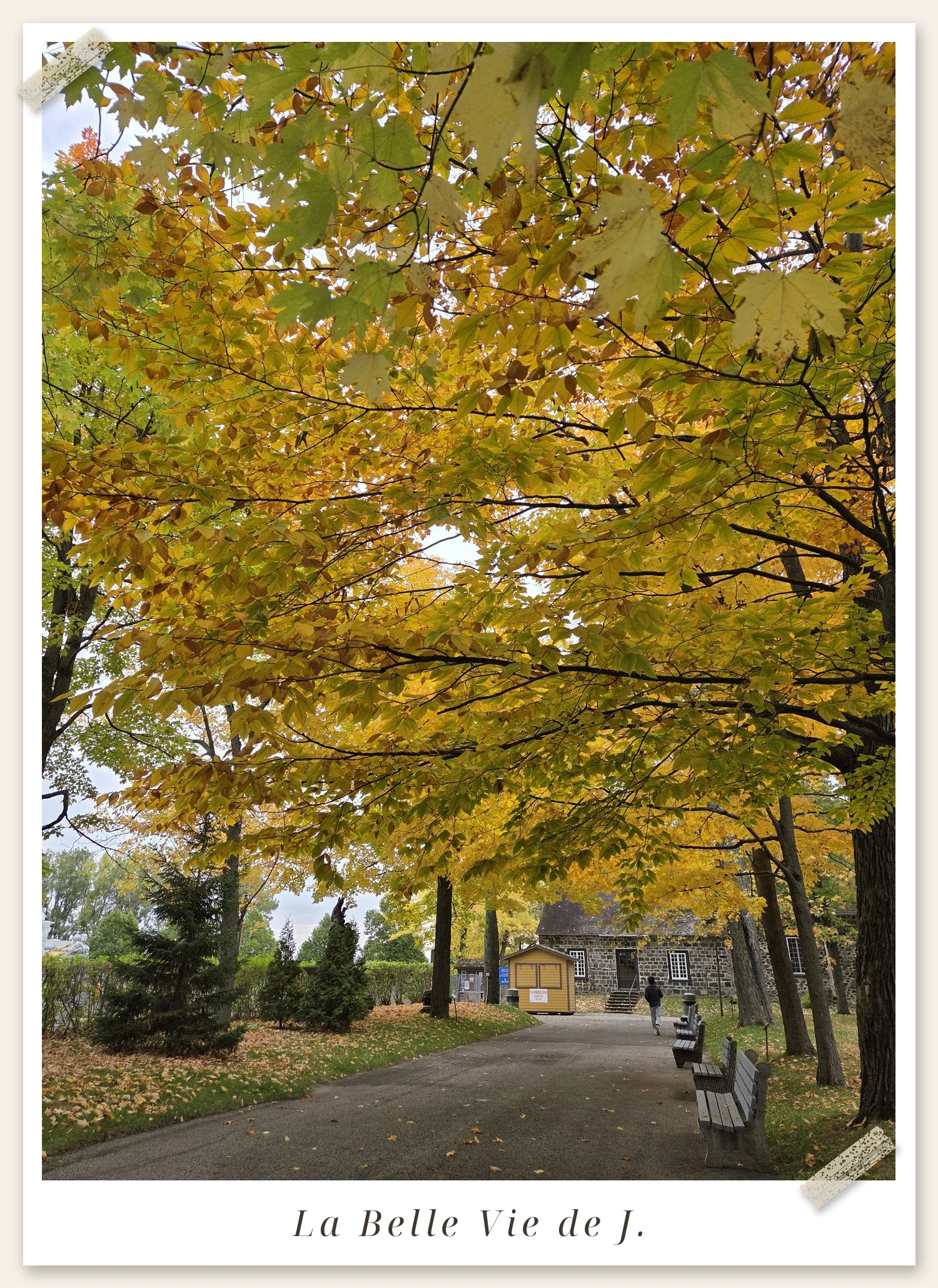
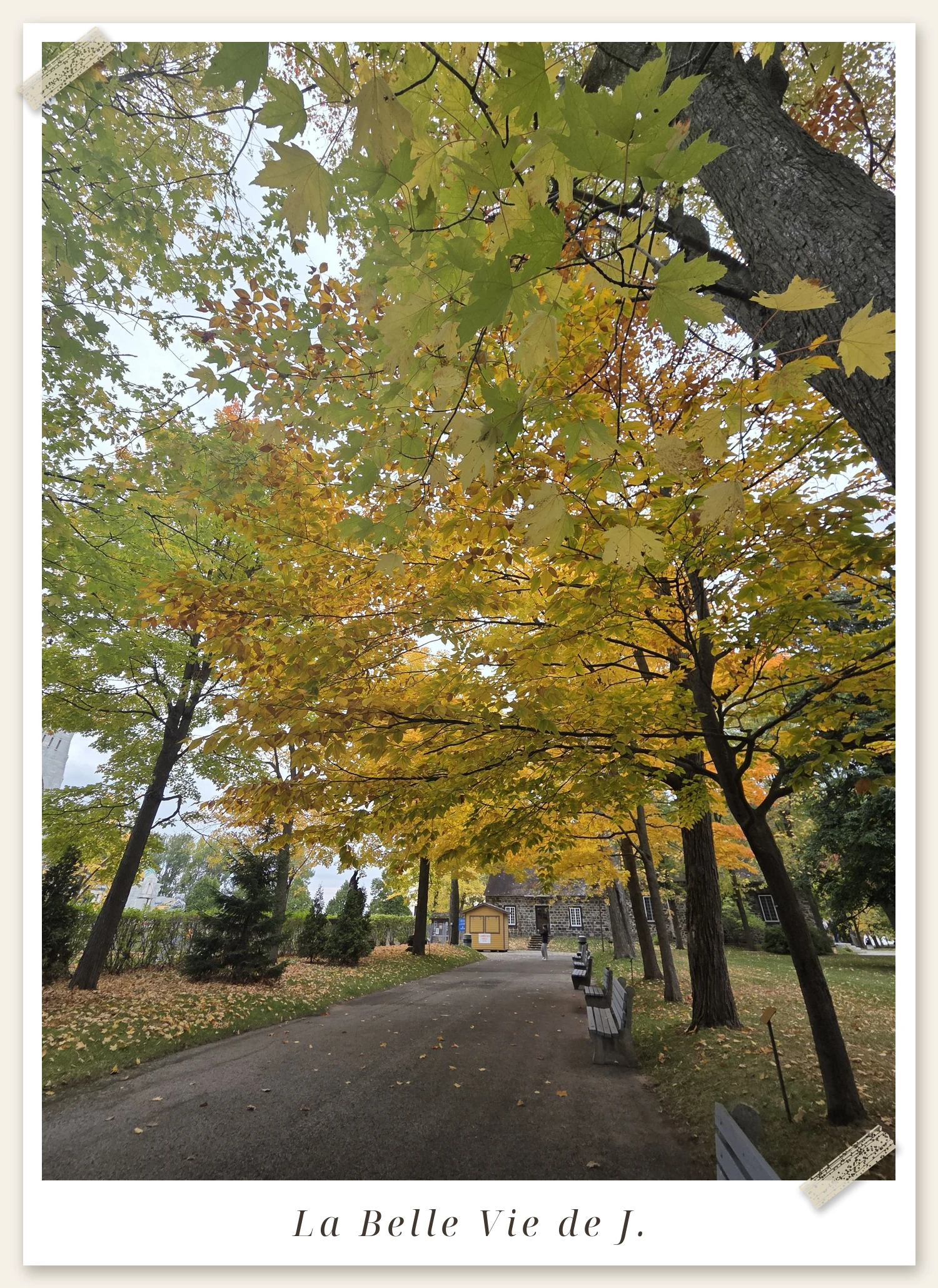
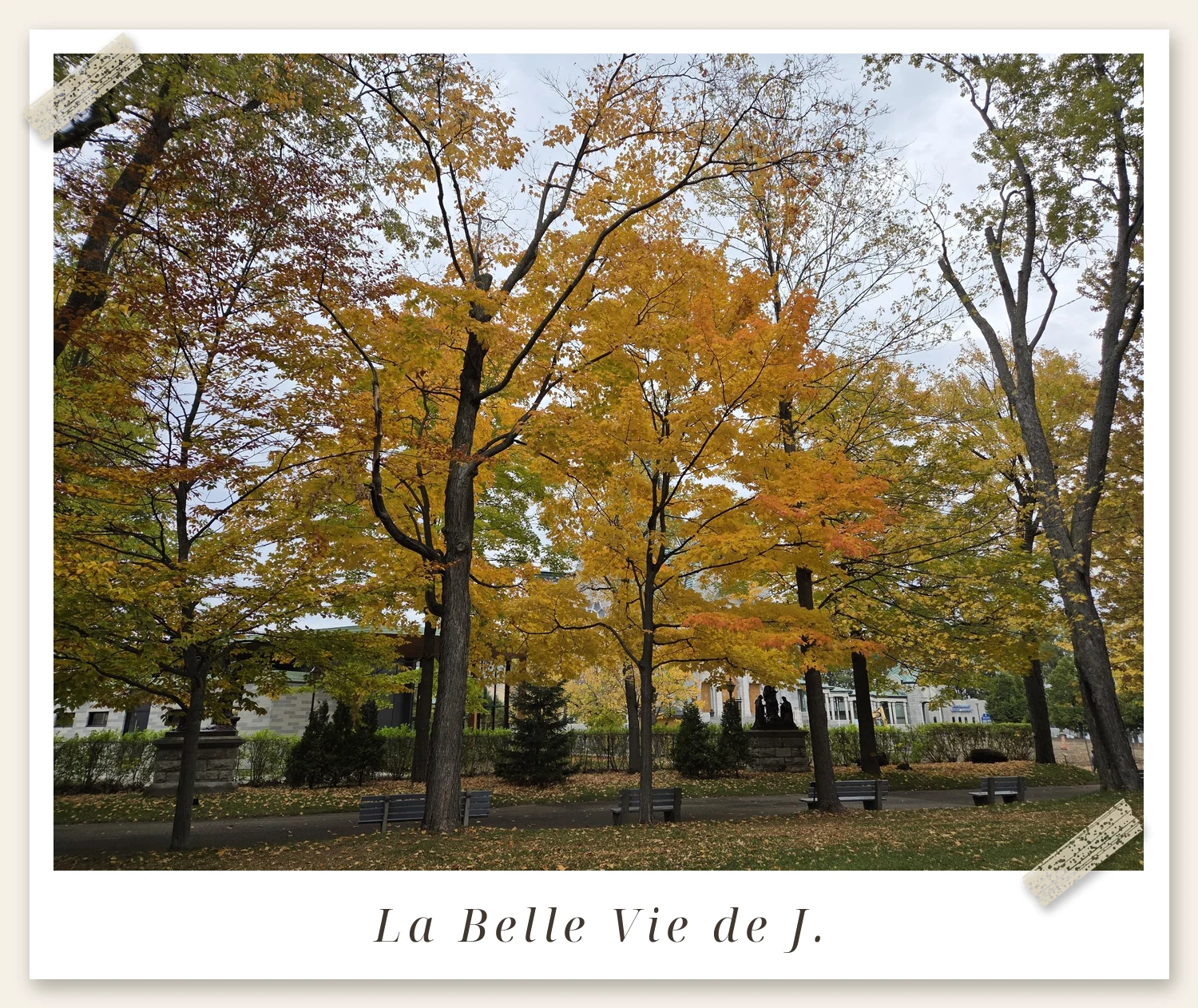
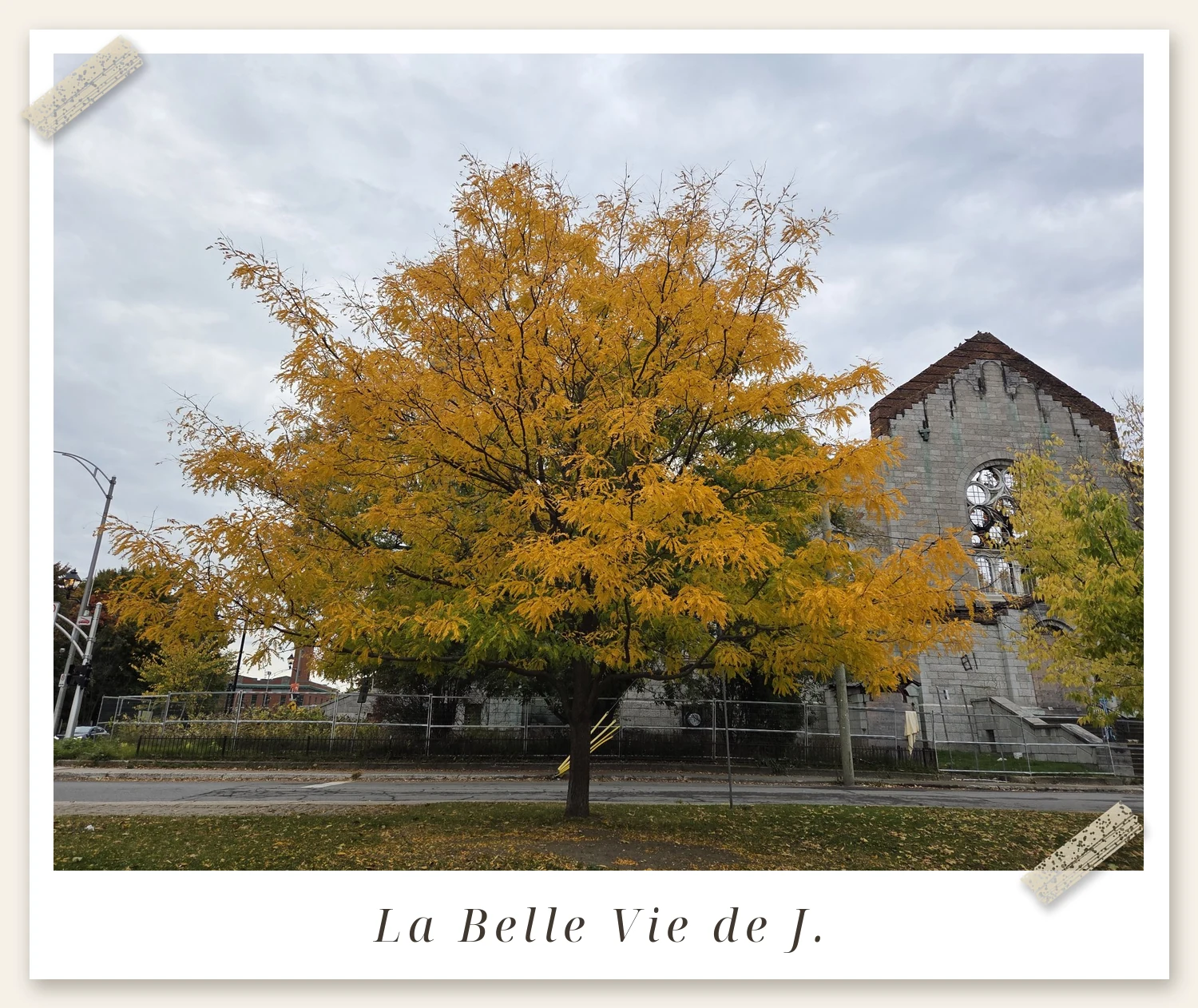
Start outside, because the gardens are the real reason I come back. The shrine grounds are a proper park: wide paths, benches under the trees, and in October a canopy of maples turning gold and red overhead. Everything is kept beautifully — raked paths, trimmed hedges, nothing out of place — yet on a weekday morning you may have whole stretches of it to yourself.
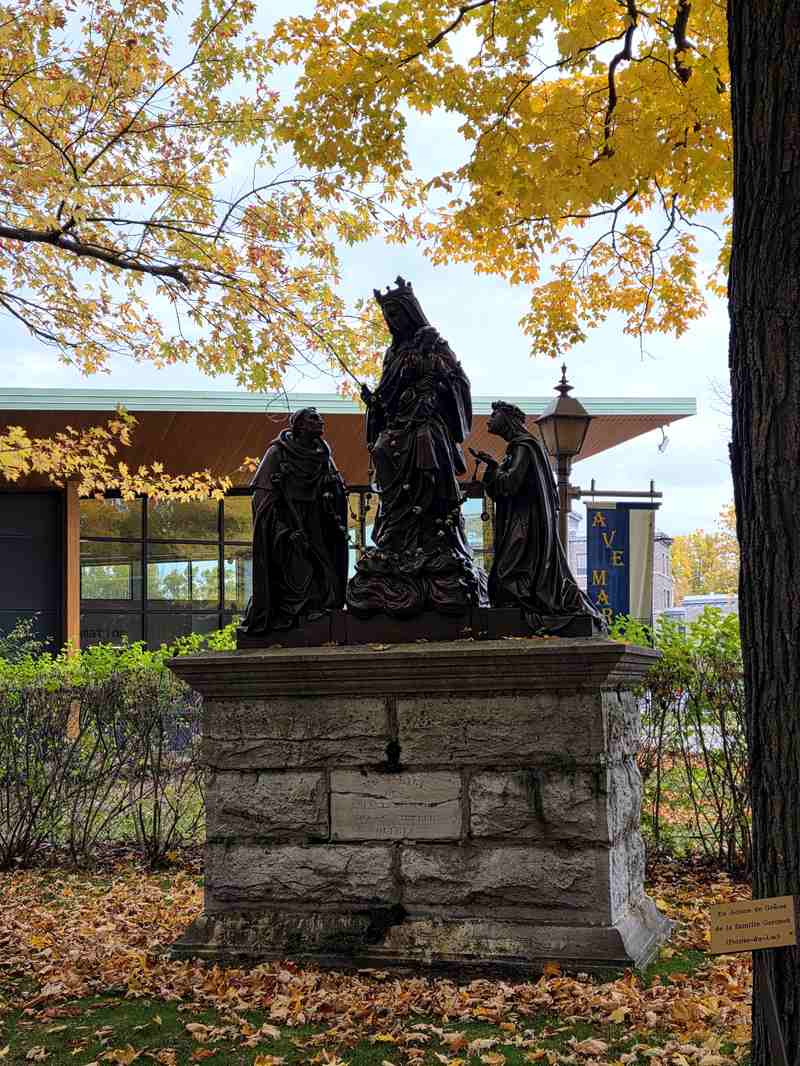
Winding through the trees is the Way of the Rosary, a path lined with bronze statue groups — cast in France and installed from 1906 — each one marking a mystery of the rosary. You don’t need to pray the rosary to enjoy the walk; the statues simply give the stroll a rhythm, one quiet scene after another, until the path opens toward the river.
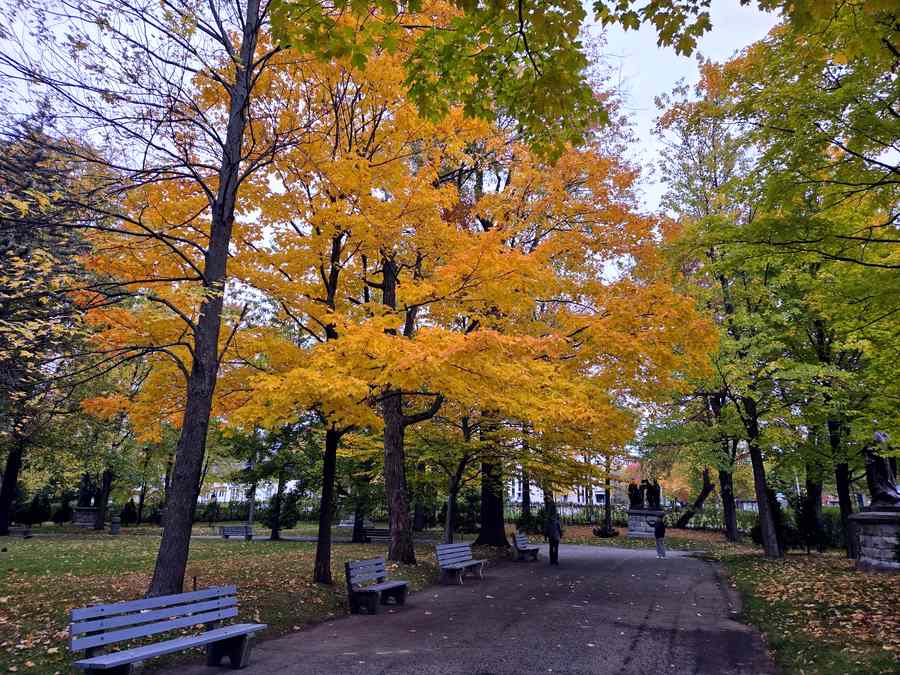
And the river is always there at the edge of it all. The shrine stands right on the bank of the St. Lawrence, and the gardens run down toward the water. On a still fall morning, with the leaves coming down one by one, it is honestly one of the prettiest — and calmest — spots in Québec.
⛪ The Little Stone Church of 1720 — and Two Miracles
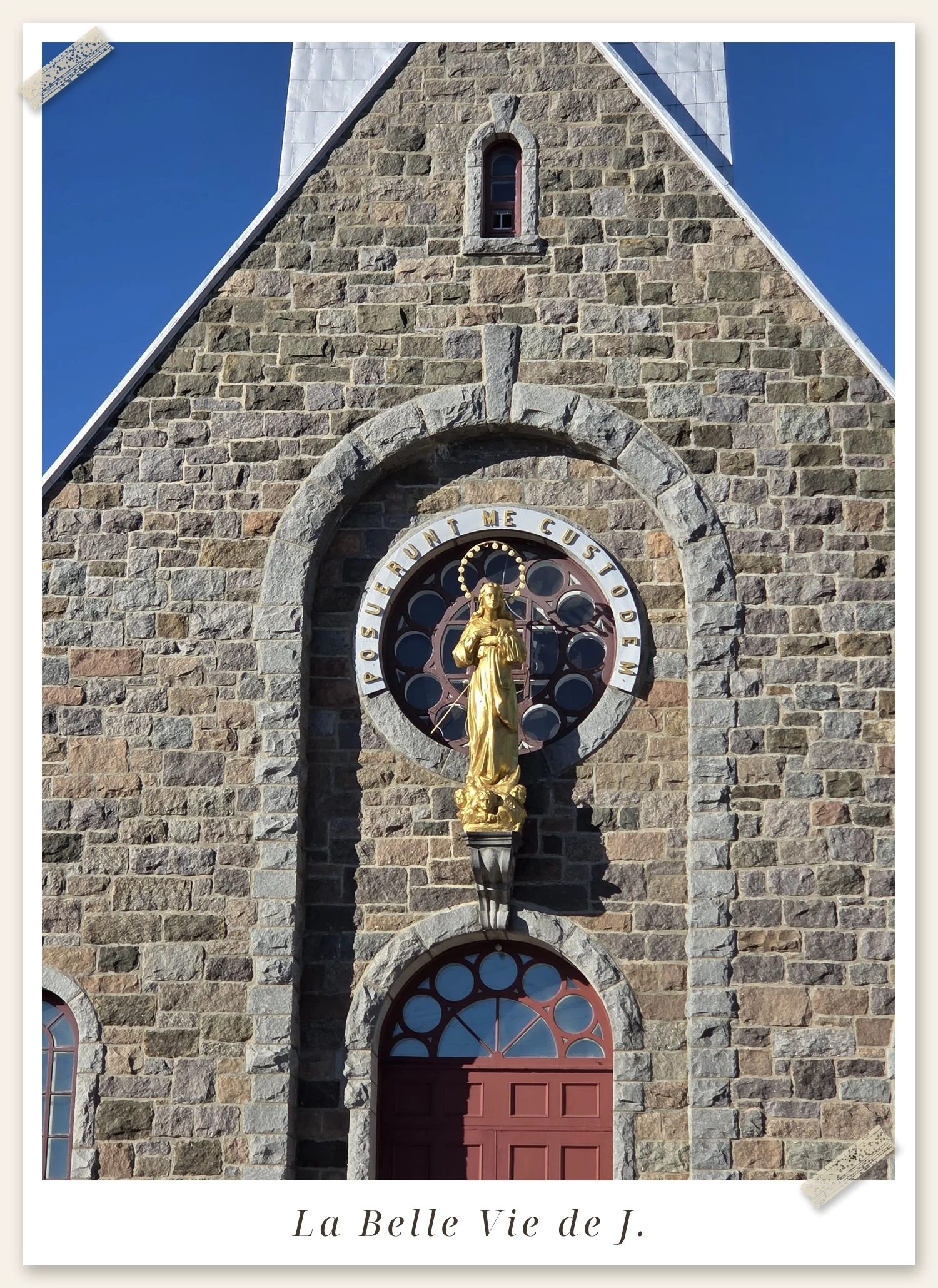
At the heart of the grounds stands a small fieldstone church, built in 1720 — the shrine says it is the oldest church in Canada where Mass is still celebrated every day. It began life dedicated to Mary Magdalene, and it very nearly didn’t survive: by the 1870s the parish had outgrown it and planned a bigger church, with stone to be hauled across the river on the winter ice.
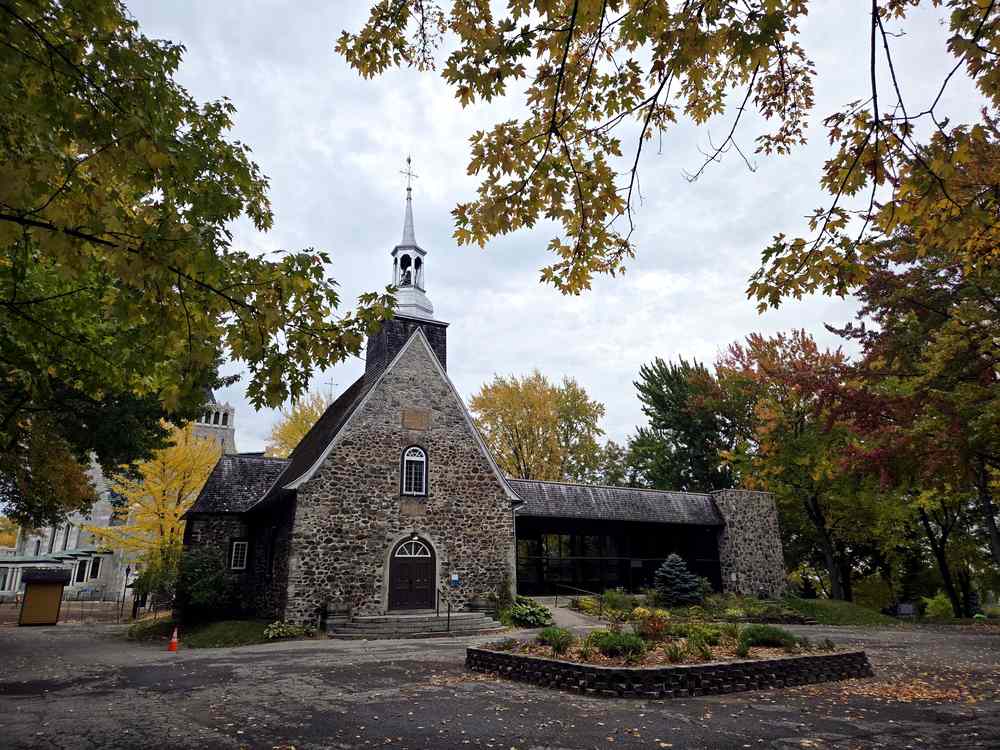
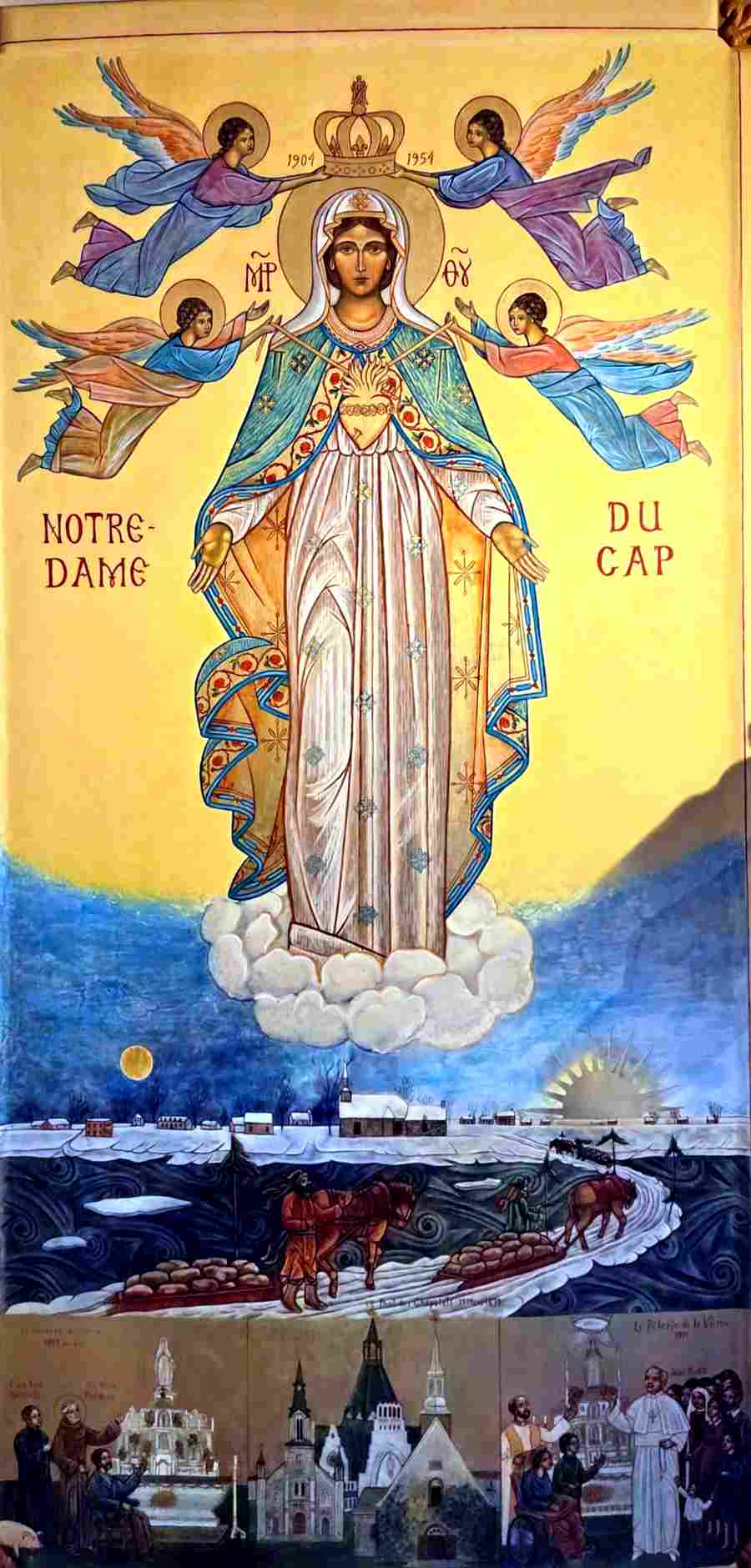
The winter of 1878–79, though, was unusually mild, and the St. Lawrence refused to freeze. Father Luc Désilets asked his parishioners to pray the rosary, and promised that if the ice came, the old church would be kept and dedicated to Our Lady of the Rosary. In mid-March 1879, drifting ice jammed into a narrow bridge across the river — about a mile and a half — — the jam formed on the evening of March 14, and the stone crossings ran from March 18 to March 26, nine days in all: long enough to haul the stone across on horse-drawn sledges. It is still called the Pont des Chapelets — the Bridge of Rosaries.
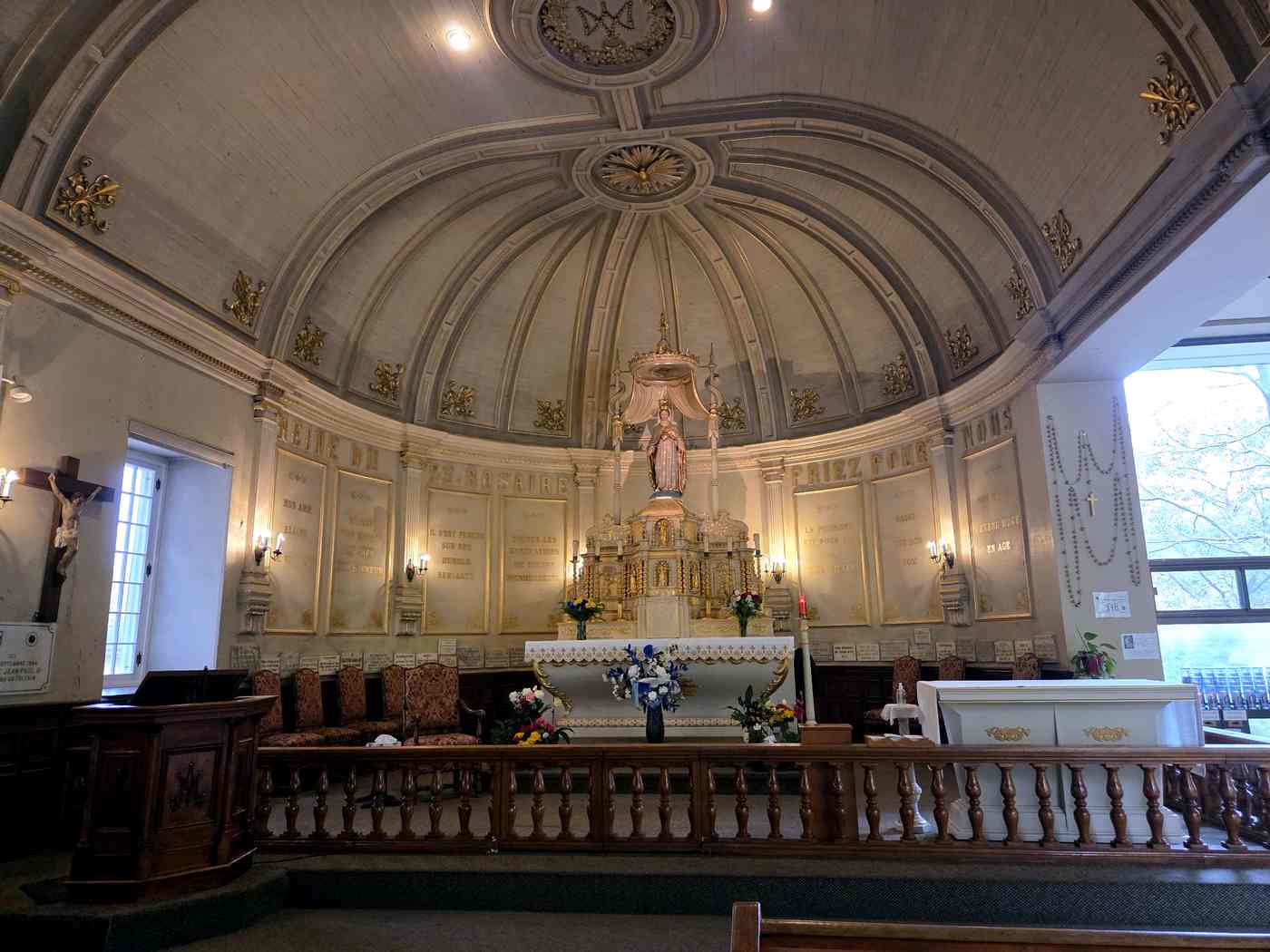
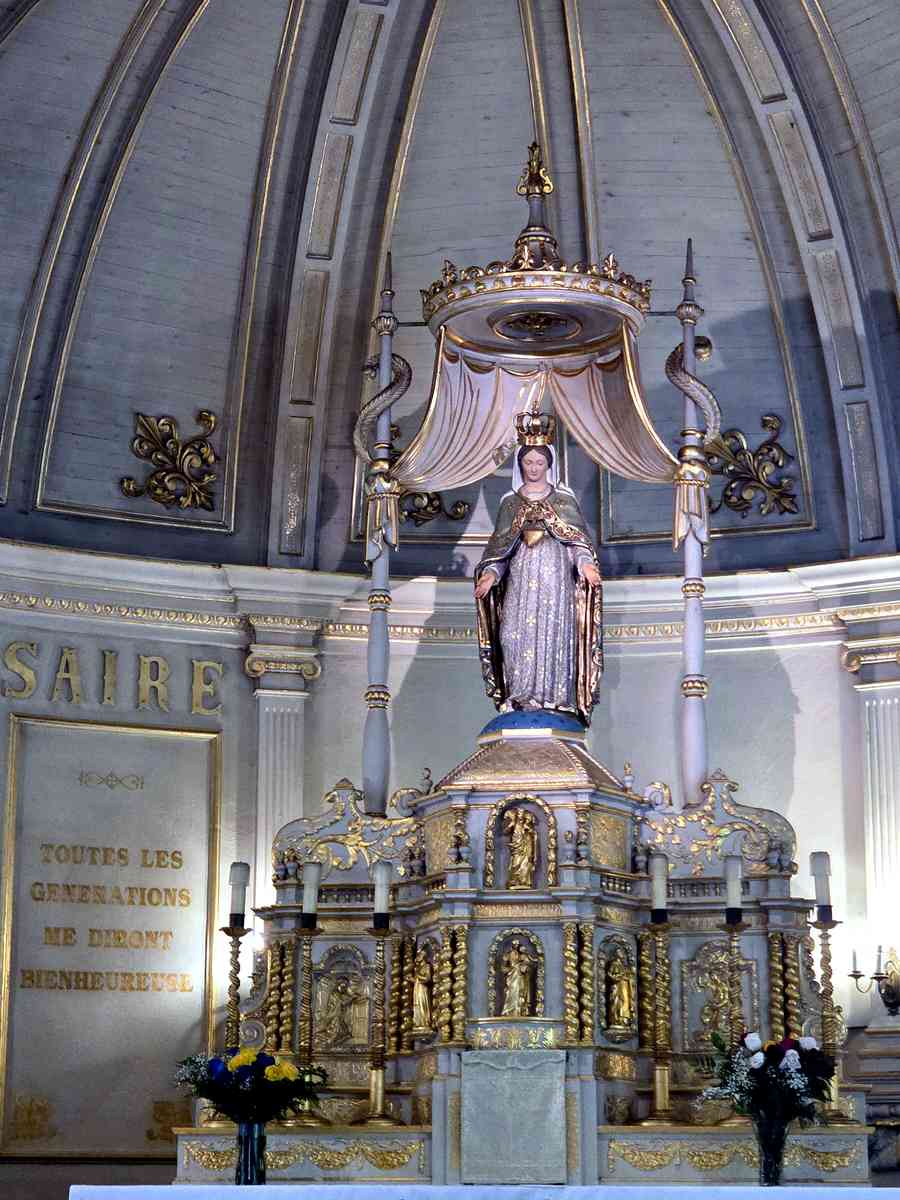
The second story is stranger. The statue above the altar — given to the parish by Zéphirin Dorval in 1854 — was ceremoniously placed in the newly dedicated church on June 22, 1888. That evening, Father Désilets, the Franciscan Father Frédéric Janssoone and parishioner Pierre Lacroix reported that the statue opened its eyes, for five to ten minutes, while they moved around the church to check it wasn’t a trick of the light. Janssoone, beatified in 1988, became the shrine’s first pilgrimage director. Step inside the old church today and you stand in the same small, gilded room where it happened.
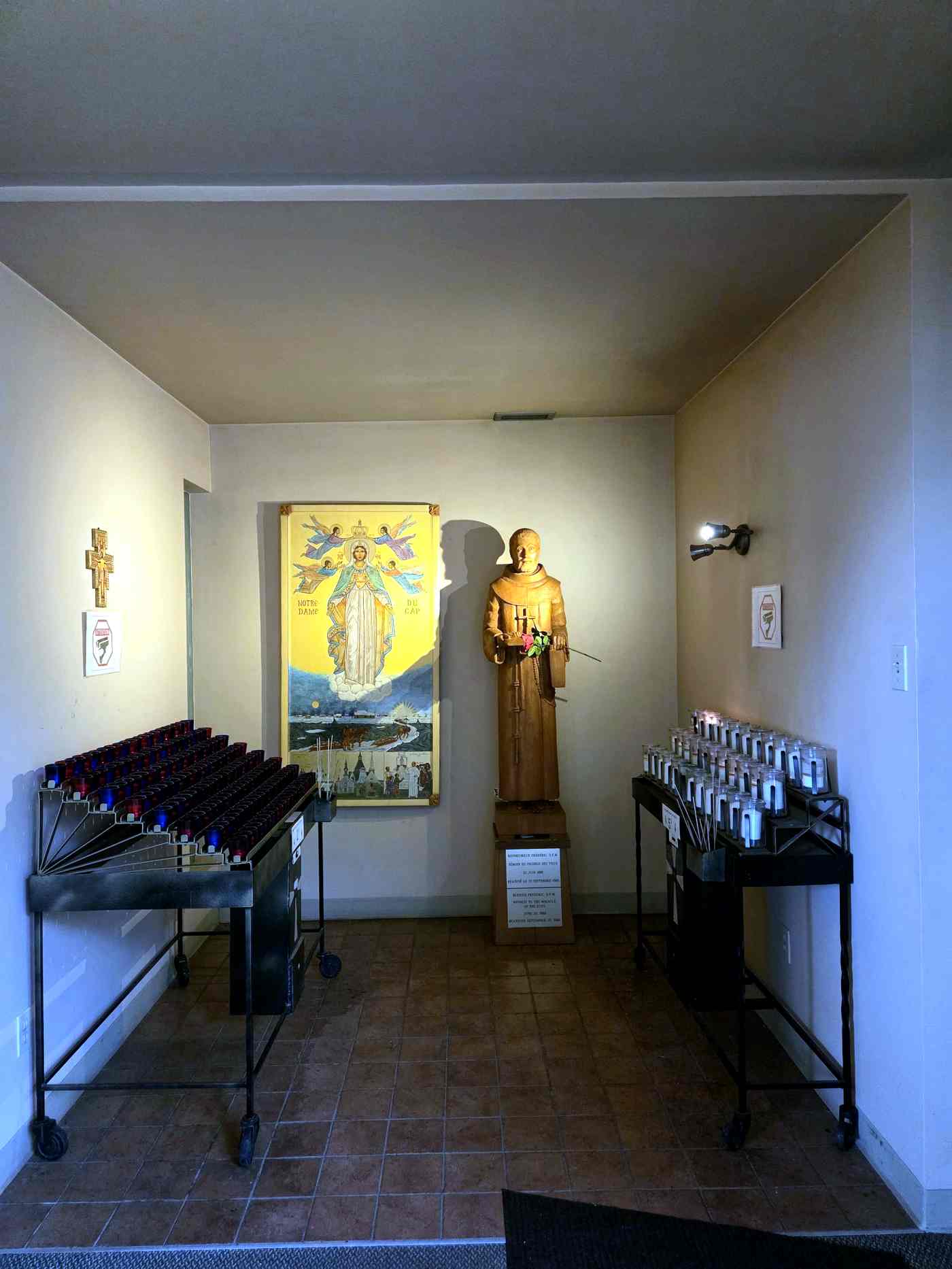
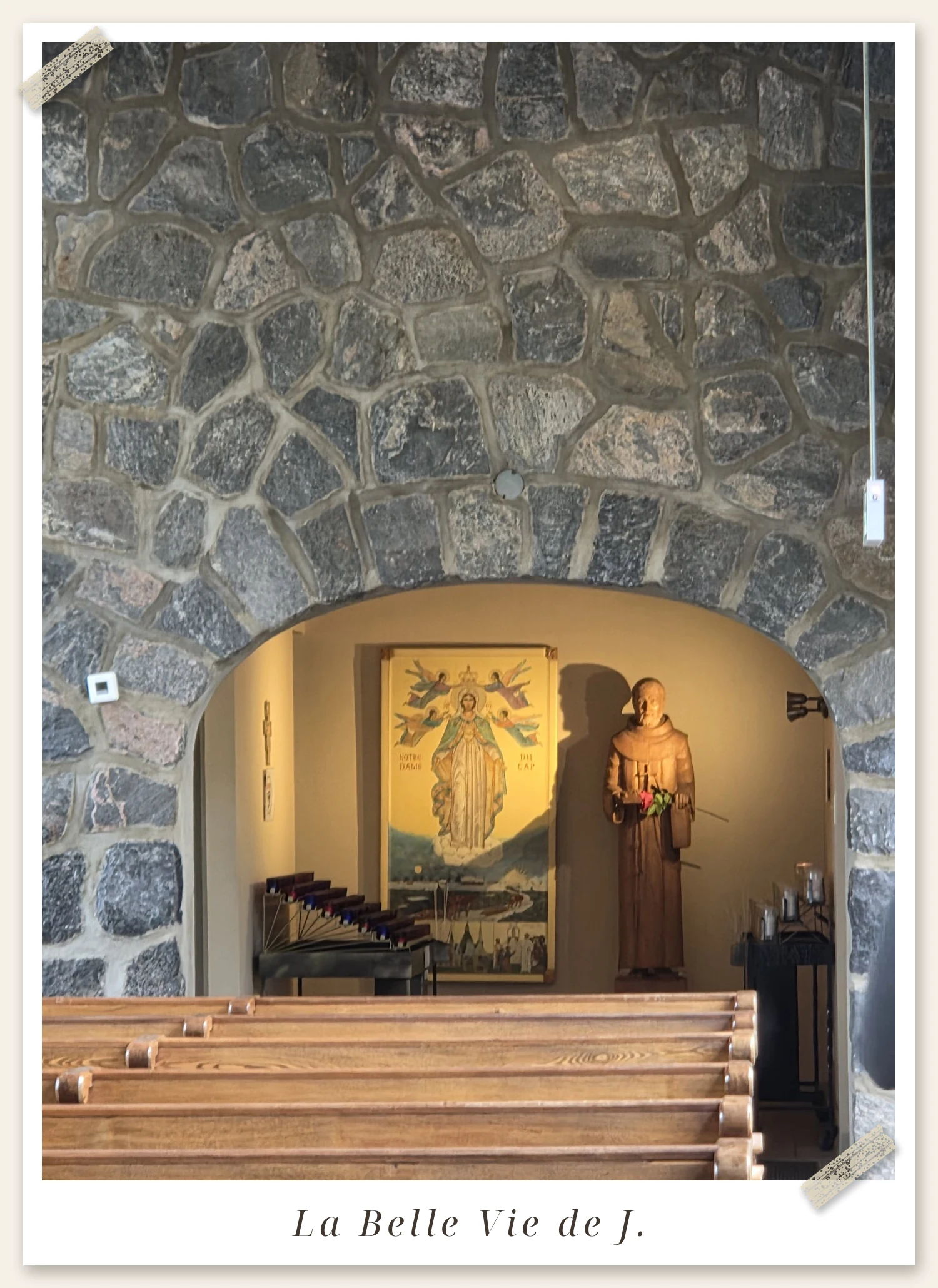
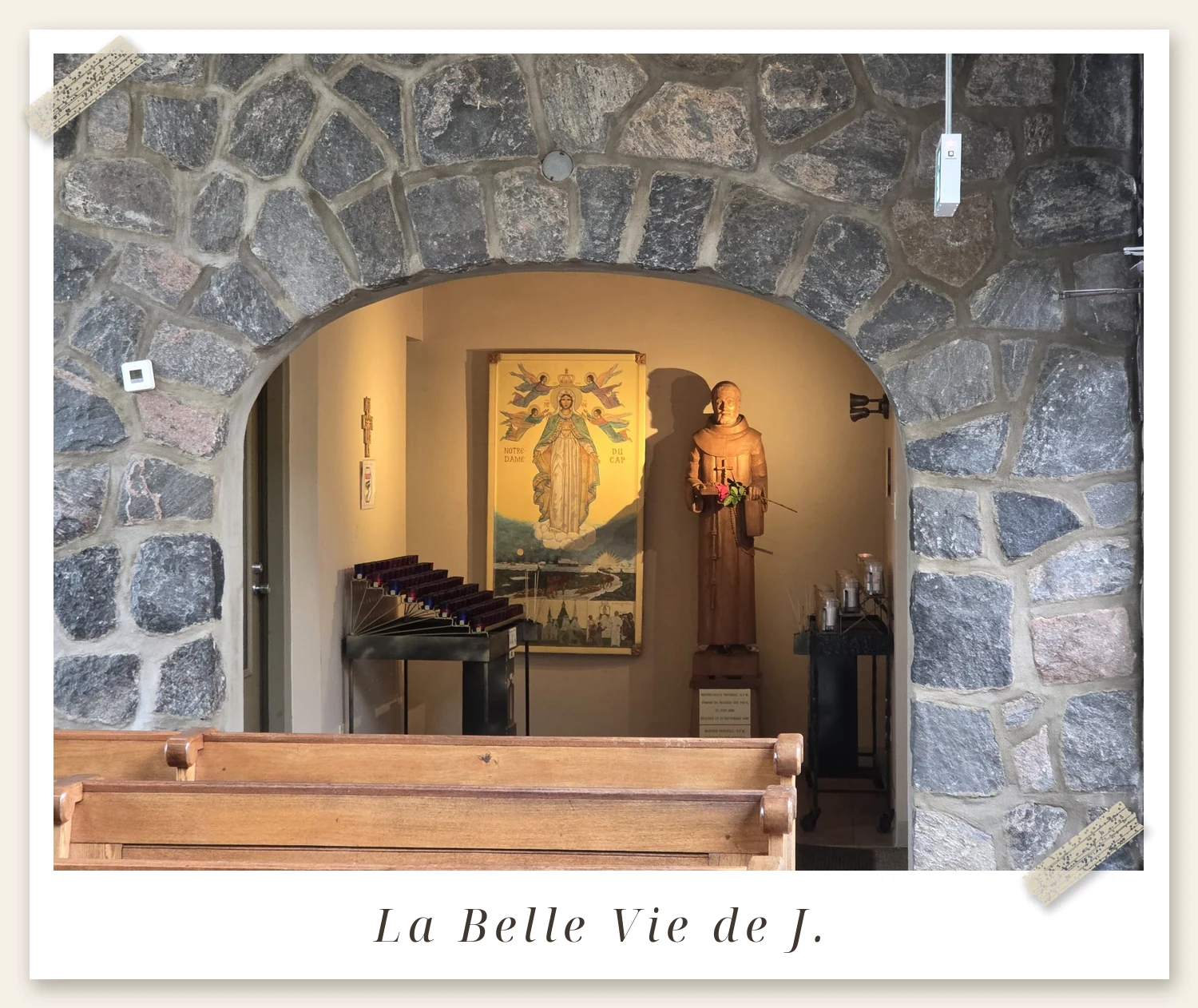
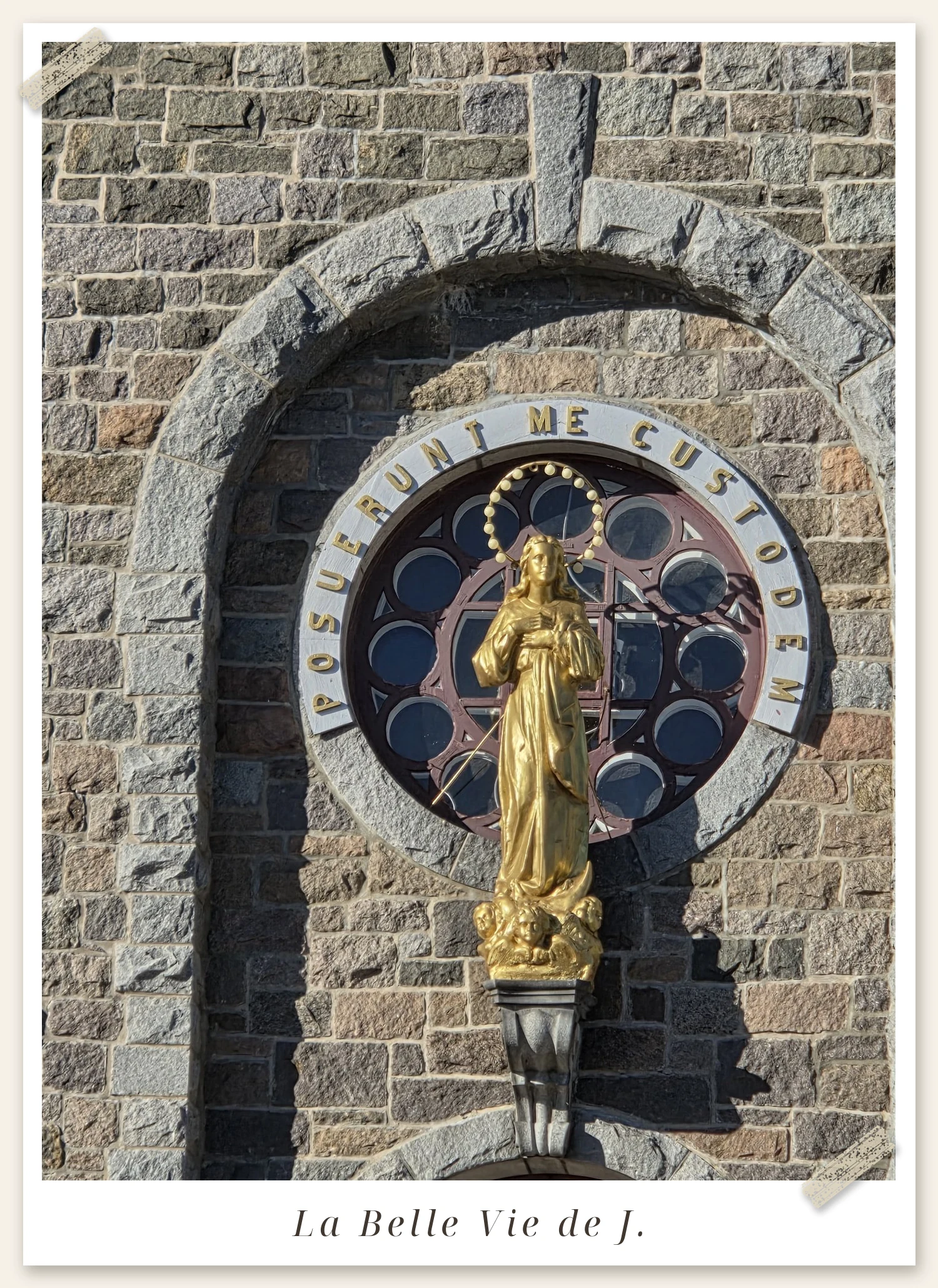
Just inside the old church, look for the tall icon of Notre-Dame du Cap, all gold — with the whole story told at her feet: the sledges crossing the ice bridge below. Beside it stands a wooden statue of Blessed Frédéric himself.
🌈 The Basilica: A Wall of Blue Glass
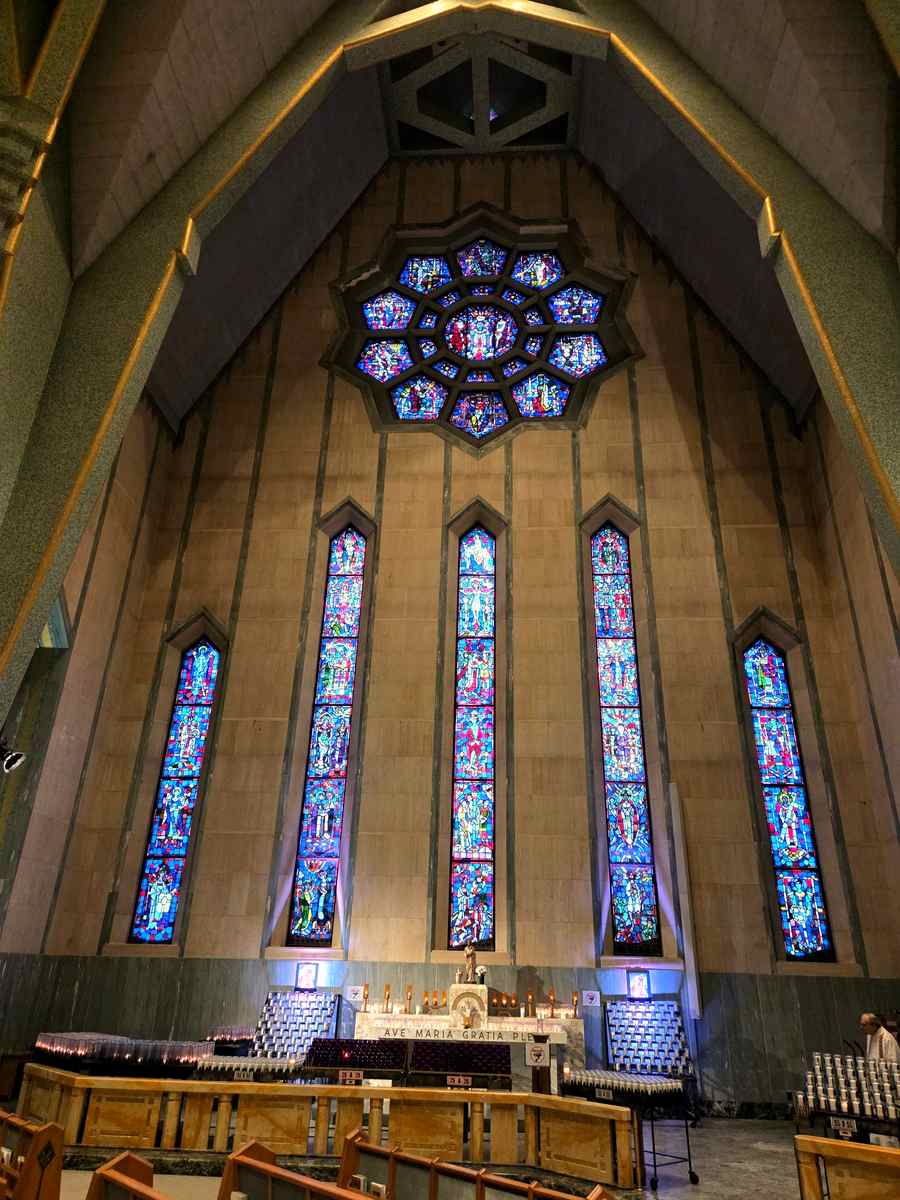
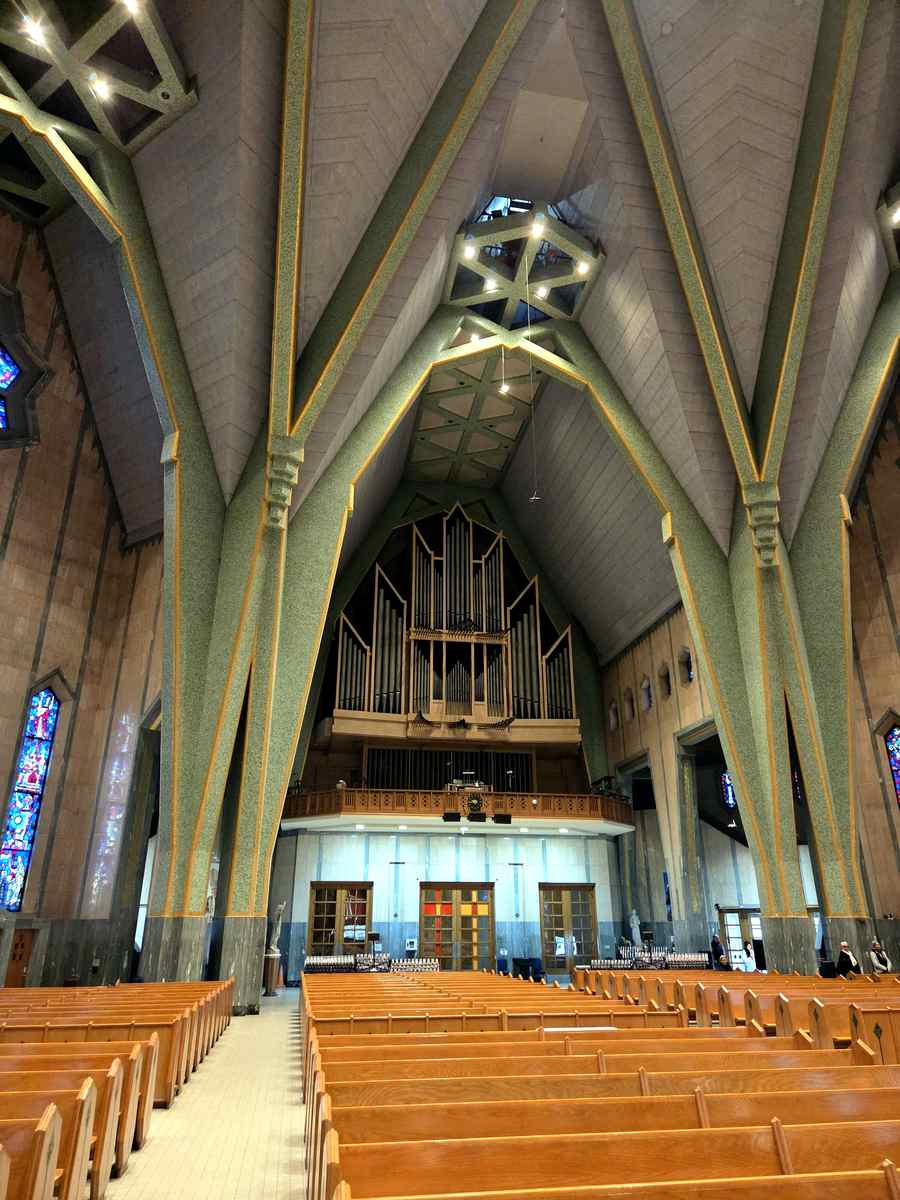
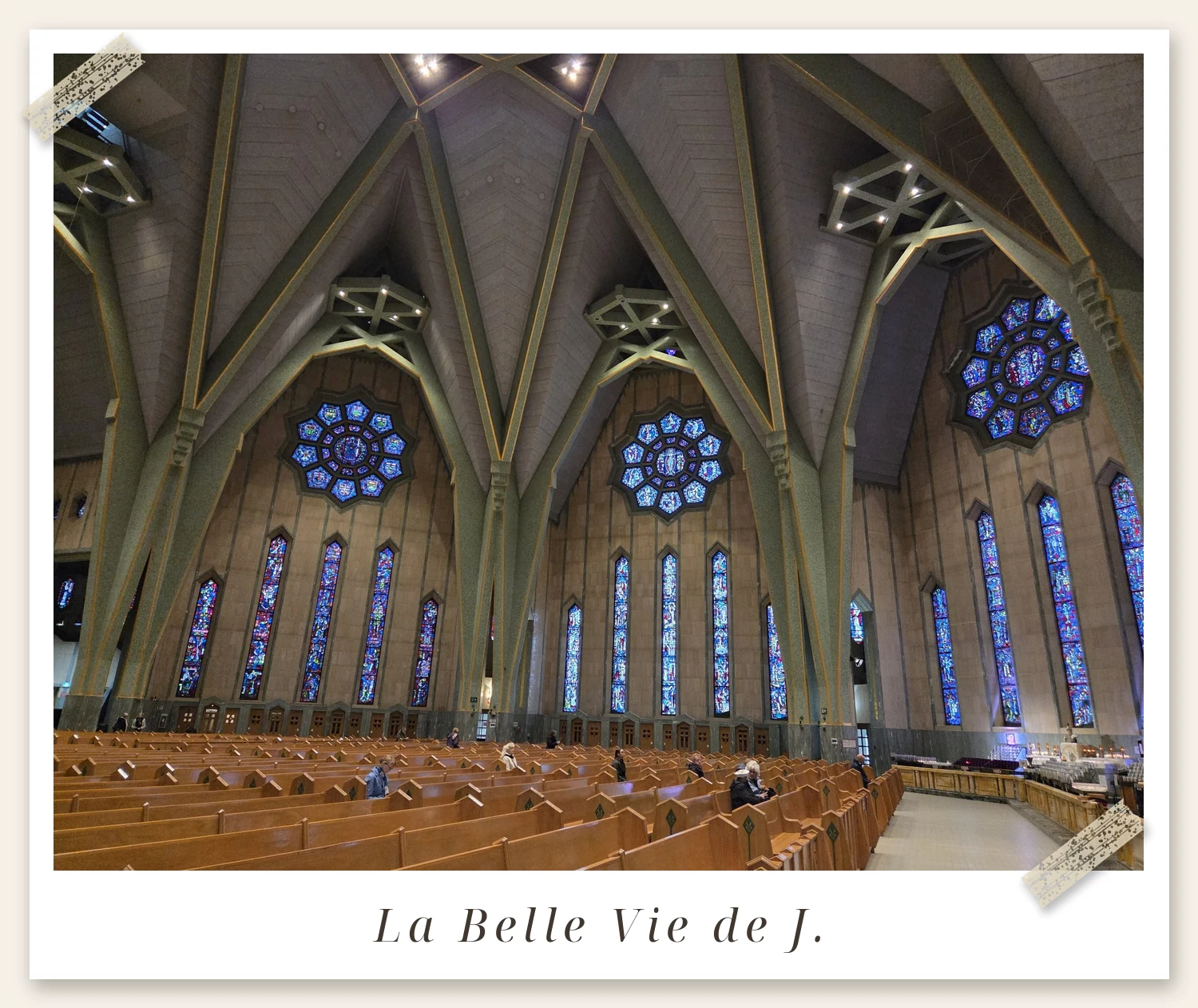
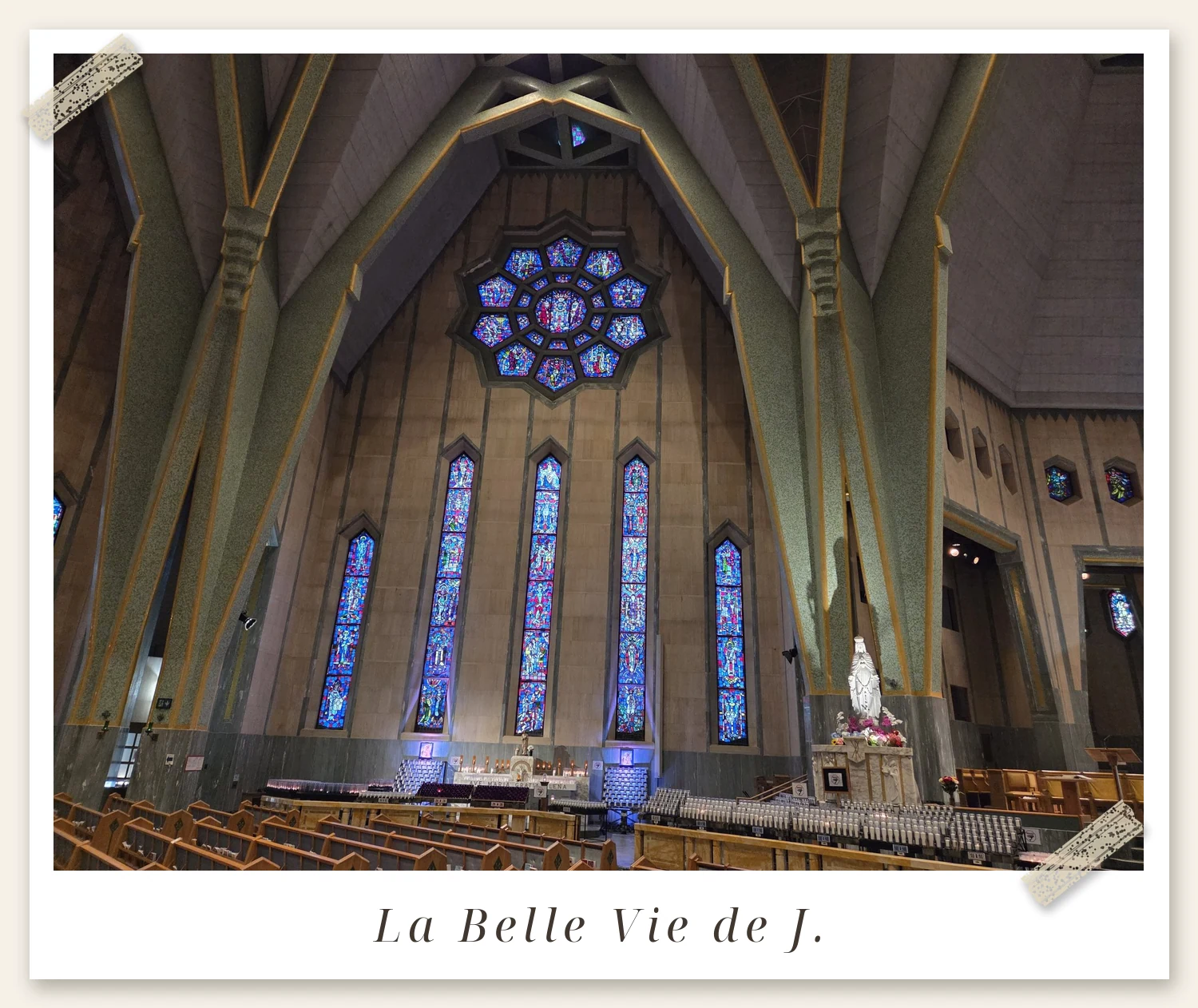
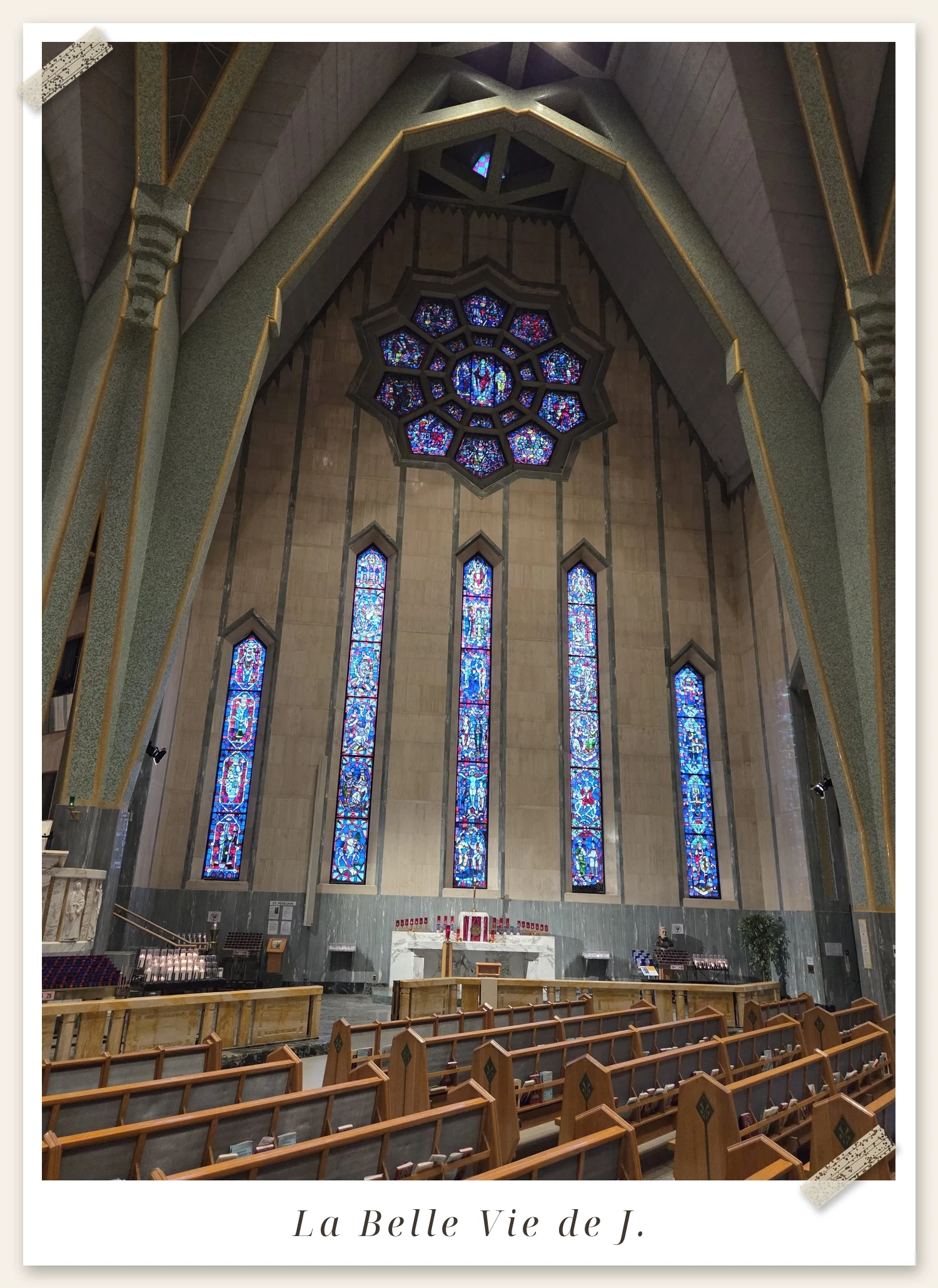
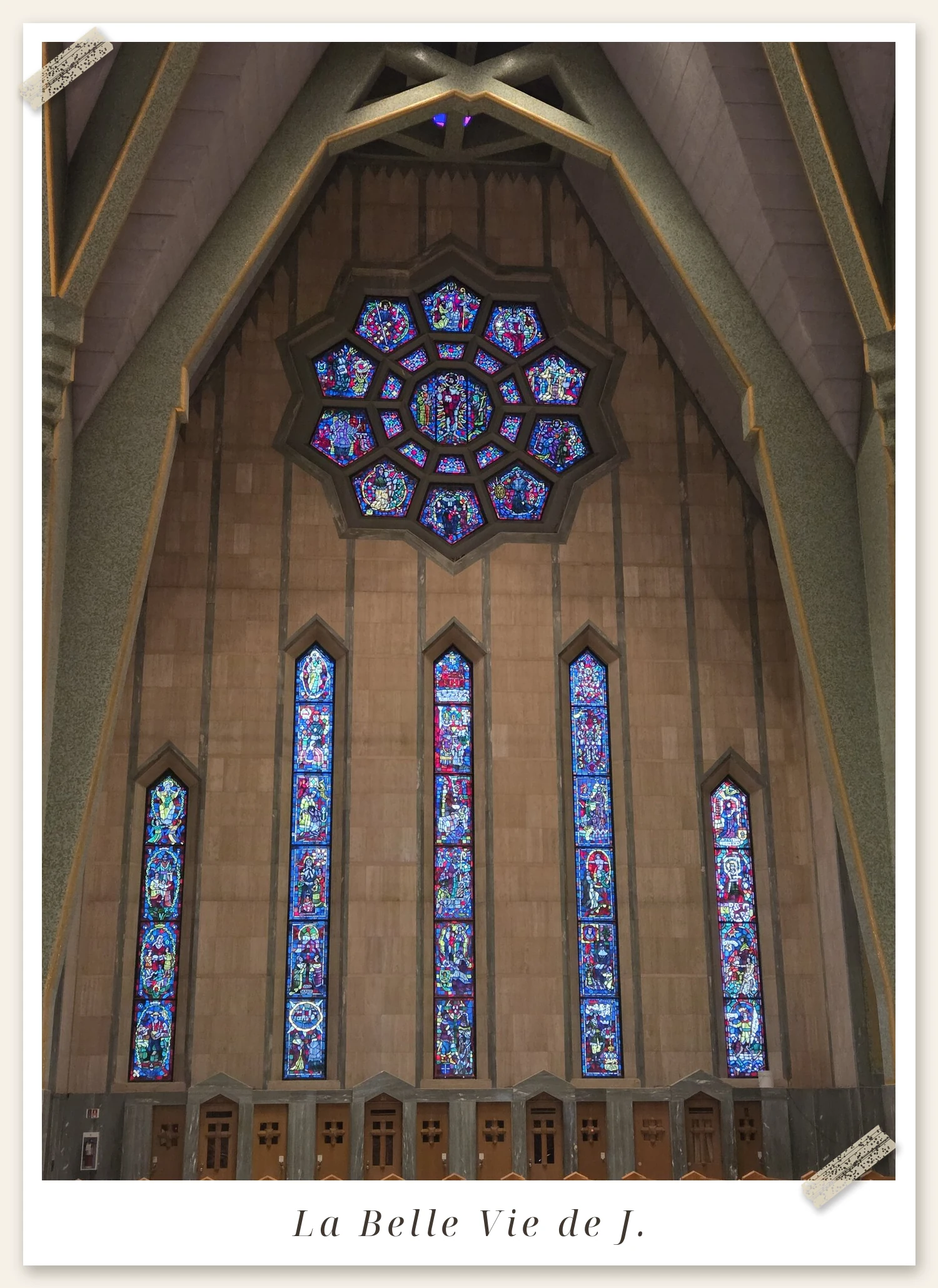
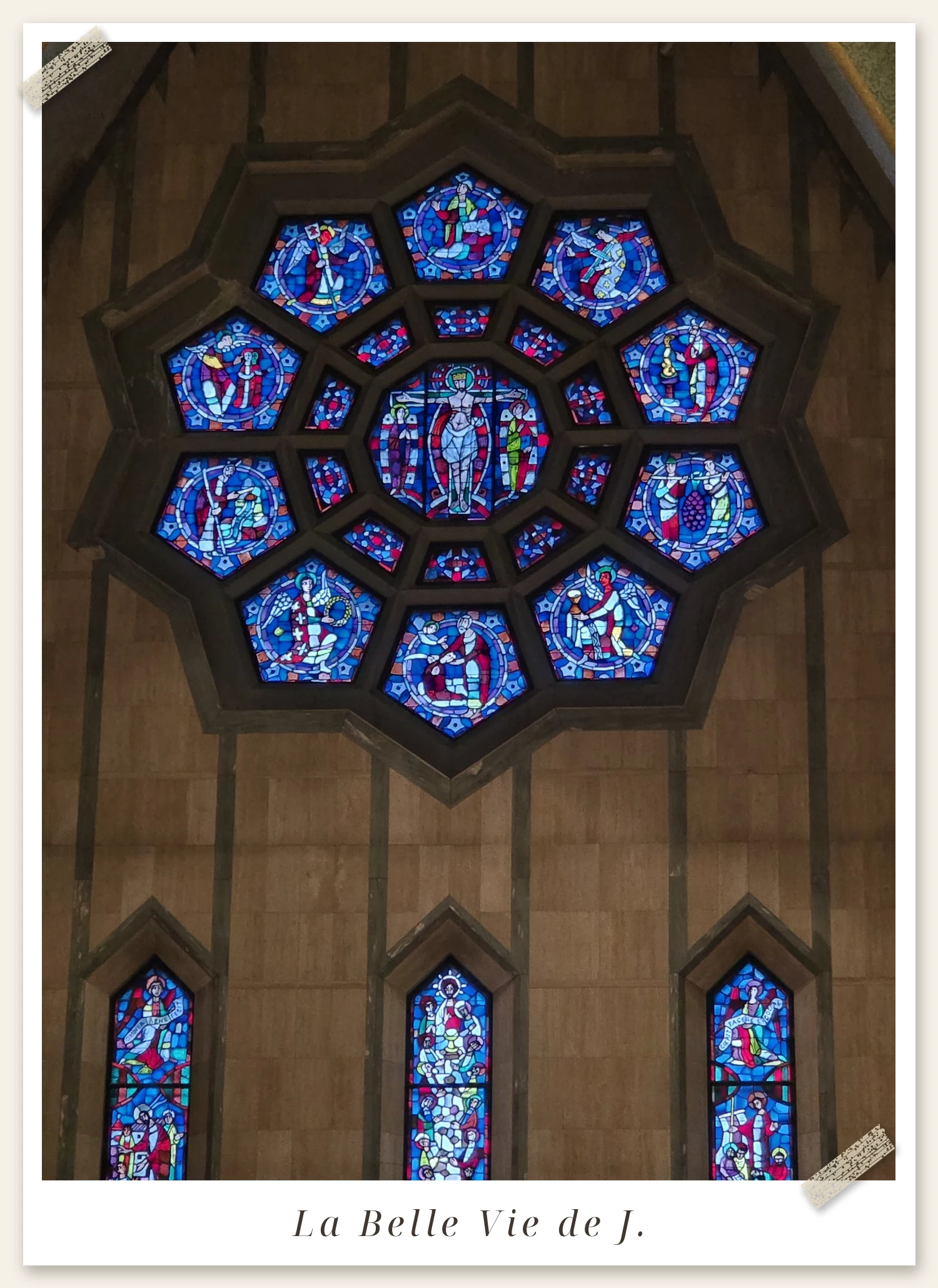
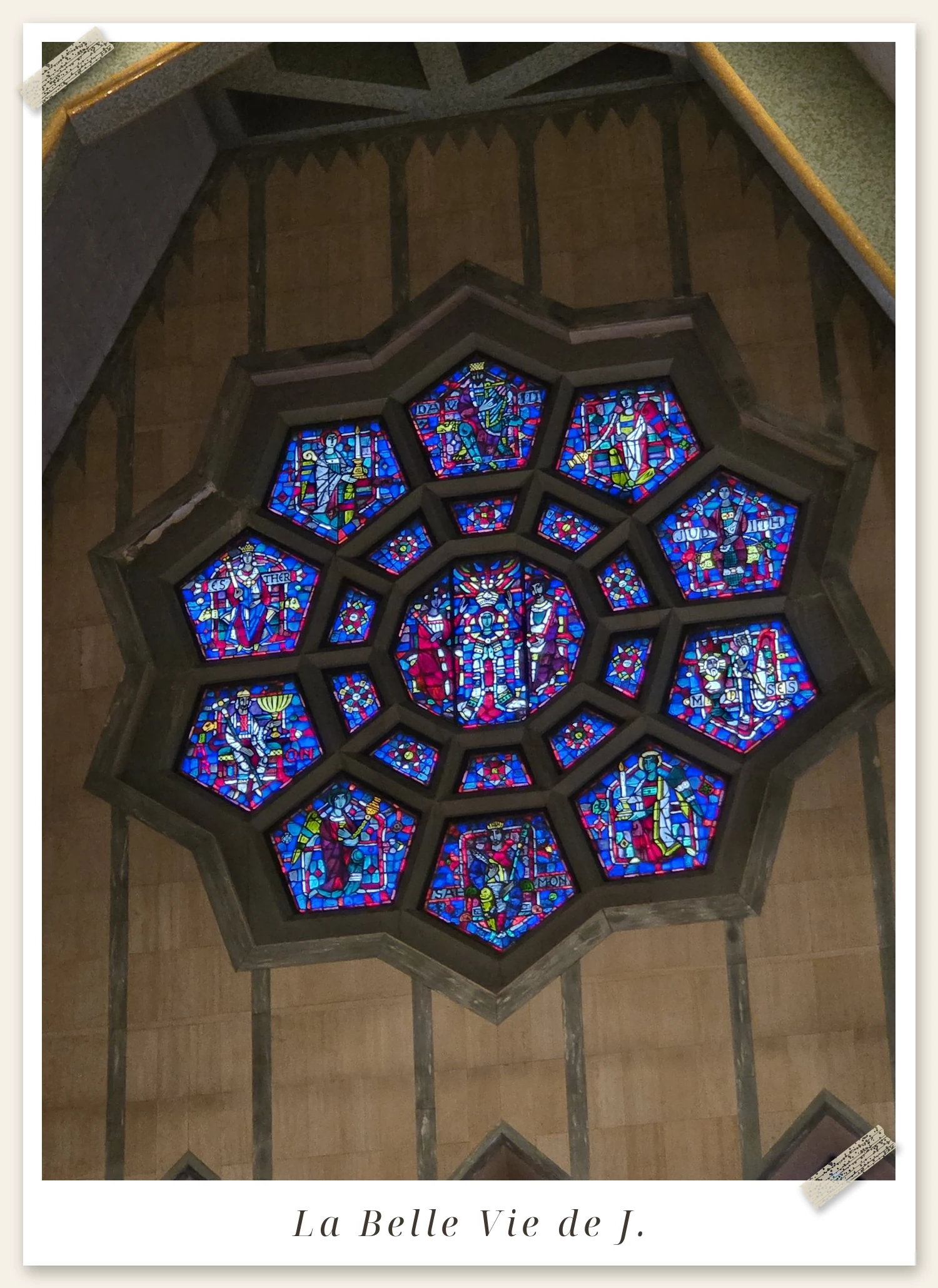
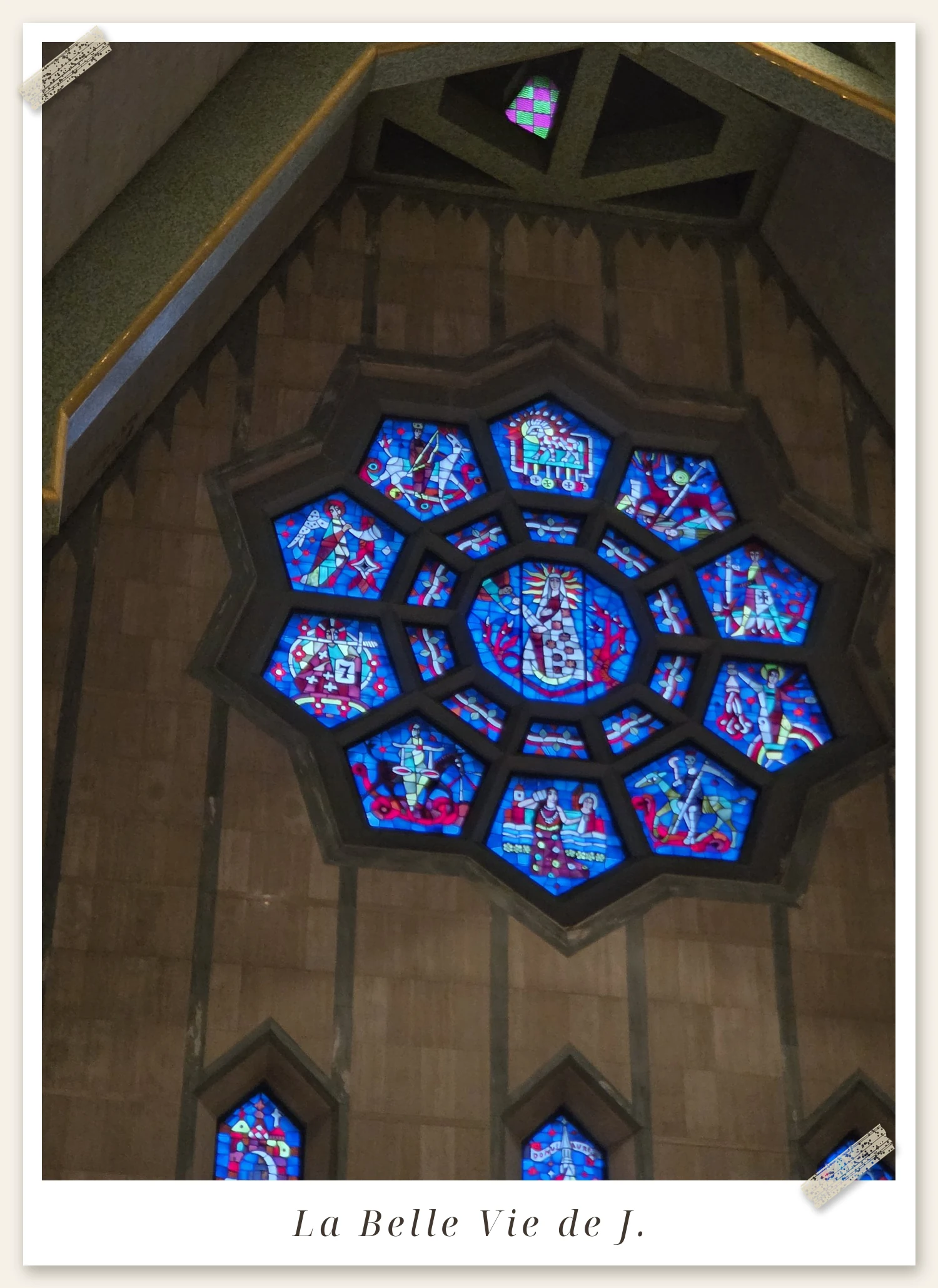
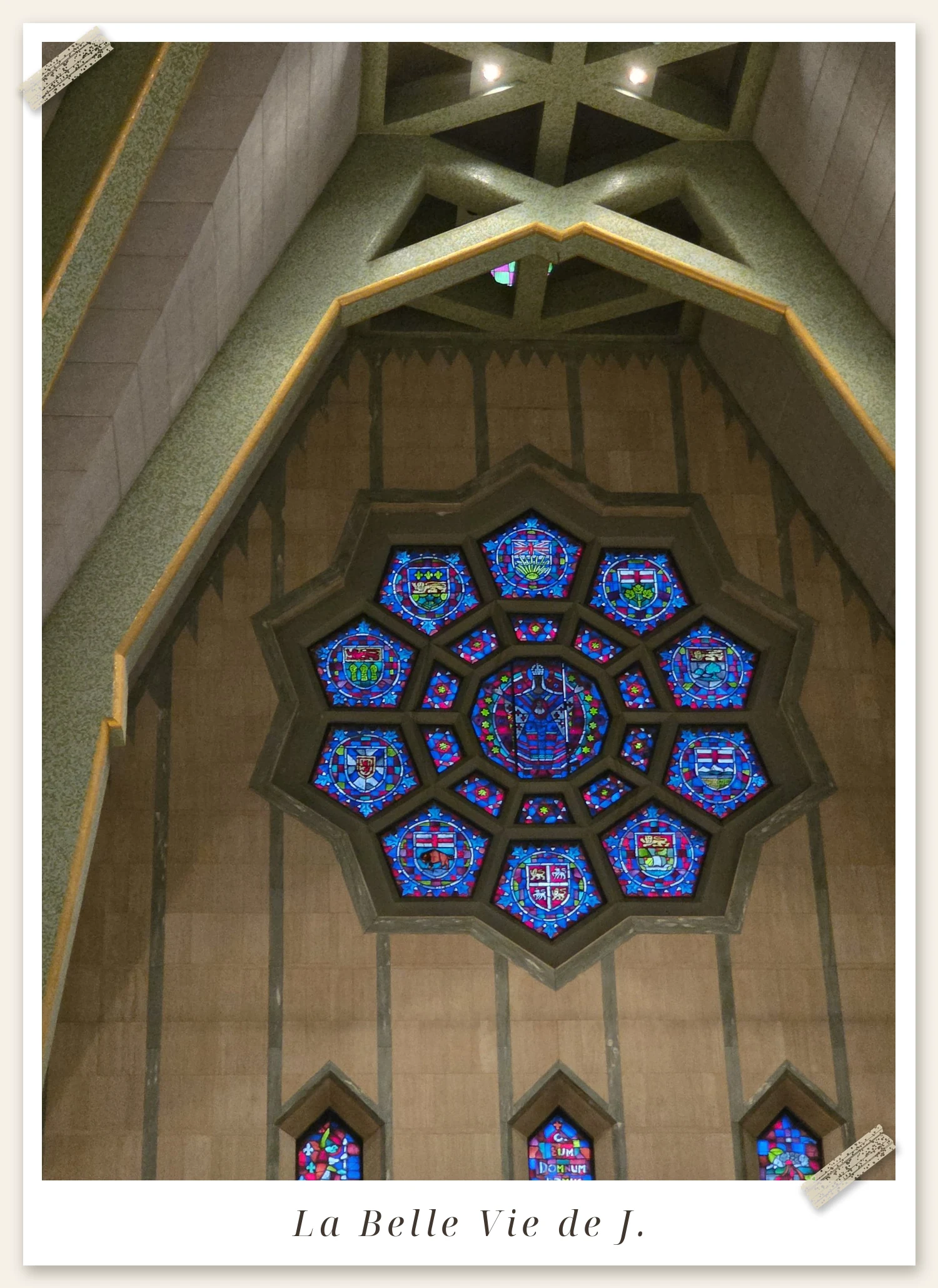
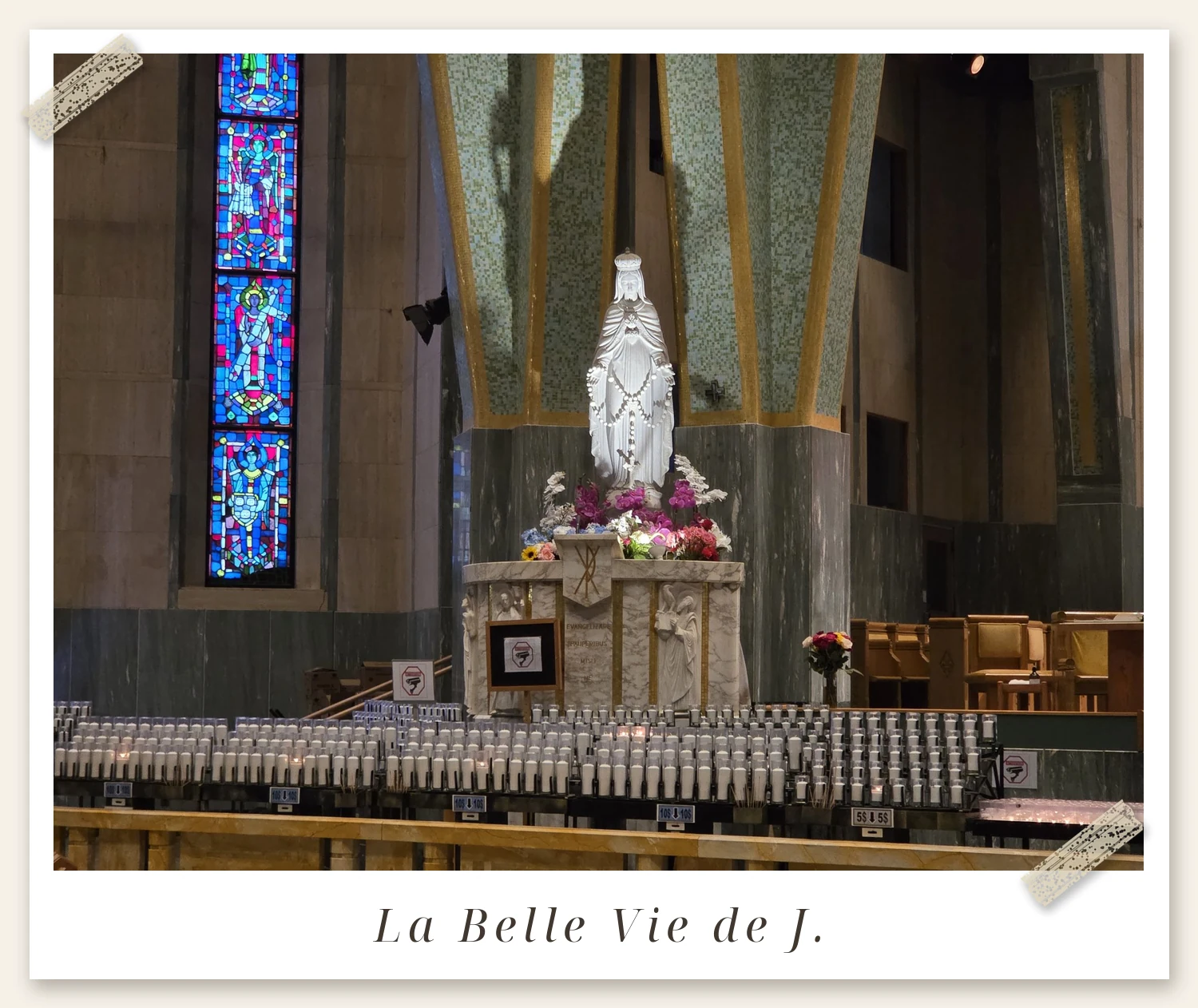
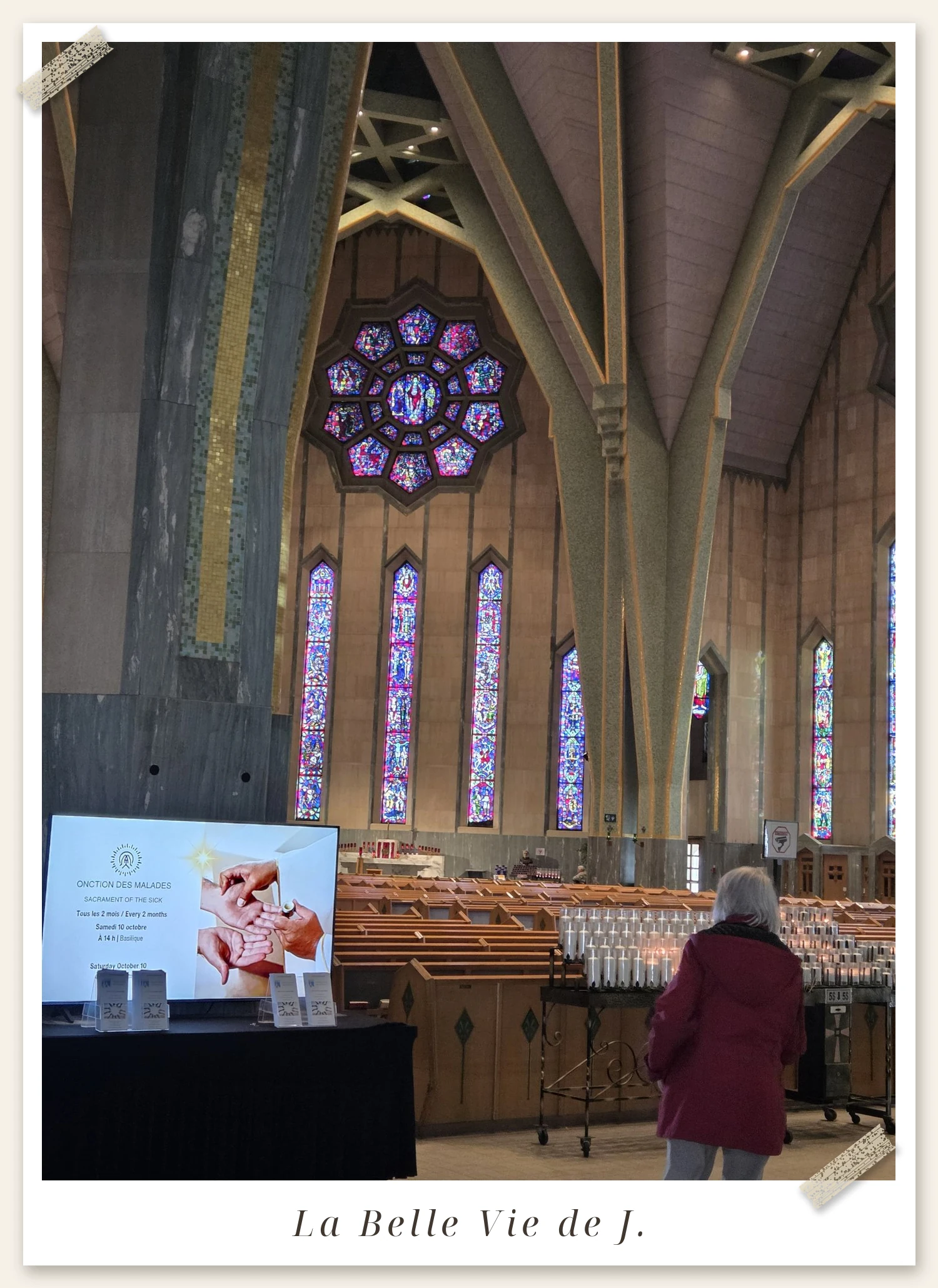
Next door, the modern basilica could hardly be more different. Designed by architect Adrien Dufresne and inaugurated in 1964, it is a soaring Norman-Gothic space carried on great concrete arches, seating some 1,660 people. What stops you first is the glass: entire walls of stained glass by Dutch Oblate Father Jan Tillemans, glowing deep blue, crowned by a huge star-shaped rose window.
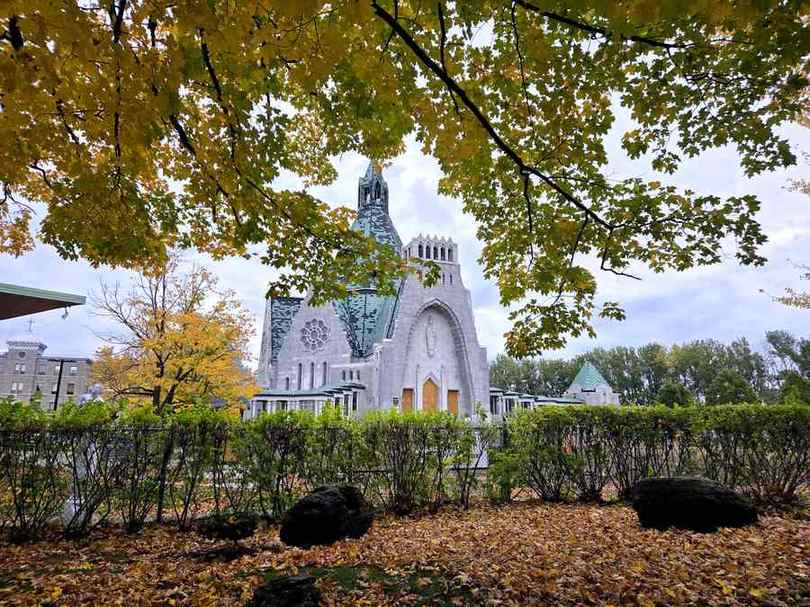
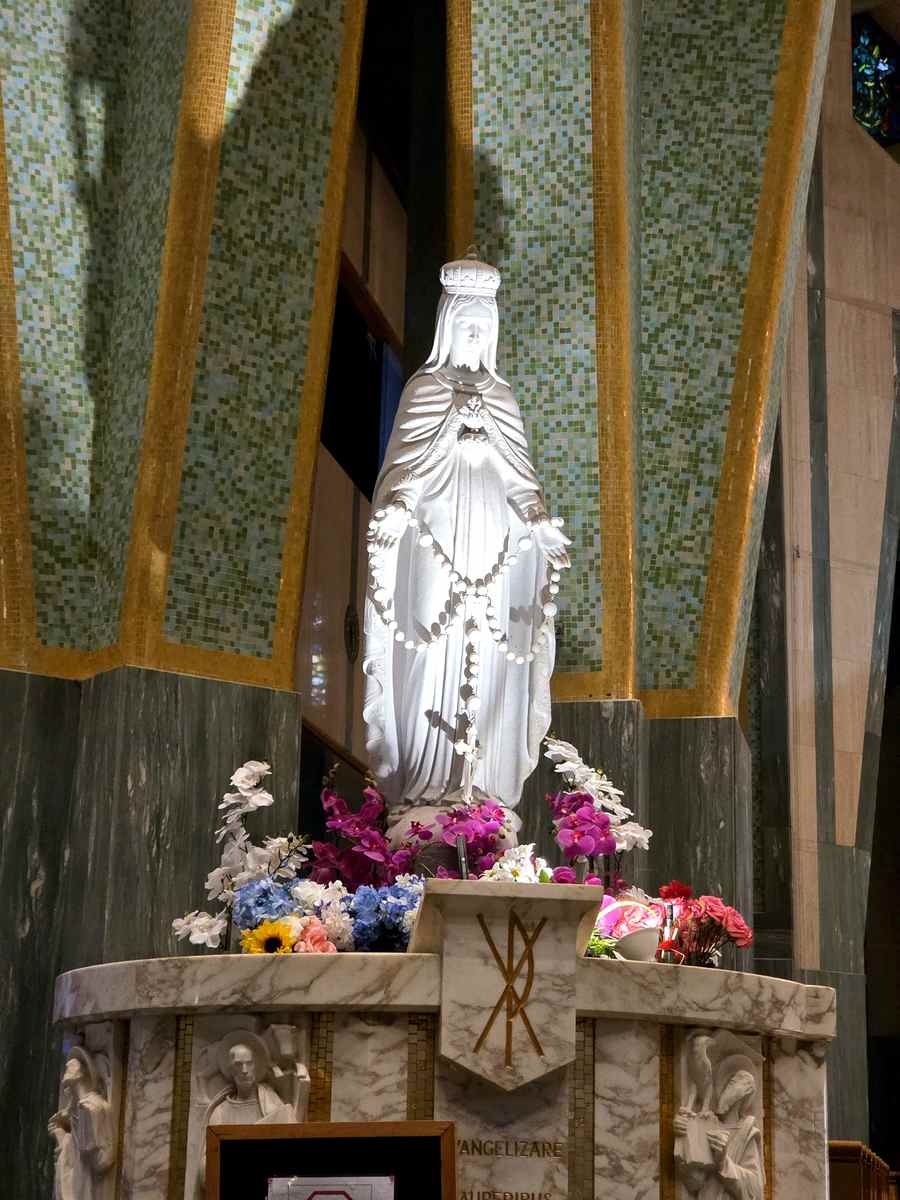
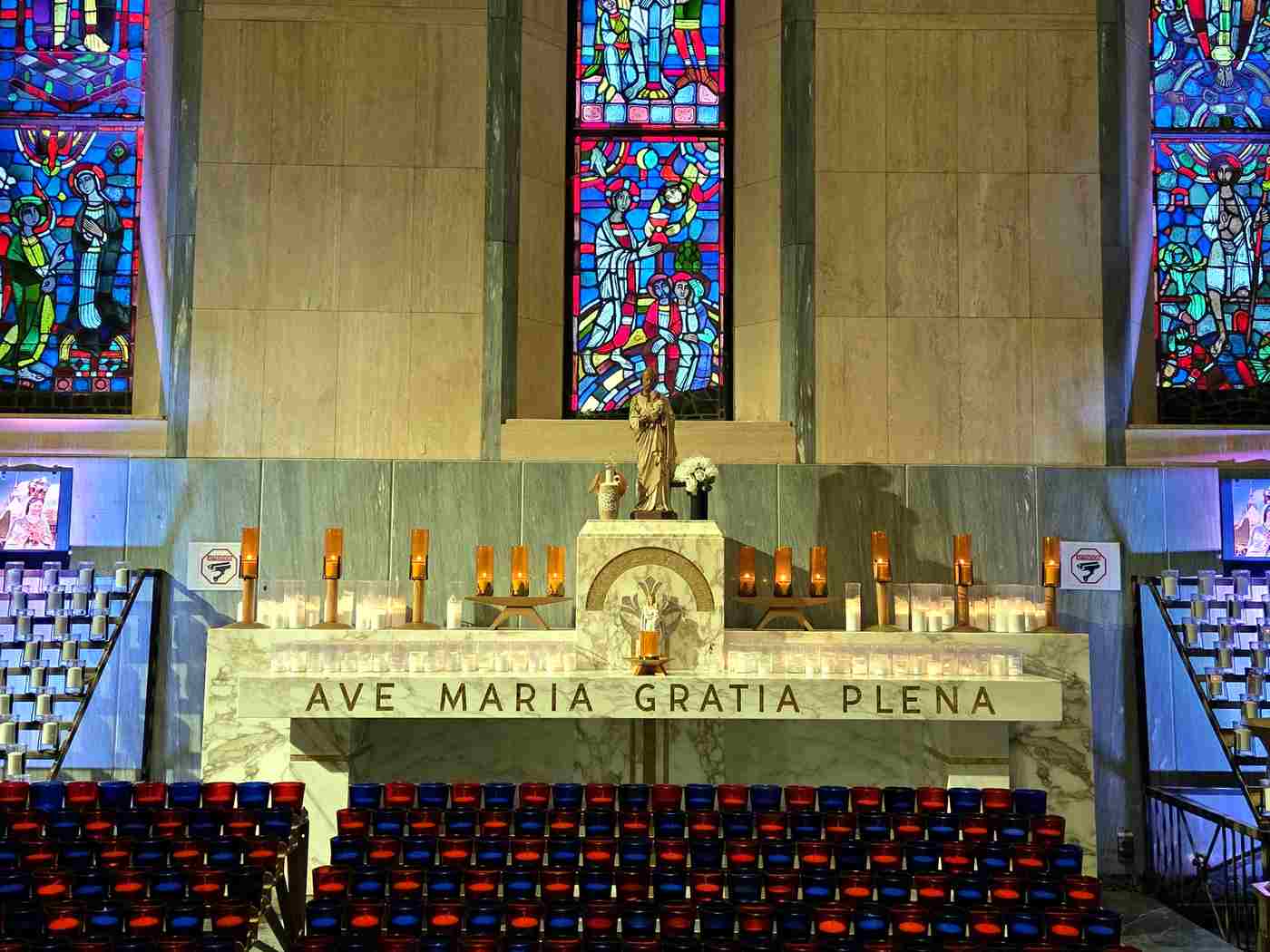
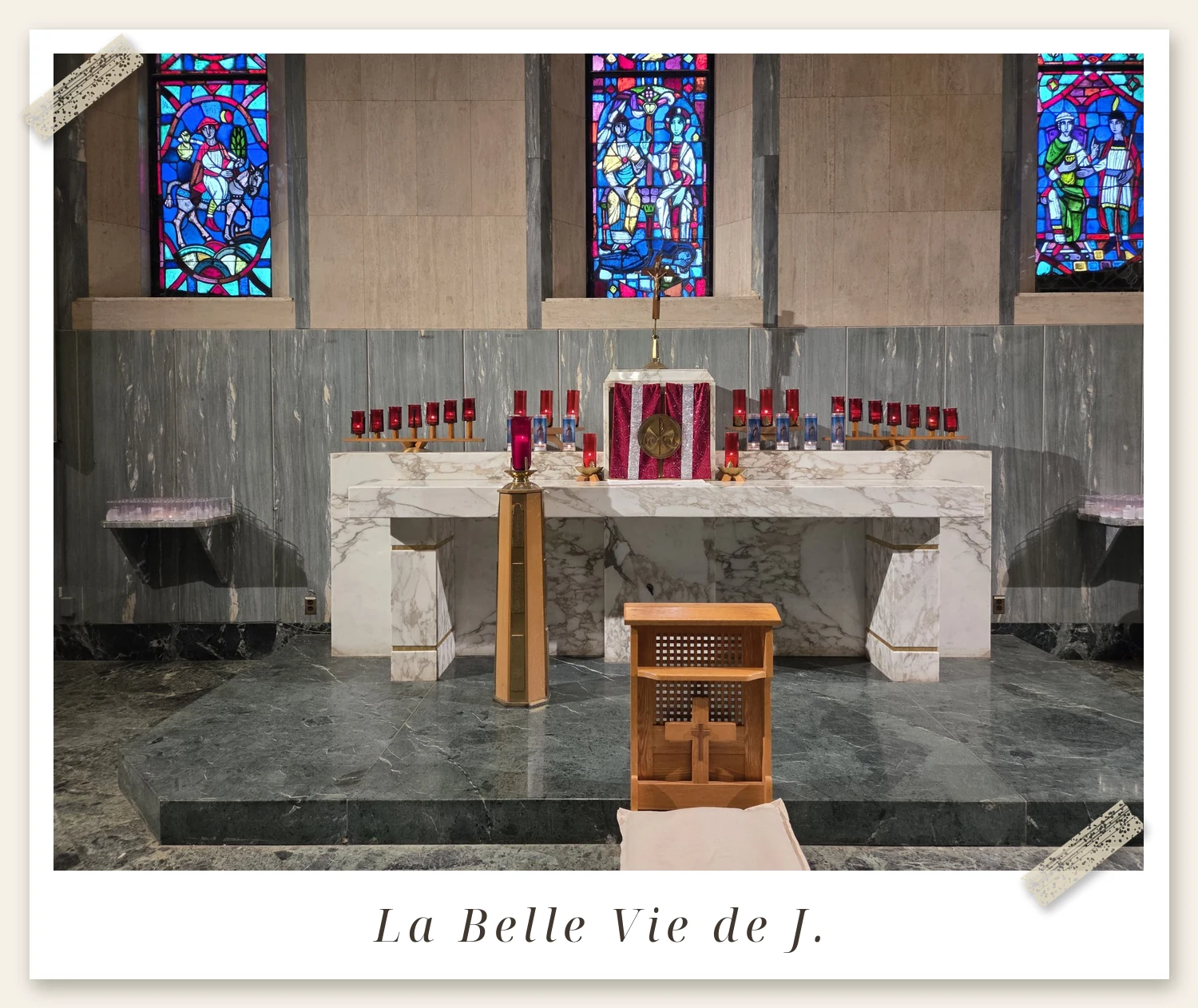
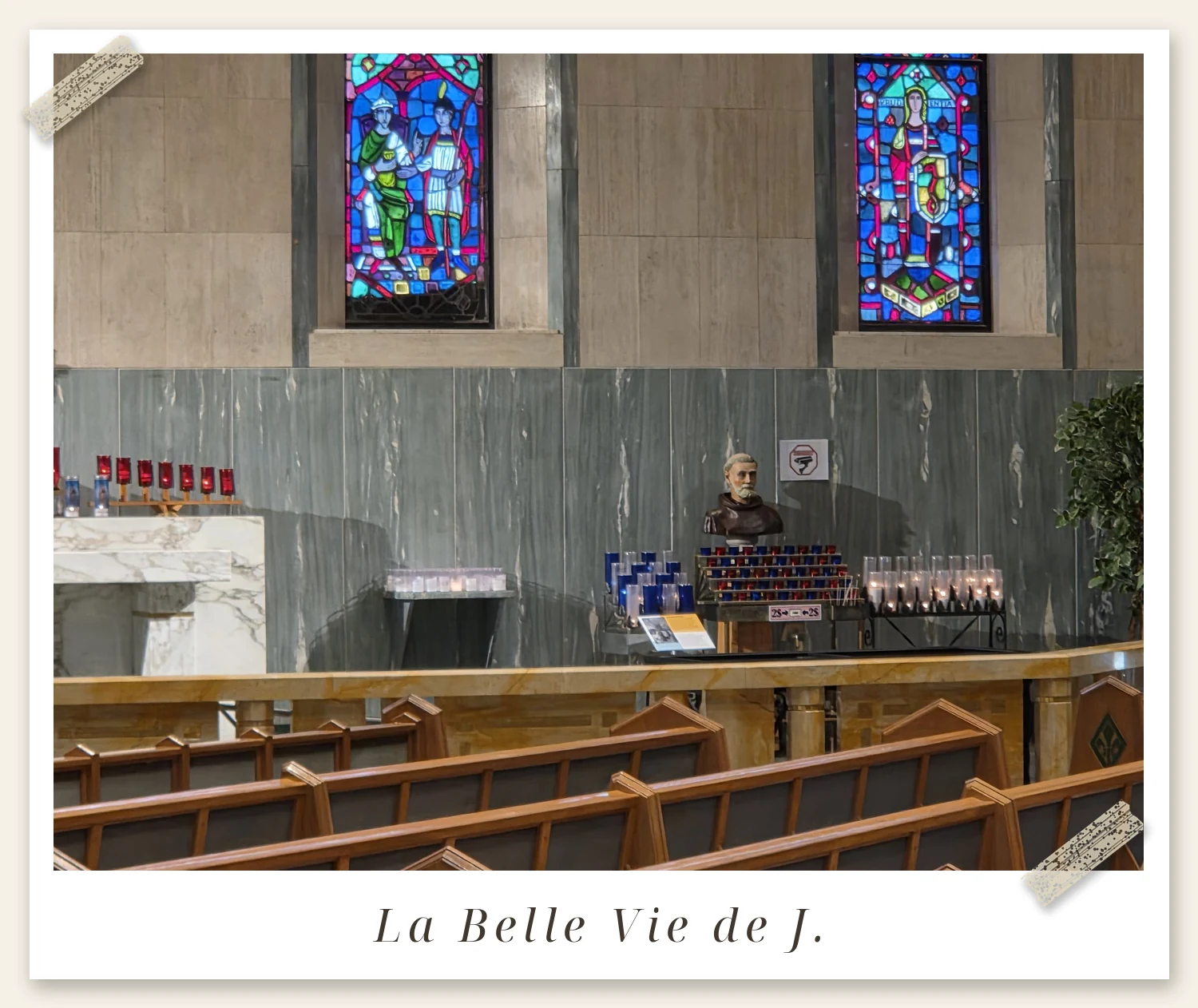
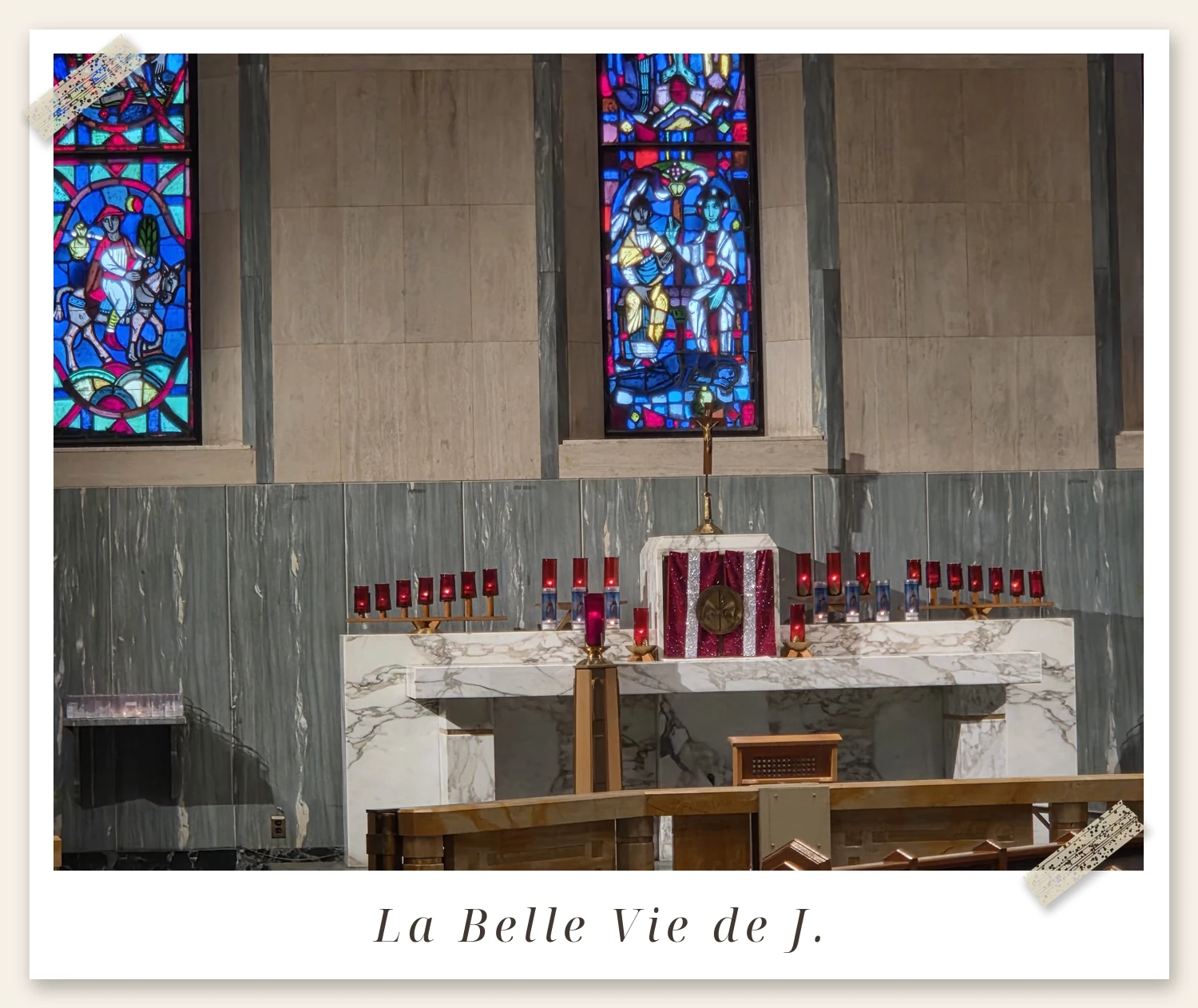
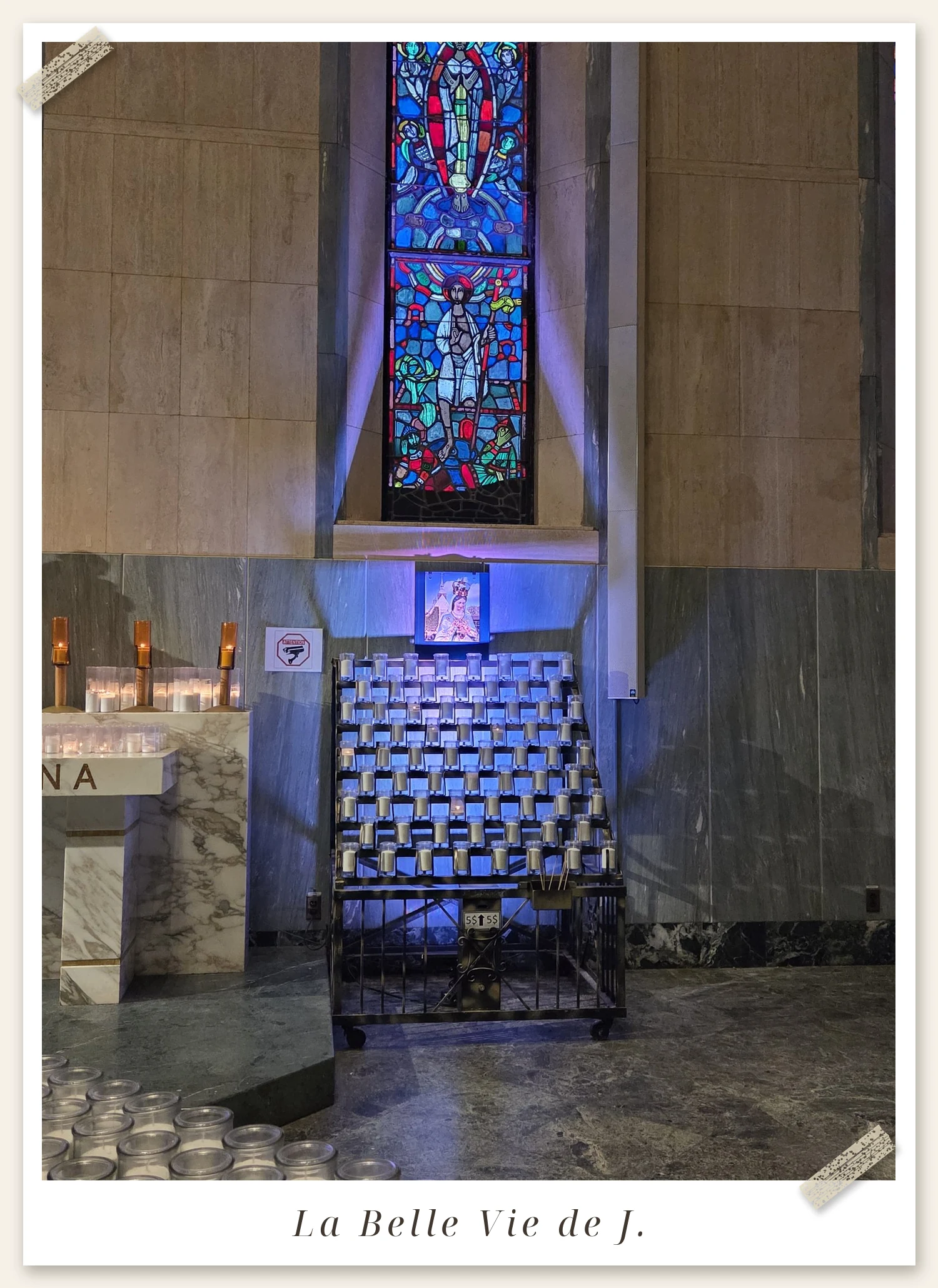
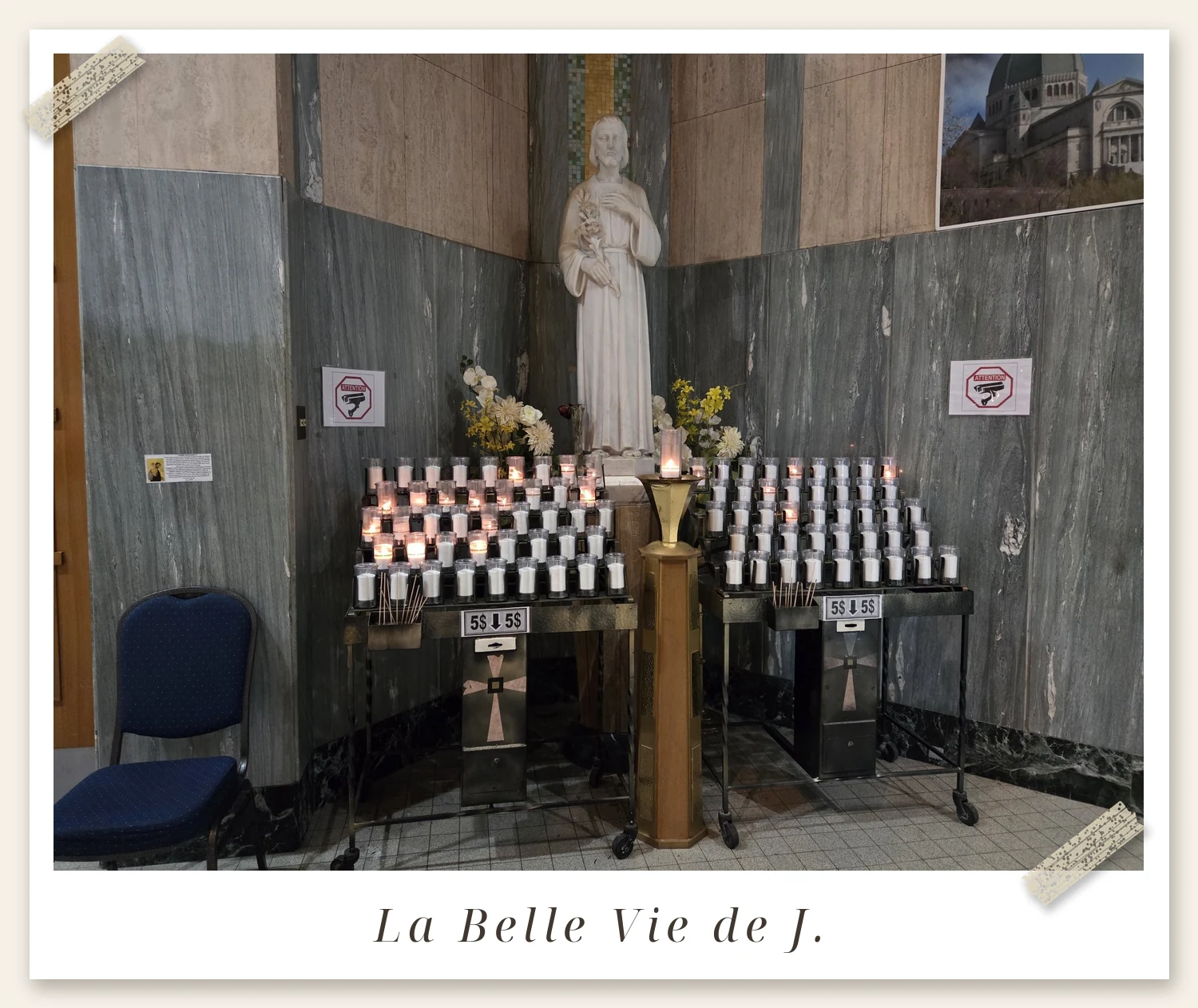
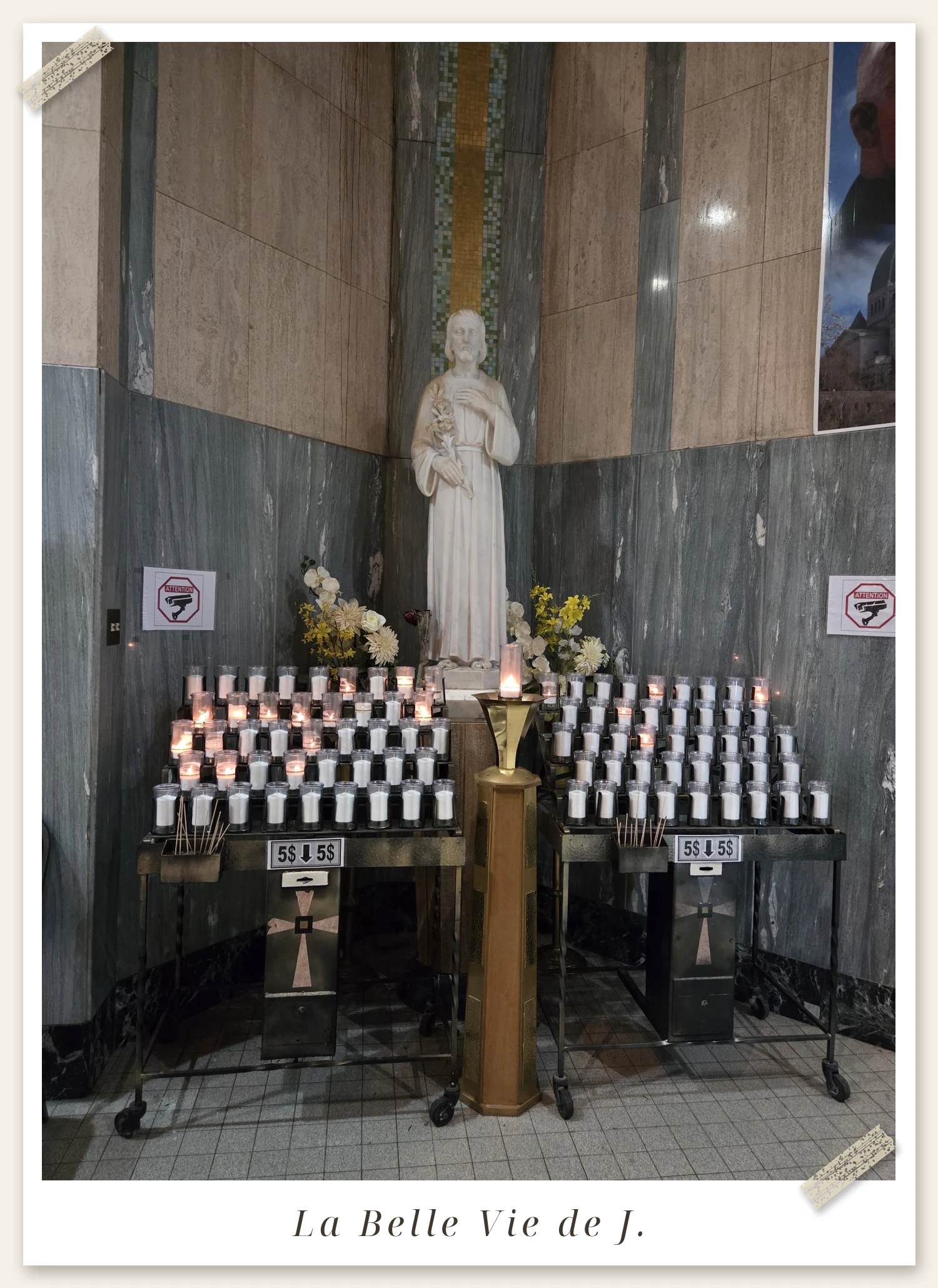
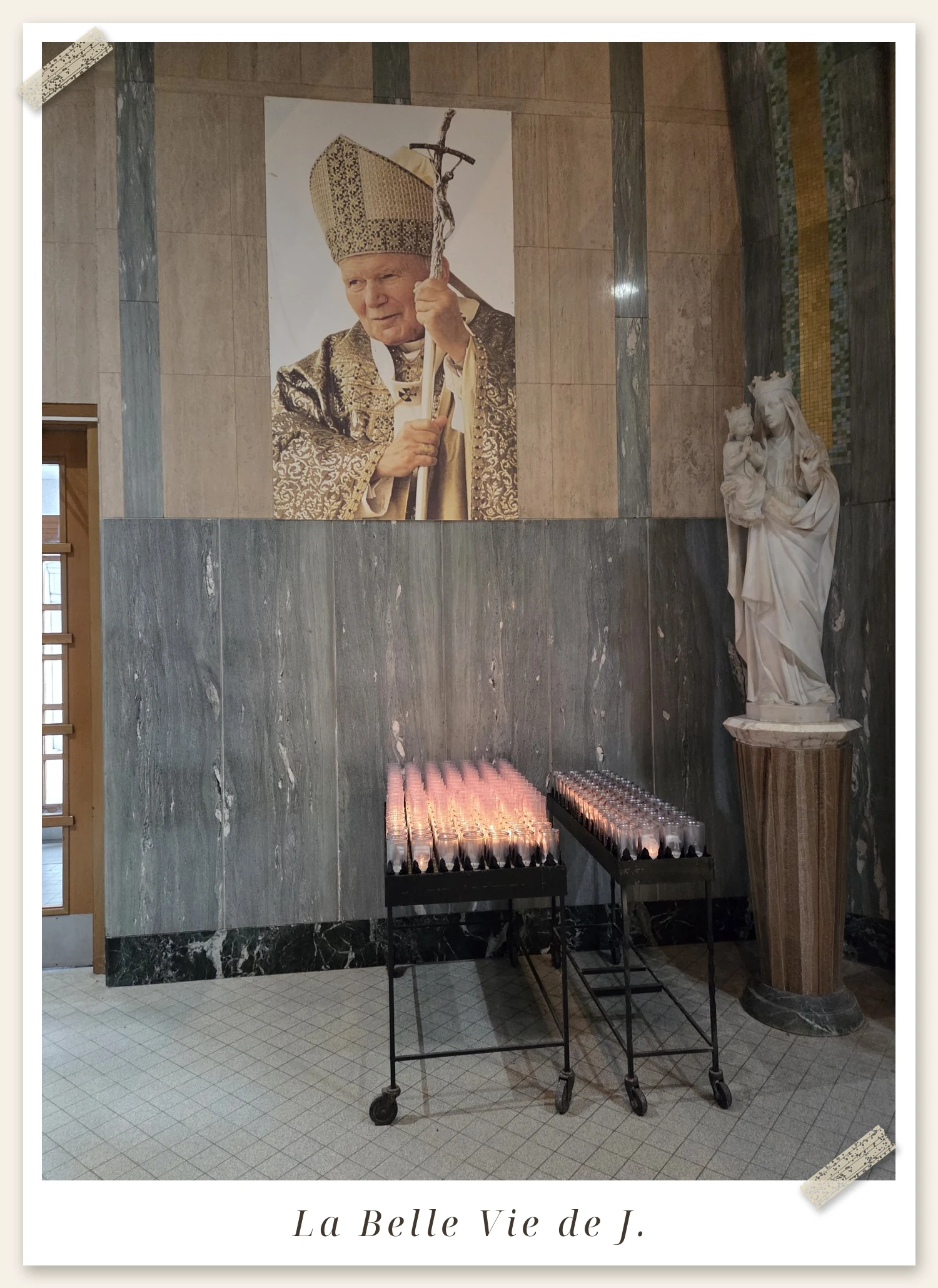
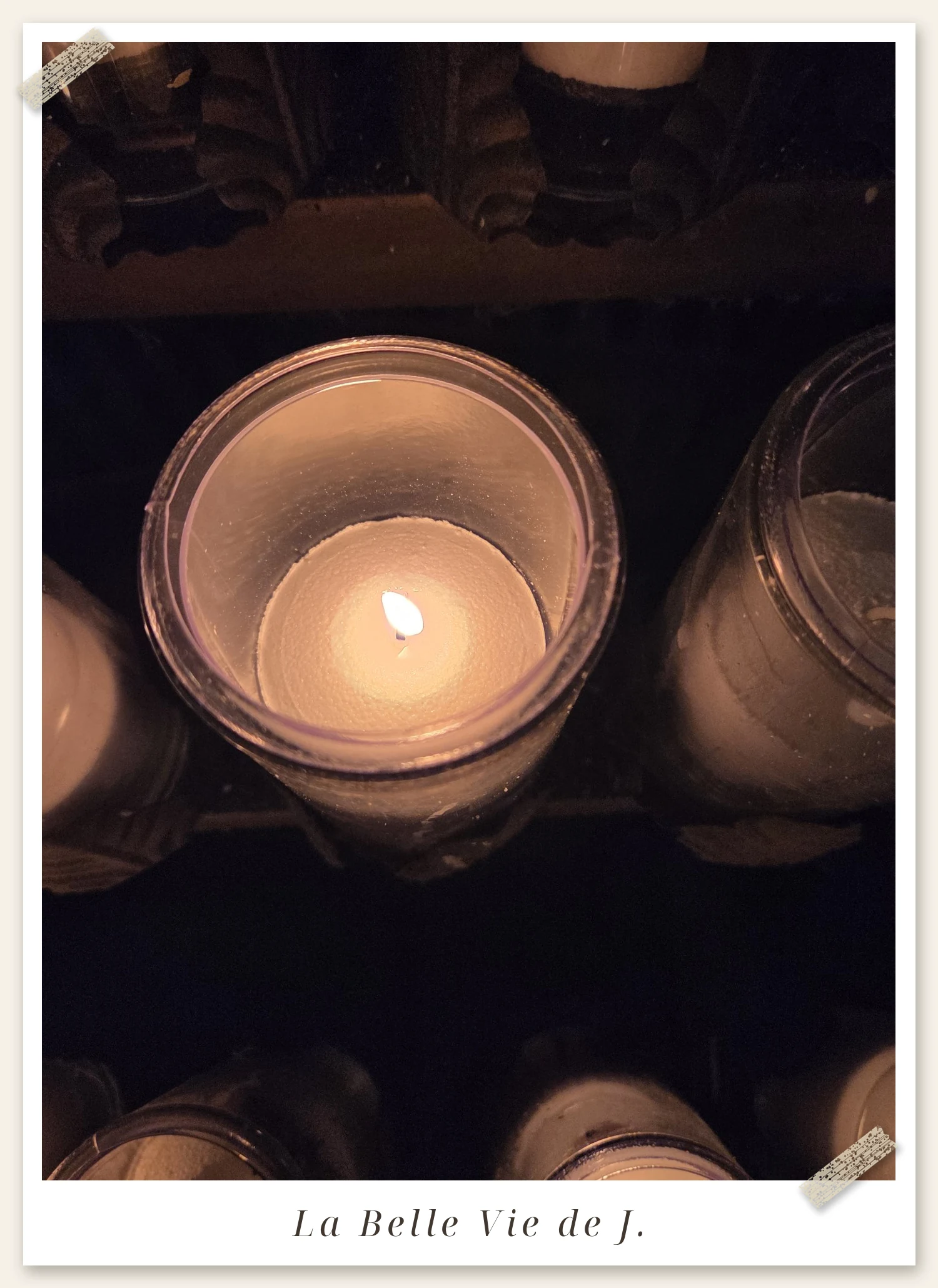
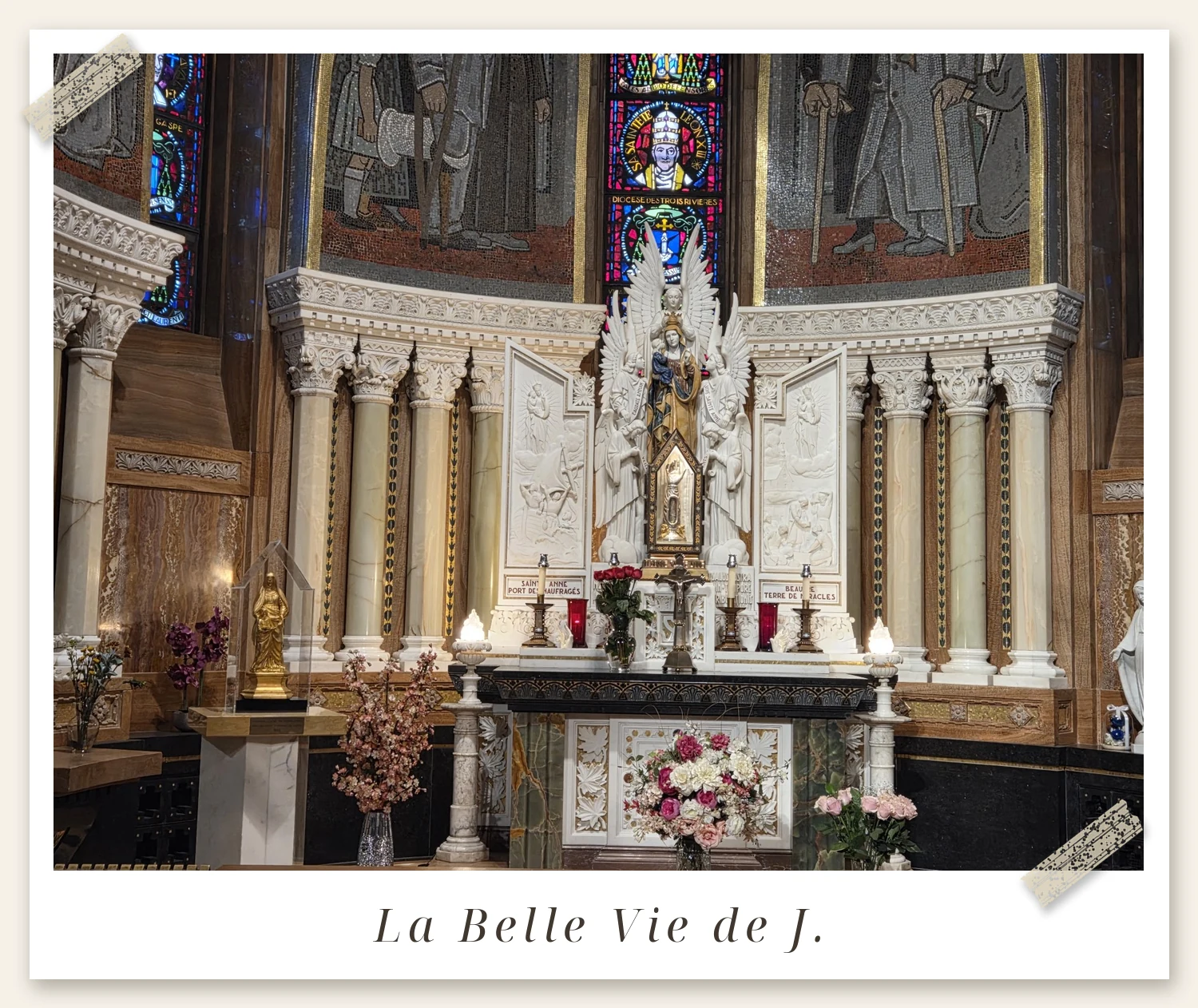
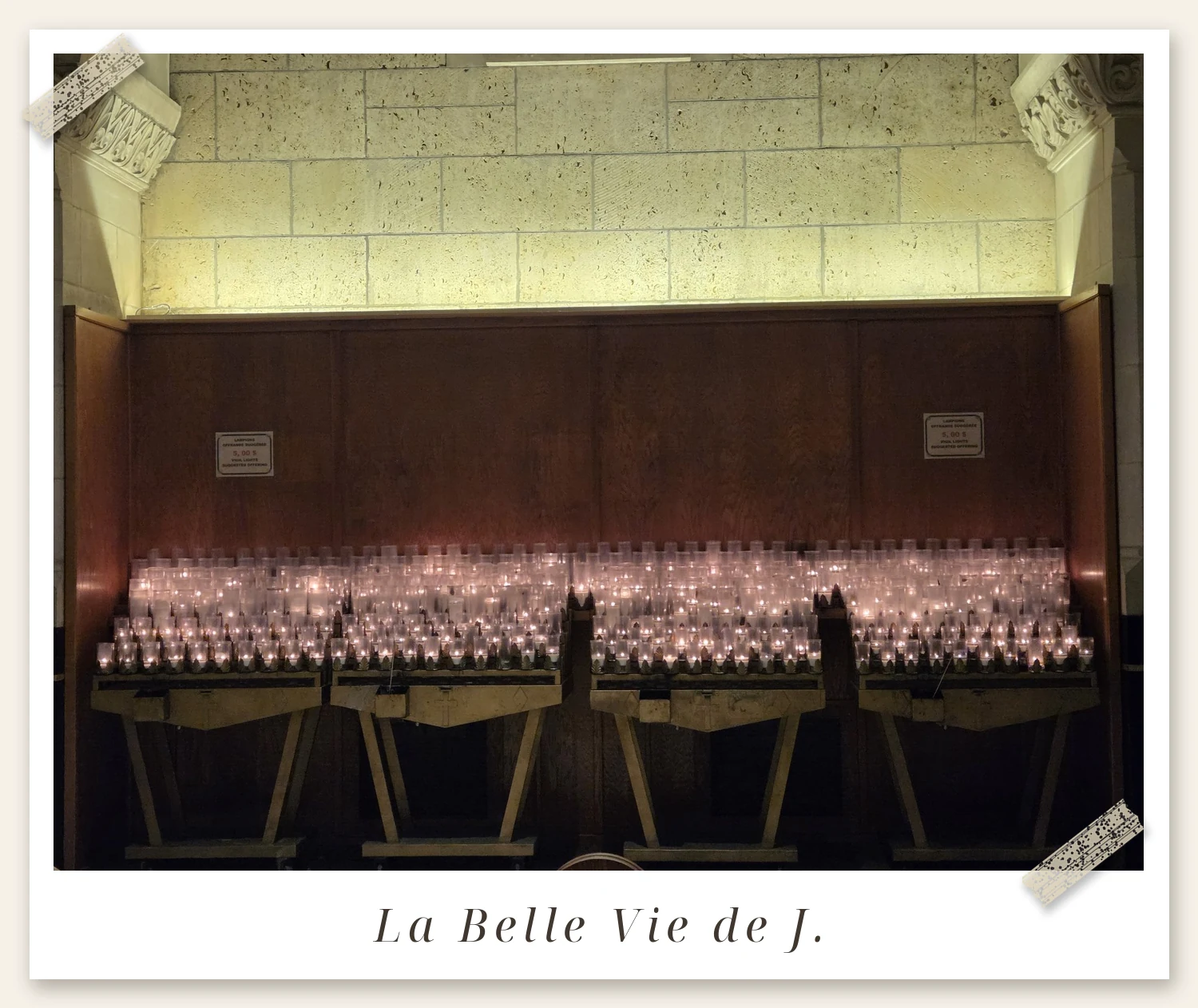
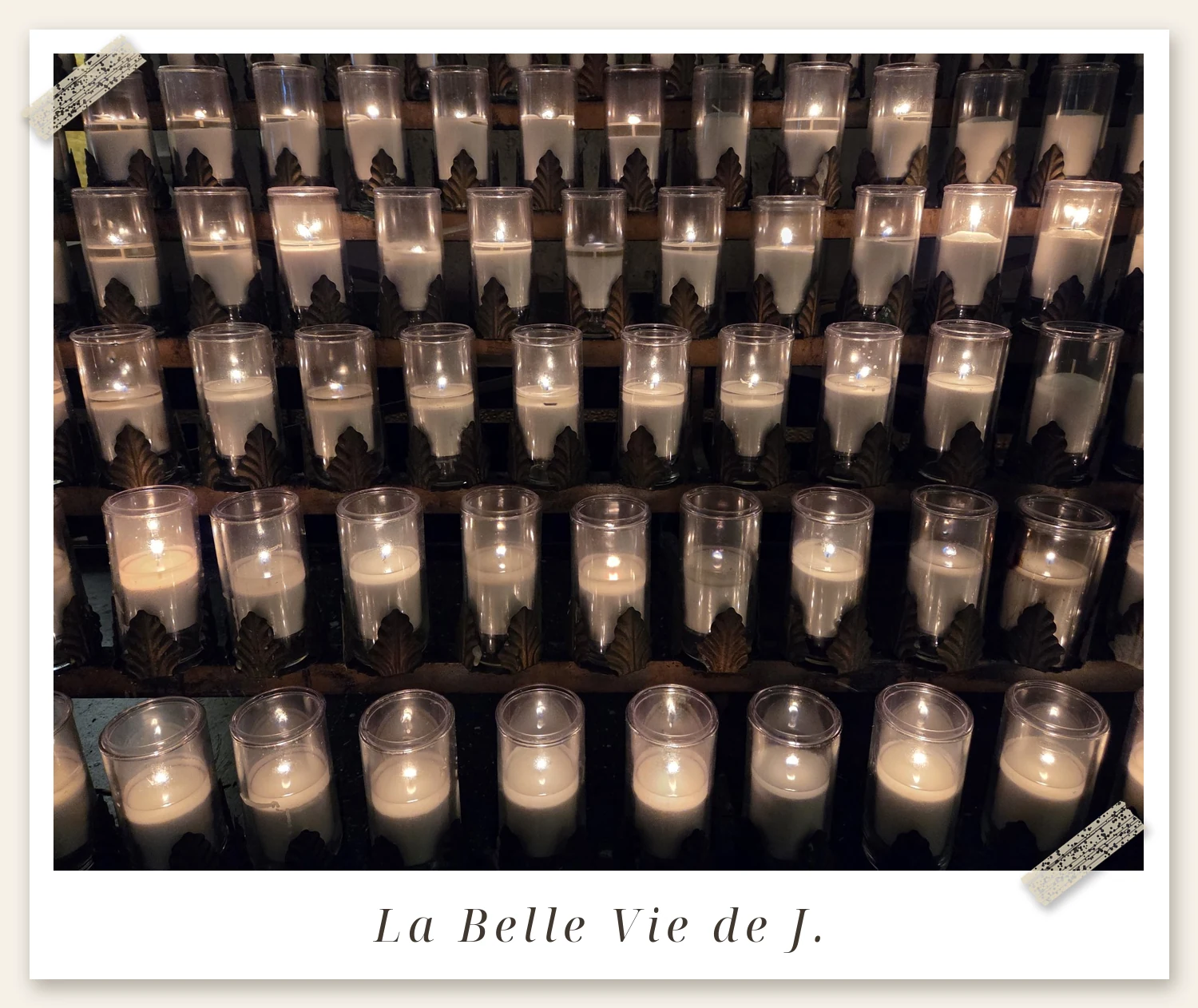
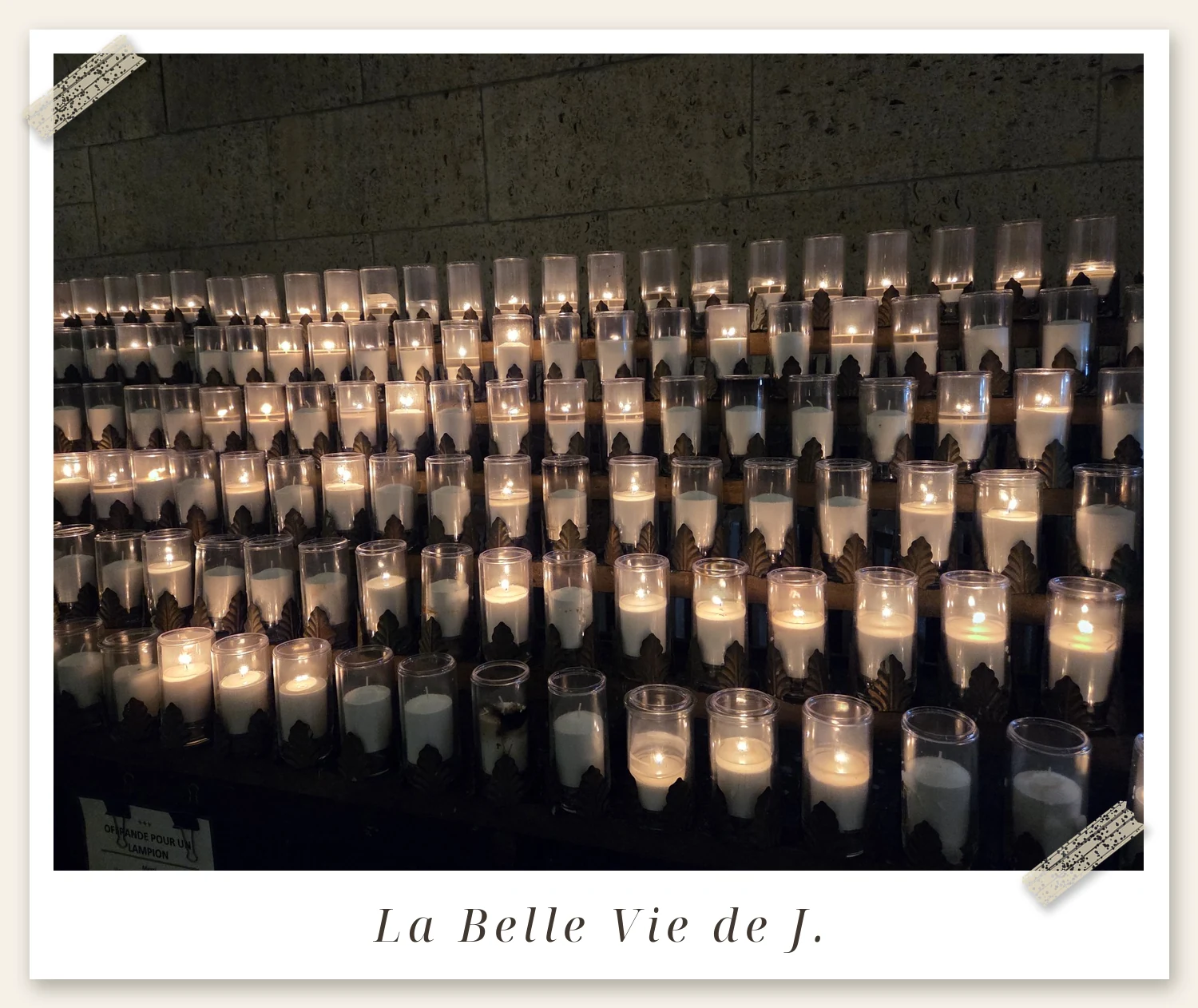
To one side stands a white, crowned statue of Our Lady holding an oversized rosary, above banks of votive candles; across the church, rows more burn beneath the marble “Ave Maria Gratia Plena” altar — as signed on site, the candles are $5 and $10. Down the nave, the great Casavant organ, all 5,425 pipes of it, fills the west end.
🗺️ Good to Know Before You Go
- Where: 626 rue Notre-Dame Est, Trois-Rivières (Cap-de-la-Madeleine) — right on the St. Lawrence, about halfway between Montréal and Québec City, which makes it the easiest worthwhile stop on the drive between the two. 📍 View Sanctuaire Notre-Dame-du-Cap on Google Maps
- Cost: Admission is free — the basilica, the old church and the gardens all cost nothing to enter.
- Parking: Free on site, too — the shrine has its own large parking lots by the gardens.
- Hours: The site keeps seasonal hours, so check the official website before you go: https://www.sanctuaire-ndc.ca/.
- When to go: Mid-October, for peak colour in the gardens. Give it at least an hour — two if the gardens get you, and they will.
- Make it a route: The Cap pairs beautifully with the drive east — from here, Québec City and Notre-Dame de Québec’s Holy Door, then Sainte-Anne-de-Beaupré and the Charlevoix coast, exactly as in our Québec fall foliage drive.
Some places you visit once and file away. This one I’ve folded into my year — a standing autumn appointment with a garden, a river, and a little stone church that refused to be demolished. If your fall needs one quiet hour, spend it here.
Have a wonderful day 💛
— J.
🕰️ The Timeline, Counted
Lay the dates in this story end to end and the shrine becomes a counting exercise. The little stone church goes up in 1720. The statue above its altar arrives as a gift in 1854 — already 134 years later. The ice bridge forms in March 1879, twenty-five years after that, and carries the stone sledges for nine days, March 18 to 26. Nine years later, in 1888, the statue is reported to open its eyes for five to ten minutes. Sixteen years after that, in 1904, it is canonically crowned, and from 1906 the bronze groups of the Rosary Way begin appearing along the garden path.
Then the long modern leap: 244 years after the little church, the basilica is inaugurated in 1964 — 1,660 seats under concrete arches, an organ of 5,425 pipes, a few steps from a room that seats a village. Visit in 2026 and the fieldstone church is 306 years old, still saying daily Mass. Three centuries, and the two buildings split them almost evenly between them: the quiet one carries the first 244 years alone.
You May Also Like
- Sainte-Anne-de-Beaupré Basilica: The Québec Landmark Everyone Should See Once
- Notre-Dame de Québec Basilica: The Holy Door, the Golden Canopy and Canada’s Oldest Parish
- Québec Fall Foliage Drive: Two Shrines, a Cathedral, Four Lookouts & a Chapel from 1747
*Photos: all taken by J. at Notre-Dame-du-Cap, Trois-Rivières.*
Get the Free Canada Savings Checklist
Join the newsletter — get the free PDF checklist and weekly Canada savings tips in your inbox.
Read Next

Some links in this post are referral or affiliate links. If you sign up or buy through them, I may receive a bonus or commission at no extra cost to you. It helps keep this blog running — thank you!