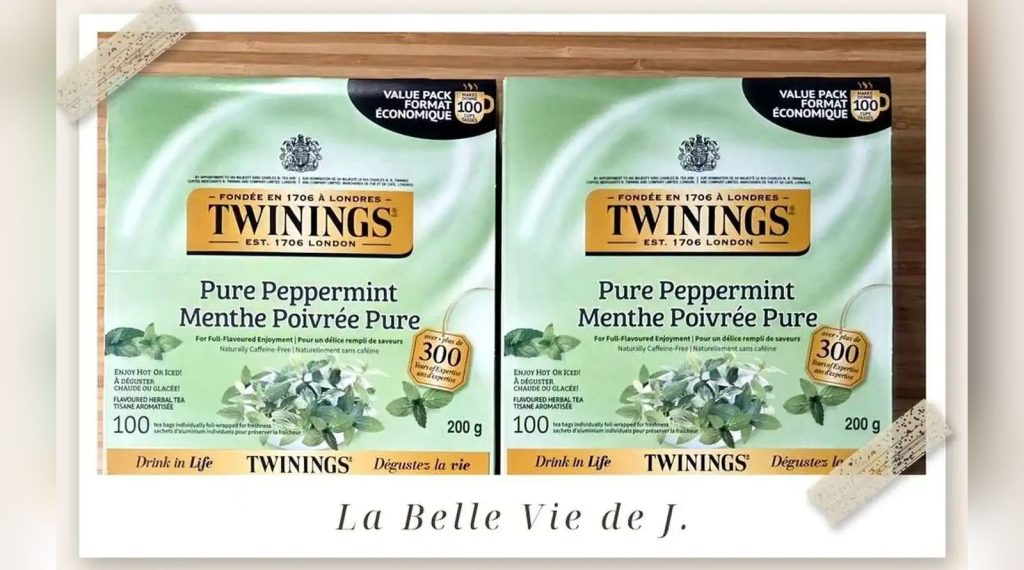
Twinings Pure Peppermint Tea Review: My Winter Throat Ritual
Last updated: November 1, 2026
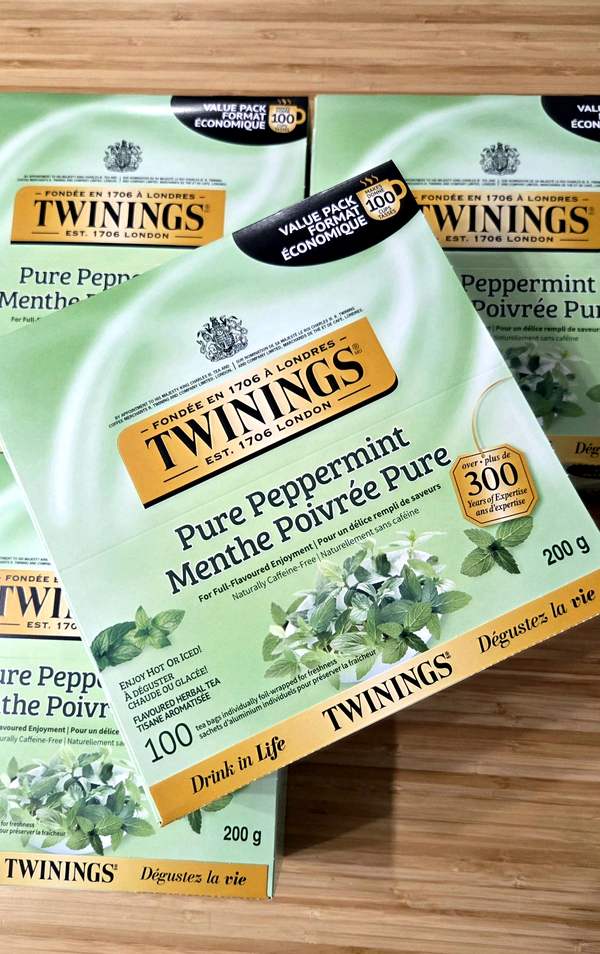
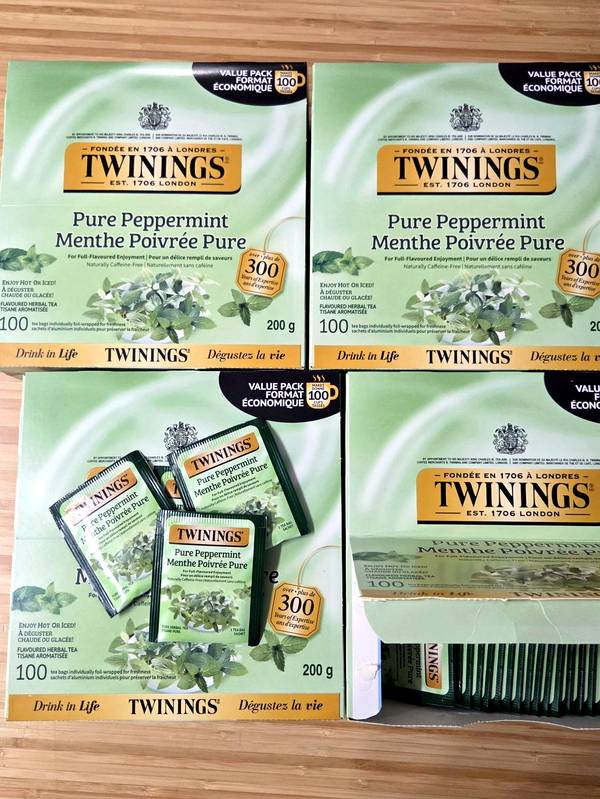
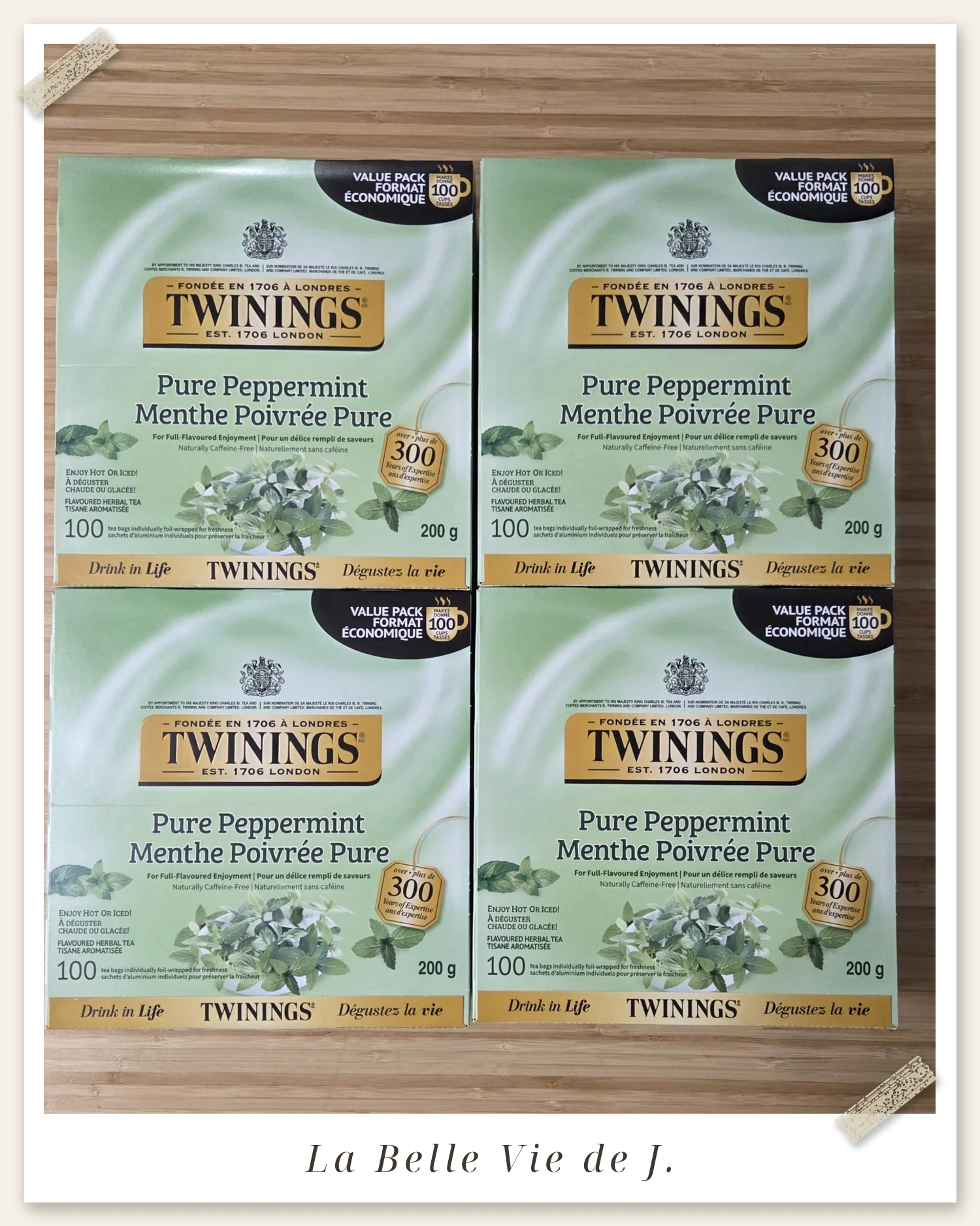
Bonjour! It’s J. — and today I want to introduce the tea I keep coming back to, year after year, whenever my throat starts acting up: Twinings Pure Peppermint. My throat has never been my strong point, and this simple little tea has quietly carried me through bad winters, the COVID years, and even the season after my tonsil surgery. This winter, I stocked up: a bundle of four 100-count value packs — 400 tea bags in all. Let me explain why.
🌿 Quick Take
- One ingredient only: 100% peppermint leaves — no blends, no flavour tricks
- Naturally caffeine-free, so it doubles as all-day hydration, evenings included
- My personal throat companion for years — before and after my 2025 tonsil surgery
- The taste: clean, bright mint that leaves your mouth feeling completely refreshed
- How I buy it: a bundle of four 100-count value packs — 400 bags to get through winter
💛 A Weak Throat, and the Tea That Stayed
I have honestly had a weak throat for as long as I can remember. Long before any surgery was on the table, peppermint tea was already my default whenever my throat felt scratchy or tired — warm, gentle, and easy to sip all day. It was simply the cup I reached for.
Then came COVID, and my already-unreliable throat got noticeably worse. After I went through it, I was left with a stubborn, uncomfortable feeling — as if something was permanently stuck in my throat that I couldn’t clear, no matter how often I swallowed or sipped water. It just sat there, for weeks. Through that whole stretch, I drank this tea constantly — and every warm cup honestly felt like a relief. That’s my personal experience, not a prescription; but when the fifth warm, minty cup of the day still feels like a relief, you remember it.
Last year (2025), I finally had my tonsils removed. And after the surgery? The ritual stayed. Through the change of seasons and the cold months, sipping warm tea regularly is still how I look after my throat — and peppermint is still my favourite of them all. Some habits survive everything, apparently including surgery.
📦 What’s in the Box
Twinings needs very little introduction — the London tea house has been at it since 1706 (the box proudly says “over 300 years of expertise”), and the crest on the front is a Royal Warrant: the box reads “By Appointment to His Majesty King Charles III.” Famous brand, yes. But what I actually love is how un-fancy the inside is.
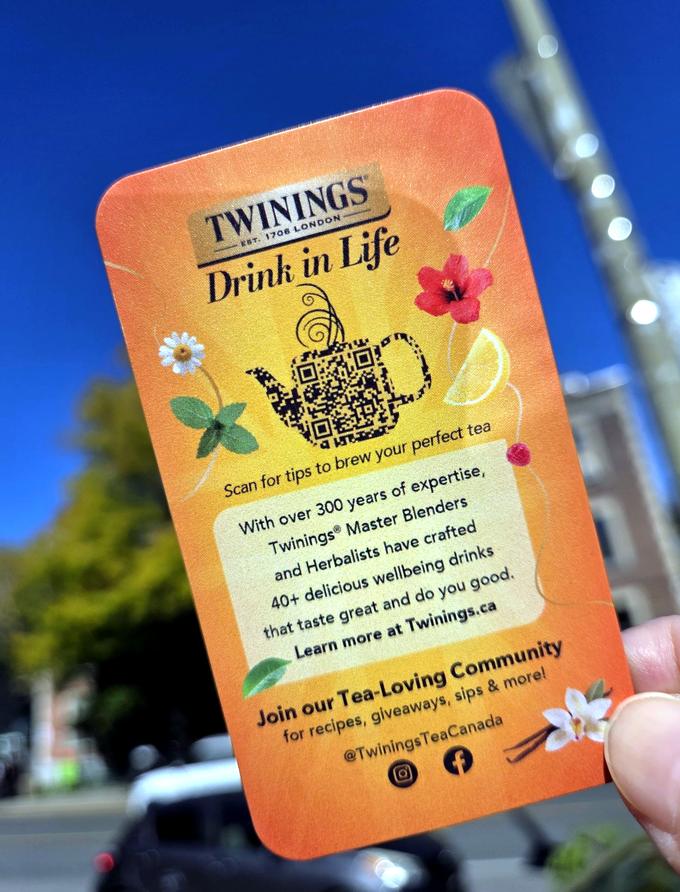
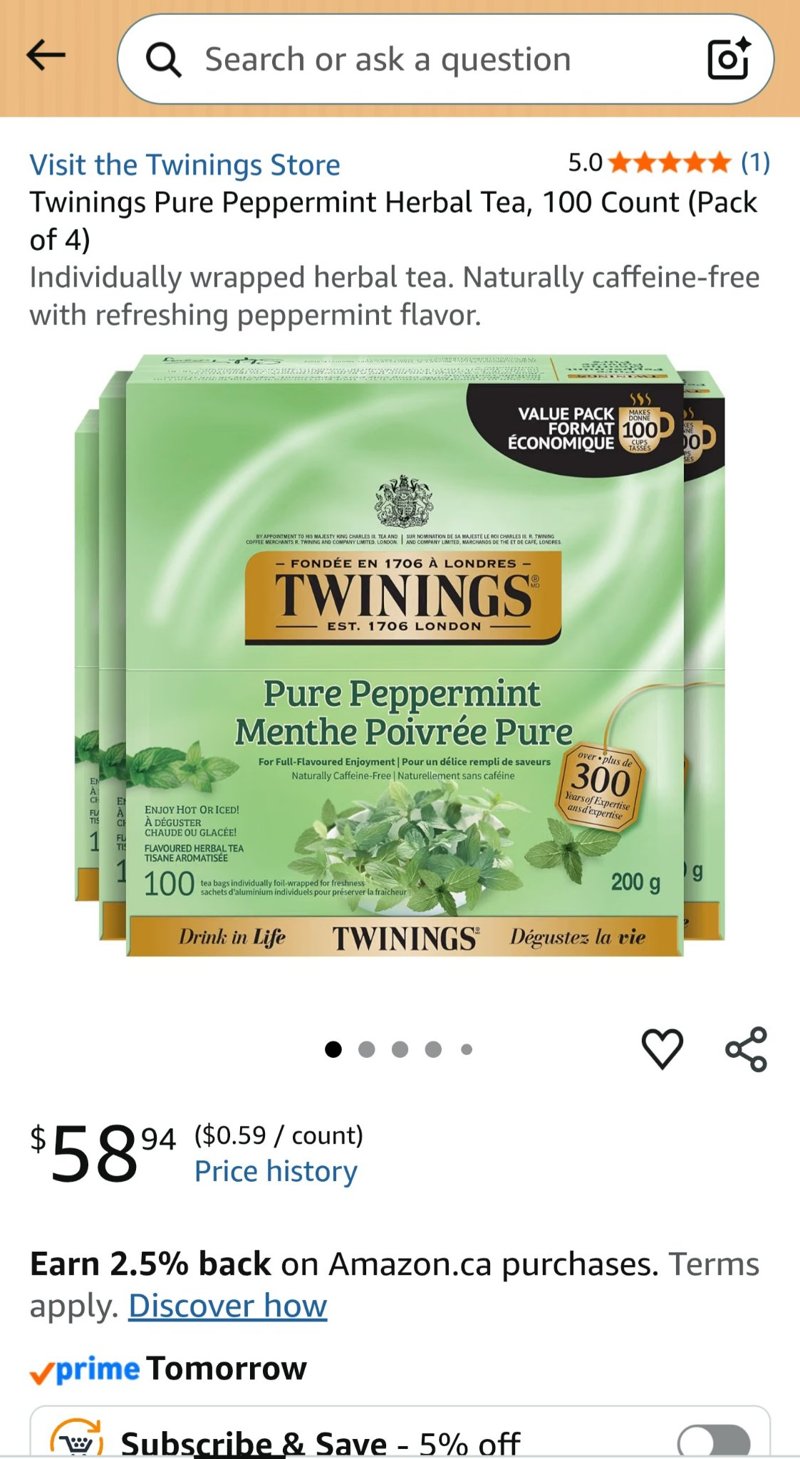
The ingredient list is one word: peppermint. Twinings’ own product page confirms it — the tea is made using only pure peppermint leaves, nothing blended in. The value pack holds 100 tea bags (200 g), each one individually foil-wrapped — so the last bag tastes as fresh as the first, weeks later. The box says “Enjoy Hot or Iced”: in summer I do brew it cold, but winter is its season for me. Twinings suggests steeping 3 to 4 minutes in freshly boiled water.
🔬 Why Mint Feels So Good: The Little Science Bit
People sometimes ask why peppermint, of all teas. Part of the answer is genuinely interesting chemistry. Peppermint’s signature compound is menthol, and menthol has a party trick: it activates TRPM8, the receptor your sensory nerves use to detect cold. Your mouth and throat read that signal as “cool and fresh” — even though the tea itself is warm and hasn’t lowered any temperature. It’s the same system that makes mint toothpaste feel icy, working in a mug instead. It’s also why a dry, tight-feeling throat seems to loosen a little with each sip — “seems” being the honest word: that cooling signal reads as openness and ease, even in a steaming cup.
That cool signal on top of a warm drink is, for me, exactly the comfort a tired throat wants: warmth going down, freshness staying behind. And because this tea is naturally caffeine-free — 0 mg, I can sip it all evening — including a last cup right before bed — without borrowing against my sleep. In the dry indoor air of a Montréal winter, that steady, unhurried hydration is half my throat-care routine on its own. (I compared caffeine-free evening options in my cinnamon coffee post — peppermint sits proudly in the 0 mg row.) Every cup is also just hydration, which any nurse will tell you is half the battle when your throat is unhappy.
The after-dinner tradition has some real physiology behind it, too. Peppermint has been sipped after meals for centuries to settle an over-full stomach, and laboratory work explains why the habit stuck: peppermint relaxes gastrointestinal smooth muscle by reducing calcium influx into the muscle cells — a gentle calcium-channel effect, shown in classic tissue studies. That is also why the concentrated oil is the form researchers chose for irritable bowel syndrome (IBS) trials, usually as enteric-coated capsules. One honesty note: those digestion studies are on the oil, not on leaf tea, and the U.S. National Center for Complementary and Integrative Health (NCCIH) is clear that evidence for peppermint leaf itself is still limited. My cup is the mild, traditional version of the story — no miracle claims, just that settled, clean feeling after eating.
And what about inflammation — I get asked this one a lot, so I looked into it properly. Start with what’s actually in the leaf: peppermint leaves are rich in polyphenols, above all rosmarinic acid, plus a flavonoid called eriocitrin — and laboratory analyses of plain hot-water infusions (an actual cup of tea, in other words) show strong antioxidant activity, with much of the leaf’s polyphenol content making it into the water. That matters because oxidative stress and inflammation feed each other, so an antioxidant-rich cup is a reasonable thing to reach for. Beyond that, the laboratory signals for inflammation itself are genuinely interesting: in test-tube studies, peppermint and other mint oils reduced the production of inflammatory messengers such as TNF-α and IL-1β in immune cells, an effect researchers link to quieting the NF-κB pathway — one of the body’s main inflammation switches — and menthol lowered those same markers in animal studies of irritated airways. Now the honest limits, because they matter: those anti-inflammatory experiments used concentrated oils or extracts, the antioxidant results are test-tube measurements, and there is essentially no human clinical-trial evidence for peppermint as an anti-inflammatory in any form. A brewed cup is a far gentler dose than a lab extract. So I file all of this under “plausible and interesting,” not proven — my cup may owe as much to warmth, hydration, and that cooling menthol signal as to any chemistry in the leaf, and I’m at peace with that.
Sources: McKemy et al. (2002), Nature — the cold receptor TRPM8 · Hills & Aaronson (1991), Gastroenterology — peppermint oil relaxes gut muscle by reducing calcium influx · McKay & Blumberg (2006), Phytotherapy Research — peppermint tea bioactivity review · Hejna et al. (2021), Antioxidants — mint oils, TNF-α/IL-1β and NF-κB in vitro · L-menthol and airway inflammation in rats, RSC Advances (2018) · NCCIH — Peppermint Oil: Usefulness and Safety
Personal note: everything here is my own experience and routine, not medical advice. If your throat troubles persist, please see a doctor — I did, and mine ended in surgery.
🍵 The Taste, Honestly
It tastes like… mint, done properly. Clean and bright rather than sweet or candy-like, with that cool finish that makes your whole mouth feel refreshed — the “ahh, that’s better” feeling after a heavy meal or a long day of talking. Twinings describes a naturally sweet finish; I’d call it clean rather than sweet. No bitterness, no perfume-y aftertaste, nothing competing with the mint. It’s a one-note tea, and the note is exactly the one I want.
🛒 How I Stock Up (Winter Rules)
Costco used to be my source: every so often they’d run a promotion on a bundle of three smaller boxes, and I’d grab it. Lately that bundle hasn’t appeared — so this time I simply went to Amazon Prime and ordered a bundle of four 100-count value packs instead: 400 tea bags, for CA$58.94 for the pack of 4 (as of October 2026) — which works out to about $0.15 a tea bag. As I told my family: you need at least this much to get through a Montréal winter.
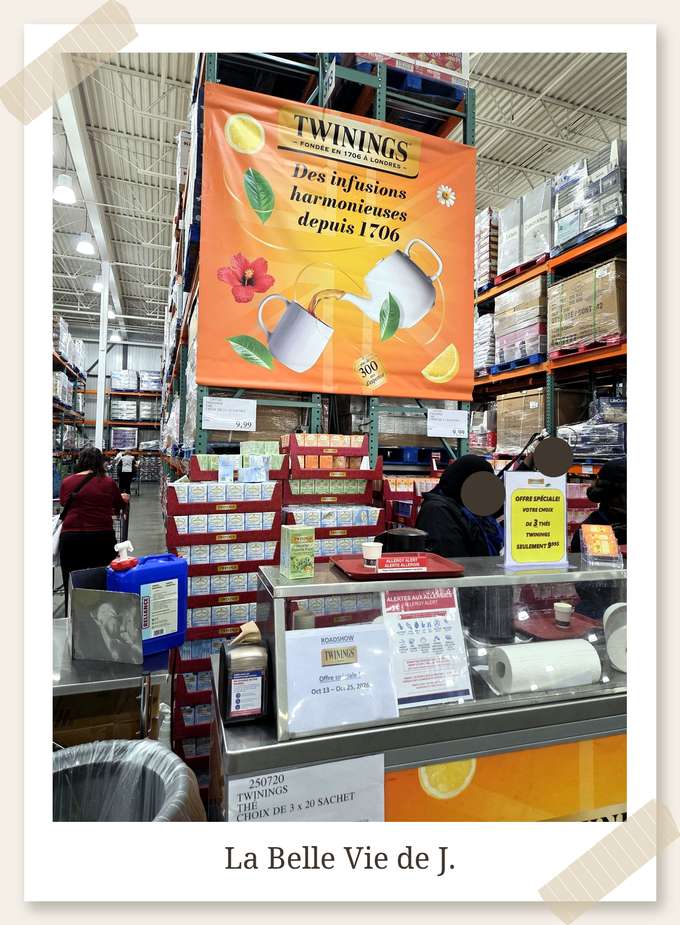
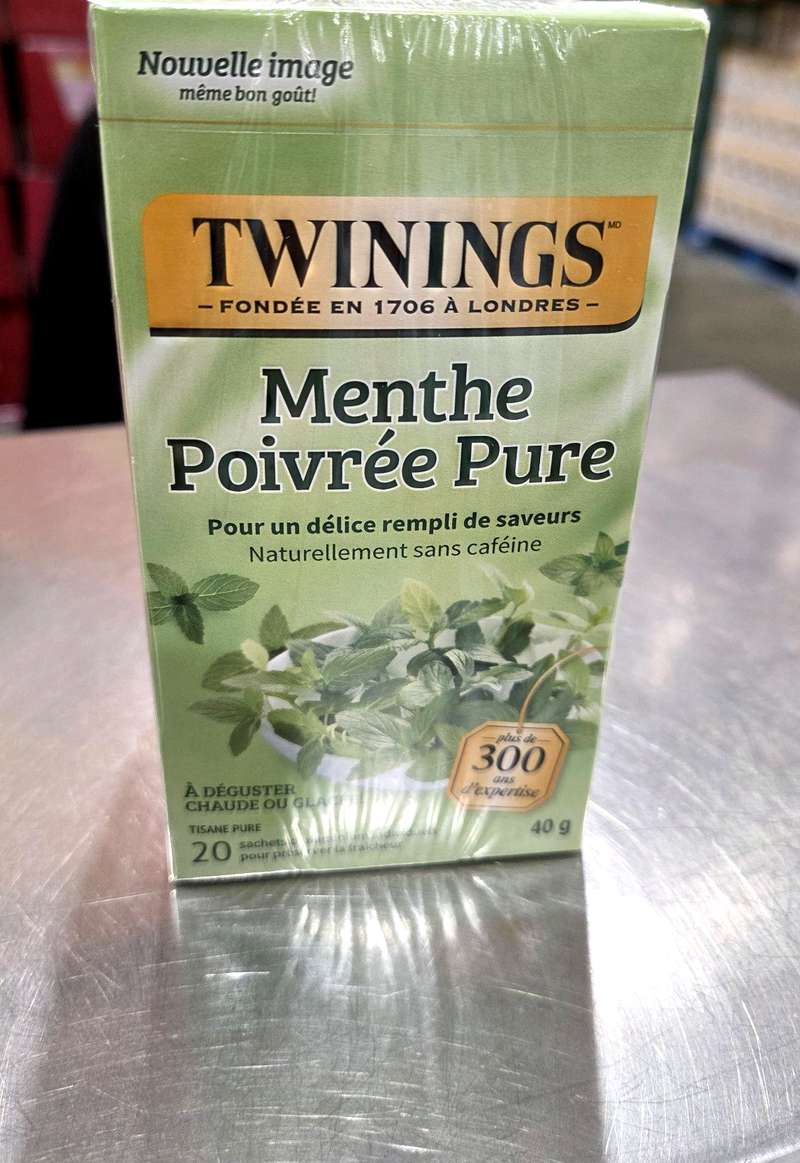

And when that roadshow is actually on, I fall back on my old Costco habit: any three 20-sachet boxes for $9.99 — peppermint first, obviously — and I stock up while it’s there. At this event price, that works out to 60 tea bags at about $0.17 a bag: a little more per bag than the big Amazon value packs, but it’s the deal I never walk past.
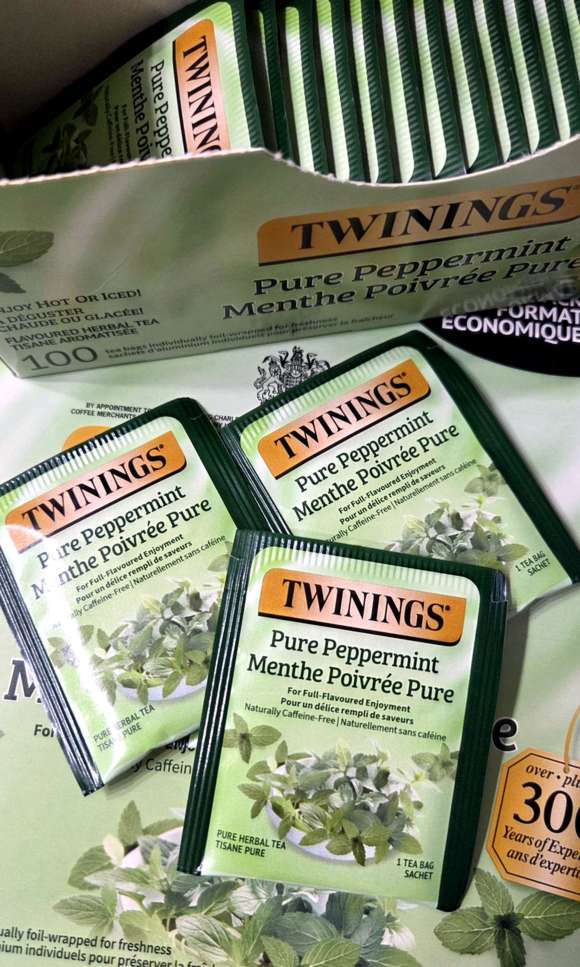
Is four boxes a lot? Objectively, yes. But between my throat routine and evening cups, they will not outlive the season. The foil wrapping is what makes bulk buying sane: no open bag going stale, and a few sachets always fit in a coat pocket.
ℹ️ Good to Know
- Product: Twinings Pure Peppermint (Menthe Poivrée Pure), herbal tea
- Ingredients: peppermint leaves only (100%) — confirmed on Twinings’ official product page
- Pack: 100 individually foil-wrapped tea bags, 200 g, value pack format
- Caffeine: naturally caffeine-free (0 mg) — safe for evenings
- Brewing: freshly boiled water, steep 3–4 minutes (Twinings’ guidance); also good iced
- How I buy it: Amazon Prime pack of 4 × 100-count boxes (400 bags) — CA$58.94 for the pack of 4 (as of October 2026), about $0.15 per tea bag; Subscribe & Save takes another 5% off
- Official product page: twinings.ca/products/pure-peppermint
- My photos: my own boxes, bought with my own money on Amazon Prime
🌟 Final Word
If your throat is your weak point too — or you just want a caffeine-free cup that leaves your mouth feeling clean and your evenings calmer — this is the tea I recommend without hesitation. It has been my constant cup through weak-throat years, rough COVID winters, and one tonsil-free recovery. The least I can do is keep the kettle on.
Do you have a winter throat ritual of your own? I’d love to hear it in the comments.
Before you go, you might also find my guides on Starbucks Signature Hot Chocolate Review and Juliette & Chocolat Review: Pretty Desserts, Wicked Prices useful.
My other winter ritual, on the skincare side: the MEDIHEAL PDRN lifting pads I keep in the fridge.
📚 You May Also Like
- Cinnamon Coffee for Dark Days: A Cozy Montréal Mood Ritual
- Starbucks Signature Hot Chocolate Review: Honest Label Check
- Juliette & Chocolat Review: Pretty Desserts, Wicked Prices
❓ Frequently Asked Questions
Is Twinings Pure Peppermint tea good for a sore or irritated throat?
In my own experience, yes — warm peppermint tea has been a real comfort for my weak throat for years, through COVID winters and after my 2025 tonsil surgery. The menthol activates cold receptors (TRPM8), so each sip feels cool and soothing, and the warm liquid itself is simply comforting to sip. That said, it’s a comforting drink, not a medicine — the article explains what the science does and doesn’t support.
Does Twinings Pure Peppermint tea contain caffeine?
No — it’s naturally caffeine-free (0 mg). I drink it in the evening and right before bed without it affecting my sleep, and it’s an easy way to keep sipping fluids through dry winter days.
What’s actually in Twinings Pure Peppermint tea?
Just peppermint — 100% peppermint leaf, nothing else. Each of the 100 tea bags per box is individually wrapped in foil, so the flavour stays fresh even in a big bulk box.
Where can I buy the Twinings Pure Peppermint value pack in Canada, and what does it cost?
I bought mine on Amazon Prime: a pack of 4 × 100-count boxes (400 bags) for CA$58.94 (as of October 2026) — about $0.15 per tea bag, and Subscribe & Save takes another 5% off. Costco sometimes runs the smaller 3-pack as a promotion, but it hasn’t been in stock lately, which is why I switched to the bulk pack.
Thanks for stopping by — have a lovely day! 💛
— J.
Get the Free Canada Savings Checklist
Join the newsletter — get the free PDF checklist and weekly Canada savings tips in your inbox.
Read Next

How do you save on this? Share your own tip in the comments — I'd love to hear it!
Some links in this post are referral or affiliate links. If you sign up or buy through them, I may receive a bonus or commission at no extra cost to you. It helps keep this blog running — thank you!