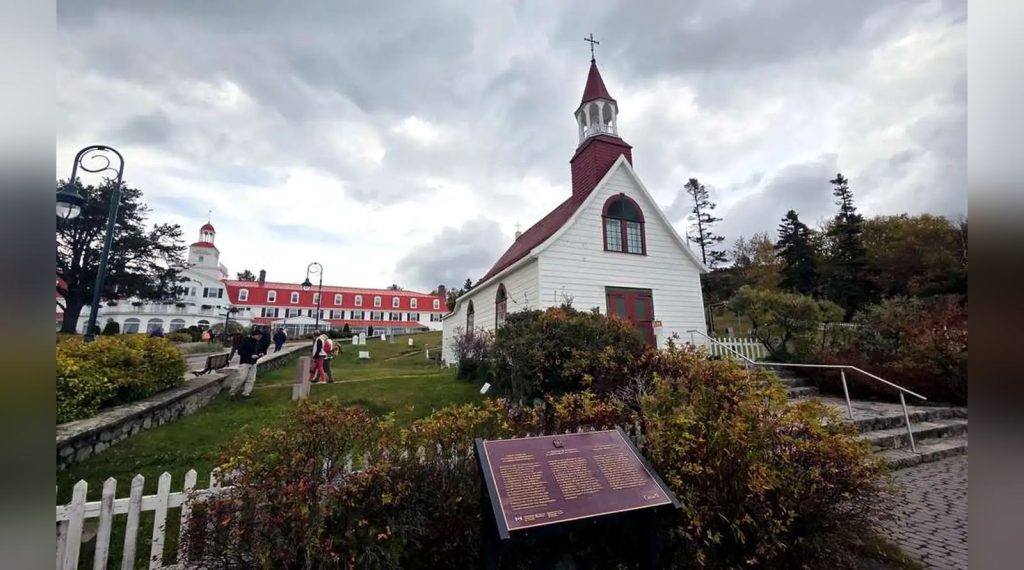
Chapelle de Tadoussac: Canada’s Oldest Wooden Chapel (Built 1747)
Last updated: November 5, 2026
Tadoussac is famous for its whales — but the little white chapel beside the grand hotel is the stop that stayed with me. Real reviews — my own money, my own experience.
Canada’s oldest wooden chapel is not in some big city — it is in a small village in Quebec. I stood in front of it in early October 2026, and the sign says it plainly: built in 1747, a Monument historique.
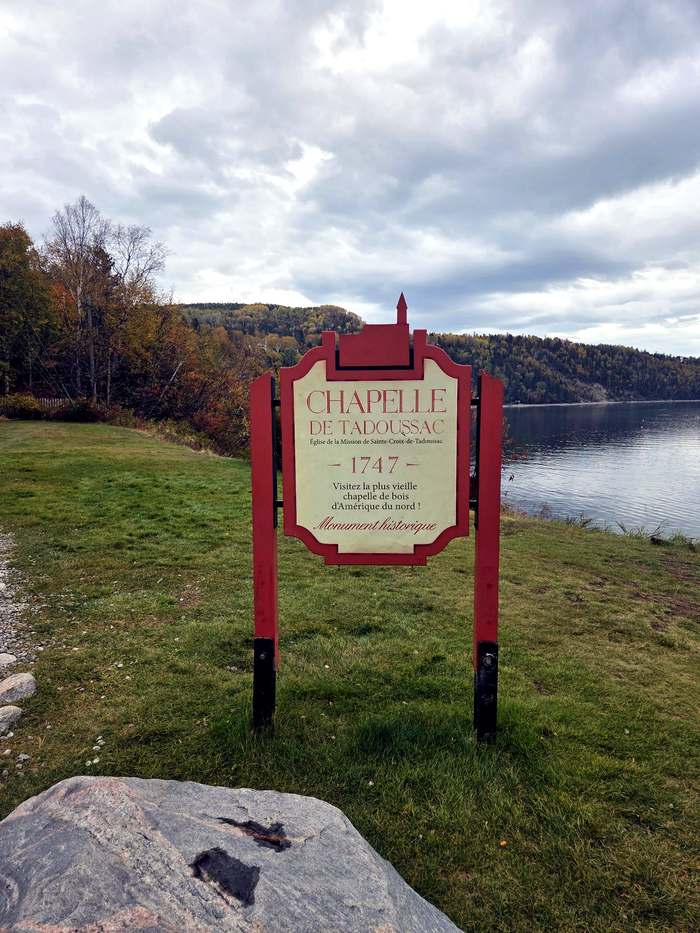
I have lived in Quebec for nine years, and I am still discovering places like this. Tadoussac is famous for whale watching, but this little white chapel next to the Hotel Tadoussac stopped me in my tracks. It is small, quiet, and almost 280 years old — and you can just walk in.
🌿 Quick Take
- 280 years of history — the oldest wooden chapel in Canada, built in 1747, before Canada was Canada.
- It’s free. No admission — just walk in.
- Pair it with whale watching: Tadoussac is Quebec’s whale capital, and the chapel is steps from the boats.
- Light a candle inside: real flames are banned (it’s all wood), so you light an LED candle instead — a small, moving moment.
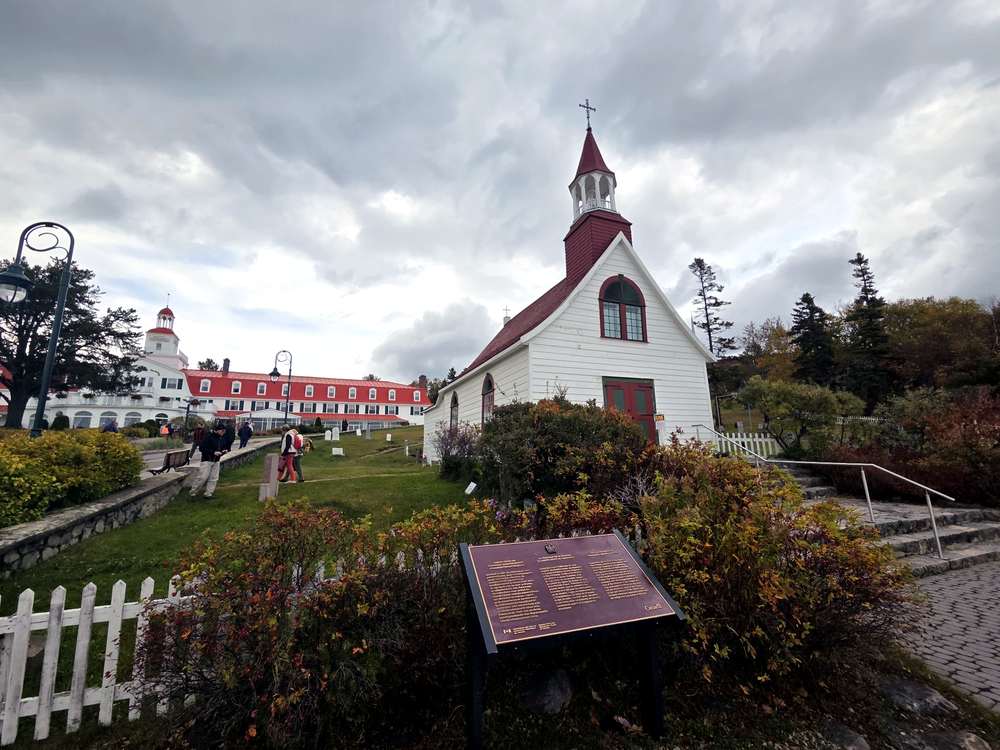
- The postcard shot: white boards, red roof, and the grand Hotel Tadoussac next door — all in one frame.
- An hour is enough to see everything.
A Jesuit Mission Church from 1747
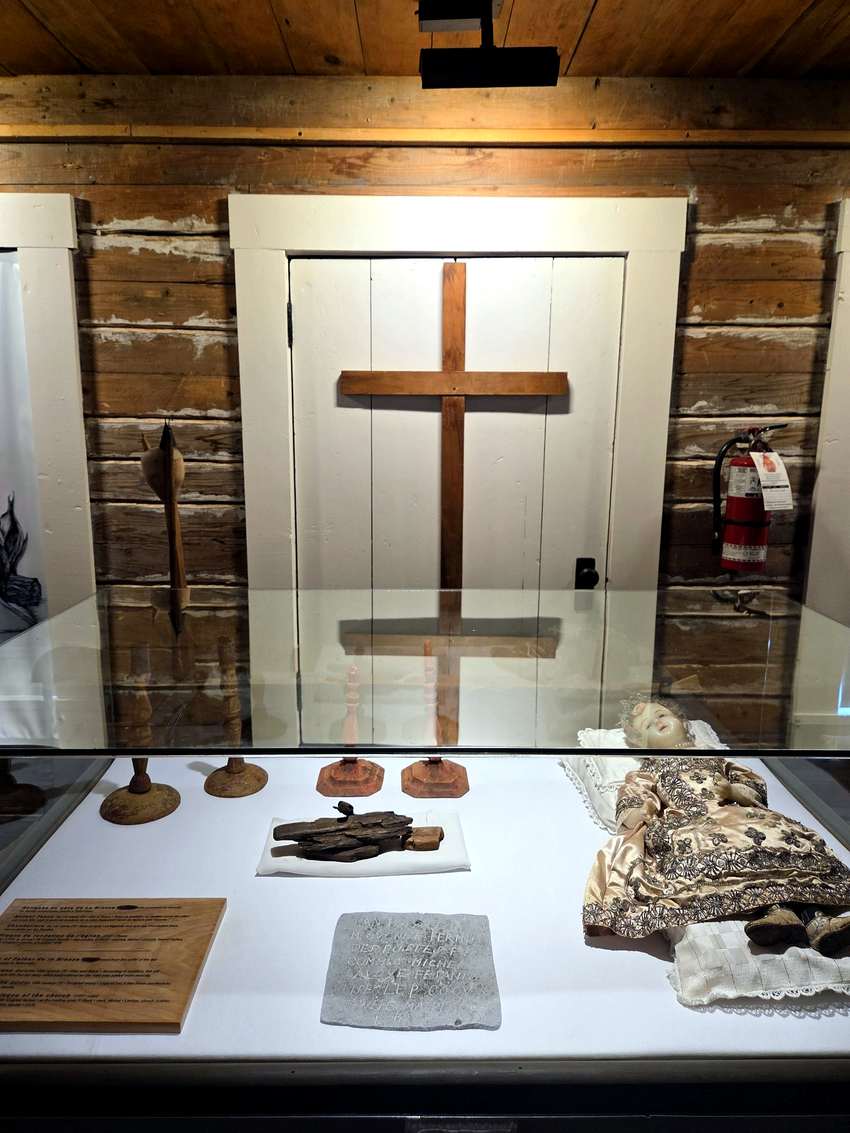
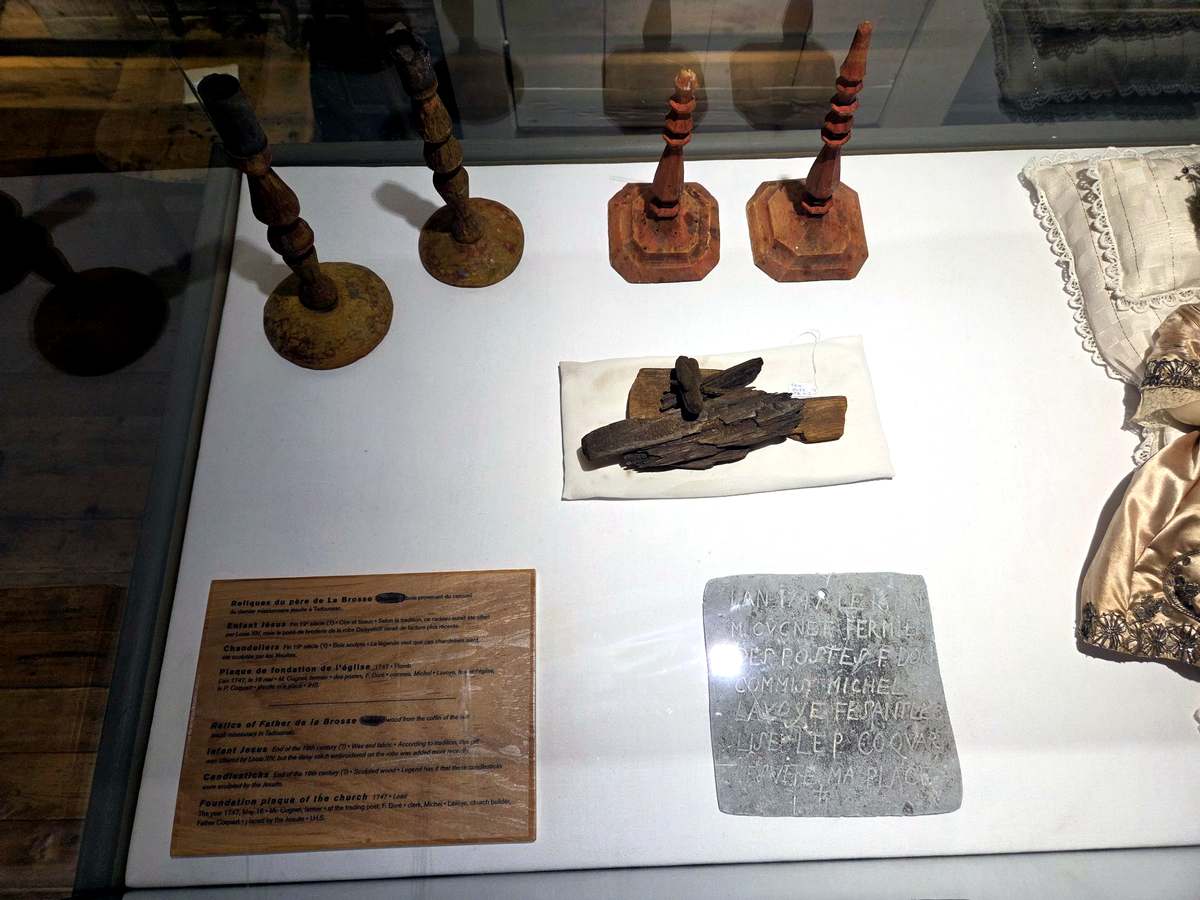
The sign calls it the Église de la Mission de Sainte-Croix-de-Tadoussac — a Jesuit mission church. The French missionaries were here long before Canada was Canada. Inside the chapel, a small exhibit explains the relics of Father de La Brosse, a Jesuit missionary at Tadoussac, and shows the church’s original foundation plaque from 1747, made of lead, with the names of the people who raised it.
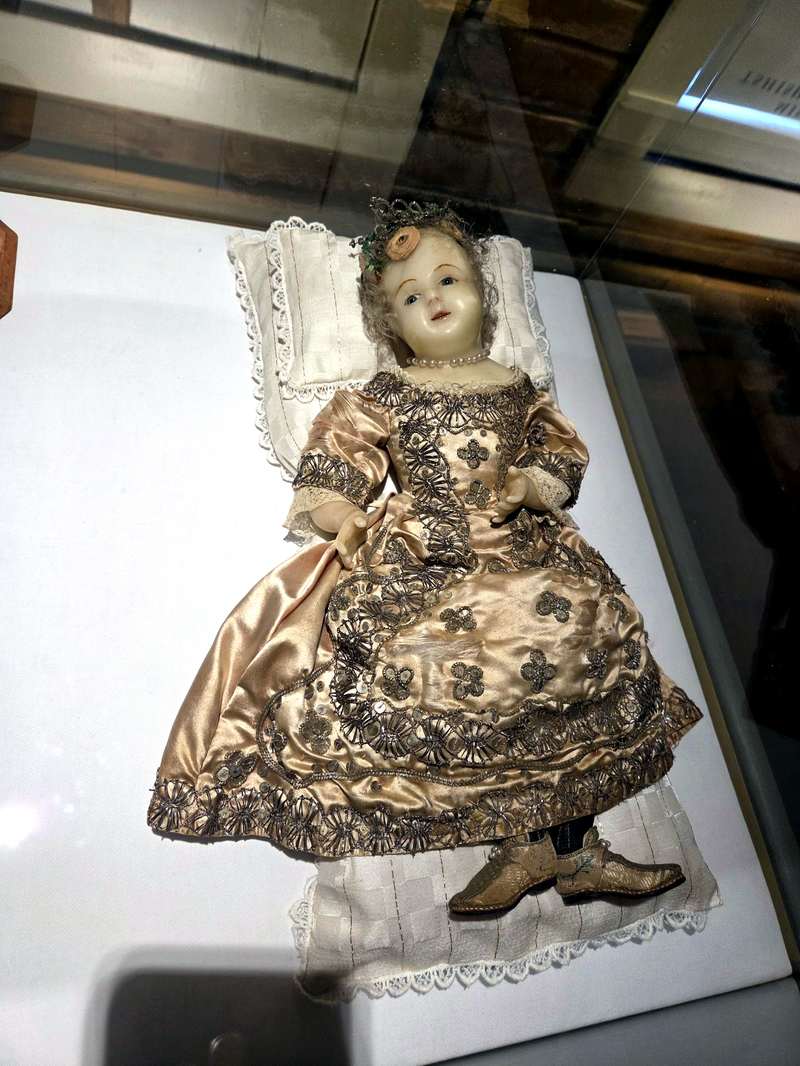
According to the exhibit label, the Infant Jesus figure on display is said — by tradition — to have been a gift from Louis XIV himself. The old wooden candlesticks, the label says, were carved by the Jesuits. Whether or not every legend is exact, you feel the weight of the centuries in that room.
The Outside: White Boards, Red Roof, and the Grand Hotel Next Door
The chapel sits right beside the Hotel Tadoussac, the big white hotel with red roofs that dominates the waterfront. The two buildings belong together somehow — same red, same white, same era of Quebec history.
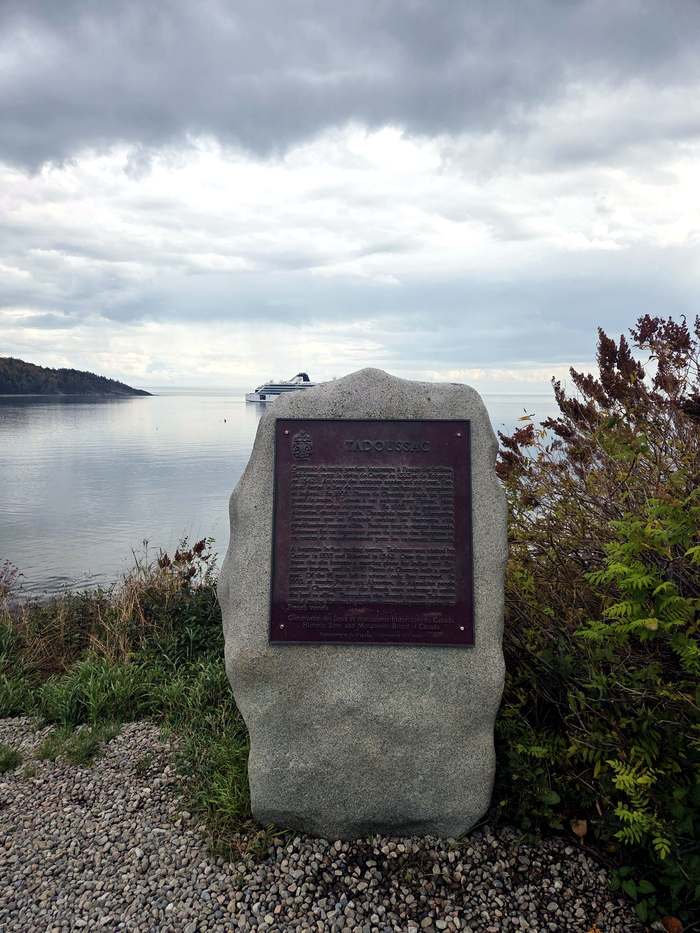
A stone marker nearby tells the longer story of this point of land — Cartier, Roberval, Champlain, the trading post era. A cruise ship was anchored in the bay when I visited, which felt oddly fitting: people have been arriving here by water for five centuries.
Stepping Inside: Wood Everywhere
The first thing you notice is the ceiling — warm wooden planks curving overhead, the whole interior built of wood. It smells like old timber and candle wax. The space is small; a few rows of pews, and then the altar.
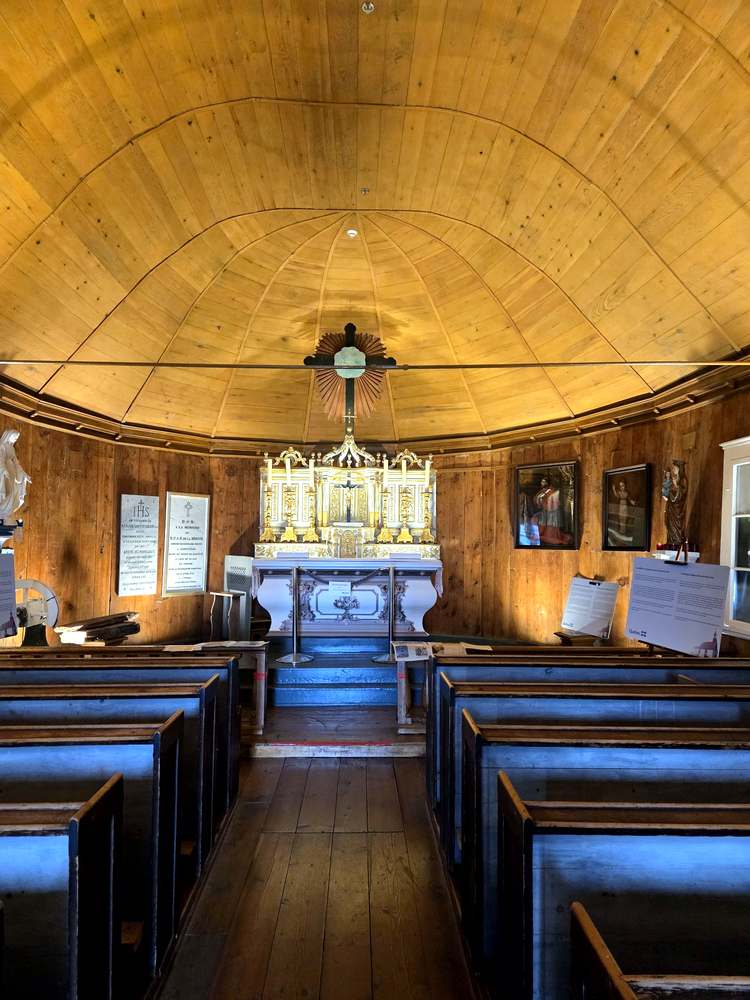
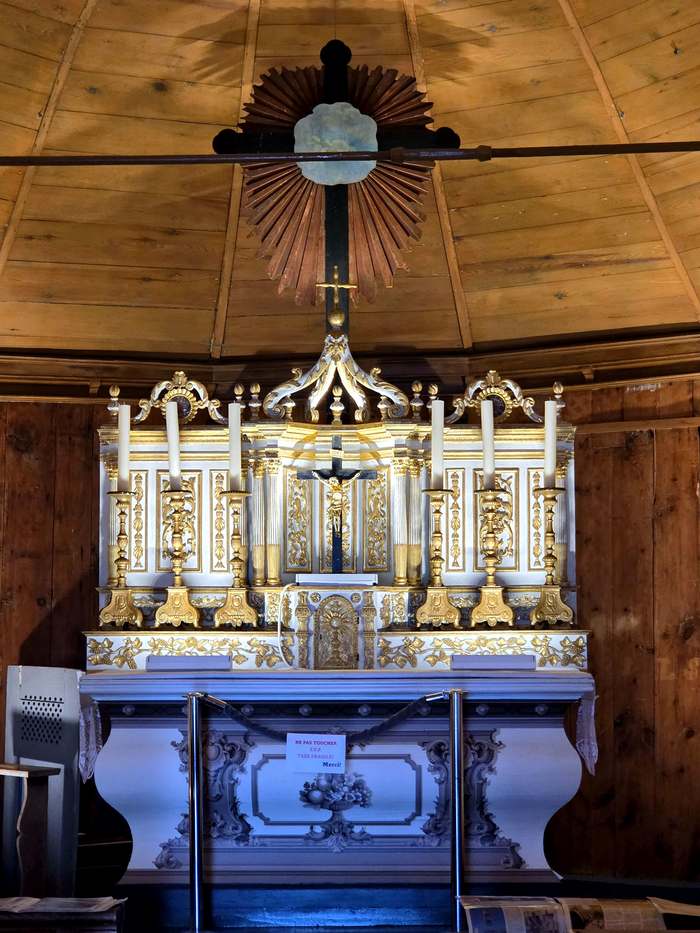
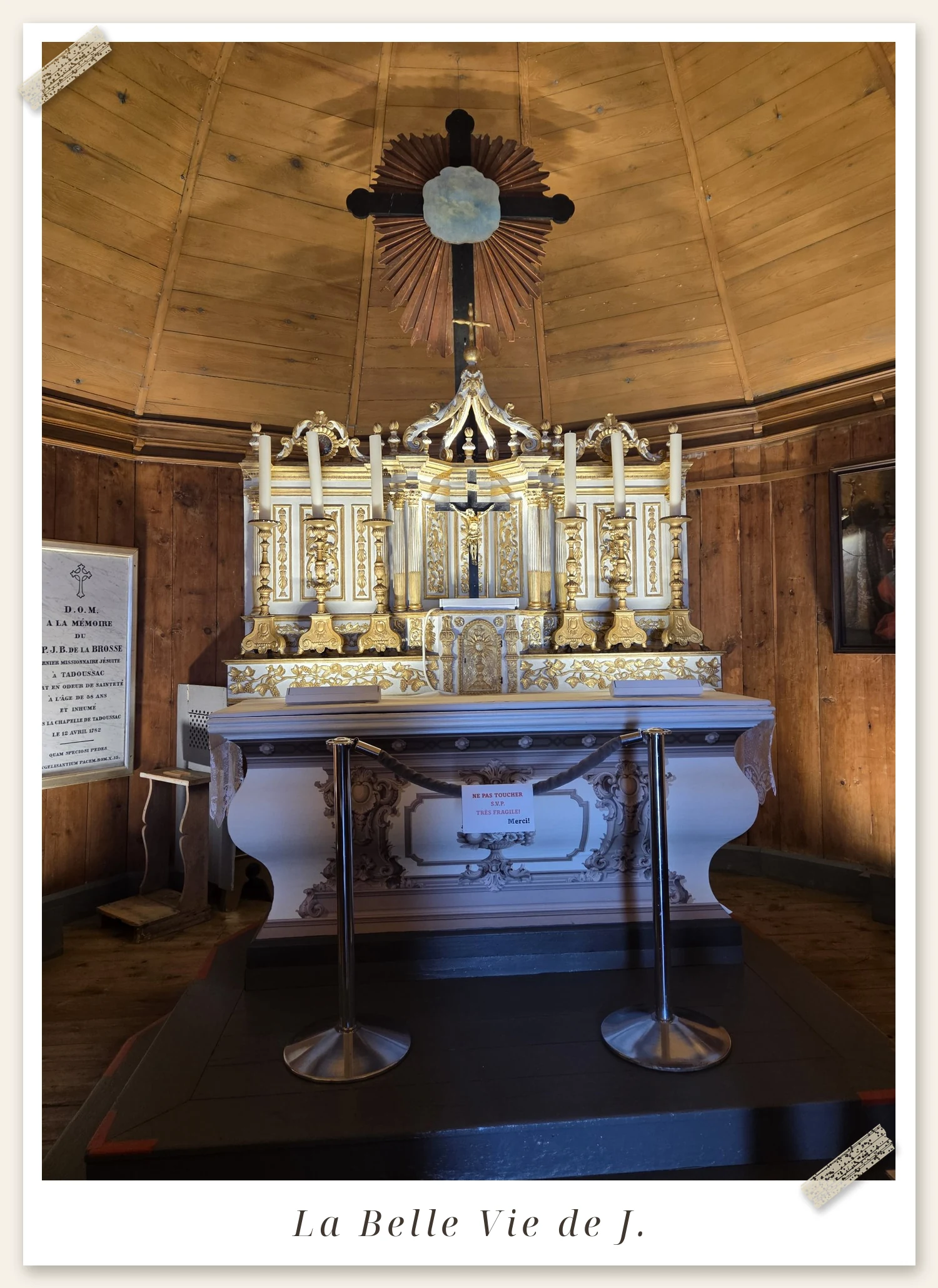
The altar is the surprise. In this plain wooden room, the white-and-gold altar glows. A sunburst crucifix hangs above it. Candles, gold leaf, carved columns — it is the one ornate thing in an otherwise humble building, and it works beautifully.
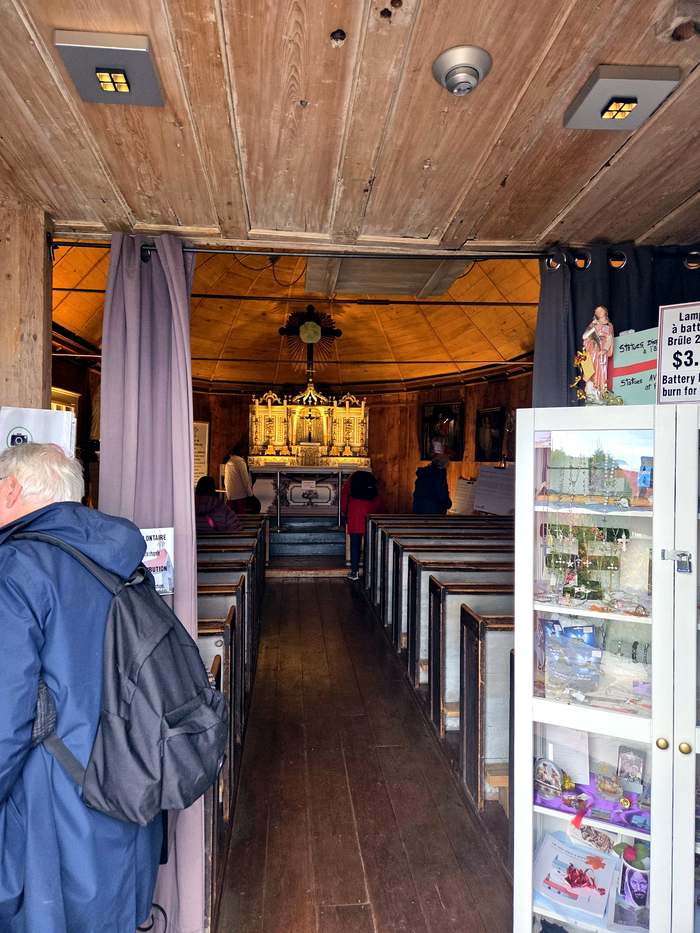
From the entrance, you can see the whole chapel at once — the gift cabinet with rosaries on the right, and the little candles by the statues. Real flames are not allowed in a wooden chapel this old, so they use LED candles instead. I lit one myself. The person looking after the chapel was genuinely kind — happy to answer questions and share its stories.
The Statues: Mary in Every Corner
The chapel keeps several statues of the Virgin Mary, and each one has a different mood. A serene white Madonna with blue votive candles at her feet. A crowned Madonna and Child in painted color. Saint Anne teaching the young Mary. A Virgin of the Immaculate Conception rising over cherubs.
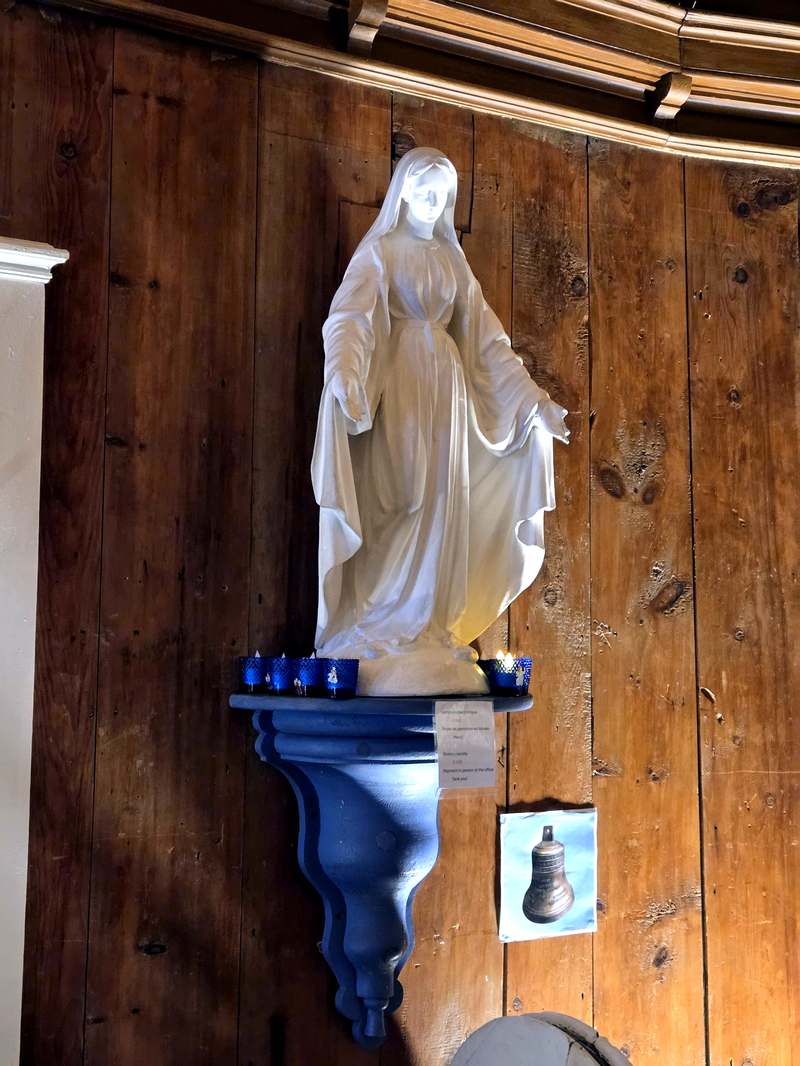
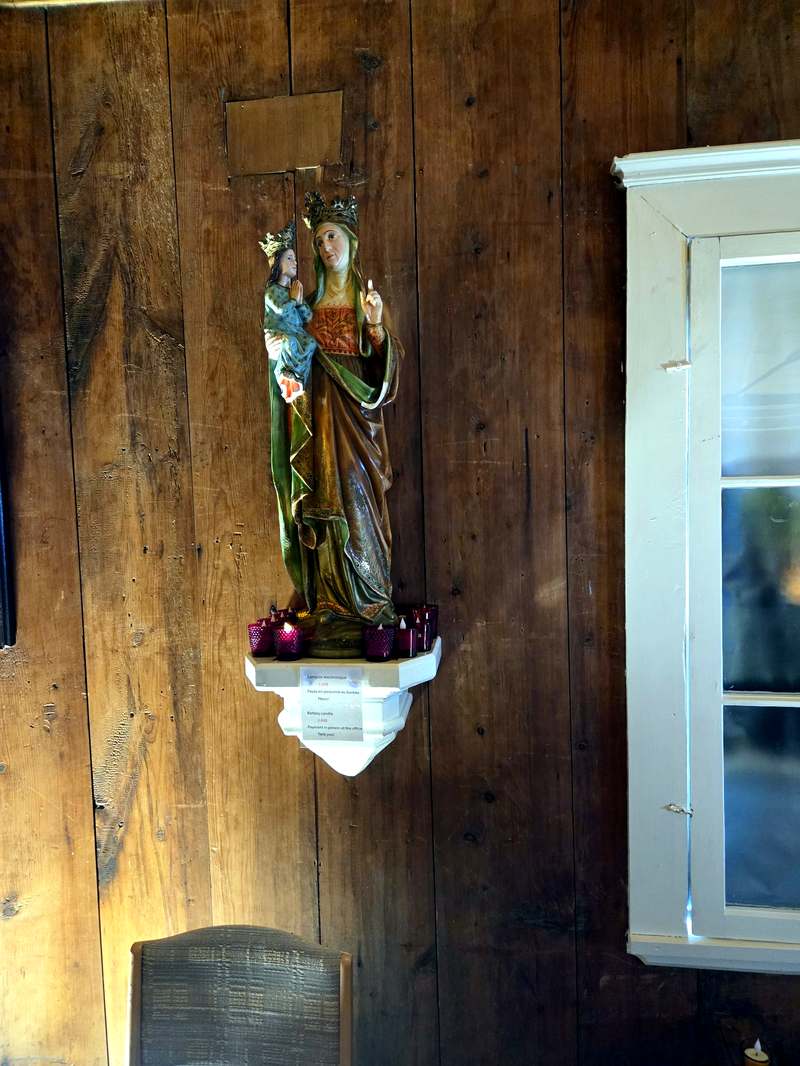
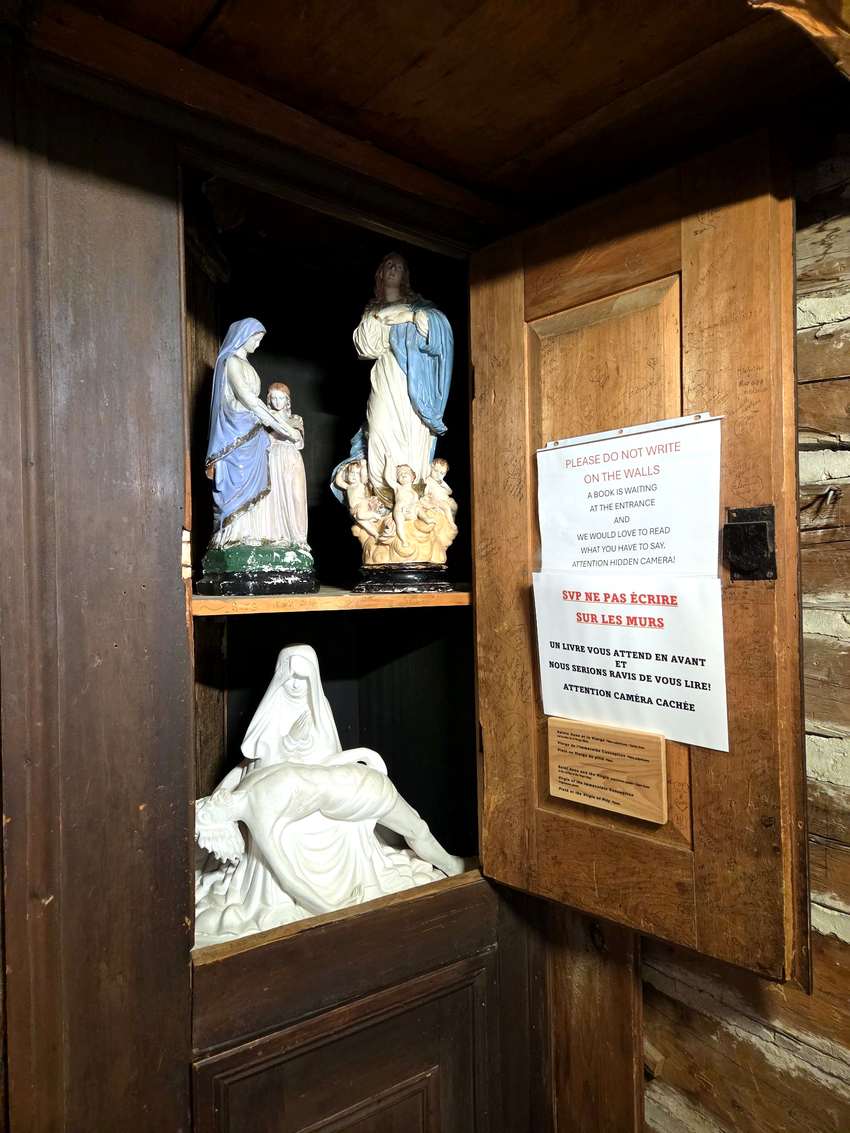
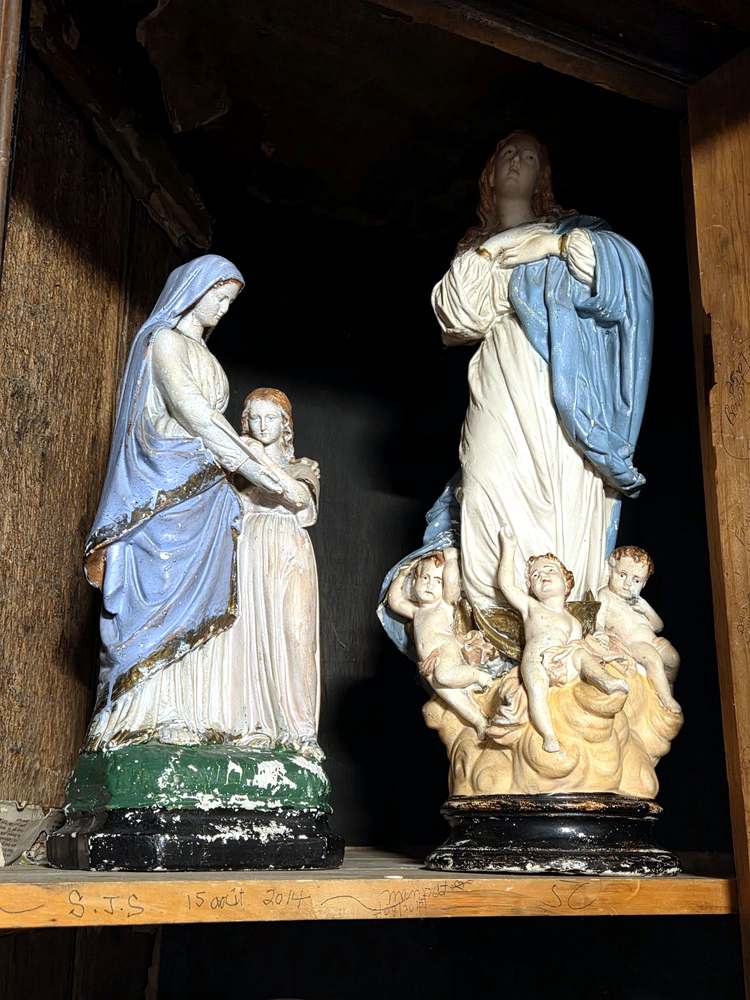
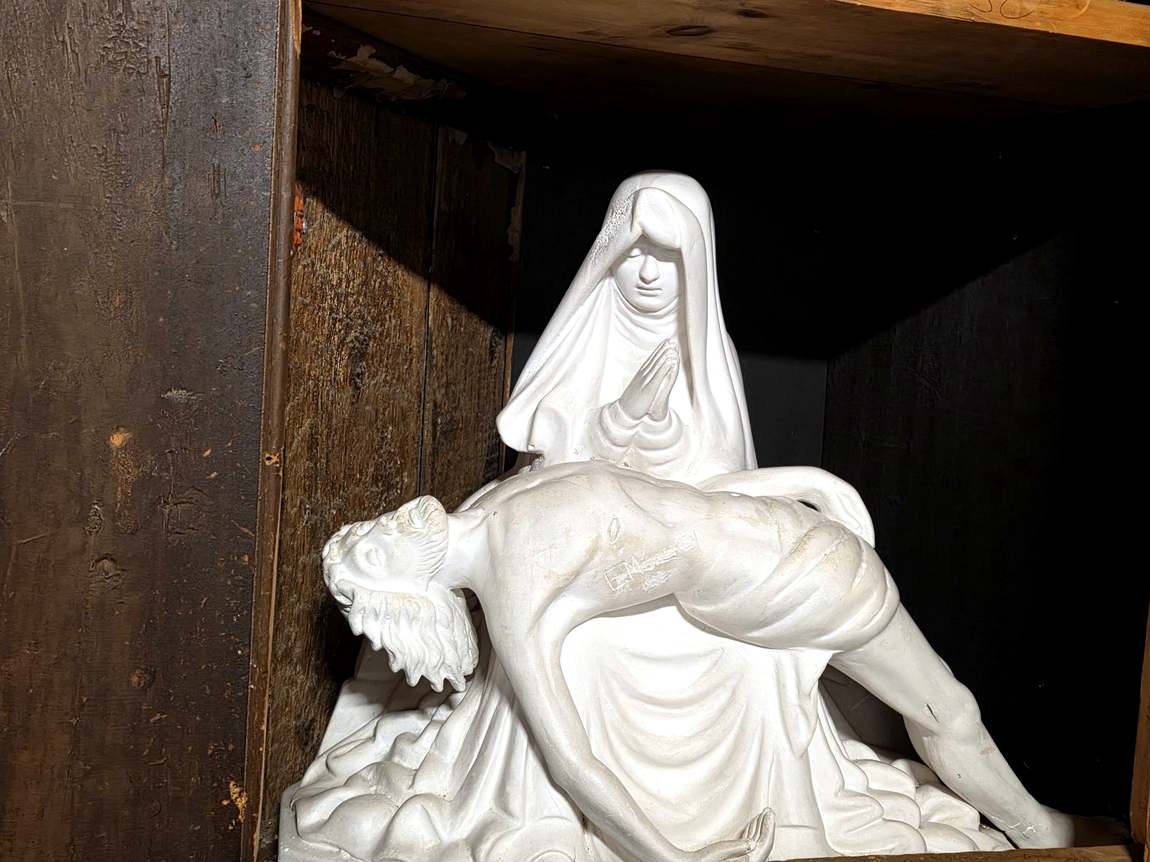
The one that held me longest was the Pieta — Mary holding the body of Christ, all in white. It is small and plainly carved, but the grief in it is unmistakable.
The Relic Room: 1747 Up Close
In a side room, glass cases hold the chapel’s treasures: fragments of wood from Father de La Brosse’s coffin, the wax Infant Jesus figure, the old candlesticks, and the 1747 foundation plaque — lead, inscribed with the year and the names of the builders.
Another panel, “Objets de Culte / Objects of Worship,” explains the liturgical pieces with French and English text — the chalice, the cruets, the altar bell, the incense burner — all of them old, all of them once used in this very chapel.
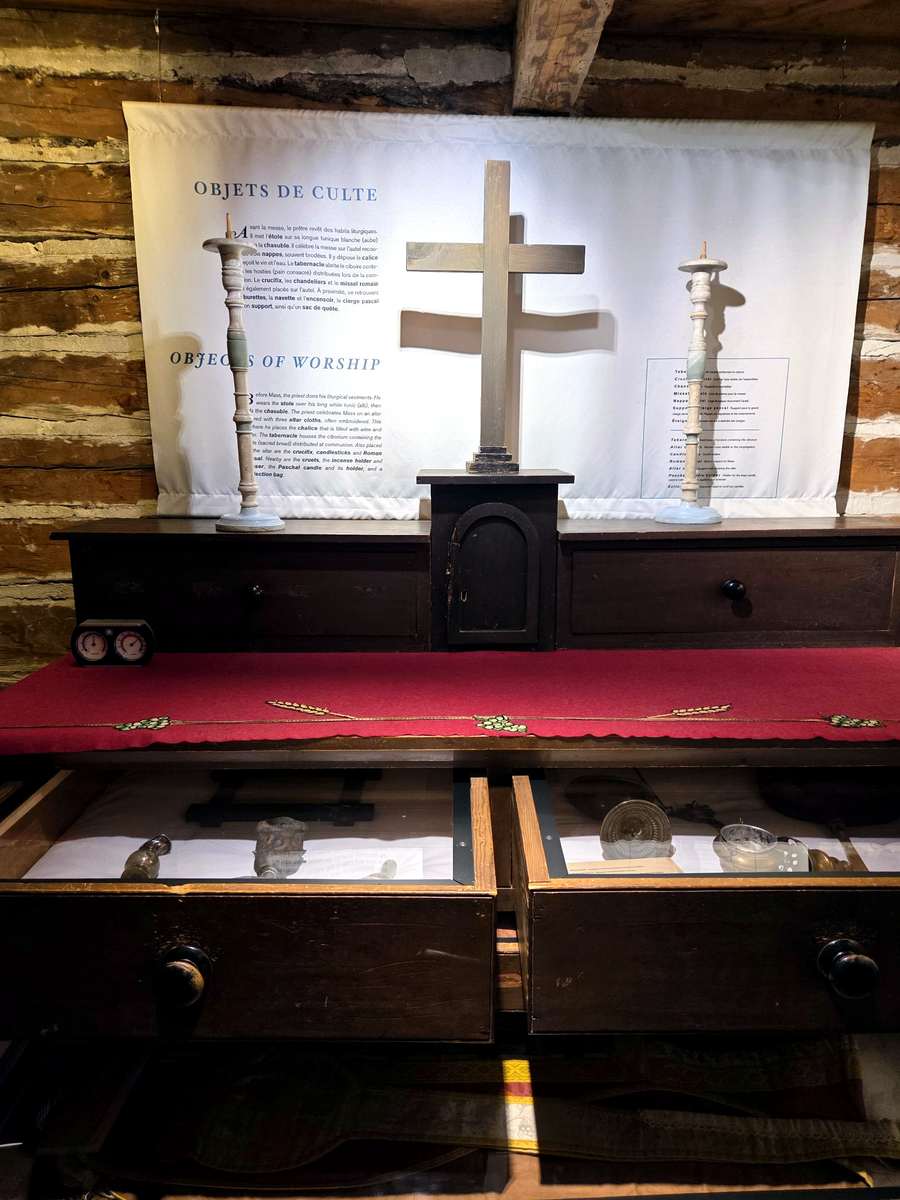
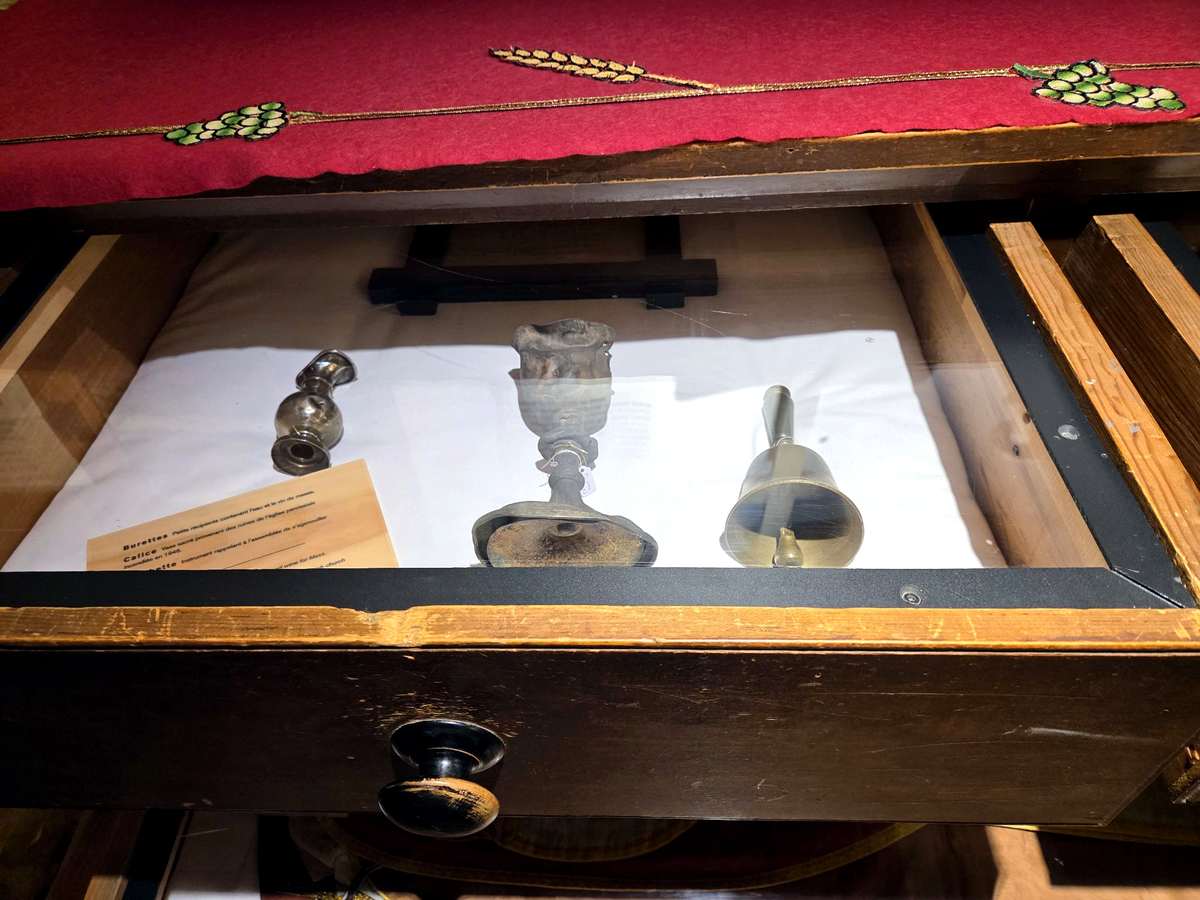
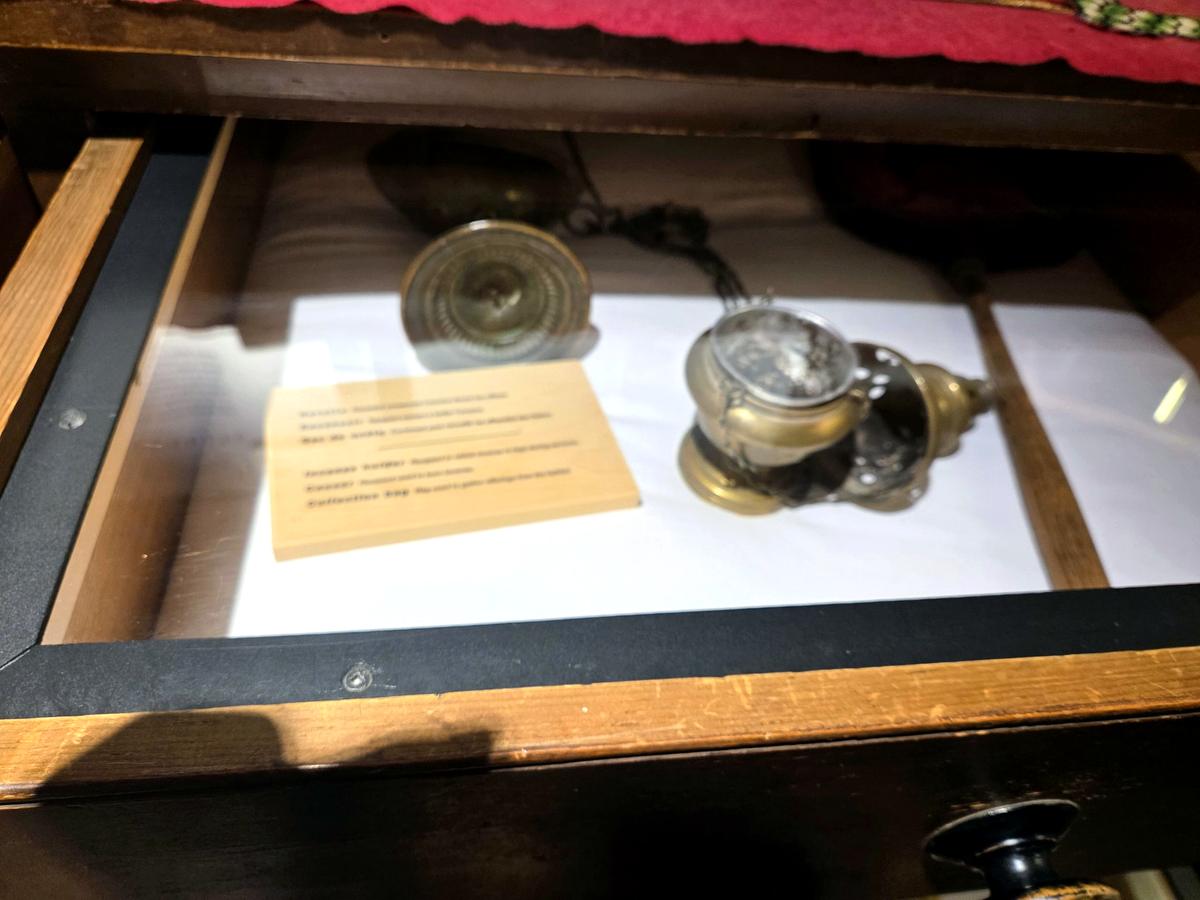
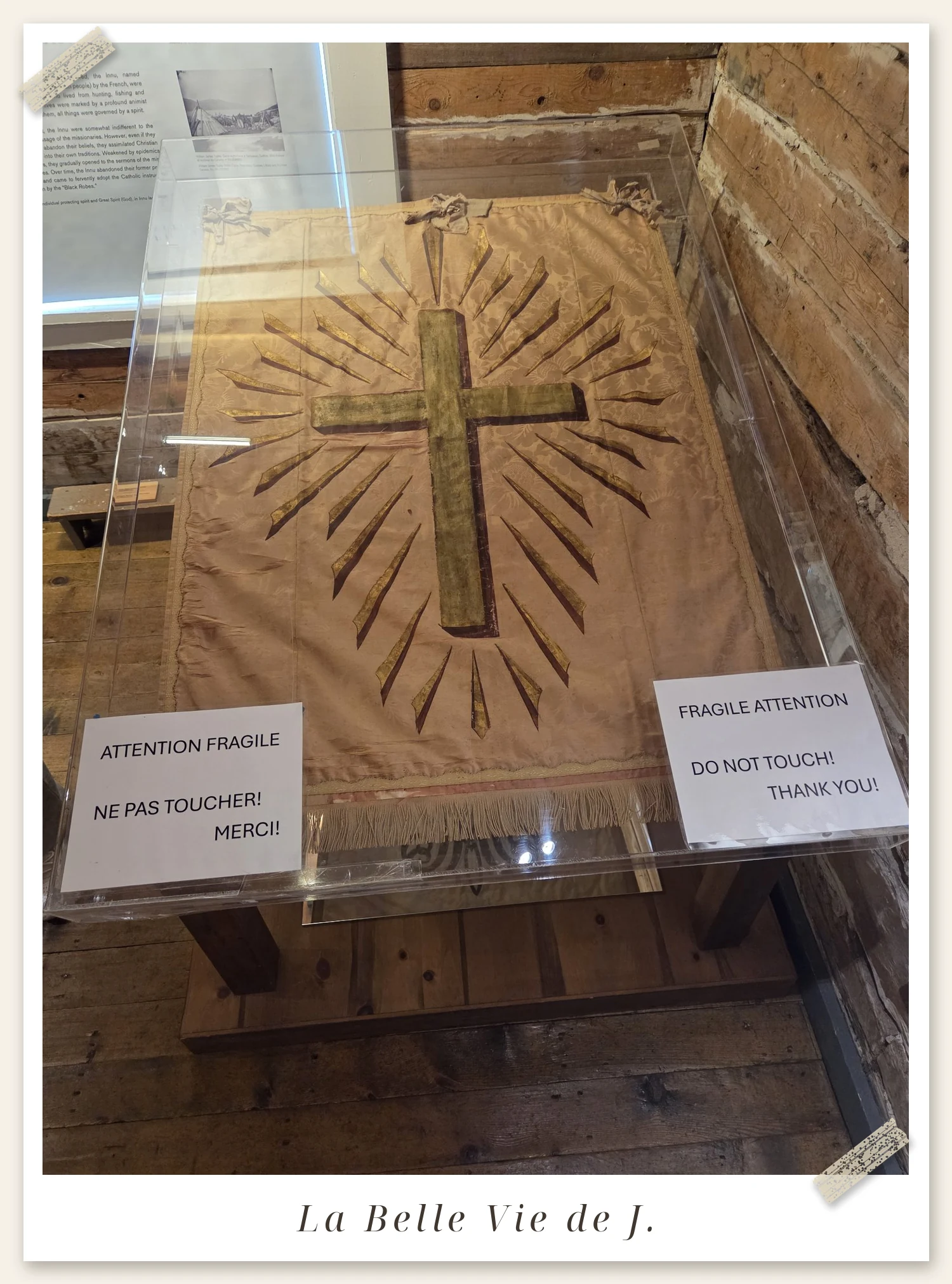
One small sign made me smile: “Please do not write on the walls — a book is waiting at the entrance, and we would love to read what you have to say.” Four centuries of visitors, and people still want to leave their mark.
Visitor Tips
- It is a quick stop, and worth it. An hour is enough to see everything — pair it with a walk along the Tadoussac waterfront and the Hotel Tadoussac grounds.
- Admission is free. No ticket, no fee — just walk in. Donations are welcome, and the little LED candles by the statues are a few dollars; I lit one myself, and the money goes to the chapel.
- Check before you go. It is a historic site with seasonal hours — the official site says it opens from the last Sunday of May through Thanksgiving, 9:00–18:00. Confirm on the official chapel website before your visit, especially outside summer.
- Photography is allowed (as of my October 2026 visit), but keep voices low — it is still a place of prayer.
- Combine with whale watching. If you are in Tadoussac for the whales, the chapel is right in the village center — no detour needed.
📍 Address: 169 Rue du Bord-de-l’Eau, Tadoussac, QC G0T 2A0 — View Chapelle de Tadoussac on Google Maps
Standing in that wooden room, older than the country around it, I thought about how many people have prayed there — Jesuit missionaries, traders, sailors, and now tourists with cameras. Some places you visit; this one you feel.
Driving the Charlevoix route? Pair the chapel with one more quiet hilltop that stayed with me: the cemetery above La Malbaie, where a giant steel cross watches over the whole village — free to visit, easy to park, and in October, surrounded by some of the best fall colours in the region.
Before you go, you might also find my guides on Quebec Fall Foliage Road Trip and Québec Fall Foliage Drive useful.
🧭 A One-Hour Visit, Step by Step
- Start outside: the white boards, the red roof, and the Hotel Tadoussac next door in one frame — the postcard shot.
- Step inside and look up first: the curved wooden ceiling overhead, then the white-and-gold altar at the far end.
- Walk the statues slowly — and give the small white Pieta a moment; it is plainly carved, and it held me longest.
- End in the relic room: the 1747 lead foundation plaque, the wax Infant Jesus figure, and the wooden candlesticks carved by the Jesuits.
- Light an LED candle by the statues — a few dollars, and the money goes to the chapel; real flames are banned in an all-wood building.
- Sign the guest book at the entrance on your way out — the chapel asks for that instead of marks on its walls.
🧭 Before the Chapel: The Trading Post of 1600
The chapel did not land on this point of land by accident. In 1600 — nearly a century and a half before it was built — Pierre de Chauvin had a trading post built at Tadoussac, often described as the first French establishment of its kind in Canada; its replica, the Poste de traite Chauvin, can still be visited a few minutes’ walk away. The geography explains the choice: the village guards the mouth of the Saguenay fjord, where it meets the St. Lawrence — a natural crossroads for the fur trade first, and then for the missionaries who travelled the same routes. The little mission church of 1747 is the direct heir of that first chapter. It is also why the stone monument near the chapel tells the story of Cartier, Roberval and Champlain: here, everything begins on this point of land. In other words, the chapel is the surviving act of a story that opened in 1600 — first the post, then the mission, then this wooden church that has outlasted every century since.
Have a wonderful day 💛
— J.
🕰️ The Chapel on One Timeline
This point of land runs on a long clock. The trading post opens in 1600. The chapel is built in 1747 — 147 years later, which means the fur trade chapter alone was already older, on the day the chapel was born, than most buildings you will ever stand in. From 1747 to my visit in October 2026 is 279 years: the “almost 280” on the sign, still standing, still wooden, still free to walk into.
The visiting math is just as lopsided, in your favour. The season runs from the last Sunday of May through Thanksgiving — roughly four and a half months of the year — and the doors are open 9:00 to 18:00, nine hours a day. An hour is enough to see everything, and that hour is a ninth of an open day, inside a building that has outlasted five centuries of arrivals by water. Small chapel, long timeline, tiny visit — that ratio is exactly why it stays with you.
You May Also Like
- Québec Fall Foliage Drive: Two Shrines, a Cathedral, Four Lookouts & a Chapel from 1747
- Never Miss Peak Fall Foliage in Canada — A Guide to Québec’s Fall Colour Map
- Mont-Tremblant Fall Hotels for Less: My Québec Casino Member Secret
*Photos: all taken by J. at Chapelle de Tadoussac, Tadoussac, Quebec. Historical details from the chapel’s own signage and exhibit labels.*
Get the Free Canada Savings Checklist
Join the newsletter — get the free PDF checklist and weekly Canada savings tips in your inbox.
Read Next

Some links in this post are referral or affiliate links. If you sign up or buy through them, I may receive a bonus or commission at no extra cost to you. It helps keep this blog running — thank you!