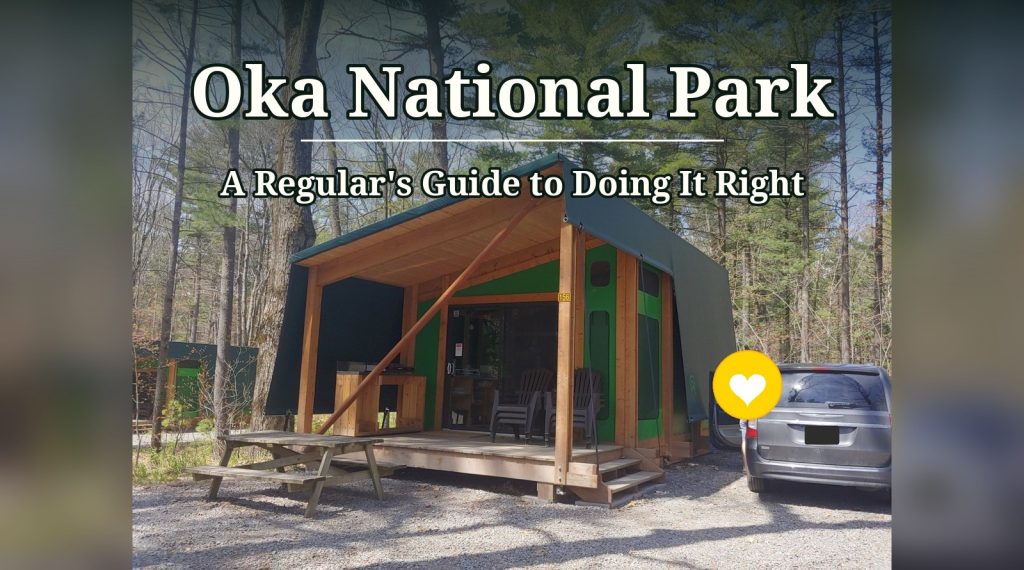
Oka National Park, Done Right — A Regular’s Guide to the Beach, Glamping, Bike Trails, Day Trips and Booking
Last updated: November 10, 2026
I’ve wandered through my share of Sépaq parks, but the one I keep coming back to is Oka. I worked through the nearby parks one by one — pitching my own tent on some trips, doing the show-up-with-a-bag glamping thing on others — and somewhere along the way Oka became our family’s regular park. The annual pass post covered the big picture; this one digs into Oka alone. How to make a day of it at the beach, how the two kinds of glamping differ and how booking actually works, even the night a raccoon family came to visit — the inside story only a regular would know, all in one post.
THE SHORT VERSION
- The water in front of Oka isn’t the sea — it’s a lake. And yet the sandy beach runs for about 11 km
- About an hour’s drive from Montreal — of all the Sépaq parks, this is the one I’ve used the most
- A day trip on an entry pass alone is plenty. Barbecue spots and shaded rest areas line the beach
- Glamping (ready-to-camp) is a minimum of two nights. The green Étoile is bigger; the beige traditional tent is a little cozier
- Inside the park, the 10 km paved bike section is separated from cars, and bike rentals are free for kids 17 and under (limited quantities)
📅 Bookings for Oka’s summer 2027 season open Saturday, November 7 at 2 p.m.!
A virtual waiting room hands out queue numbers, so create your Sépaq account in advance. Popular dates go fast once booking opens.
🏖️ 1. What kind of place is Oka? — not the sea, a lake, yet 11 km of beach
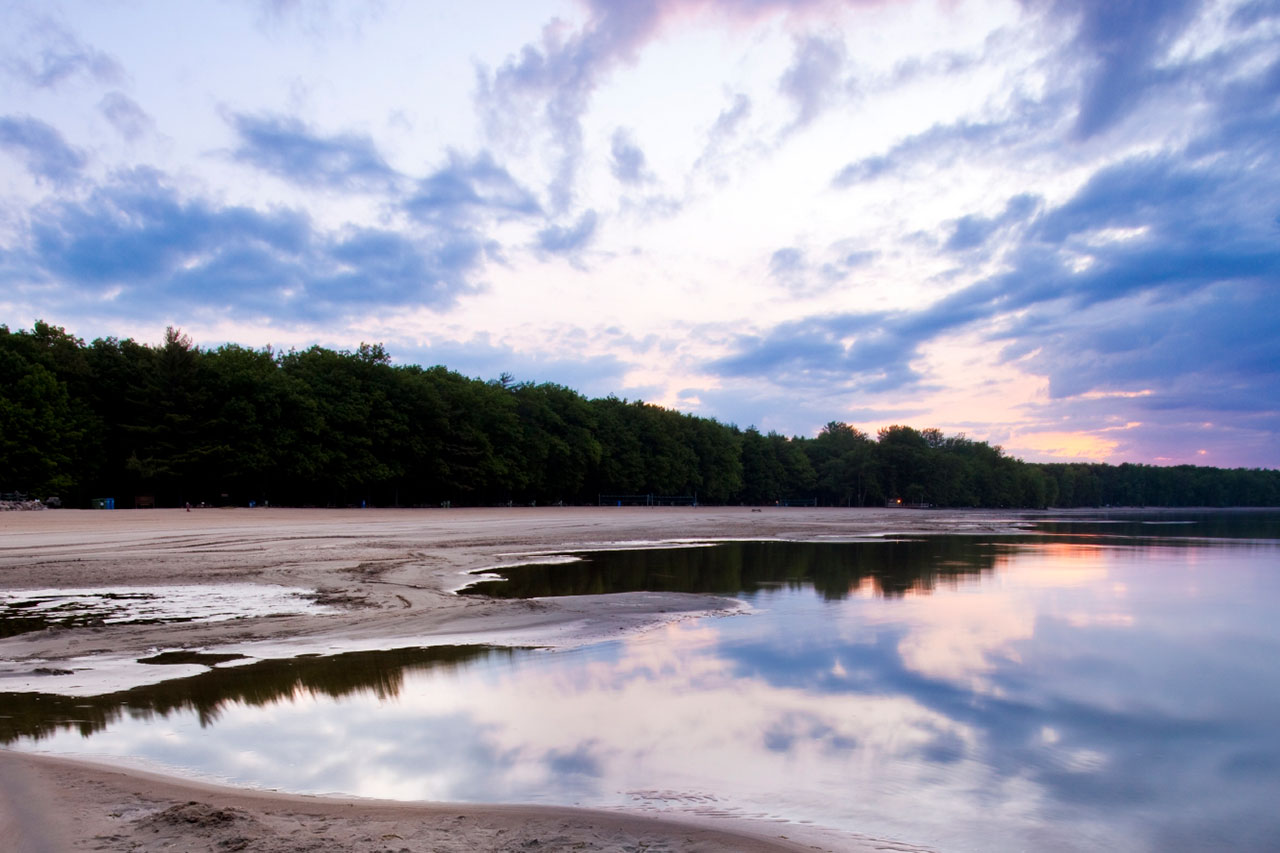
Oka (Parc national d’Oka) is a Sépaq national park about 50 km west of Montreal, roughly an hour’s drive away (2020 chemin d’Oka). Leave in the morning and you can be sitting by the water before lunch.
There’s one misconception almost every first-timer has. That wide expanse of water in front of you is not the sea. Oka’s waterfront is Lac des Deux Montagnes — a lake. It forms where the Ottawa River widens just before meeting the St. Lawrence, so it’s broad enough to show a horizon, and the sandy beach runs for about 11 km. In summer a supervised swimming area with lifeguards opens, and a boardwalk runs along the shore. For kids in the water, a lake has its advantages — no waves to worry about.
Why do I keep choosing Oka? Simple: it’s close to Montreal, there’s so much to do that you never get bored, and the cycling is excellent. Walk a forest trail and a deer might step out; at the campground, raccoons peek in from time to time. Below, I’ll go through it in order: day trips, glamping, tent camping, cycling, and activities.
🧺 2. Day trips, no overnight stay — a barbecue spot and some shade are enough
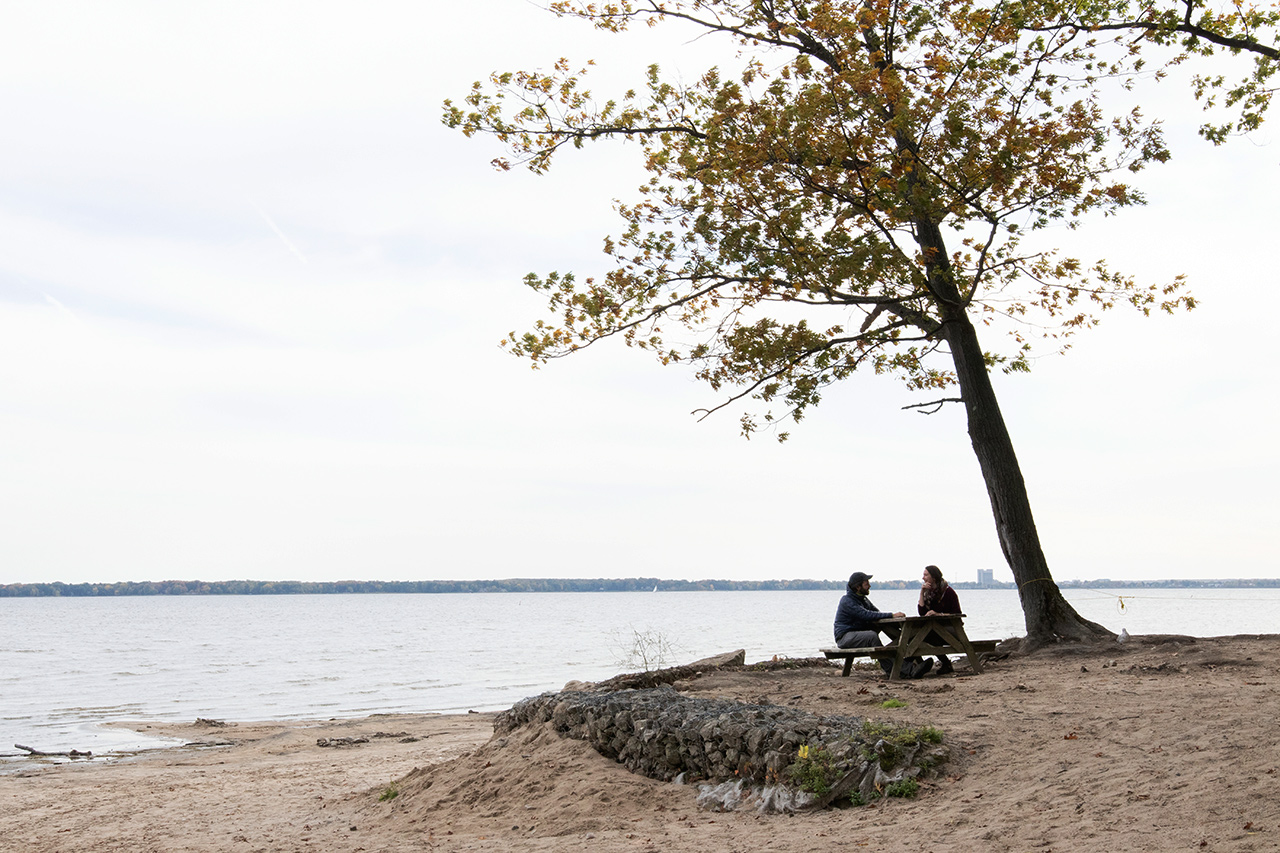
Oka doesn’t have to mean sleeping over. An entry pass alone makes for a full day trip — in fact, the annual pass pays for itself through exactly these light visits stacking up. There are plenty of spots by the beach set up for barbecues, and lots of shade to rest in, so a mat and some food are all you need for the day.
A summer day usually goes like this: arrive in the morning and claim a shady spot, swim and stroll, barbecue at lunch, then ride bikes or walk a trail in the afternoon before heading home. Parking at the supervised beach is charged separately from admission, but the all-parks annual pass takes 25% off — one more saving that stacks up the more day trips you make.
💡 Tip: For a day trip, arrive in the morning. Claim your shade first and you can rest right by the beach even at midday.
⛺ 3. Glamping — the Étoile, the traditional tent, and the night the raccoons came
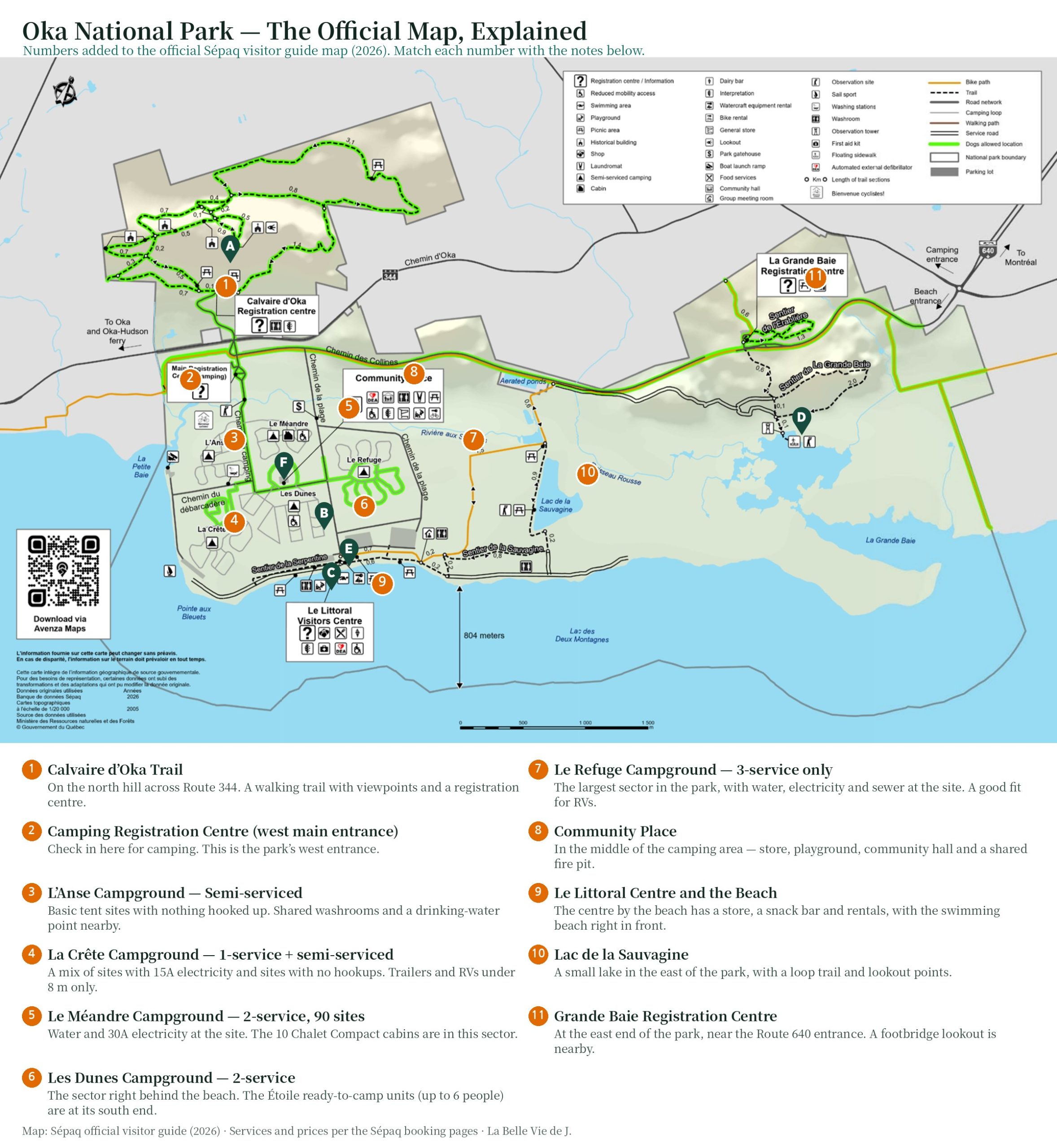
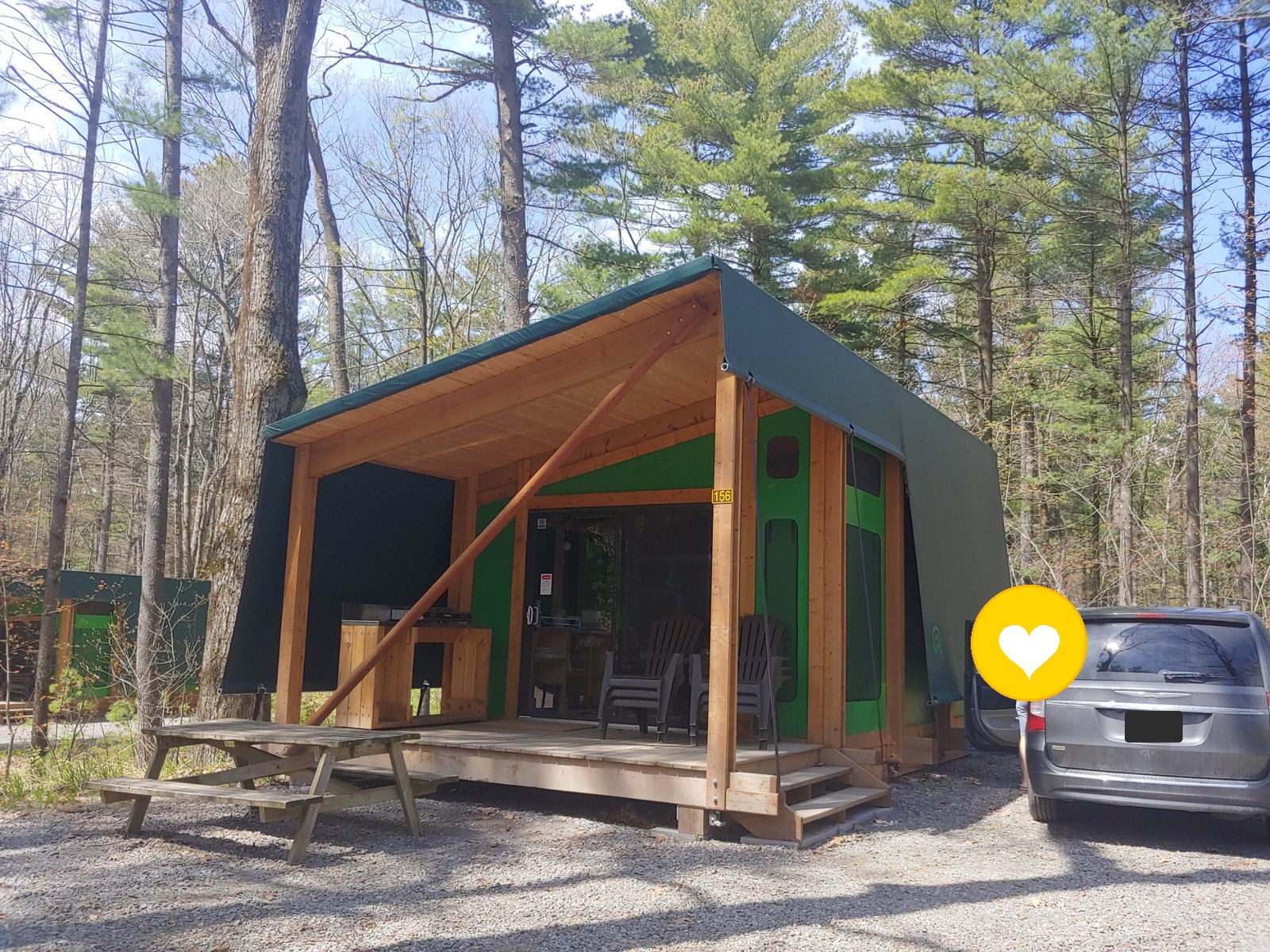
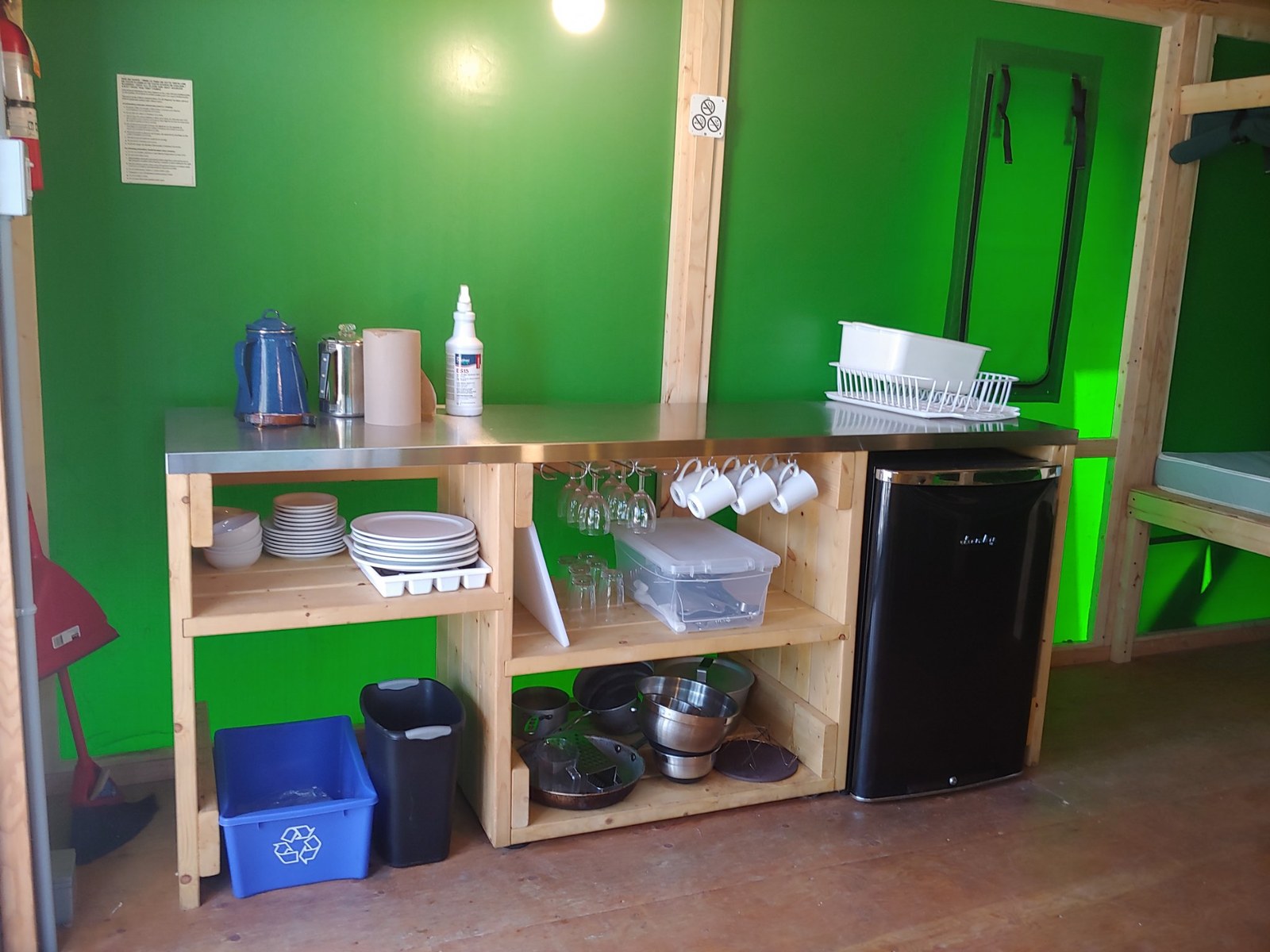
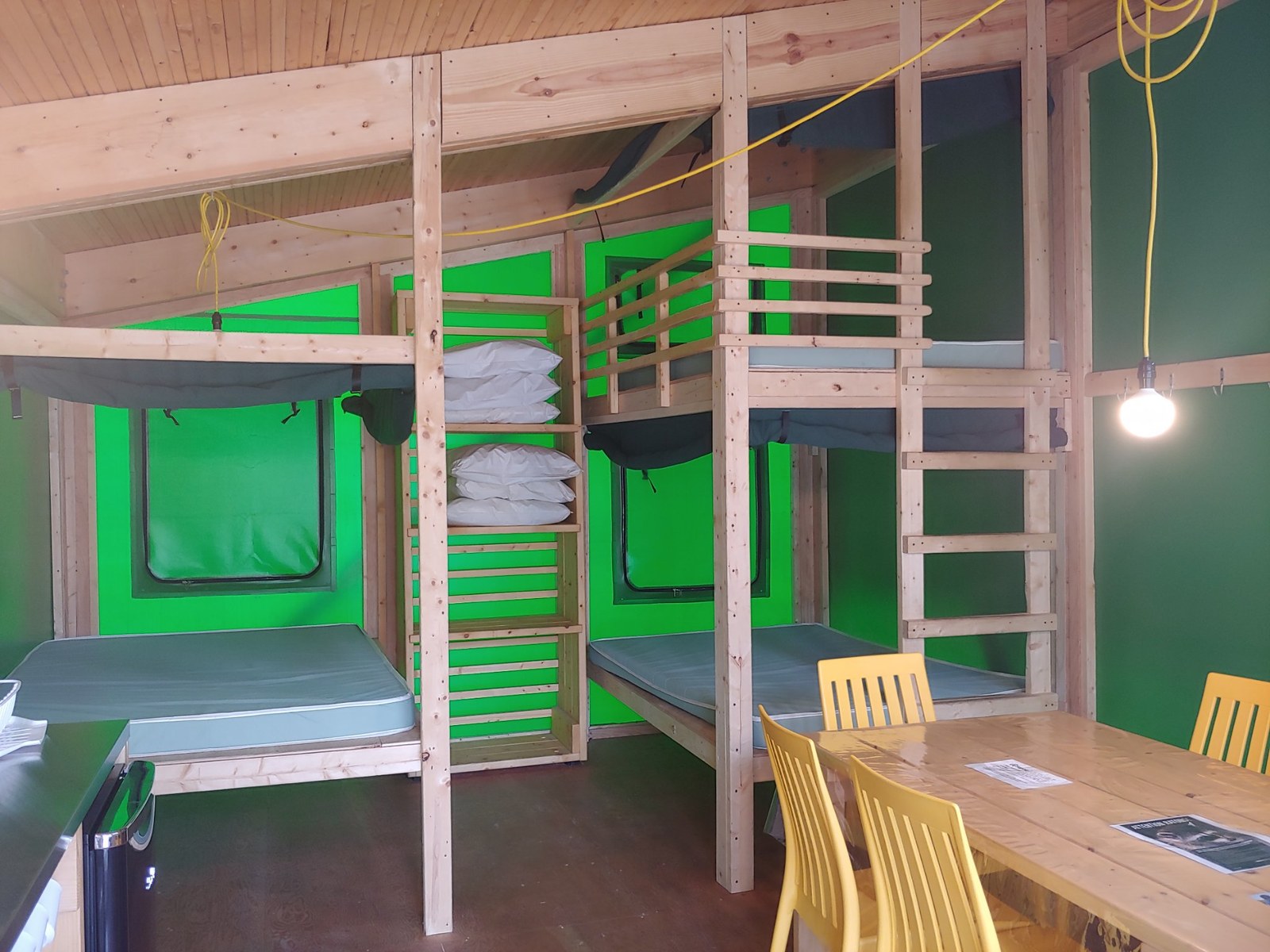
If you want the camping feel without any gear, Oka’s glamping — prêt-à-camper, or ready-to-camp — is the classic option. Beds and a kitchen are already there; you just show up. Oka has 62 ready-to-camp units in all, and the ones closest to the beach are in the Les Dunes sector. Alongside them you’ll also find the Compact cabin — a small cabin-style stay with beds and a basic kitchenette — and about 70 former semi-serviced sites are being converted into ready-to-camp units and Compact cabins, a transition set to finish in fall 2027.
Ready-to-camp comes in two main kinds. Comparing the two I’ve stayed in: the green Étoile is bigger and better equipped, while the beige traditional tent is a slightly smaller size. If your group is bigger or you pack generously, go Étoile; for a lighter trip, the traditional tent does just fine.
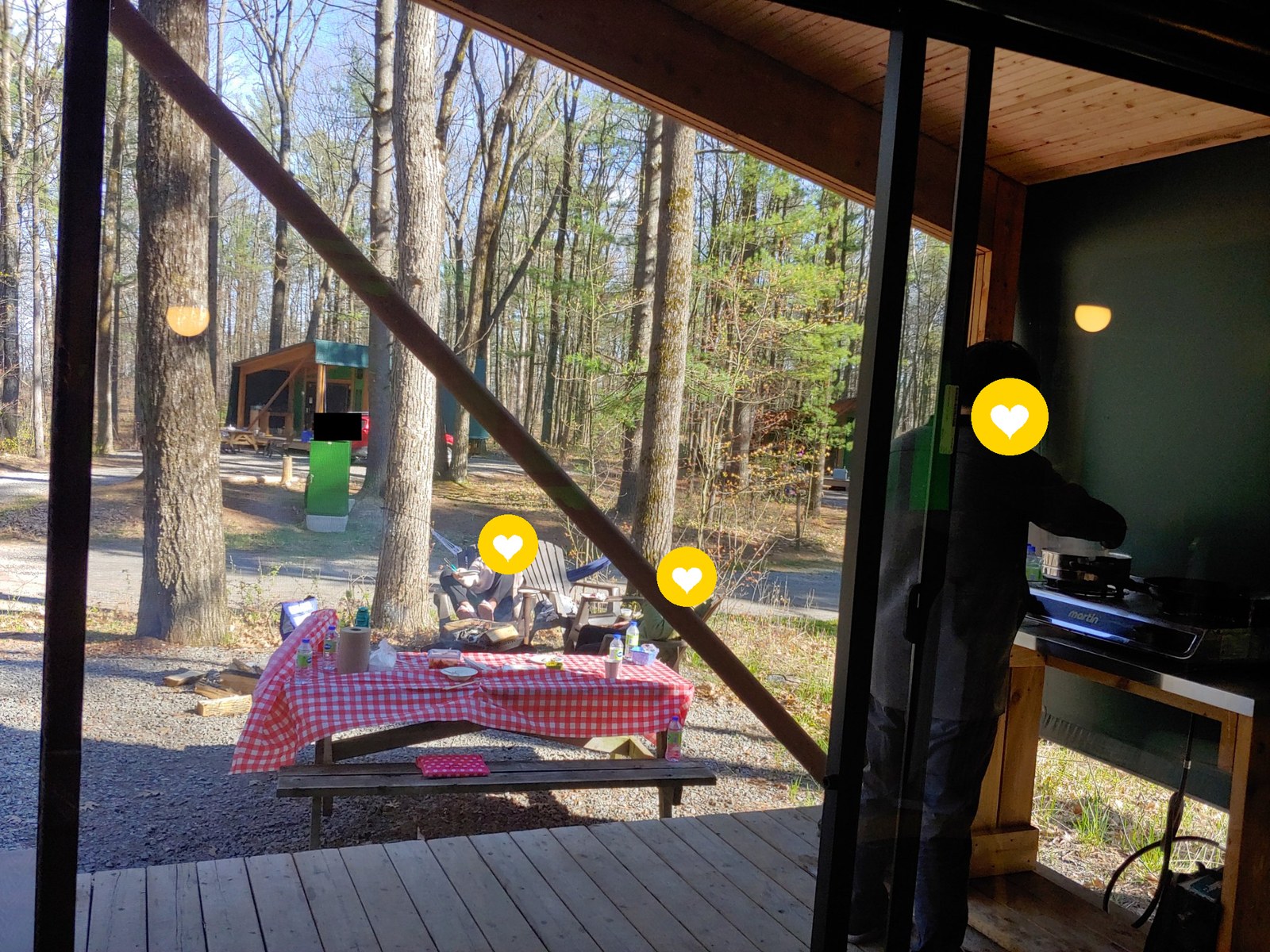
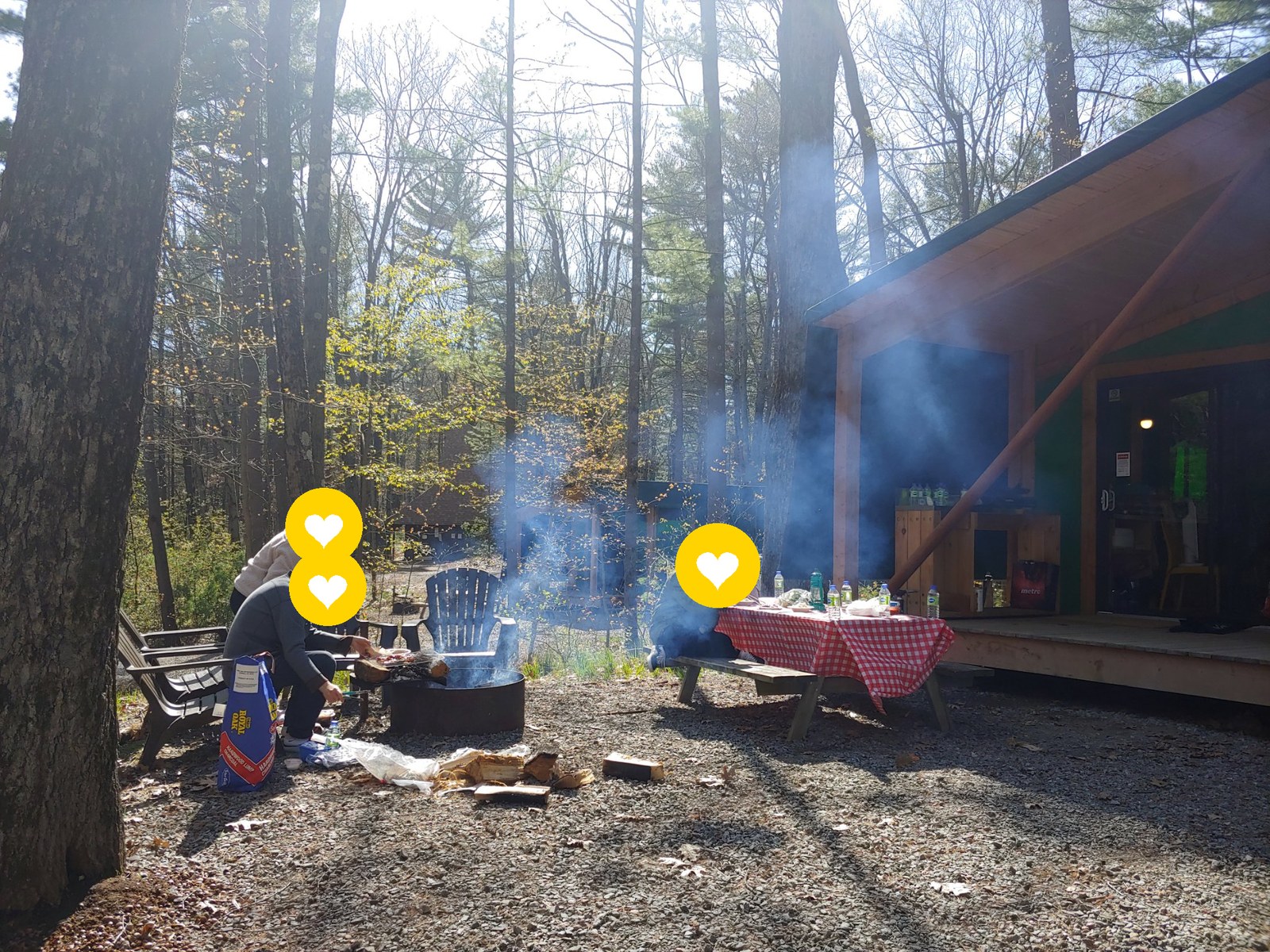
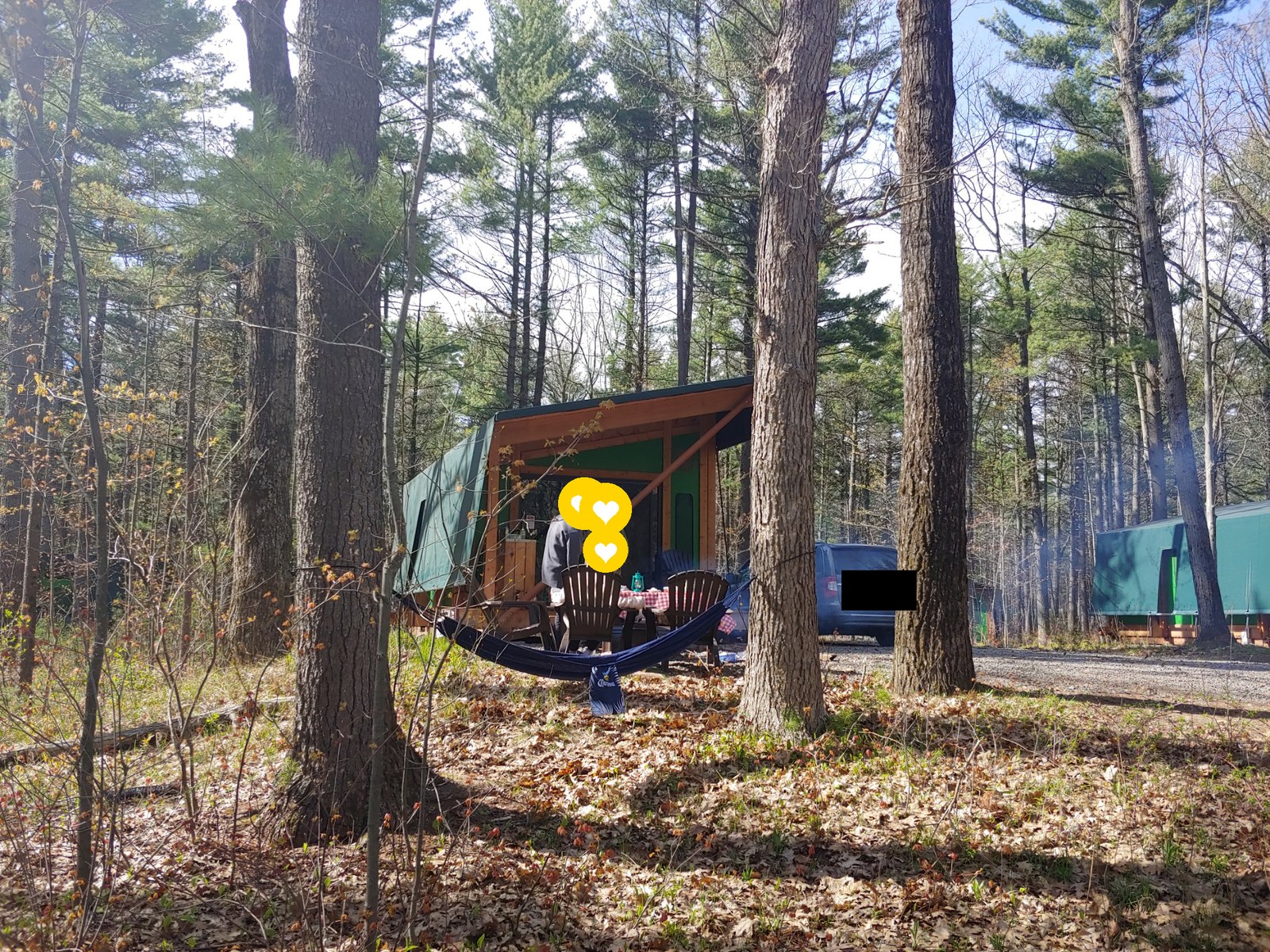
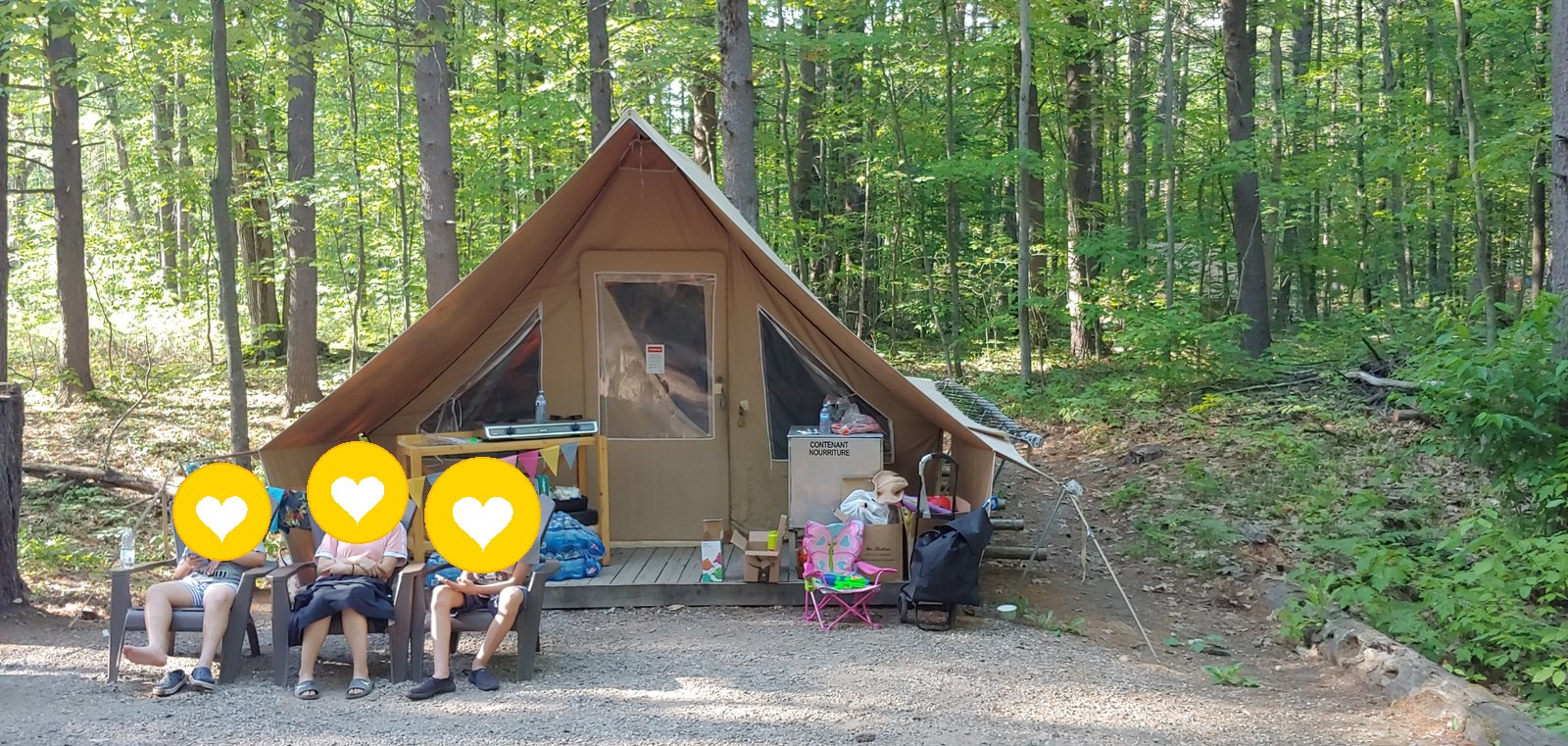
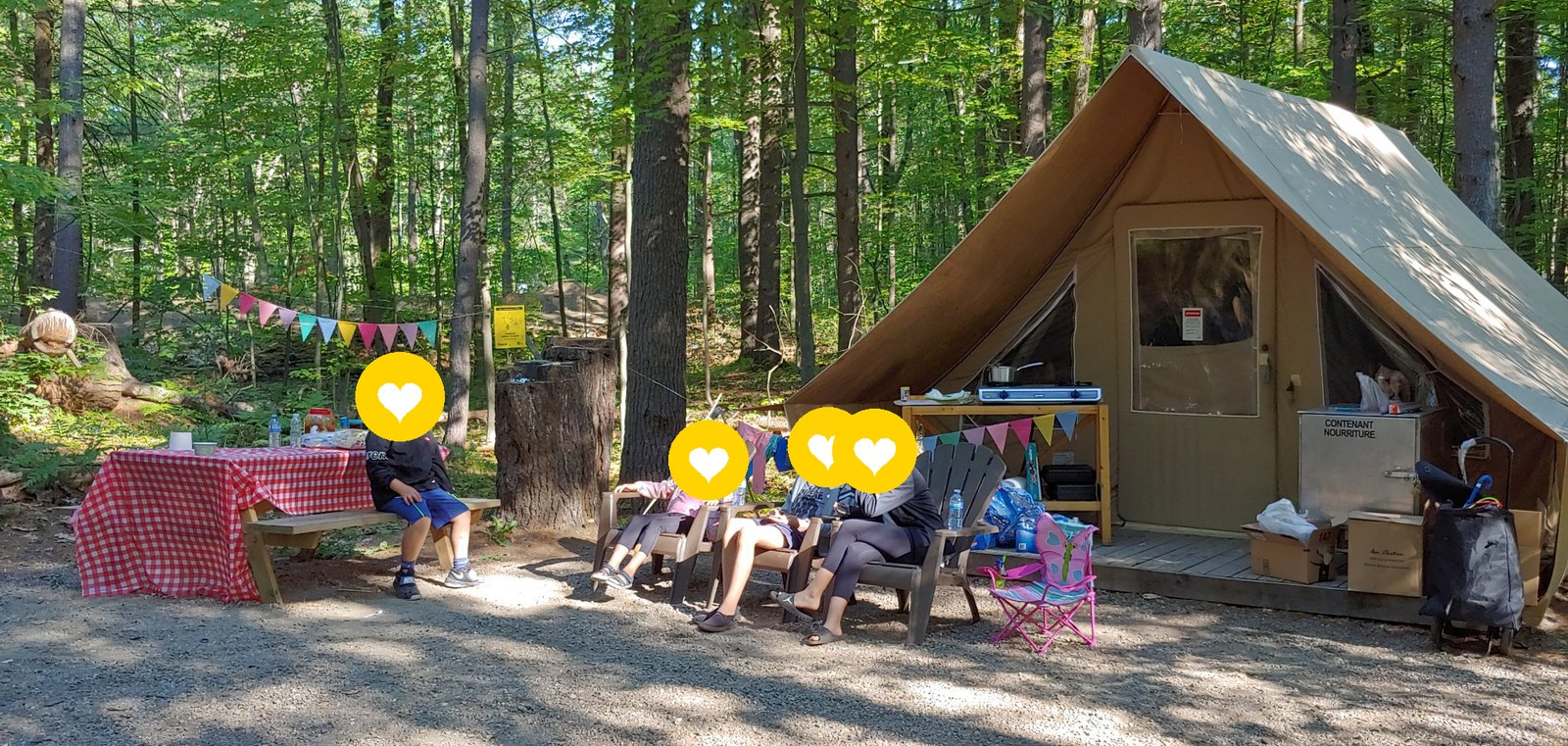
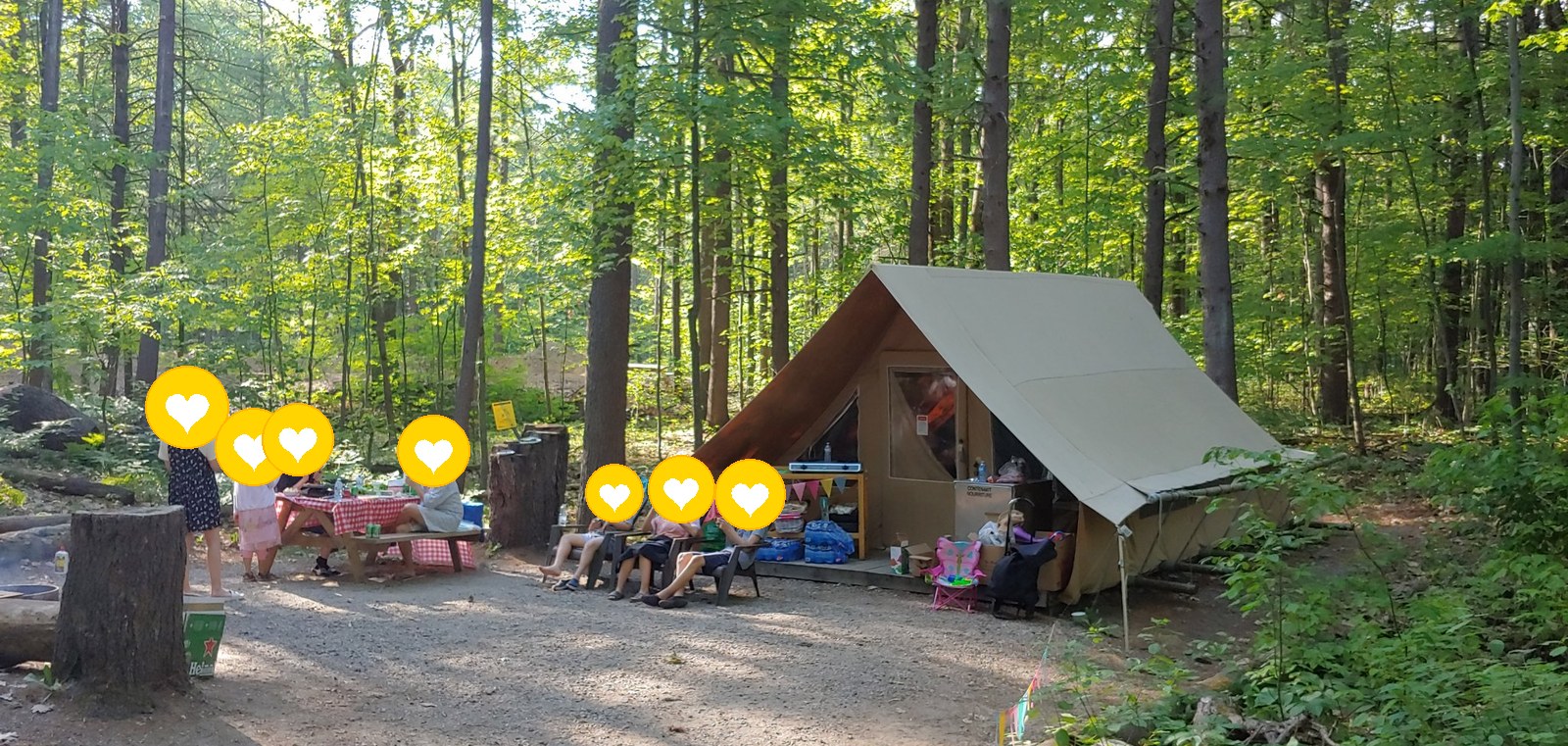
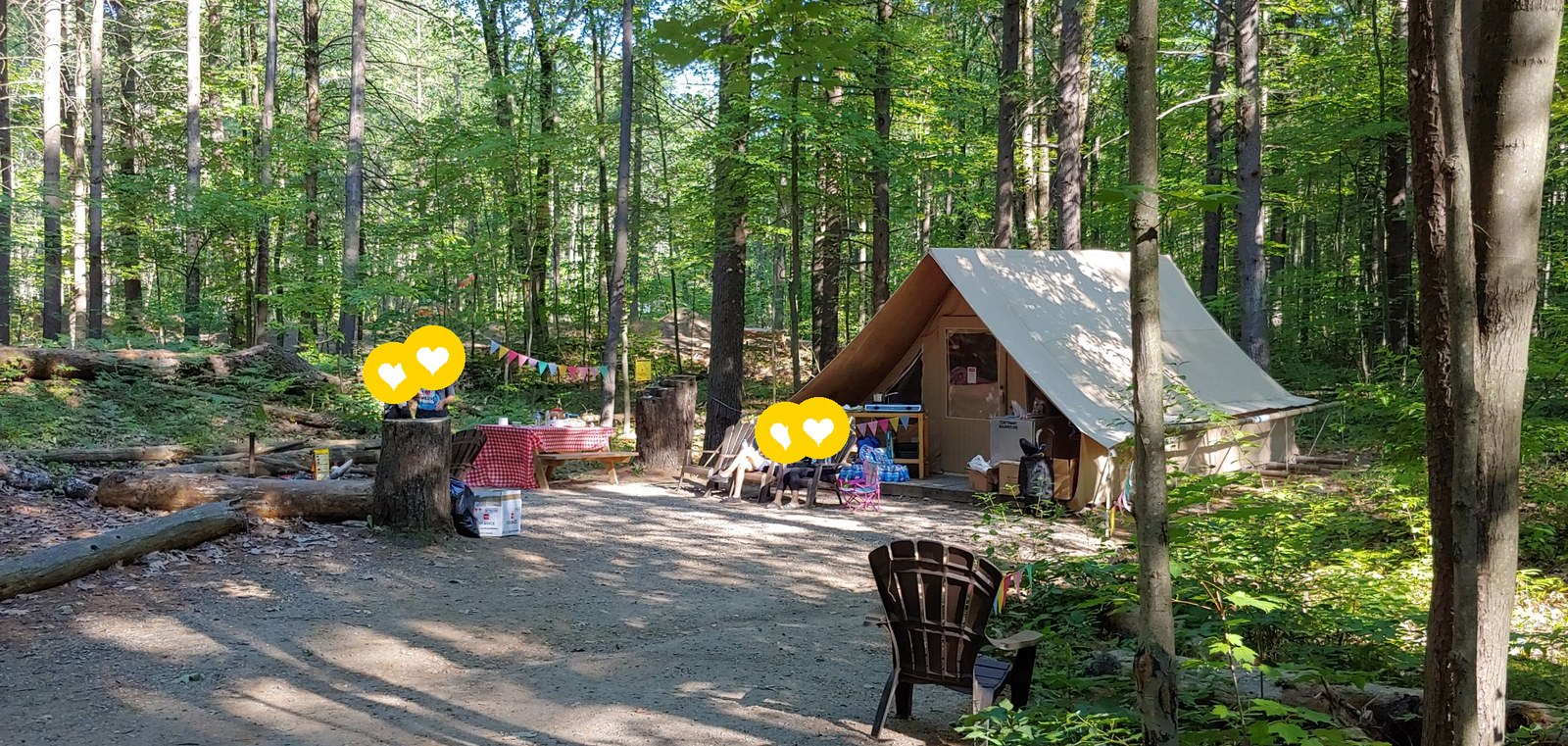
There’s one glamping-night story I can’t leave out.
It was late one night. We’d wrapped up the day and were getting ready for bed inside when a commotion broke out outside. Wondering what on earth was going on, I went to the window — and there they were: a whole family of raccoons, come to feast on the little bits of meat that had dropped around the barbecue.
Our family watched them breathlessly through the clear window. And those raccoons? They glanced at us once — once — and then, like nothing was happening, started helping themselves to every last scrap. It wasn’t one or two of them. There were so many that we were too scared to go outside, yet they showed no intention of running away.
It felt like we were the animals in the zoo. We were the exhibit behind the glass, and the raccoons were looking at us like we were the curiosity. Stay at a glamping site long enough and guests like these come with the territory. Always put food away in the designated storage bin.
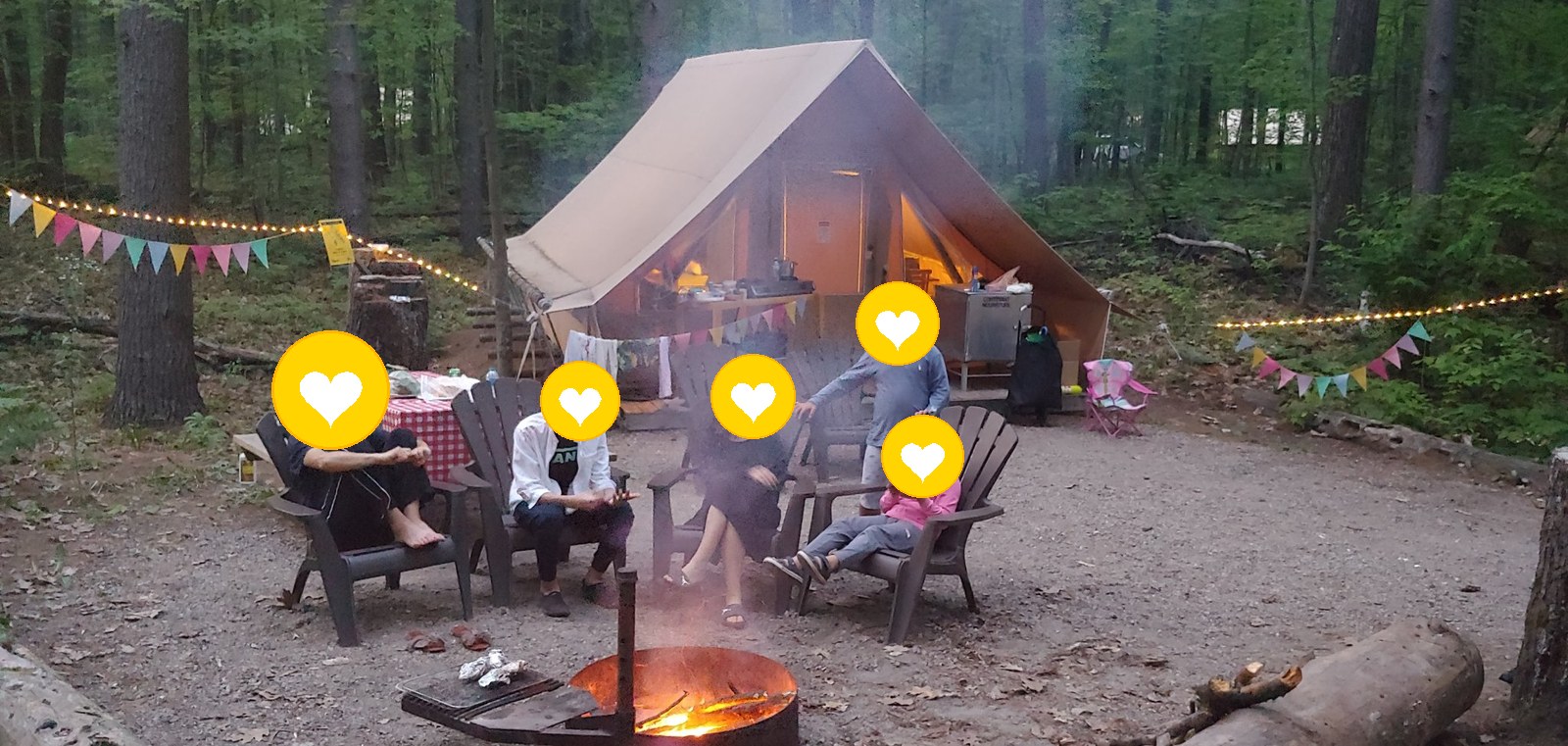
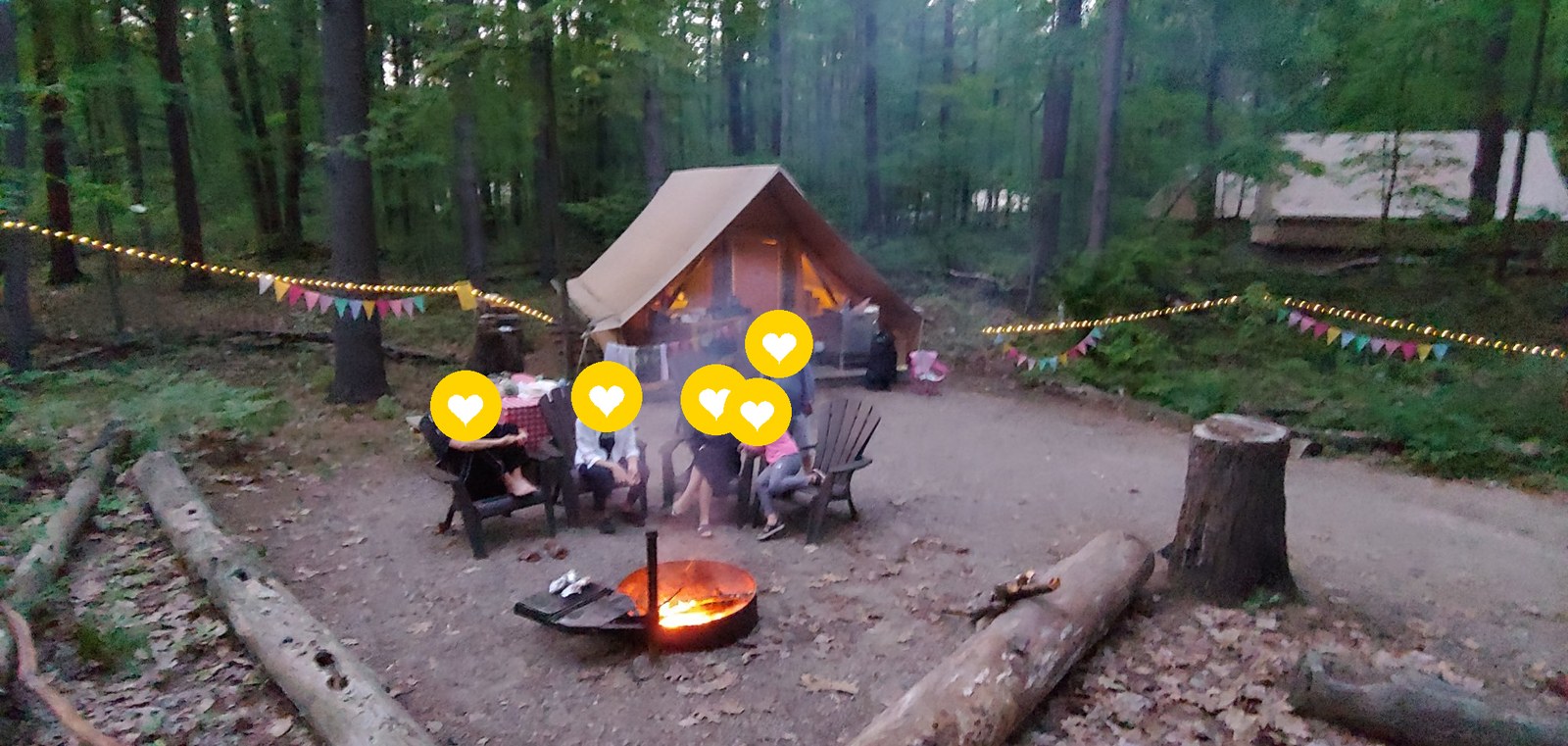
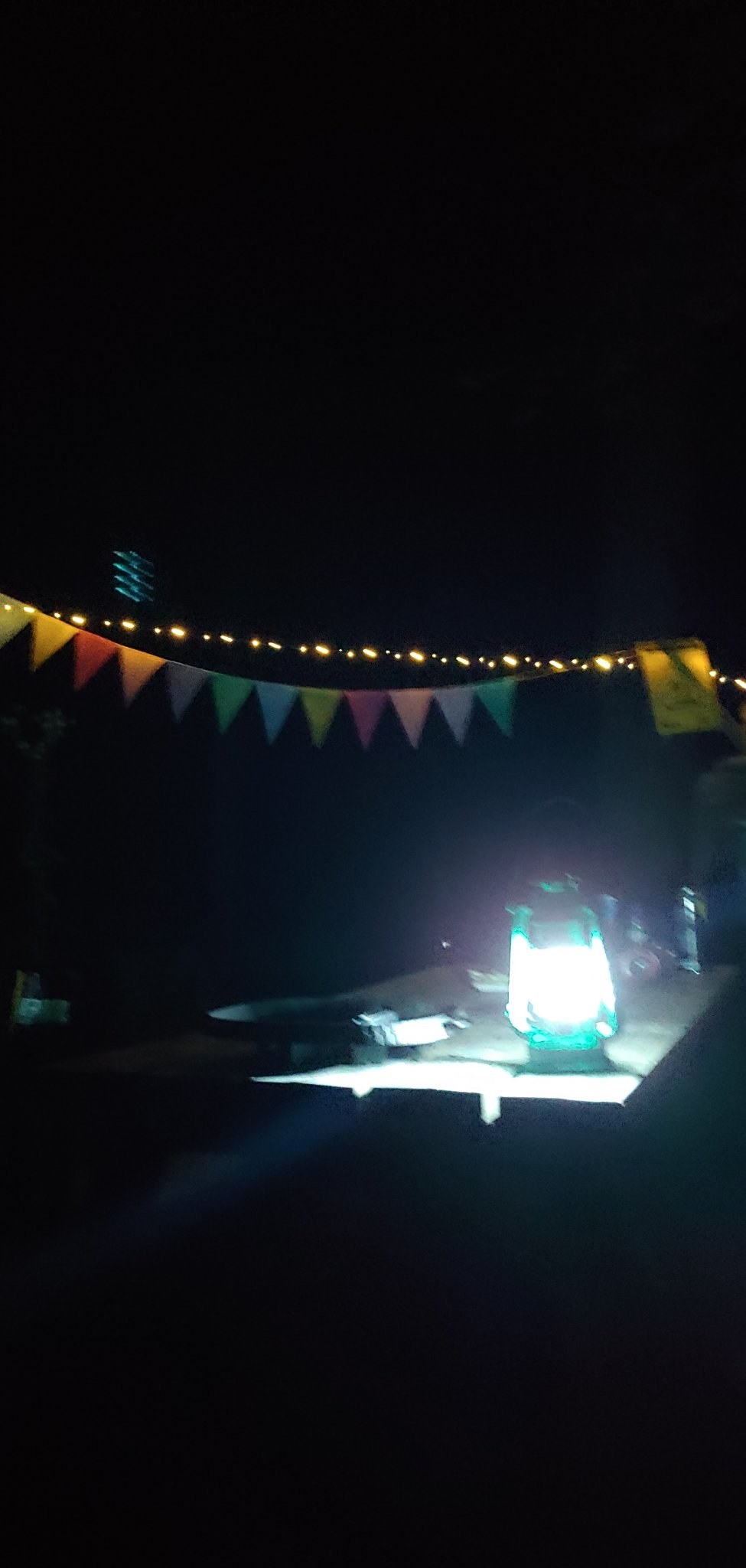
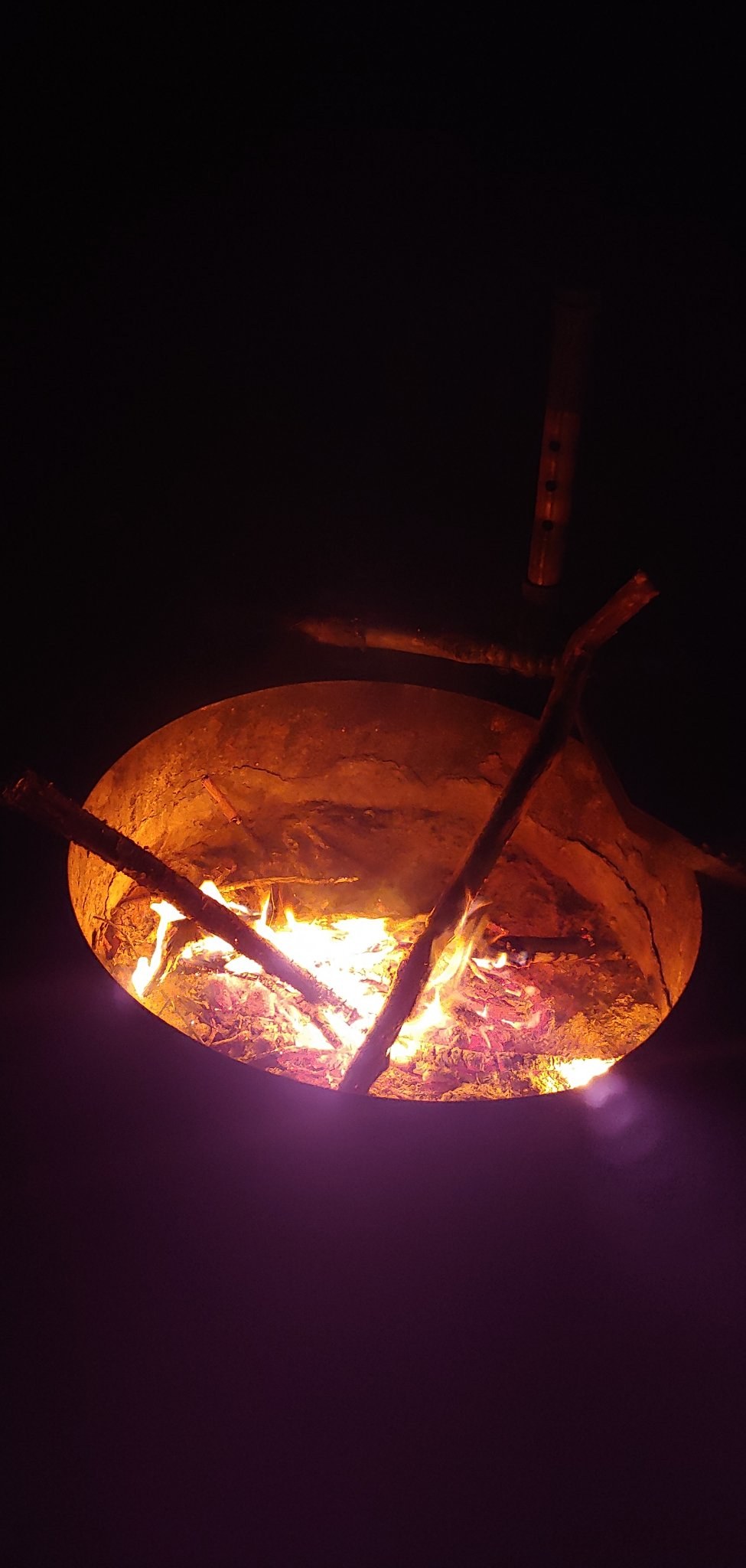
There are rules to know before you book. Ready-to-camp is always a minimum of two consecutive nights. It’s stated plainly in Sépaq’s official camping FAQ — one-night bookings simply aren’t possible. Regular campsites, booked ahead, are also two nights minimum in principle; single nights only open up 72 hours before arrival, and only for spots still left. Picture a Friday-in, Sunday-out two-night trip as the basic shape.
People often say ready-to-camp is hard to book, but I’ve been lucky — I tend to get the spots I aim for without much trouble. Prices vary by unit and date, but there are starting benchmarks. The table below shows the official per-night starting rates posted on Sépaq’s booking pages for the 2026 season (April 24 to October 31) at Oka’s Les Dunes units. Taxes and park admission are extra.
| Type of stay (Oka, Les Dunes) | Per-night rate — 2026 season, from | Notes |
|---|---|---|
| Étoile (green) | $136 | Bigger and better equipped |
| Traditional (beige) | $110 | Smaller than the Étoile |
| Regular campsite — 2 services (water & electricity) | $52.10 | Tent and trailer sites |
You book on the Sépaq Oka National Park official page, choosing your dates and unit online, or by phone through the customer centre at 1-800-665-6527. You pay the full stay up front; if you book 90 or more days ahead and the total is $500 or more, interest-free installment payment is also possible.
Each November, bookings for the next summer season all open at once. The summer 2027 season opens on November 7–8, 2026, and Oka starts at 2 p.m. on November 7. On opening day an online virtual waiting room runs, and a single transaction can hold at most three units for the same dates at the same facility. Making your Sépaq account ahead of time is step one of opening-day booking. And don’t skip the discounts.
Summer 2027 bookings at Oka open on Saturday, November 7 at 2 p.m. If your dates are set, aim for the moment booking opens.
Ready-to-camp comes with official discounts too: 15% off from the third night in the off-season, and 10% off for campers aged 60 and over.
One caution: when the 2027 season opens, all the traditional units in loop 3 of Les Dunes will still be closed for renovation work — they won’t be bookable at first and will open gradually through 2027. The cancellation policy: cancel five or more days before your stay and everything but a $7 fee (plus tax) is refunded; inside four days, there is no refund. If your plans might shift, mark that five-day line on your calendar.
💡 Tip: If pitching a tent feels like a lot, or your kids are small, glamping (ready-to-camp) is the way to go. No gear to prepare or set up — just show up — which makes it an especially easy first camping trip with little ones.
🏕️ 4. Tent camping — the fun of pitching it yourself is part of Oka
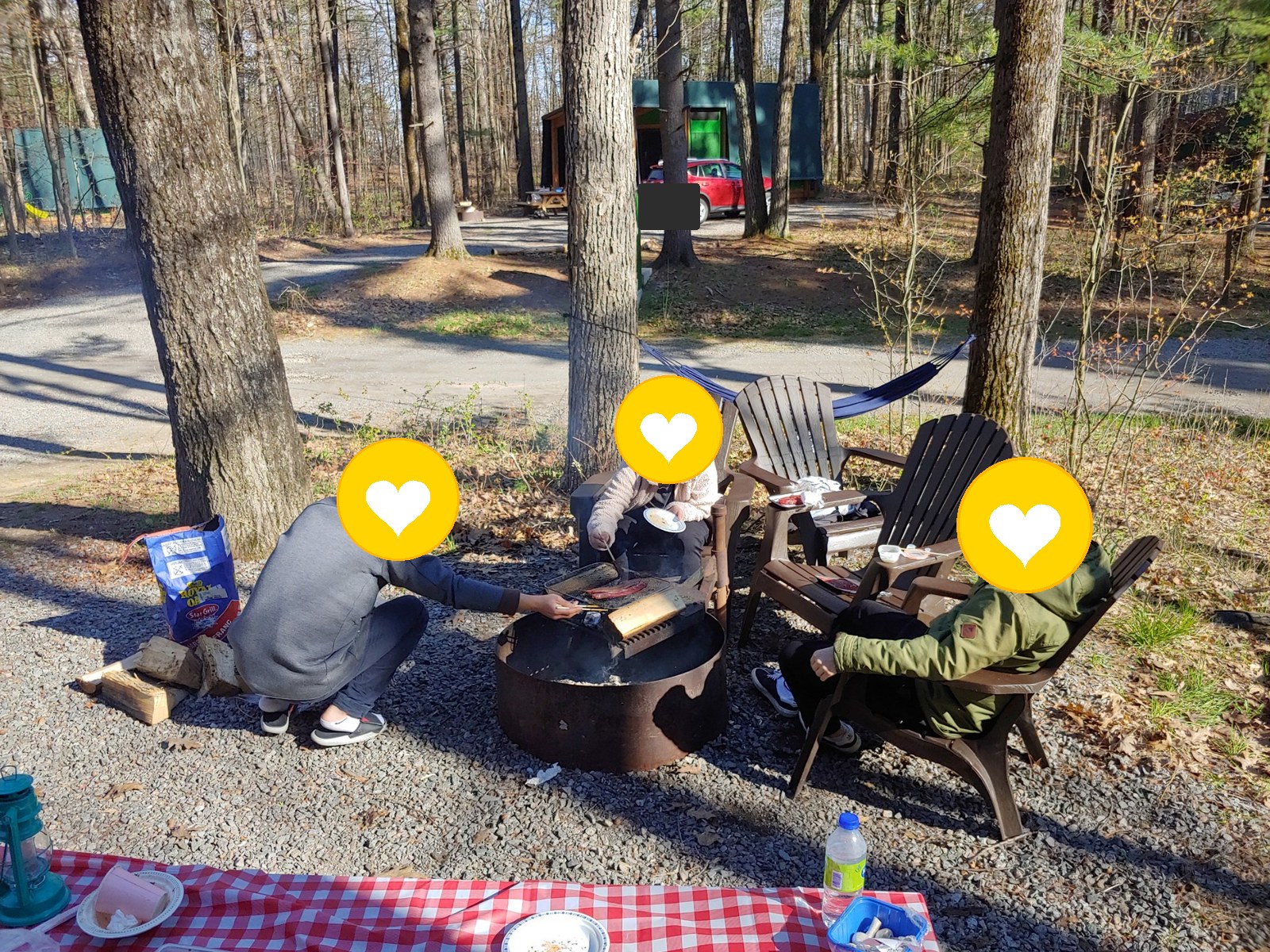
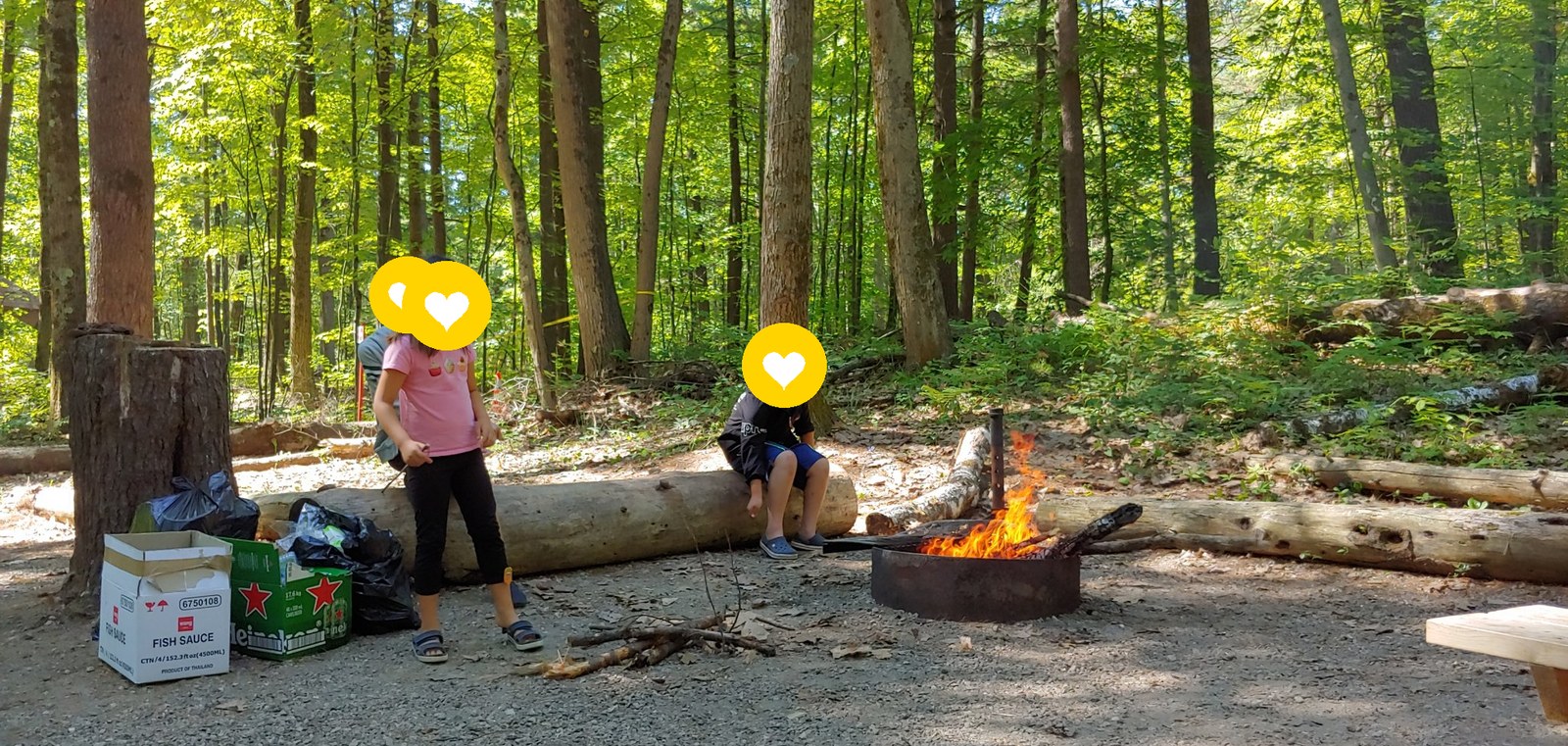
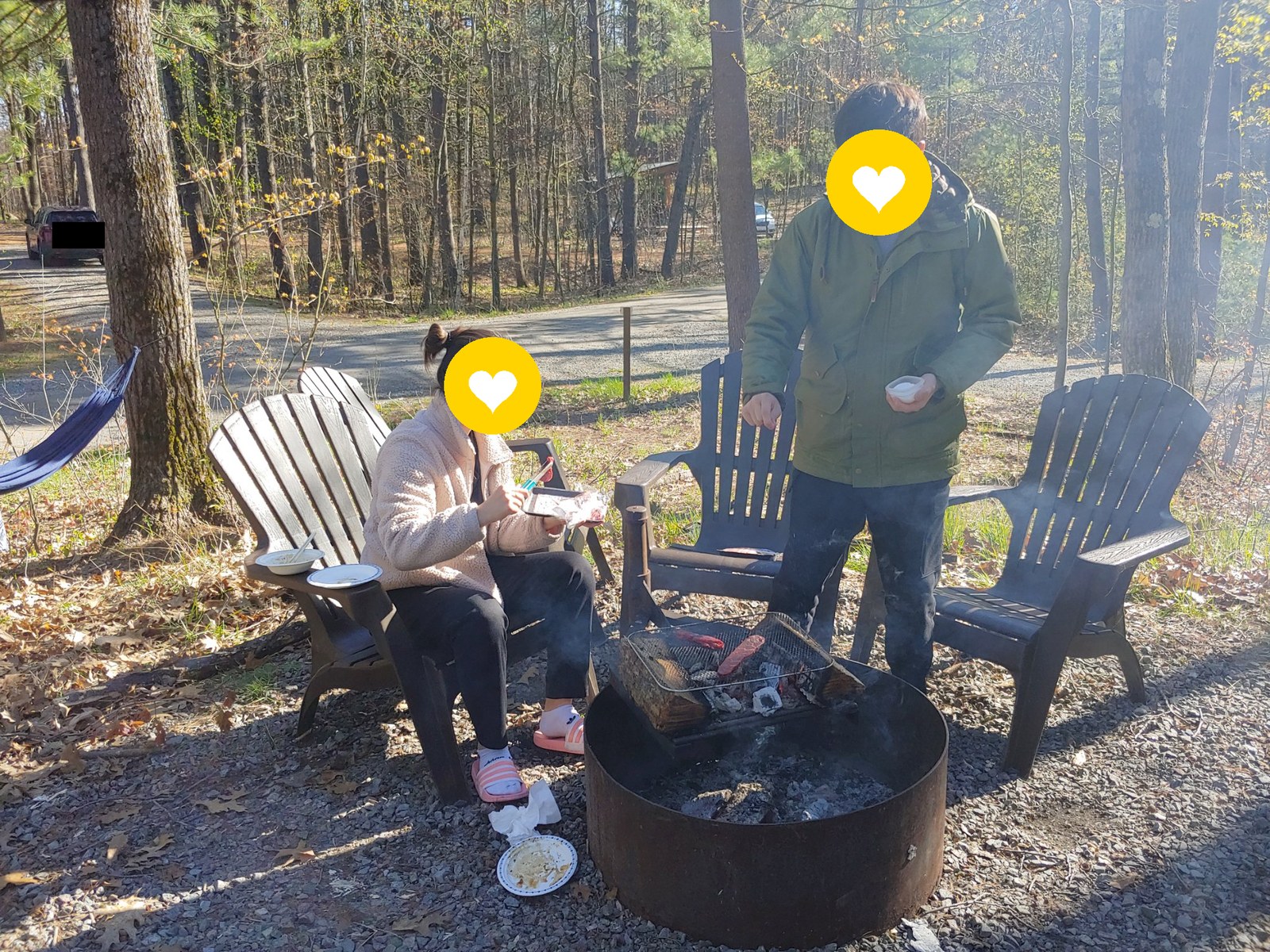
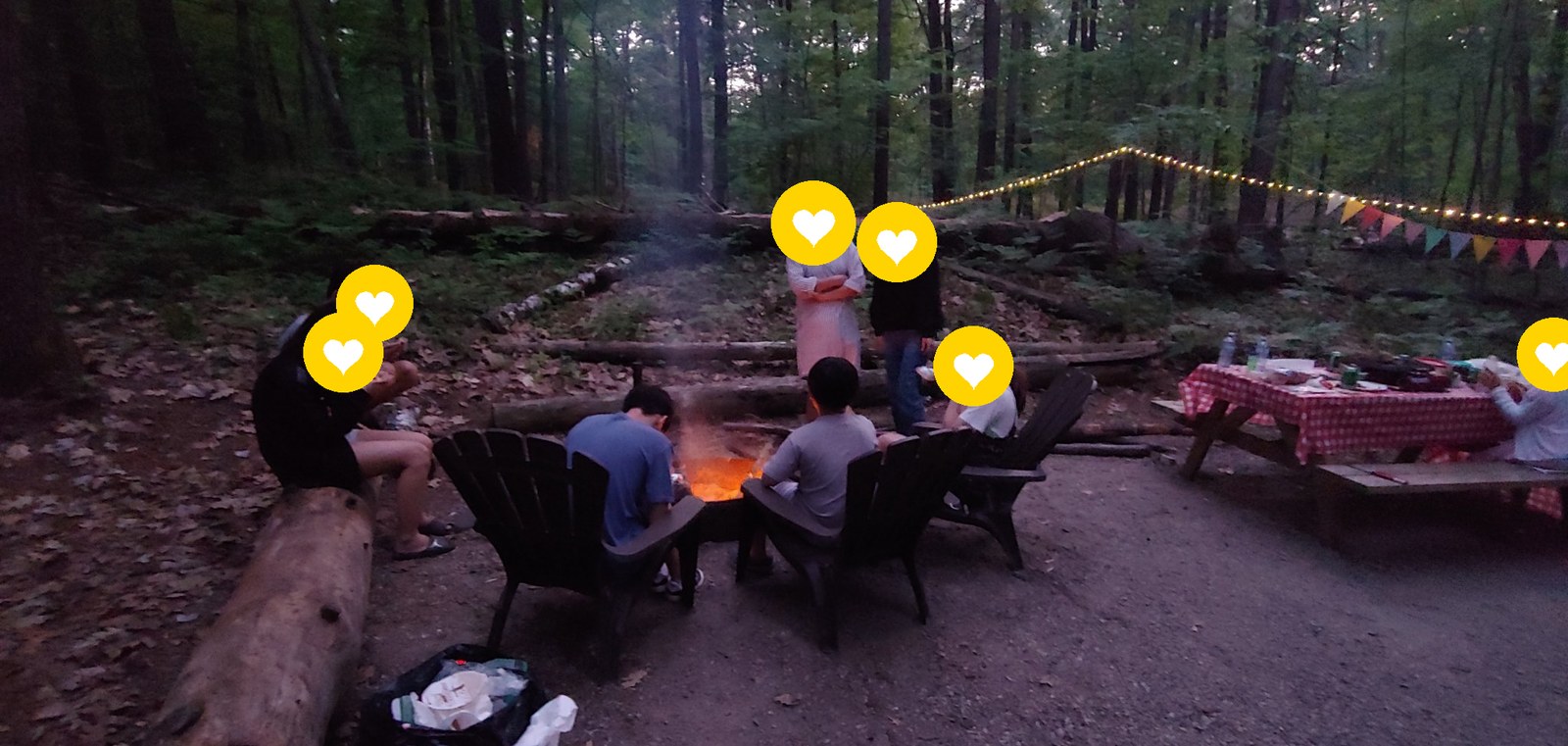
I enjoy pitching my own tent, too. If glamping is the ease of just showing up, tent camping is the pleasure of setting up a site with your own hands. Oka’s regular camping is divided into sectors by service level: no services at de l’Anse, electricity at La Crête, water and electricity at Le Méandre, and water, electricity and sewer at Le Refuge. Every site is laid out the same way, with a fire pit and a picnic table.
For a feel of prices: a two-service site (water and electricity) starts at $52.10 in the 2026 season (taxes and park admission extra). That’s less than half the glamping starting rate, so for a household with gear, tent camping is far easier on the wallet.
The booking rules run parallel to glamping. Bookings made ahead are two nights minimum in principle, and single nights only open 72 hours before arrival for spots still left. Check-in is from 3 p.m. and check-out by 2 p.m. — but arrive earlier than your slot and you can still enter the park first and enjoy the beach and trails. There are also dedicated no-reservation sites for people touring by bicycle.
🚲 5. Bike trails — why Oka rides so well
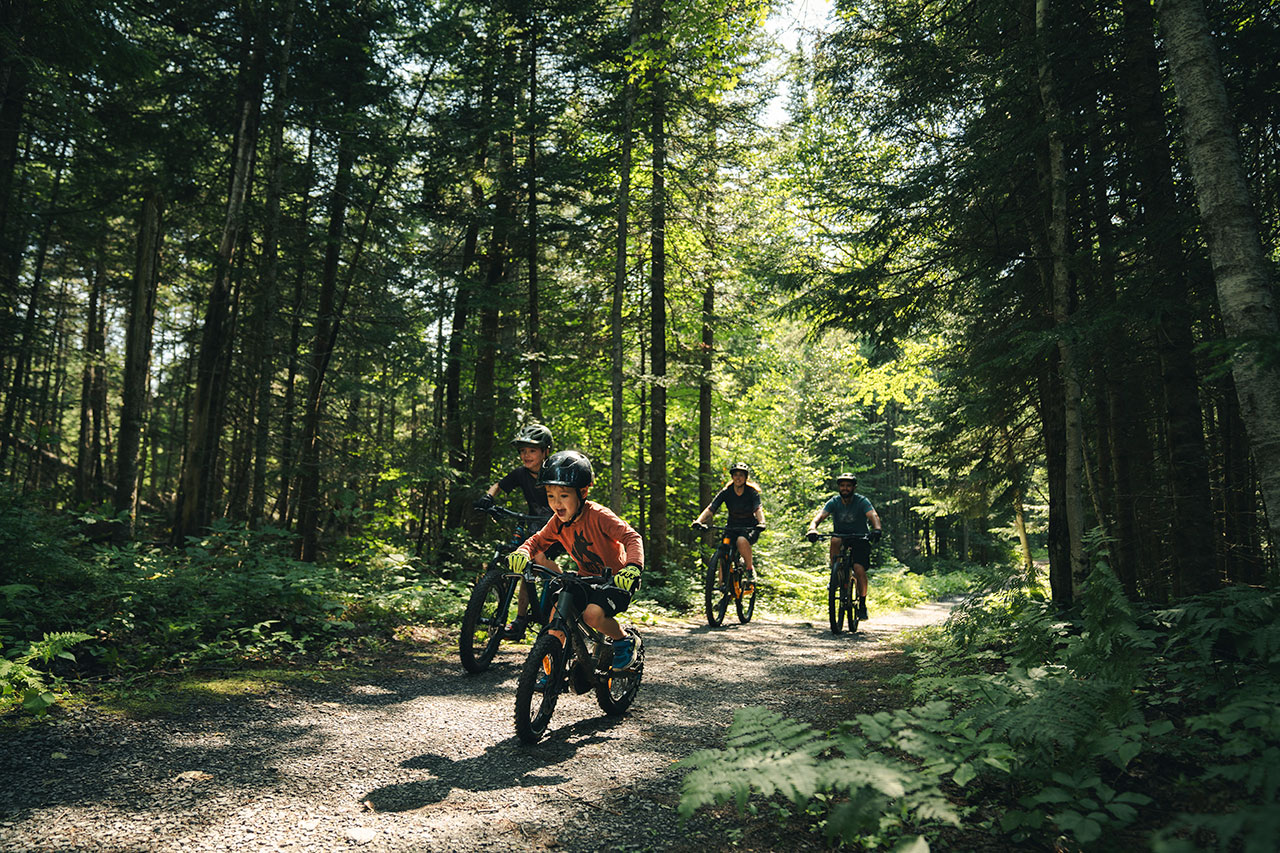
Oka’s cycling revolves around a regional corridor called La Vagabonde. It’s about 50 km in total: the eastern section, 31 km from Saint-Eustache to Oka, is flat and suits family riding, while the western 19 km, from Oka to Saint-Placide, is the sportier stretch. The route passes right through the park, and the 10 km inside the park is paved end to end and separated from cars, so riding with kids feels easy. Through forest and wetlands, across the Grande-Baie wooden bridge, and you’re at the beach.
If you want to keep it light, the in-park routes alone are plenty. There’s about 1 km of paved trail through pine forest from the lakeshore to the beach, and a park bike path from the beach past Lac Sauvagine toward the Grande-Baie visitor centre. On a mountain bike, the Le Sommet trail climbs 6.7 km of proper uphill to the Calvaire lookout. Long-distance riders link Oka with the Hudson ferry (10 minutes, 2 km) to loop the lake over 50–68 km.
No bike? No problem. You can rent one at the Le Littoral service centre, and for families, bike rentals are free for kids 17 and under (quantities limited). The park holds Bienvenue cyclistes! certification and runs dedicated no-reservation sites for bike tourers. Coming without a car, the REM Deux-Montagnes station is less than 1 km from the route.
💡 Tip: First time? Start with the eastern section of La Vagabonde. Flat pavement, the wetland bridge views — the best of Oka cycling is packed into this stretch.
🎣 6. Activities and hiking — the beach in summer, skiing in winter
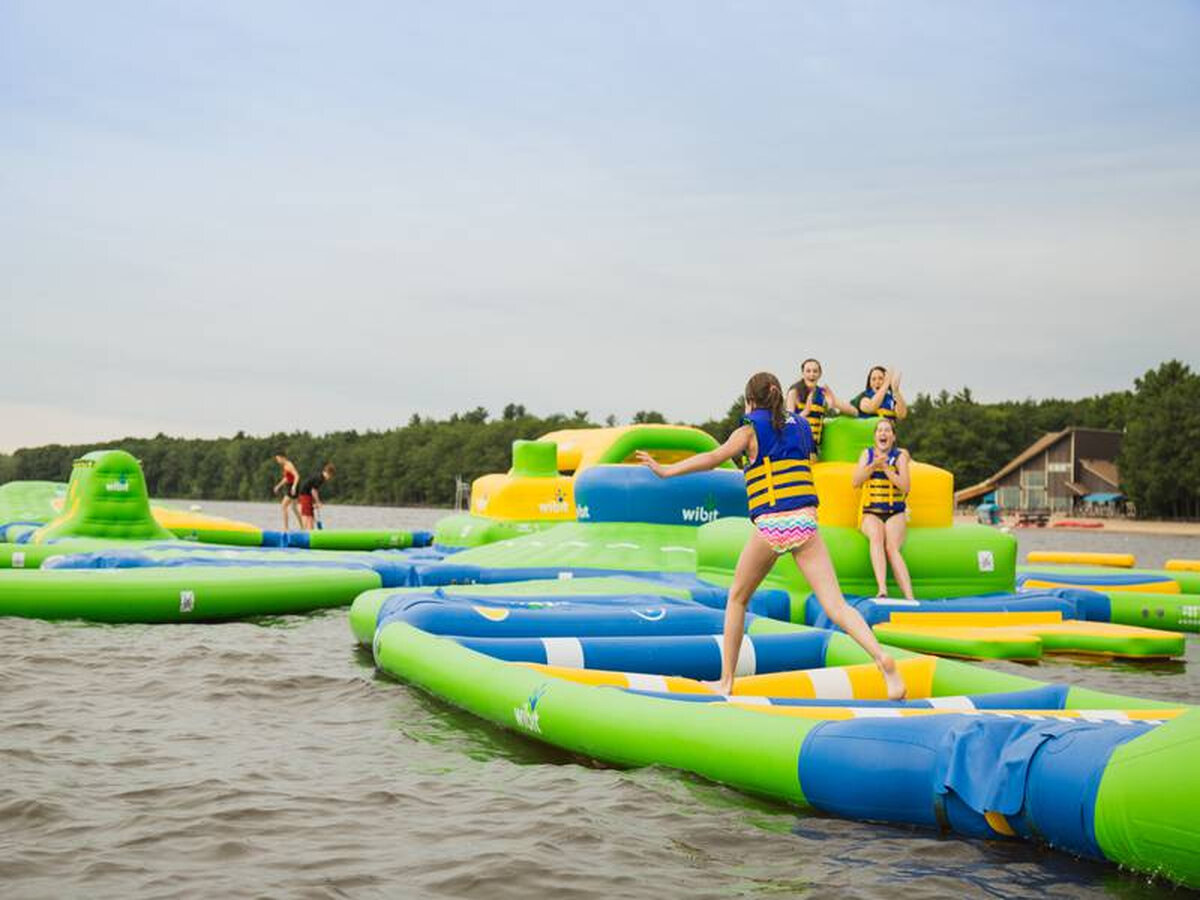
Oka is more than its beach. In summer, the supervised swimming beach is the centre of things, and an inflatable water course called Aquazilla floats just offshore. Kayaks, canoes, pedal boats and SUPs are available to rent, and beach volleyball, playground equipment, outdoor ping-pong tables and picnic areas cluster around the beach. On a rainy day, the community hall’s climbing wall, board games and foosball are the backup plan, and the park’s nature discovery programs and fishing can join a summer itinerary too.
Walking trails come by distance — pick what fits:
- L’Érablière, 1.3 km — a short, easy stroll
- La Grande Baie, 4 km — the boardwalk over the wetlands is the highlight
- Calvaire d’Oka, 4.4 km — past three chapels built in 1742, up to the summit view
- La Sauvagine, 11.8 km — a long walk along the lake
- Le Sommet, 6.7 km — an uphill trail shared with bikes
Winter doesn’t close the park either. Six cross-country ski trails, more than 35 km in total, are laid out, and the all-parks annual pass takes 15% off a ski day pass. Add snowshoeing and fat bikes (rentals available), snow scooters, two natural sledding hills (mats free), ice fishing and a 500 m ice-sculpture trail, and one annual pass covers both the summer beach and the winter skiing.
❓ Frequently asked questions
Q. Is the water at Oka the sea, or a lake?
A lake. It’s Lac des Deux Montagnes, where the Ottawa River widens before joining the St. Lawrence. It looks like the sea, but 11 km of sandy beach runs along a lakeshore.
Q. Can I book ready-to-camp for just one night?
No. Ready-to-camp is always a minimum of two consecutive nights — that’s Sépaq’s official rule. Regular campsites, booked in advance, are also two nights minimum in principle; single nights become possible only 72 hours before arrival, for spots still open.
Q. Can I enjoy Oka as a day trip without staying over?
Absolutely. With barbecue spots and plenty of shade by the beach, an entry pass fills a whole day. Add swimming, cycling and a trail, and one day trip is as dense as a camping stay.
Q. How do I book camping or glamping?
Book by unit on the Oka park page of Sépaq’s official site, or by phone at 1-800-665-6527. You pay in full when you book. Bookings for the next summer season open in November — for the 2027 season, Oka opens at 2 p.m. on November 7. Booking details and the cancellation policy are laid out in section 3 above.
Q. What are the check-in and check-out times?
Regular campsites: arrival from 3 p.m., departure by 2 p.m. Ready-to-camp runs later — arrival from 5 p.m., departure by noon (Sépaq’s official times, in effect since summer 2026). Arrive before your slot and you can still go into the park first and enjoy the activities.
Q. Can I bring my dog?
Yes, but not everywhere. Since May 2019, Oka accepts dogs in designated areas only: camping on specified sites in loops 2 and 3 of Le Refuge and loop 1 of La Crête, plus some trails — always on a leash and by your side. Guide and service dogs can go everywhere; pets other than dogs aren’t allowed. Allowed areas can change by season, so check the Oka park page before you leave.
Q. Is there a separate fee for the beach?
Beach access is included in park admission — nothing extra. Beach parking is a separate charge, but it only applies on beach opening days, and the all-parks annual pass takes 25% off. The supervised beach’s gatehouse runs daily from 8 a.m. to 6 p.m., June through Labour Day (the first Monday of September).
Q. They say glamping is hard to book. When should I aim for?
Your best shot is the November opening day, when bookings for the next summer season go live. One transaction can hold up to three units, the opening runs through a virtual waiting room, so make your Sépaq account in advance. Off-season weekdays and stays of three nights or more (15% off from the third night) are worth aiming for too. There’s no secret, honestly. I’ve just always been lucky — lucky enough that people around me find it uncanny. Even during COVID, when booking was harder still, I booked my friends’ spots too — three glamping units, side by side, for the same day — and three groups went off together.
Q. What changes at Oka with an annual pass?
Unlimited admission is the basics, plus 25% off supervised beach parking and 15% off cross-country ski day passes. At a close-in park like Oka, the more day trips stack up, the faster the pass pays for itself. The two pass types, their prices, perks and the break-even math are all laid out in the annual pass post.
Keep reading
· Sépaq National Parks — One Annual Pass for 23 Quebec Parks: Prices, Perks and Break-Even Math
To sum up: Oka is close enough for a spur-of-the-moment trip, full enough to fill a whole day, and if you stay over, night visitors like the raccoons come as a bonus. First time? Start with a day trip — claim a shady spot and get the barbecue going. Then try two nights of glamping and meet Oka after dark. Once it becomes your regular park, you stop opening the map every weekend. Prices and season dates above are for the 2026 season, so check Sépaq’s official page once more right before you book.
— J.
Get the Free Canada Savings Checklist
Join the newsletter — get the free PDF checklist and weekly Canada savings tips in your inbox.
Read Next

Some links in this post are referral or affiliate links. If you sign up or buy through them, I may receive a bonus or commission at no extra cost to you. It helps keep this blog running — thank you!