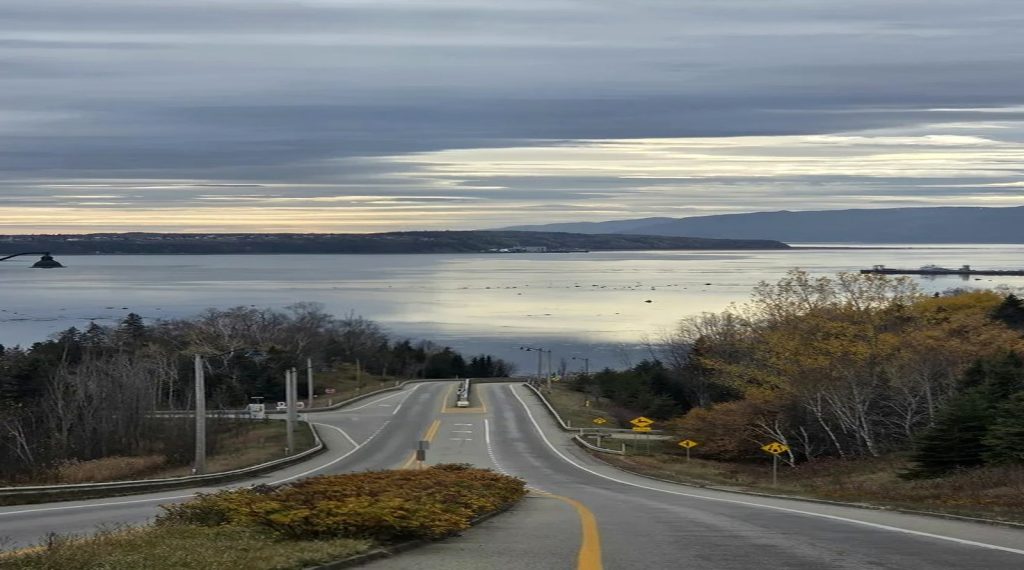
Saint-Joseph-de-la-Rive: A Charlevoix Village Worth the Stop
Last updated: November 7, 2026
Bonjour! It’s J. — for years, Saint-Joseph-de-la-Rive was just a name the main road carried me past. Then one day, out for nothing more than a breath of air, I turned the car around and rolled down the hill into it — and I have been wondering ever since why I waited so long.
This little village on the north shore of the St. Lawrence, in Charlevoix, sits on one of my favourite driving lines in Québec: Montmorency Falls, then Baie-Saint-Paul, then this descent to the water, then the Fairmont at La Malbaie and on to Tadoussac — the same spine as my Charlevoix fall foliage drive. If that road is a necklace, Saint-Joseph-de-la-Rive is the bead I had somehow never actually touched.
One honest warning before we start: this shore is famous for grey autumn weather, and the camera never quite keeps what the eye holds here. Rain, low cloud, a sky that changes by the minute — and still, with the season nearly gone, the place was beautiful past what my photos can prove. Read them as a promise, not as evidence.
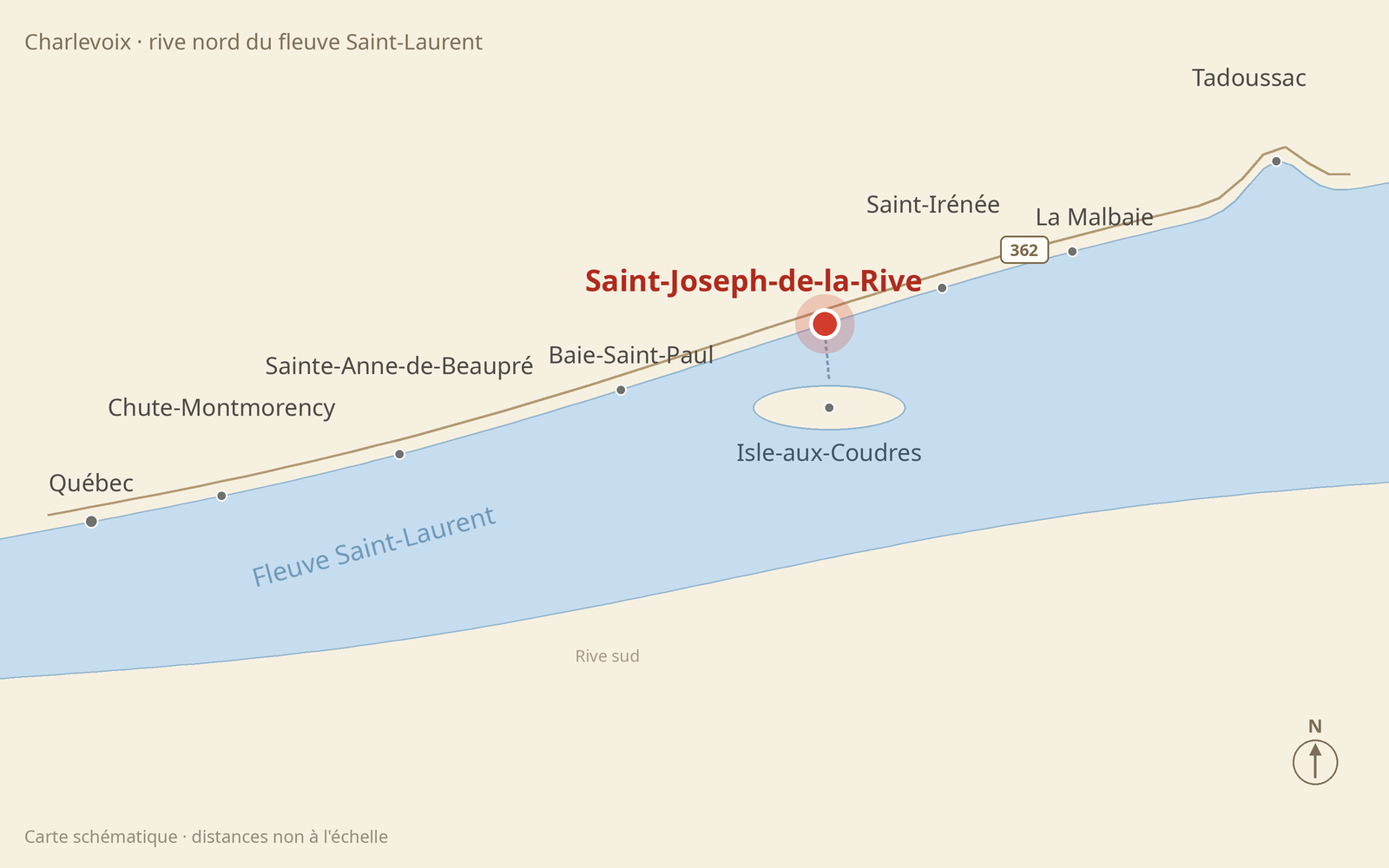
🌿 Quick Take
- What: Saint-Joseph-de-la-Rive, a tiny St. Lawrence shore village in Charlevoix (a sector of Les Éboulements)
- The hook: a village I drove past on the main road for years — until the day I finally turned down the hill
- The loop: one slow drive from the La Descente viewpoint down through the village to the ferry dock, and back up again
- The surprises: a maritime museum on an old shipyard, a Charlevoix train station, and a bakery whose sign reads “depuis 1908”
- The bonus: the ferry to Isle-aux-Coudres from the village dock is completely free, all year
🌄 La Descente: the hill that introduces the village
Every visit here starts the same way: with a descent. Route 362, the river road, runs high through Les Éboulements, and the village hides below it, down the steep slope the locals call the grande côte — the route du Port. Halfway down, a rest stop called Halte La Descente gives you the one thing the main road never does: a reason to stop and look.
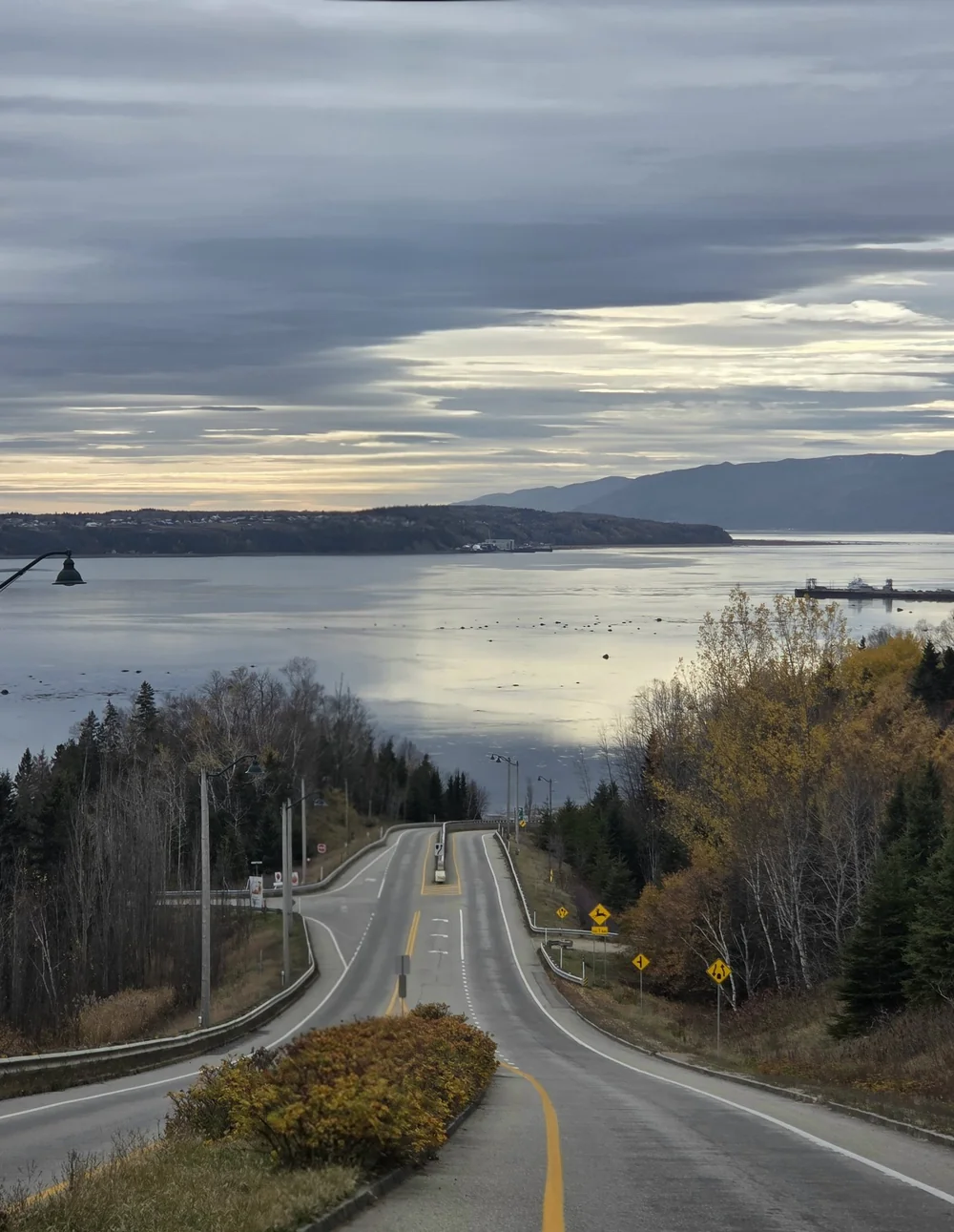
The stop is marked in the Charlevoix way, with one of the big photo-frame signs of the “Cratère et marées” sector — crater and tides. The name is the whole region in two words. Tourisme Charlevoix tells it this way: the hills around here are the rim of an ancient meteorite crater, some 450 million years old and about 54 kilometres across by the tourism board’s telling, and the “tides” are the St. Lawrence’s own, among the biggest on the river.
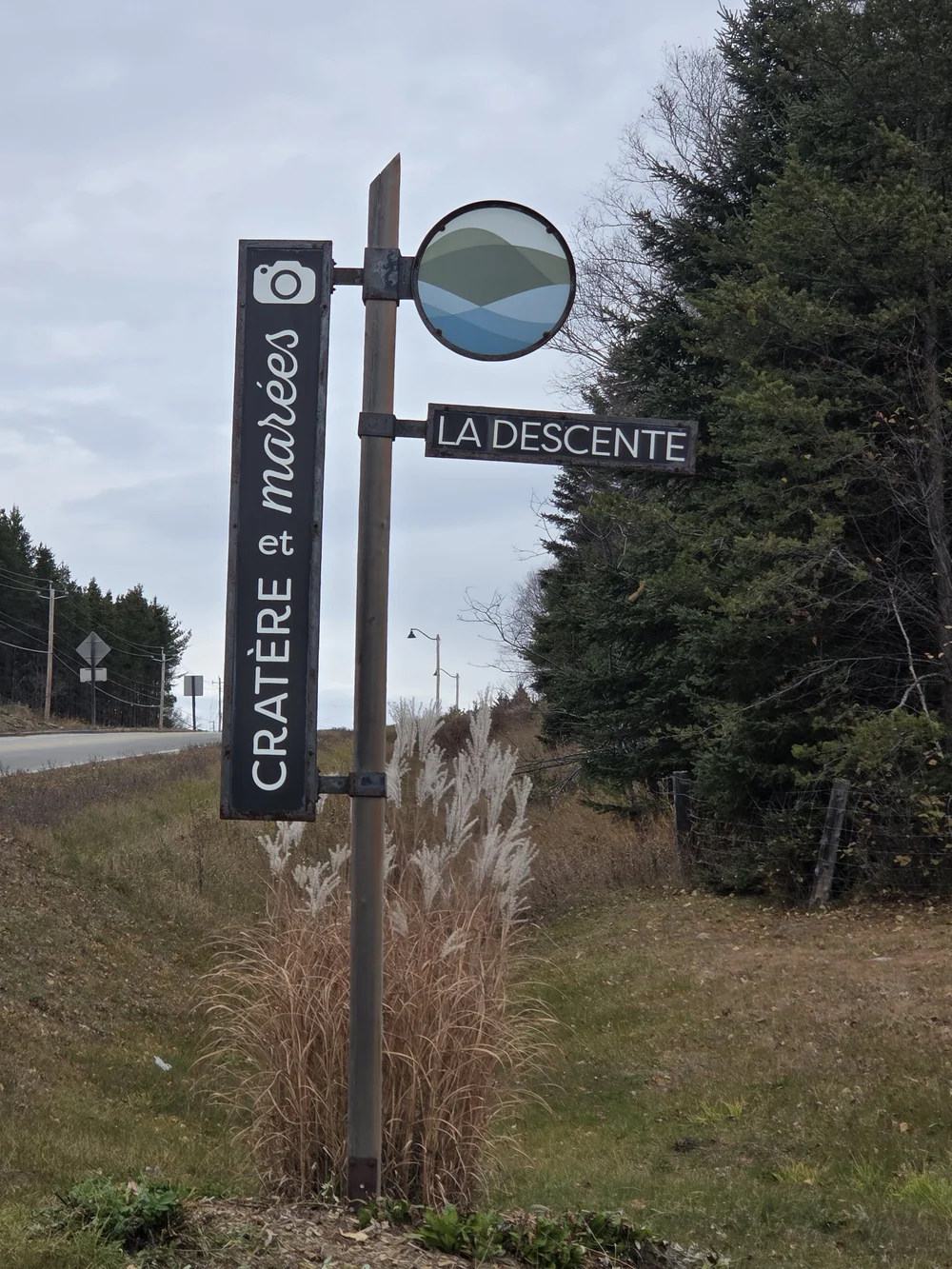
From the halte, the view arranges itself in layers. The road threads down through the trees, the rooftops of the village gather at the shore, and straight across the water sits Isle-aux-Coudres — the very island the village ferry serves. Behind you, the Massif mountains close the frame. It is a viewpoint that explains the village before you arrive in it.
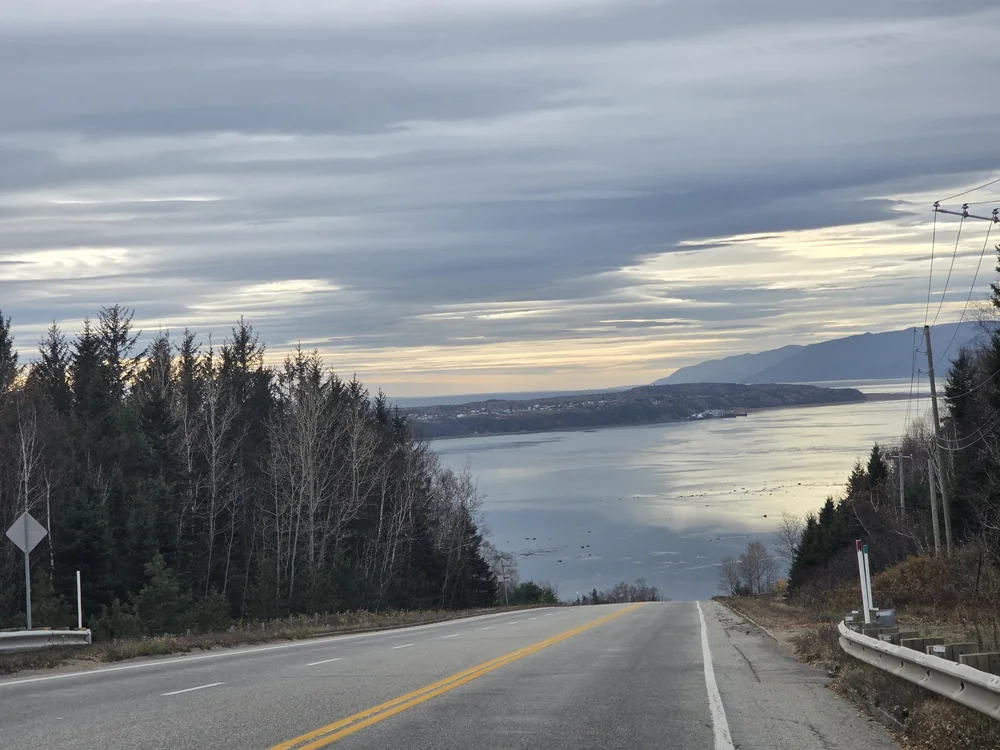
And the season was still showing off on the way down. Maples burned red along the shoulder, and the roadside shrubs had gone the deep gold of things in no hurry to finish. Late in the year, under a working grey sky, this hillside had no business being this pretty.
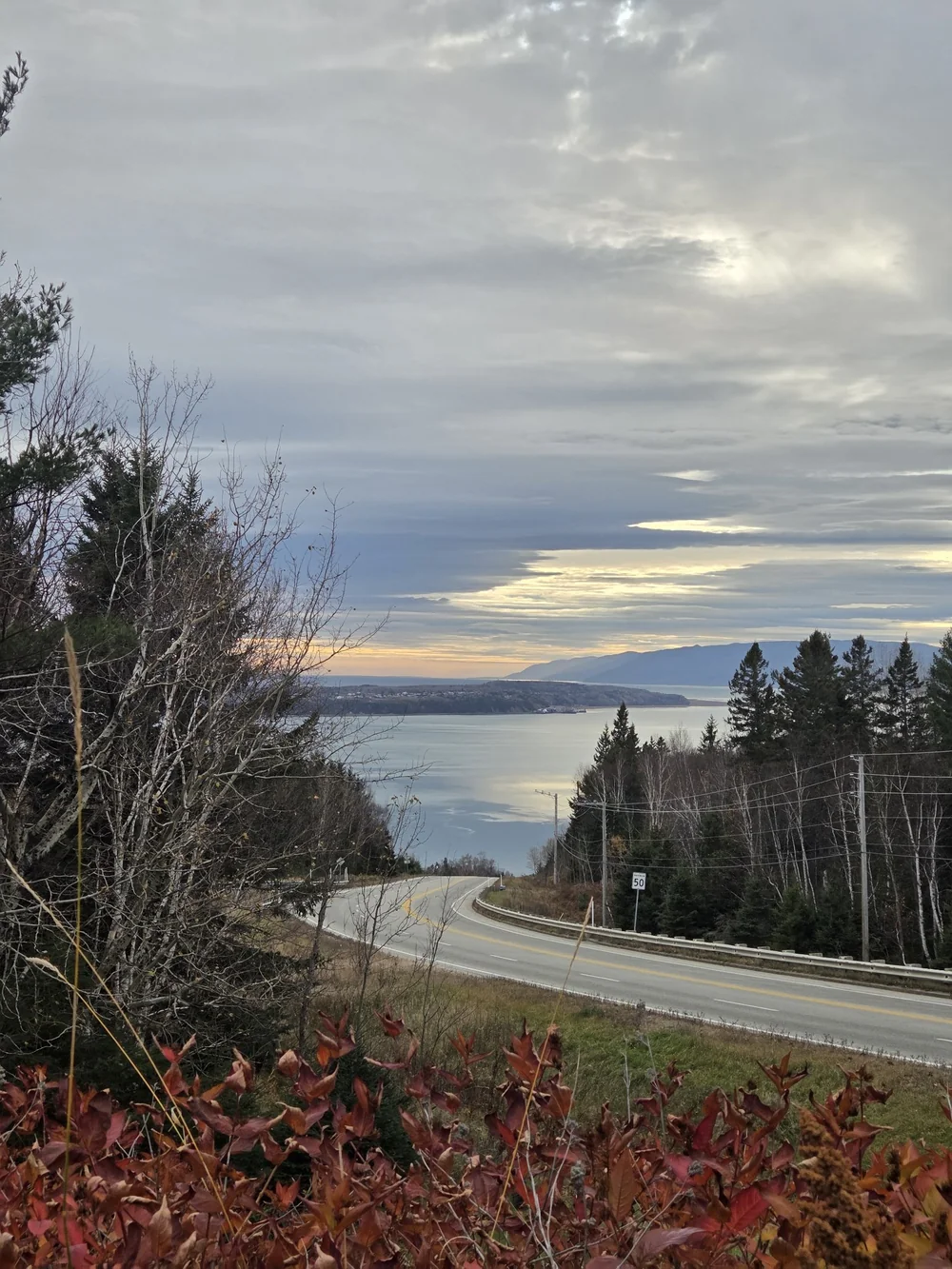
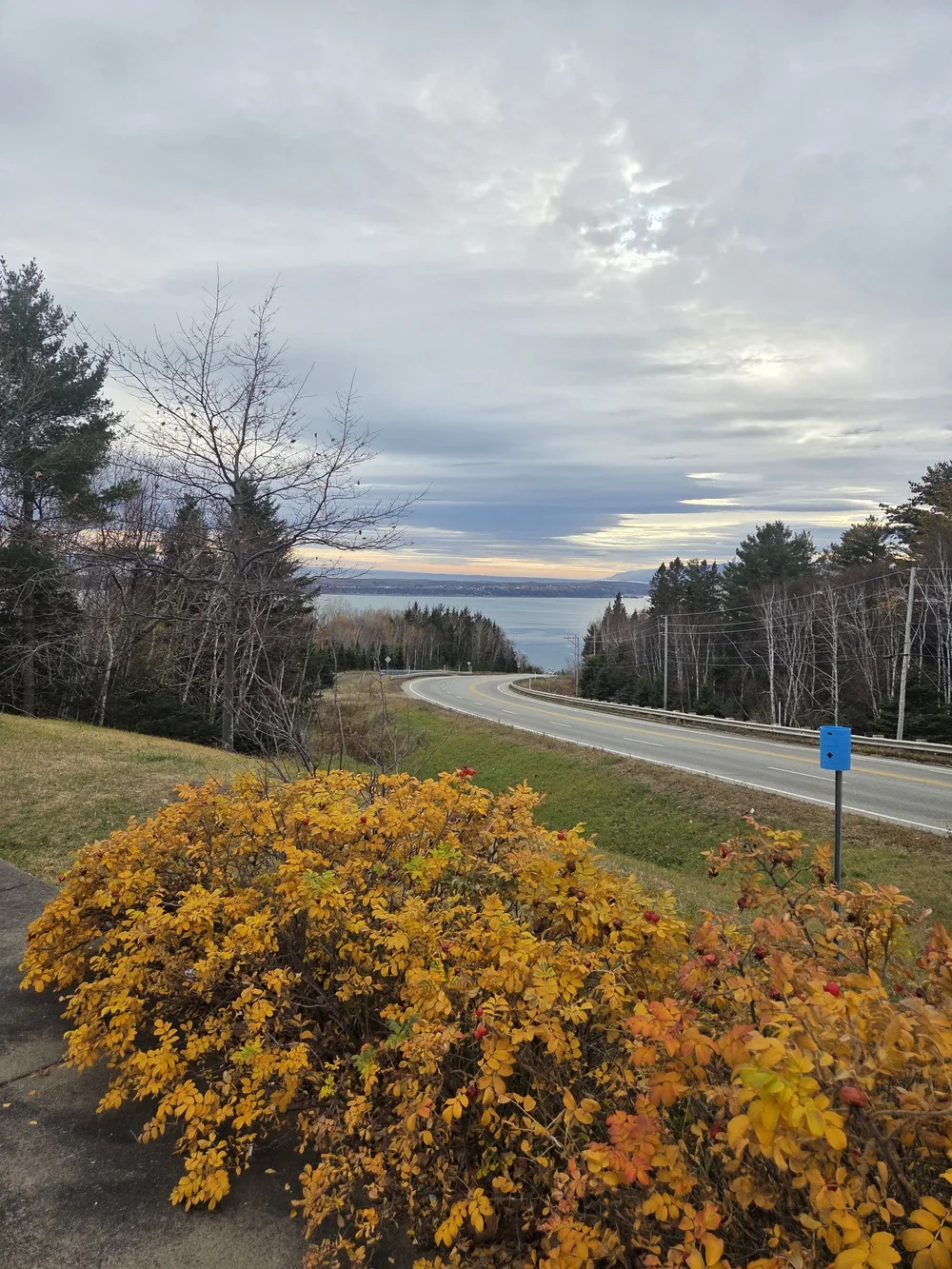
💡 Tip: do not drive the grande côte without stopping. The halte has parking, benches and picnic tables, and it is the village’s front porch. Two minutes standing there will rearrange your whole visit — you will know exactly where everything is before you reach the shore.
🏘️ A fairy-tale village, one slow loop
At the bottom of the hill, the road levels out along the water, and the village turns out to be exactly the right size for a car window: one gentle loop, down to the ferry dock and back, with everything worth seeing strung along it like beads. At low tide the river steps back and leaves wide silver flats beside the shore road.
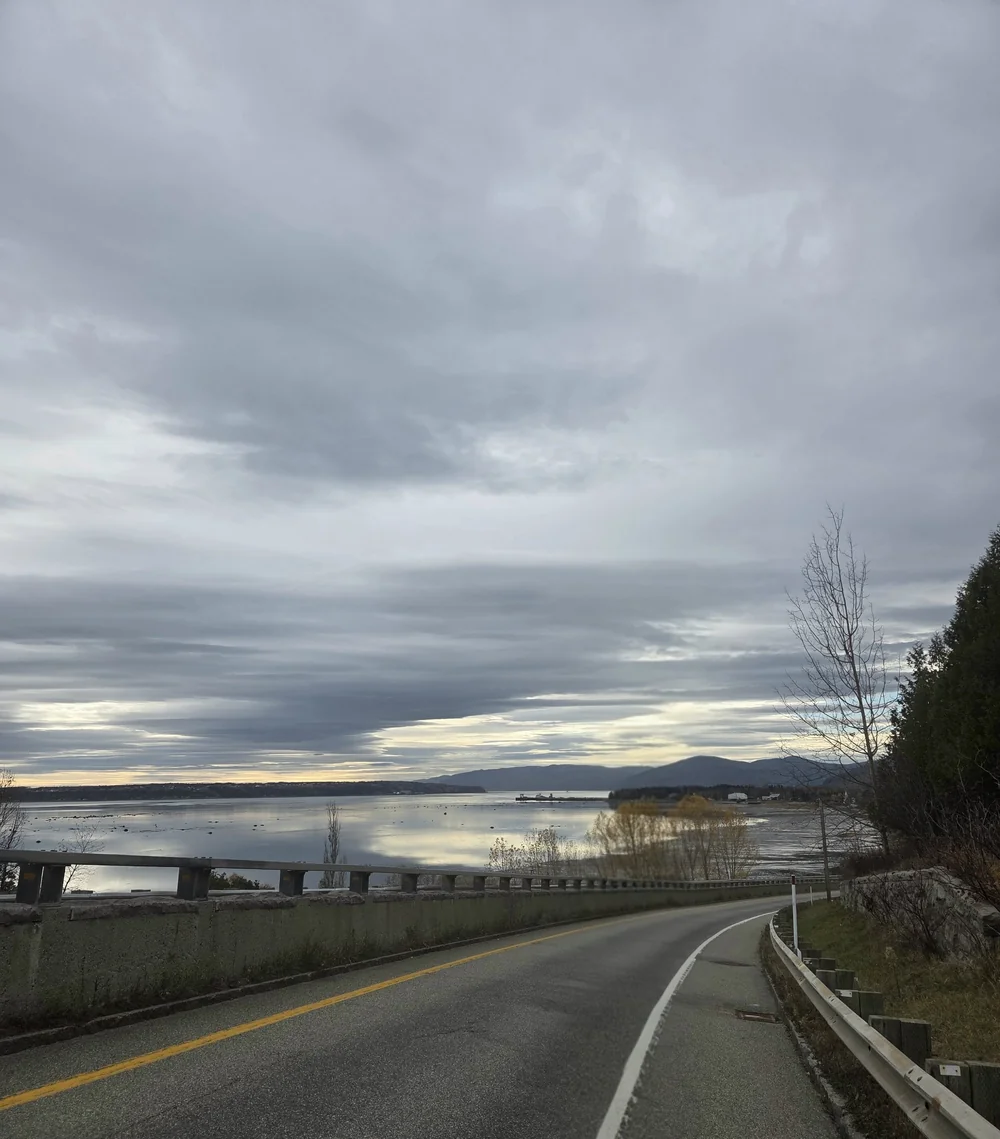
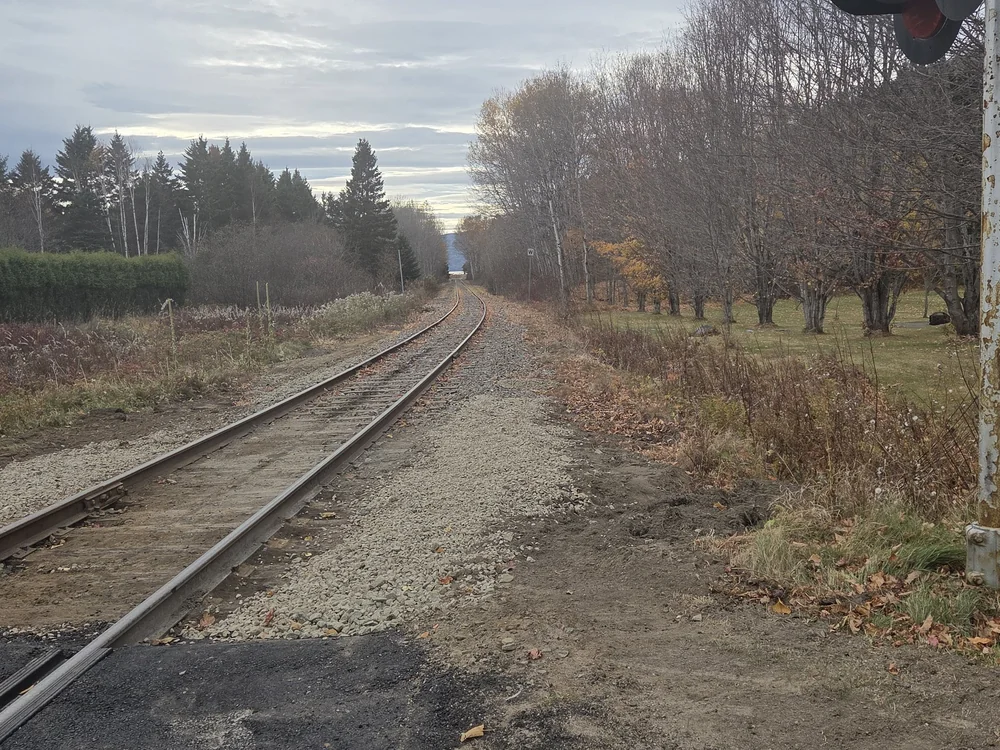
The railway keeps the road company the whole way. The Charlevoix train line threads straight through the village at shore level, and there is something about rails, small houses and the river in one glance that makes the whole place feel set down gently from a storybook.
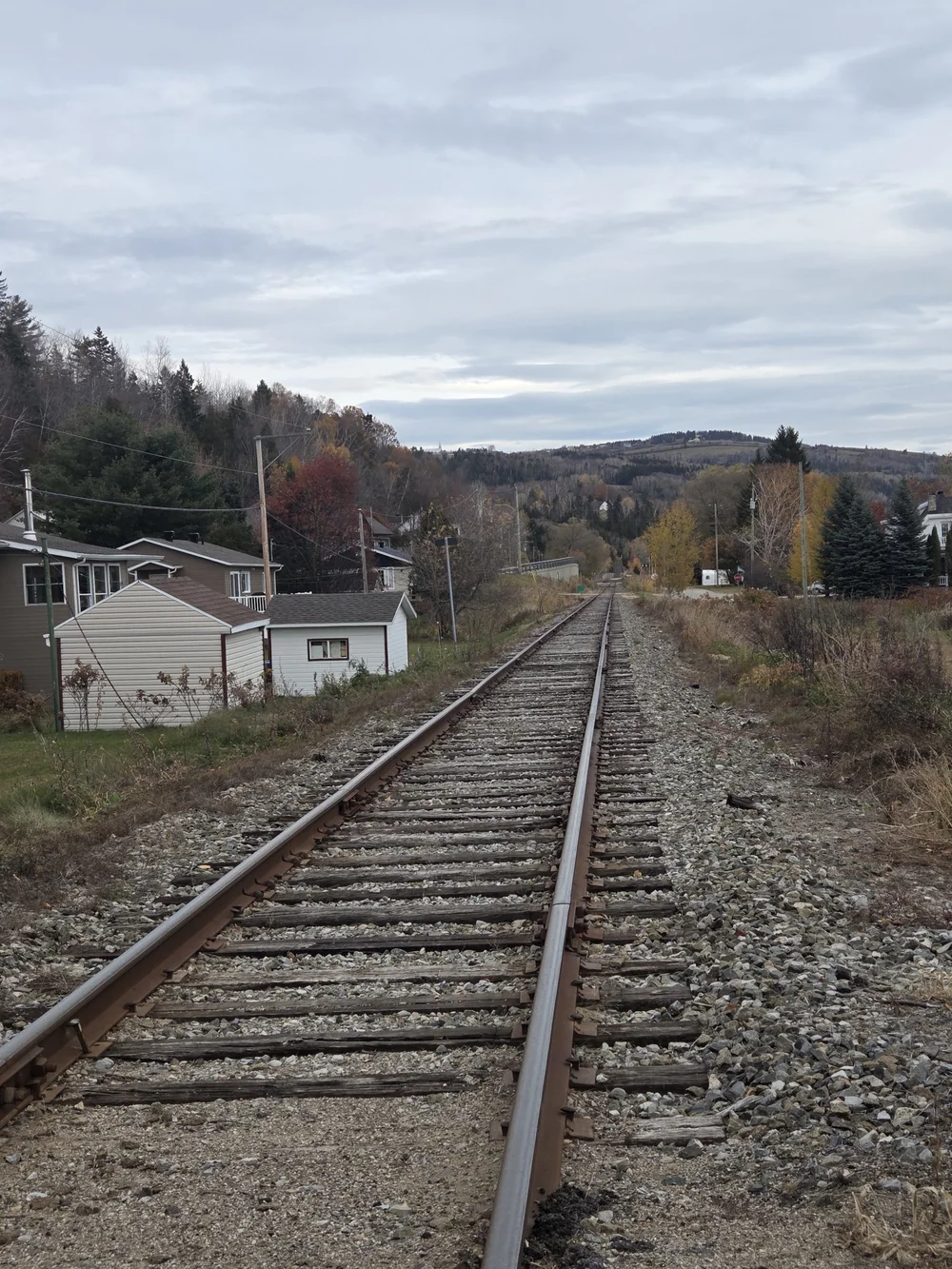
And the houses themselves: painted wood, deep porches, and roofs in colours a village is allowed when it has been pretty for a very long time. This red-roofed one stopped me mid-loop. The whole village looks like a page from a fairy tale — the kind of place you expect to find a story living in, not just scenery.
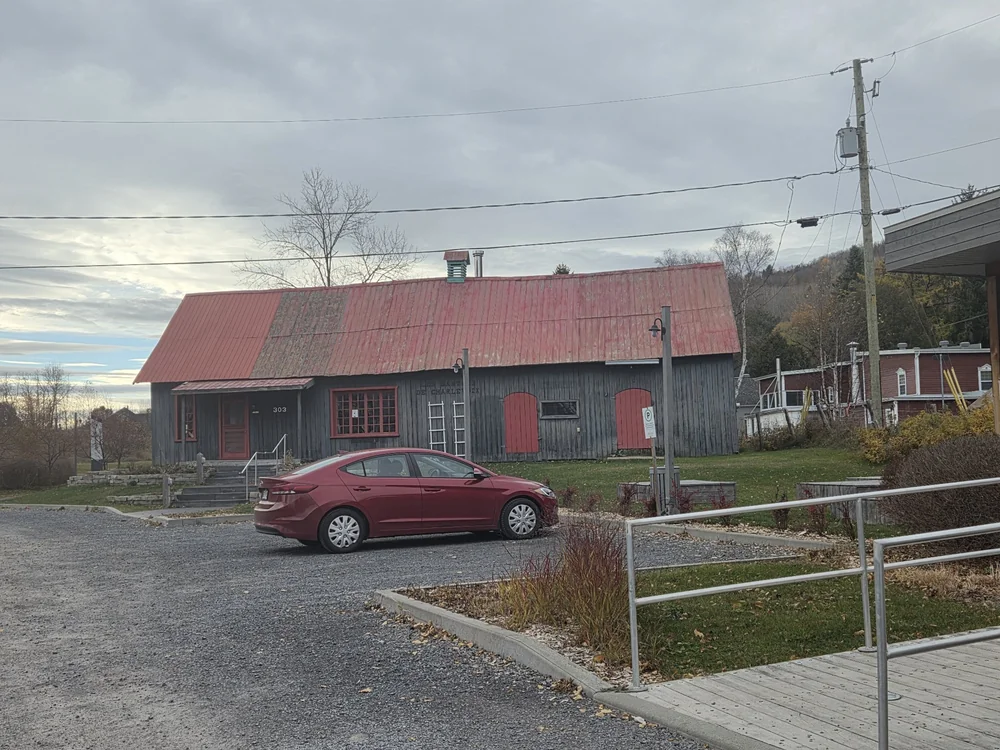
⚓ The maritime museum: standing on an old shipyard
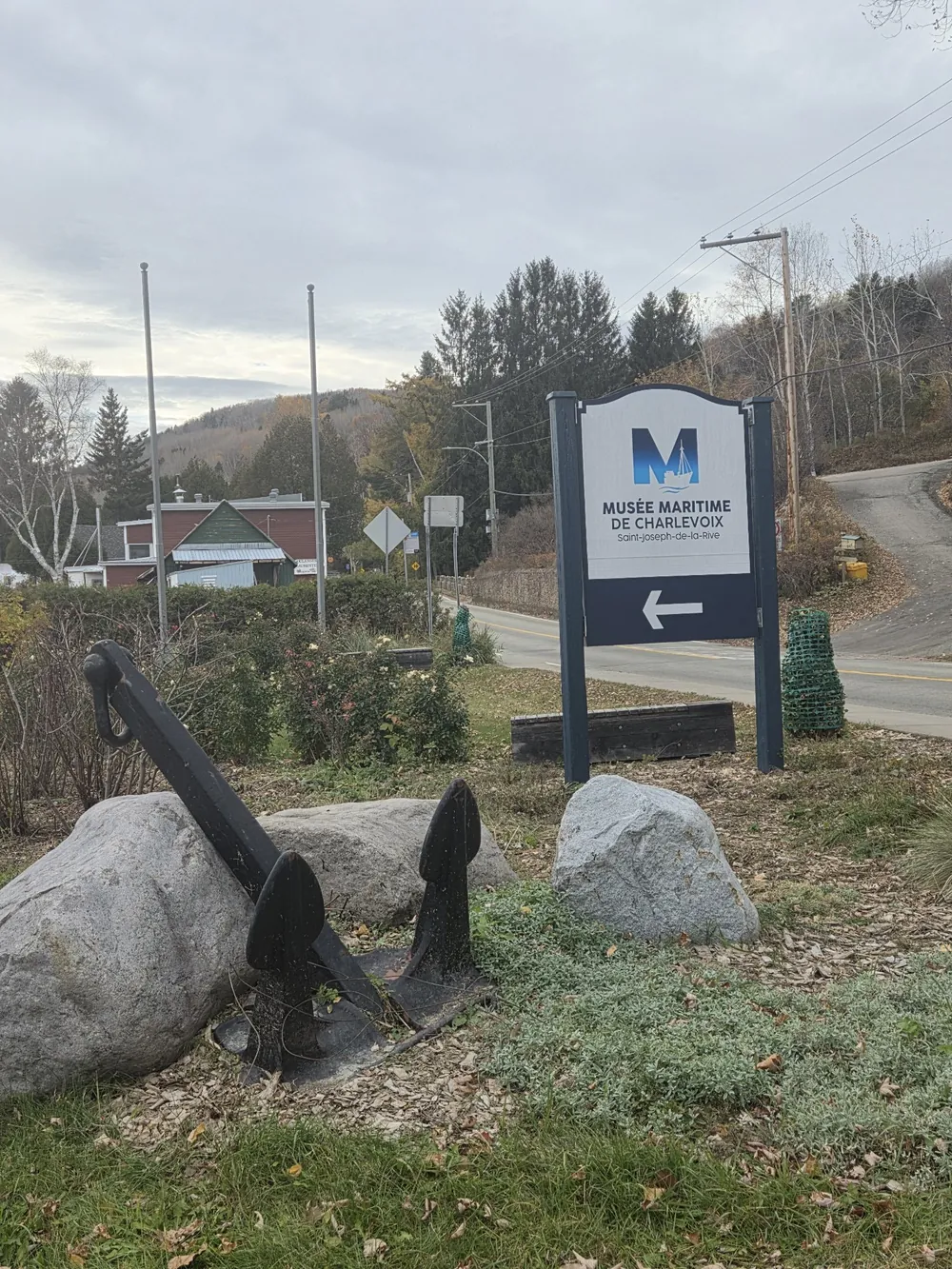
Halfway along the loop, an anchor and a sign announce the Musée maritime de Charlevoix — and the ground under it is the exhibit before any exhibit. This is the site of Les Chantiers maritimes de Charlevoix, a shipyard founded in 1946 by twenty villagers, where wooden schooners were built and repaired for the river trade. The site is now a recognized historic place, and the old yard buildings still stand around the shore. View on Google Maps
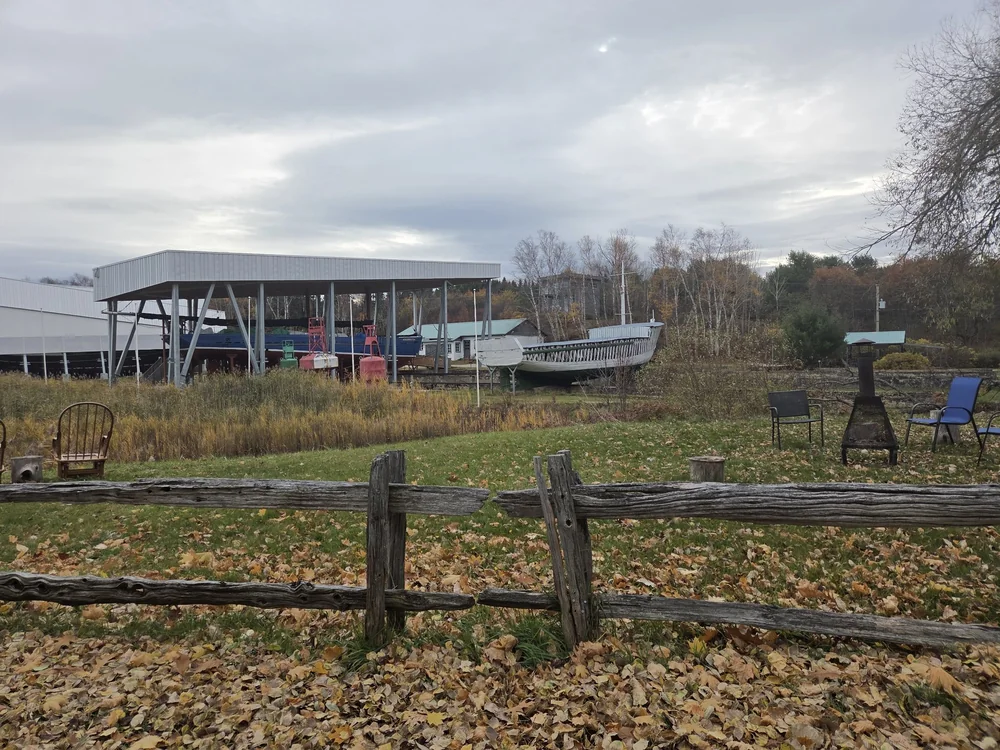
Full honesty, because this blog runs on it: I stopped here after the museum had closed for the season — its visiting season runs from mid-May to mid-October — so this visit was an outside one, a slow walk around the grounds. And you know what? The outside is already a museum. The boats are simply here, beached on the shore of the old yard.
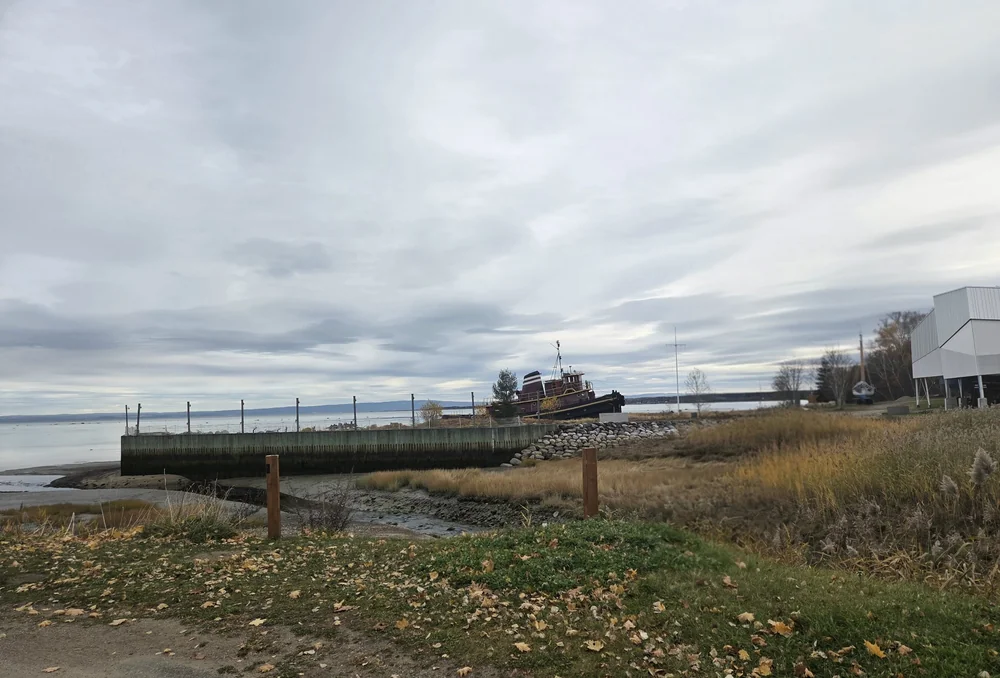
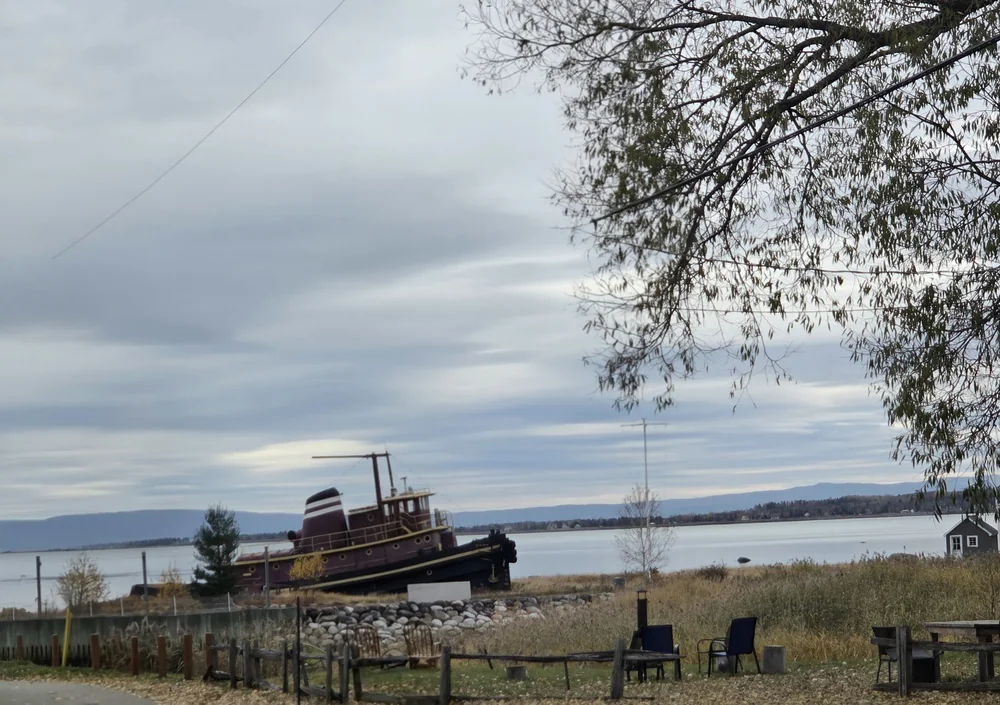
Under its protective shelter rests one of the wooden schooners — the goélettes that were Charlevoix’s trucks and buses for generations. In season, the museum lets you climb aboard four of its boats, including the heritage-listed schooners Saint-André and Marie Clarisse, and there is a 4 km forest trail, the Forêt marine, climbing behind the yard. All of that is firmly on my list for a return trip inside the season; the museum’s official site carries the current dates before you go.
🚂 The little station across from the museum
Directly across from the museum gate stands one of the prettiest small stations in Québec — the Gare de Saint-Joseph-de-la-Rive. This is a stop on the Train de Charlevoix, the coastal train that runs about 125 km between Chute-Montmorency, at Québec City’s edge, and La Malbaie, stopping at seven stations along the river. View on Google Maps
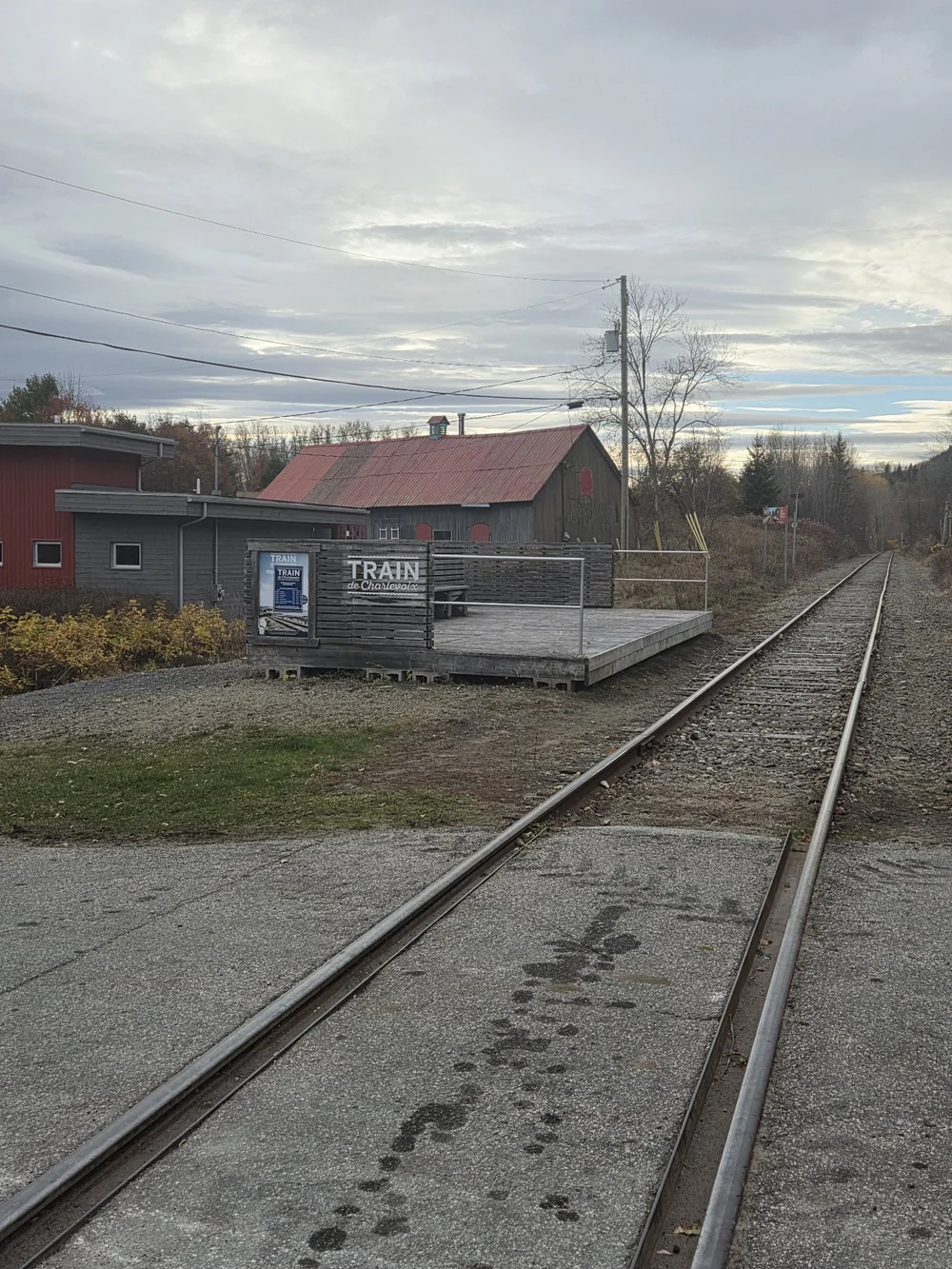
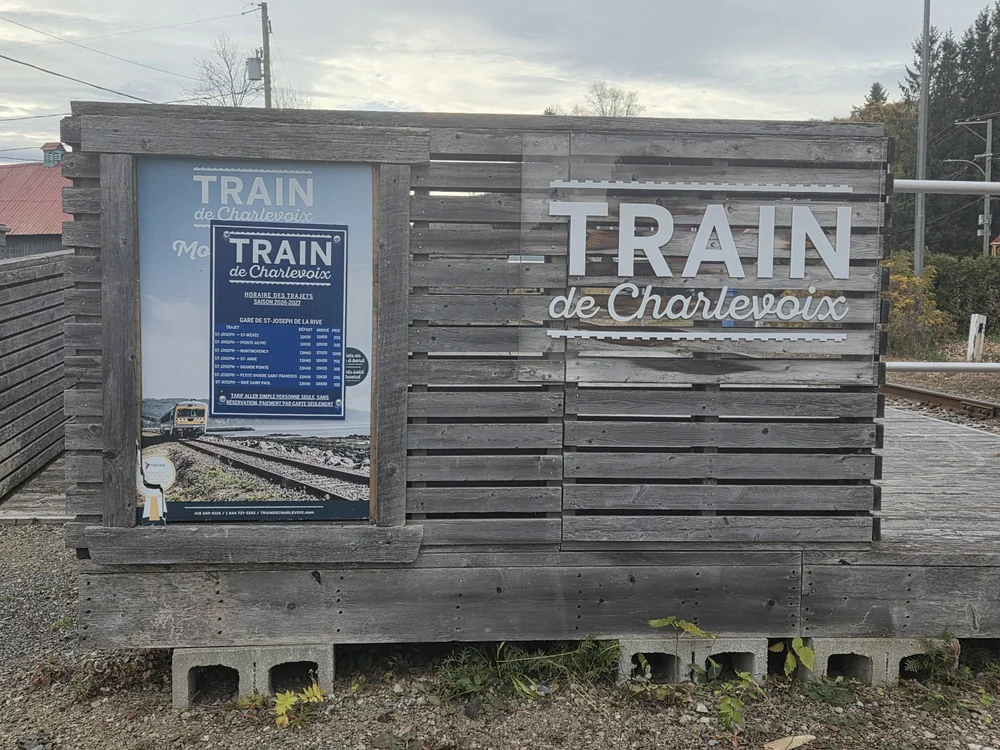
One quirk worth knowing before you plan around it: on the timetable, this stop usually appears under the name “Les Éboulements” — the municipality the village belongs to — even though the station itself stands here in the village, facing the museum. The train runs seasonally, roughly from early June to early November, and the station board spells out the season’s fares and the simple way it works: you can buy your ticket right at the station.
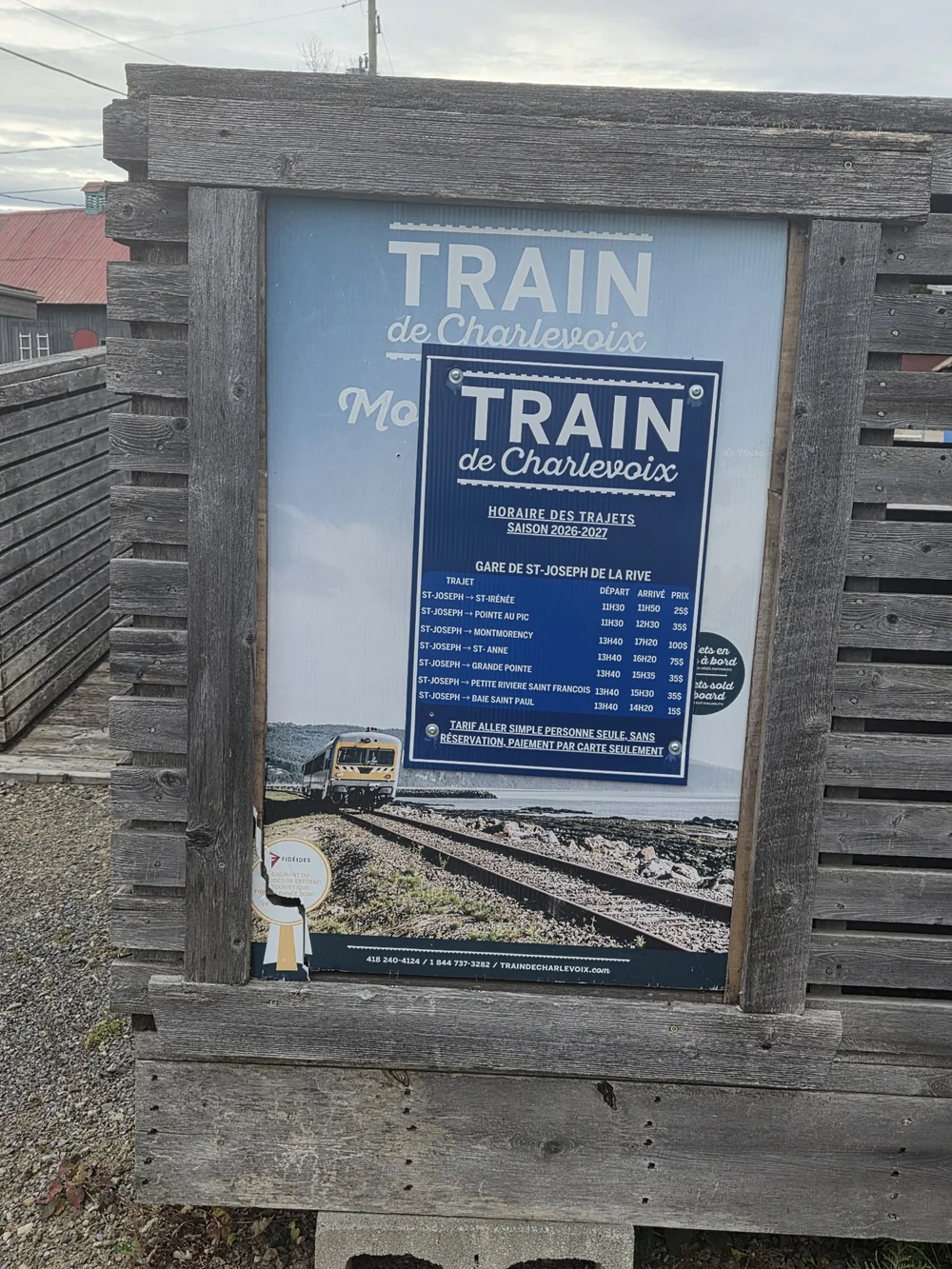
And because readers always ask: no, VIA Rail does not come here — no VIA train runs along this shore. Coming from Montréal by rail, the real route is VIA Rail to Québec City’s Gare du Palais, a shuttle to Chute-Montmorency station, then the Train de Charlevoix along the coast. It is a connection, not a through train — but as connections go, ending on that river-hugging little railway is no hardship at all. Riding this line in the colour season, Québec City to Baie-Saint-Paul takes about two and a half hours of pure shoreline.
🥖 The sign that surprised me: a bakery from 1908
I did not stop for the bakery. The bakery stopped me. Rolling slowly through the village, I caught the sign — Boulangerie Laurentide, and under the name, four digits that do not belong on a small village storefront: DEPUIS 1908. Baking since 1908. I actually laughed out loud in the car.
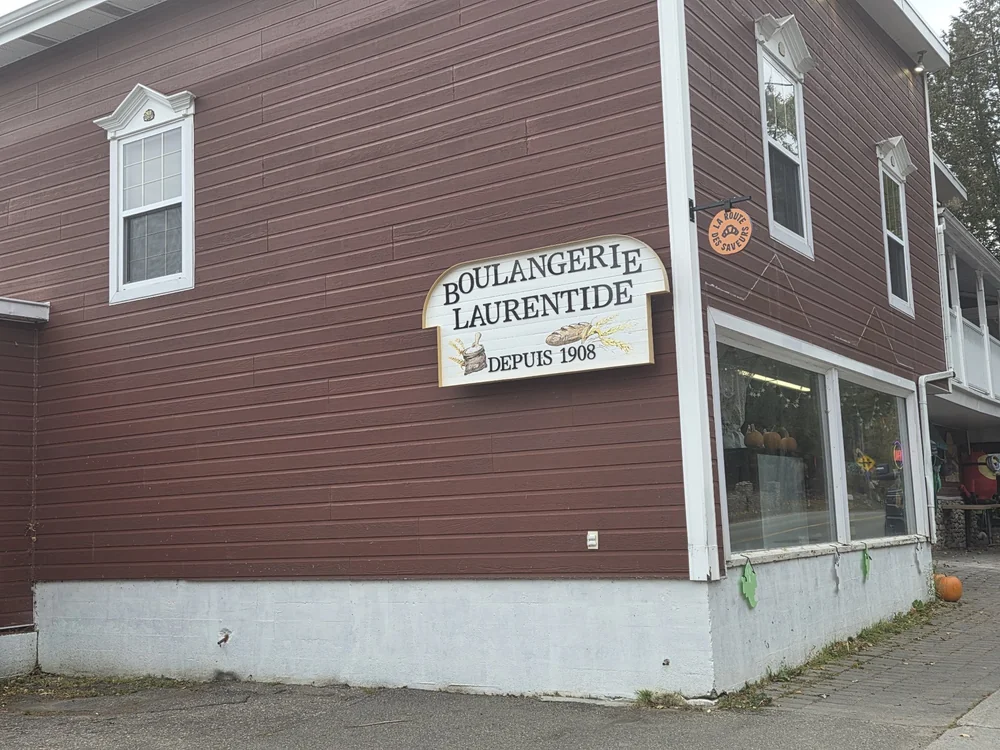
It is not a marketing line. The Laurentide, at 321 rue Félix-Antoine-Savard, was opened in 1908 by the Tremblay family and is now in its fifth generation — it presents itself as the oldest bakery in the whole Capitale-Nationale region. Its famous names are the tarte Rosanna, a family recipe handed down the generations, and a proper tourtière. And everything is still made right there, by hand — a true homemade, mom’s-kitchen kind of bakery. I am telling you about the sign and not the crumb, because on this stop I only admired it from the street — but a bakery that has outlived a century of Charlevoix winters has earned a planned return, with an appetite. View on Google Maps
⛴️ The ferry dock, and a bar in a camper by the water
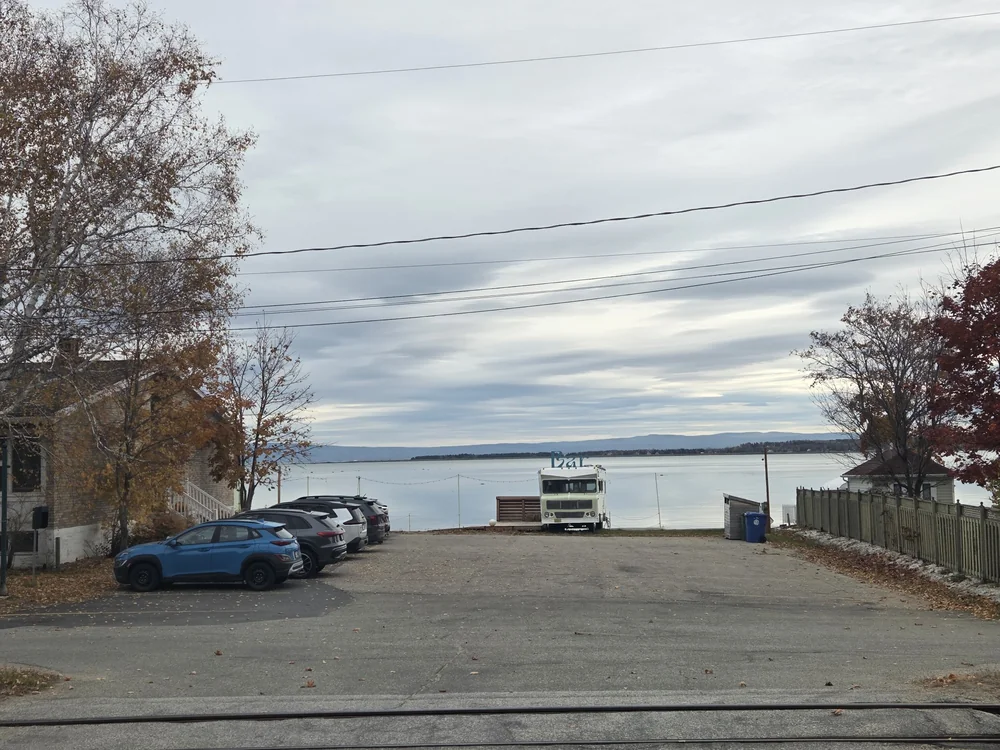
The loop ends, as every loop here should, at the water. Along the shore the village keeps its playful side: a vintage camper, painted mint and polished like a diner, converted into a little bar with a terrace of picnic tables facing the river. On a grey late-season day it sat quiet — but as a piece of village character, it is perfect.
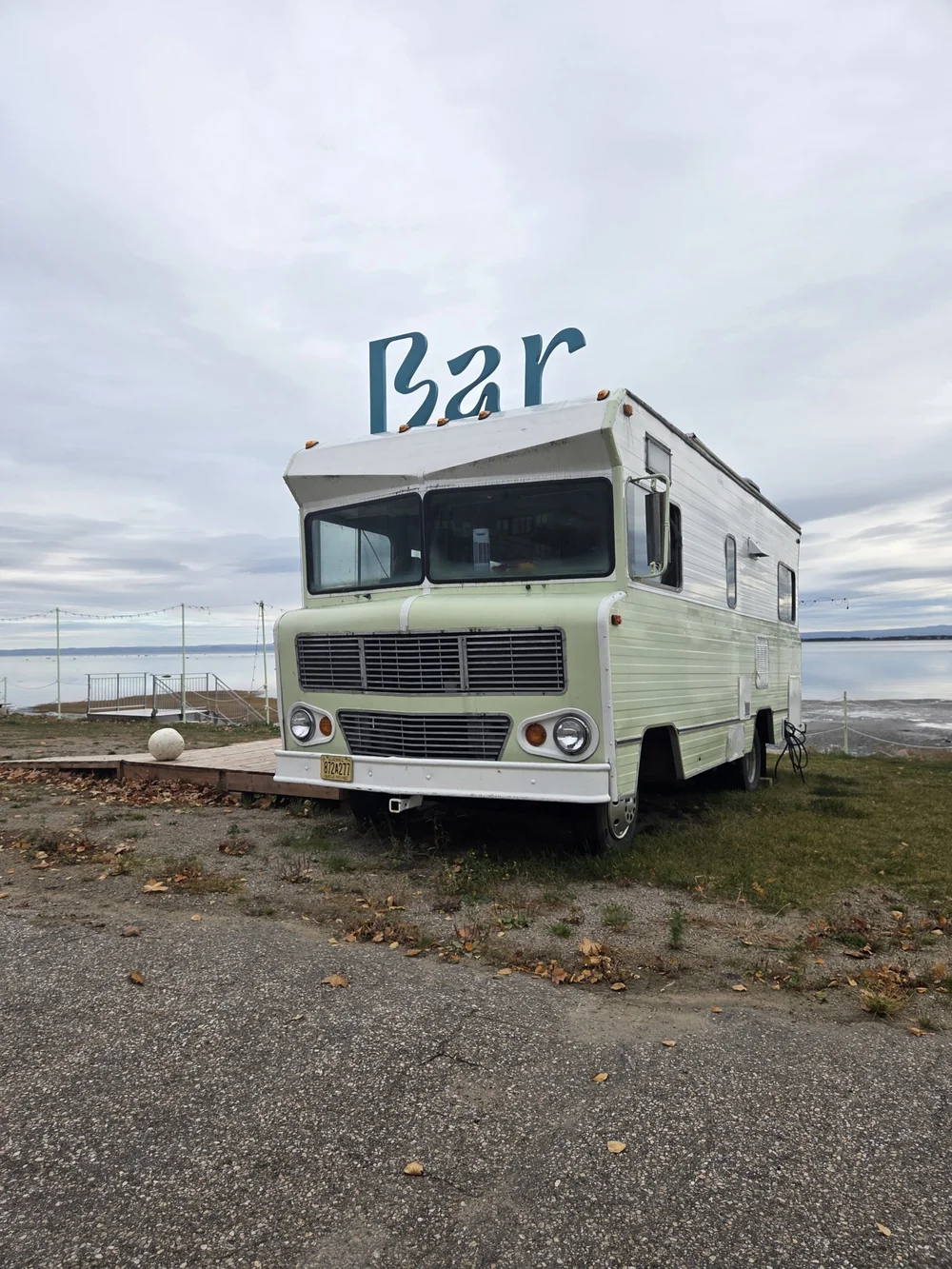
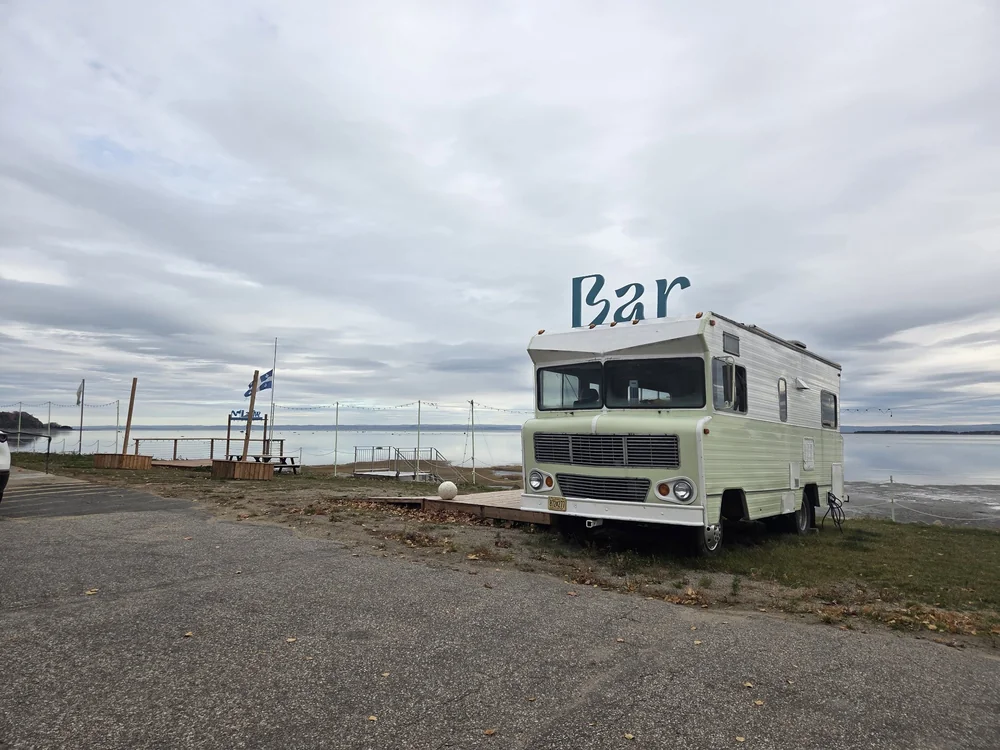
From the terrace side, the tide had gone out and left the flats gleaming, the Québec flag doing its slow wave above it all. This shore lives by the tide table: come at high water and the river is at your feet; come at low water and it hands you a silver plain instead.
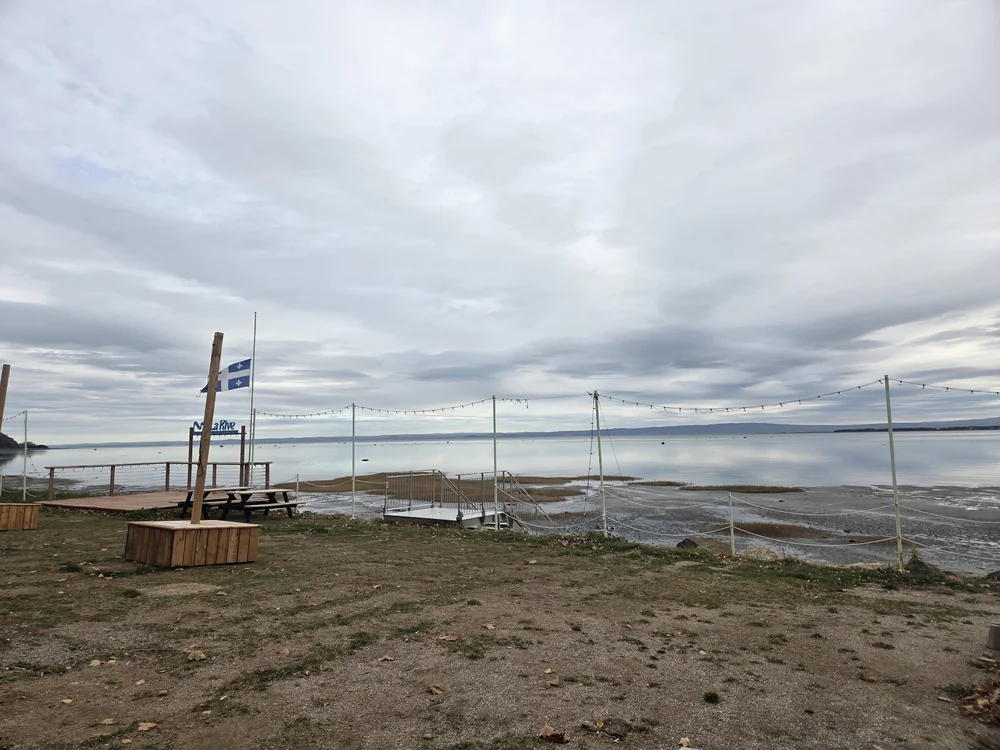
Pull into the shore parking and the whole loop reads at once — camper bar, museum shore, station, rooftops — which is why this unassuming lot is secretly one of the best seats in the village.
The rails leave the village the way they came — quietly, through the autumn woods, with the river flashing between the trees. And at the end of the road stands the dock, because this village has one more trick: it is a port.
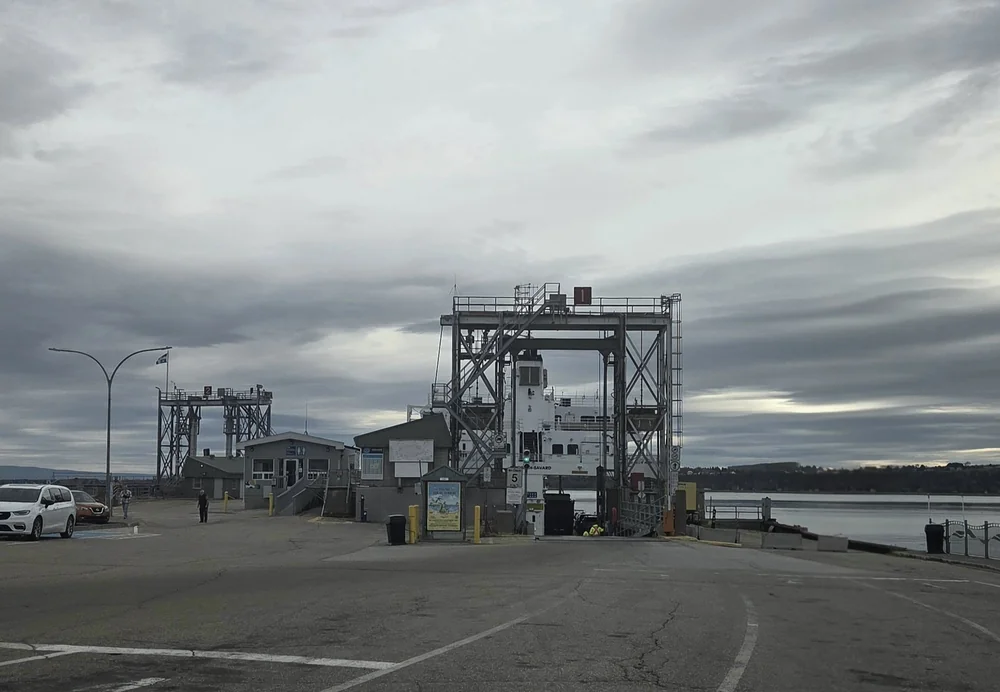
The ferry from this dock crosses to Isle-aux-Coudres — the island you admired from the halte — and it is run by the STQ, Québec’s ferry corporation. The crossing is 3.7 km, about 20 minutes aboard the NM Joseph-Savard, it runs all year, and here is the part that still surprises people: it is completely free — cars, bicycles and walk-on passengers alike. The STQ site posts the live schedule; in summer, two boats keep the crossing turning over about every half hour.
🌅 Before the sun goes: the sky on the water
If you take one piece of timing advice from this whole post, take this one: be here late in the day. At this season the sun gives up early, and in the last of the light, something happens that no viewpoint on the hill can give you. The sky lies down on the water. The river goes still and pale, the clouds double themselves, and the whole grey day quietly turns into the best photograph of the trip — the one that still does not do it justice.
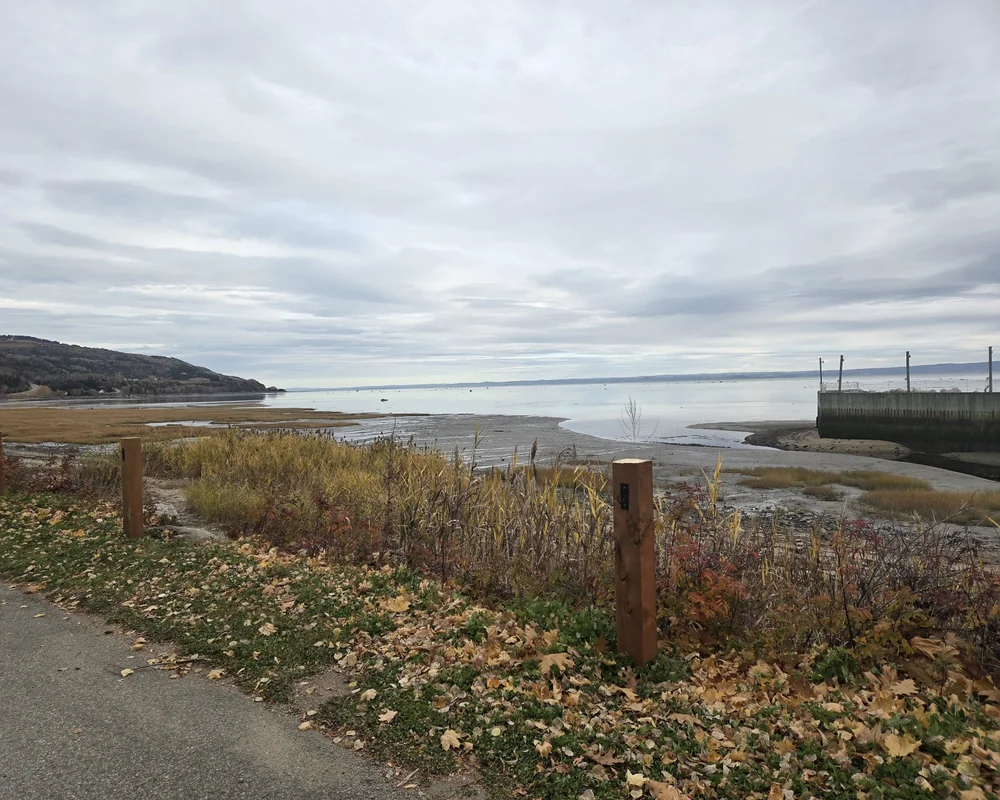
That is the thing about Saint-Joseph-de-la-Rive. Nothing here shouts. A hill, a loop, an old shipyard, a small station, a century-old bakery sign, a free boat — and a sheet of water that borrows the sky twice a day. For years I let the main road keep it. If you are driving this shore — on the foliage route, on the train line, on the way to the Fairmont or to Tadoussac — do the thing I finally did. Turn down the hill.
📋 Saint-Joseph-de-la-Rive at a Glance
| Where | Saint-Joseph-de-la-Rive, Charlevoix — a sector of Les Éboulements, on the north shore of the St. Lawrence River |
|---|---|
| Getting there | About 110 km east of Québec City by car (roughly 1 h 20–30) via Routes 138 and 362; or the Train de Charlevoix — the stop is listed as “Les Éboulements” |
| The loop | Route 362 from Baie-Saint-Paul, down the route du Port (the grande côte), one slow loop along the shore to the ferry dock |
| Don’t miss | Halte La Descente viewpoint · Musée maritime de Charlevoix · the village station · Boulangerie Laurentide (since 1908) · the ferry dock at day’s end |
| Free ride | The Isle-aux-Coudres ferry (STQ) — free for cars and passengers, year-round, about 20 minutes each way |
| Best moment | Late afternoon, when the sky reflects on the water just before the early sunset — and low tide, for the silver flats |
| Seasons | Maritime museum: mid-May to mid-October · Train de Charlevoix: early June to early November · Ferry: all year |
💡 J’s Tips
💡 Tip 1 — Stop on the way down. Halte La Descente, on the route du Port, is the village’s front porch: Isle-aux-Coudres straight ahead, the Massif behind the frame. The grande côte without the stop is just a hill.
💡 Tip 2 — Time the loop for the end of the day. The sun sets early here in the cold season, and the sky reflecting on the water just before it goes is the single best moment of the visit. Low tide adds the silver flats.
💡 Tip 3 — The ferry is free; use it. No ticket, no fare, cars welcome, all year. If Isle-aux-Coudres is on your list, this dock is the easiest way there — about 20 minutes across.
💡 Tip 4 — Check seasons before you plan around them. The maritime museum closes in mid-October and the train stops in early November, while the village and the ferry keep going all year. And coming from Montréal by train means VIA Rail to Québec City, the shuttle to Chute-Montmorency, then the Train de Charlevoix — look for the stop named “Les Éboulements.”
❓ FAQ
How do I get to Saint-Joseph-de-la-Rive?
By car, it is about 110 km east of Québec City (roughly 1 hour 20–30 minutes) via Routes 138 and 362, leaving the river road at Baie-Saint-Paul and descending the route du Port into the village. By train, take VIA Rail to Québec City’s Gare du Palais, the shuttle to Chute-Montmorency station, then the Train de Charlevoix — the stop for this village is listed as Les Éboulements and stands across from the maritime museum.
Is the Isle-aux-Coudres ferry really free?
Yes. The crossing between Saint-Joseph-de-la-Rive and Isle-aux-Coudres is operated by the STQ (Société des traversiers du Québec) and is free for cars, cyclists and foot passengers, all year round. The crossing is 3.7 km and takes about 20 minutes aboard the NM Joseph-Savard.
When is the Musée maritime de Charlevoix open?
The museum is seasonal: its 2026 season ran from mid-May to mid-October (May 14 to October 12), generally 9:30 a.m. to 5:30 p.m. It stands on the 1946 shipyard site at 305 rue de l’Église, and in season you can board four of its vessels, including the heritage schooners Saint-André and Marie Clarisse. Check the museum’s official site for the next season’s dates.
What does “Cratère et marées” mean on the Charlevoix signs?
It is Tourisme Charlevoix’s name for this sector of the region, covering Les Éboulements, Saint-Irénée and Saint-Joseph-de-la-Rive. The crater is the Charlevoix impact structure — by the tourism board’s telling, a meteorite strike some 450 million years ago that left a crater about 54 km across — and the marées are the powerful tides of the St. Lawrence, which uncover the wide tidal flats along the village shore.
Quick question before you go: are you a “just drive past it” traveller, or a “turn the car around” one? Tell me below — I read every answer.
📚 You May Also Like
- Baie-Saint-Paul Church: Charlevoix’s Oldest Parish
- The Golden Virgin of Les Éboulements: The Hilltop Church With Charlevoix’s Best View
- Fairmont Le Manoir Richelieu Review: The Hotel We Return to Every Year When the Cold Sets In
🚂 Next stop in this series: the shoreline you can see from this village’s church runs east to the very next station on the Charlevoix line — Saint-Irénée: Charlevoix’s Next Station & a Free Art Garden. A giant red buoy watching over the wharf, a kilometre of beach boardwalk and a famous music academy’s free sculpture garden are waiting there.
Happy wandering 💛
— J.
Take care, and see you on the next beautiful road.
Get the Free Canada Savings Checklist
Join the newsletter — get the free PDF checklist and weekly Canada savings tips in your inbox.
Read Next

Some links in this post are referral or affiliate links. If you sign up or buy through them, I may receive a bonus or commission at no extra cost to you. It helps keep this blog running — thank you!