Saint-Irénée: Charlevoix’s Next Station & a Free Art Garden
Last updated: November 5, 2026
Bonjour! It’s J. — in the last episode of this Québec series, I finally turned down the hill into Saint-Joseph-de-la-Rive, the village I had driven past for years. Standing on its church shore, my eye kept travelling east along the water. That shoreline — the one in the view — is today’s stop: Saint-Irénée, one station further.
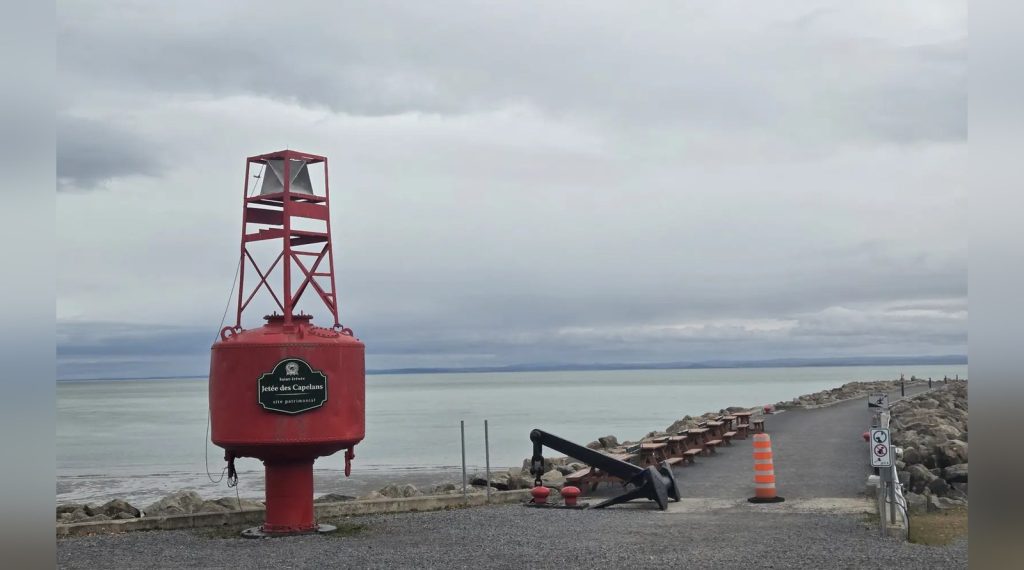
This series is my running list of Québec places that give you a real change of air without spending much money — and Saint-Irénée may be the purest example yet. A tiny shore station, a jetty watched over by a giant red buoy, a kilometre of beach boardwalk, pretty inns lined up along the tracks, and, on the hill above it all, a famous music academy whose sculpture garden is completely free.
🌿 Quick Take
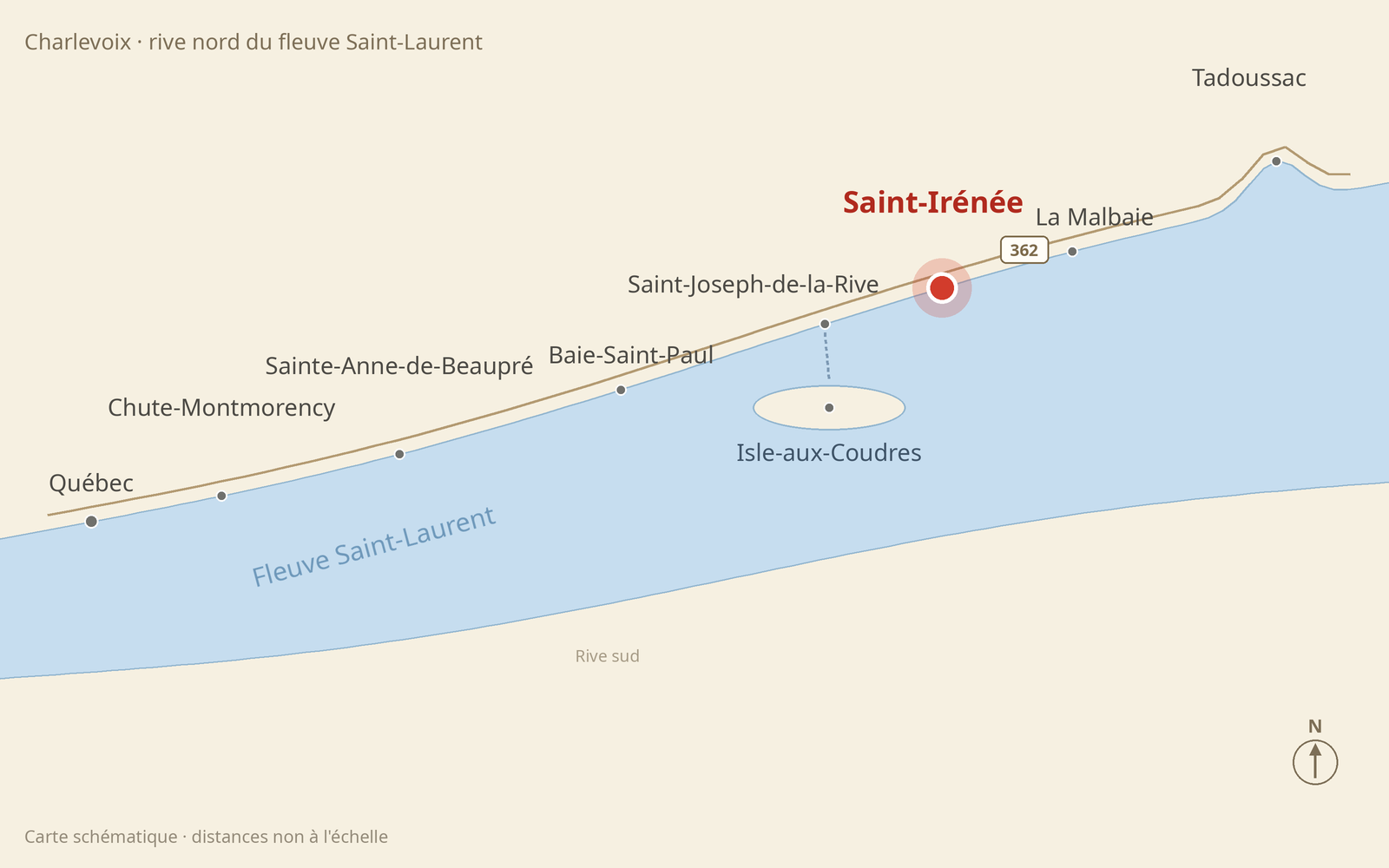
- What: Saint-Irénée, a St. Lawrence shore village in Charlevoix — officially one of Québec’s most beautiful villages
- The series link: the next Train de Charlevoix station after Les Éboulements, the stop for Saint-Joseph-de-la-Rive in the previous episode View on Google Maps
- The icons: a giant red navigation buoy on the Jetée des Capelans, and a 27-metre black arrow planted in the Domaine Forget hill
- The free part: the Domaine Forget sculpture garden — about 25 large works, open free all year
- The mood: rails, tidal flats and a boardwalk beach, with inns and cottages strung along the shore road
🚂 One stop further: the little station by the water
The Train de Charlevoix runs 125 kilometres between Chute-Montmorency, at Québec City’s doorstep, and La Malbaie, stopping at seven stations along the river. Saint-Irénée is the sixth — one stop past Les Éboulements, the station across from the maritime museum in Saint-Joseph-de-la-Rive, and the last stop before La Malbaie.
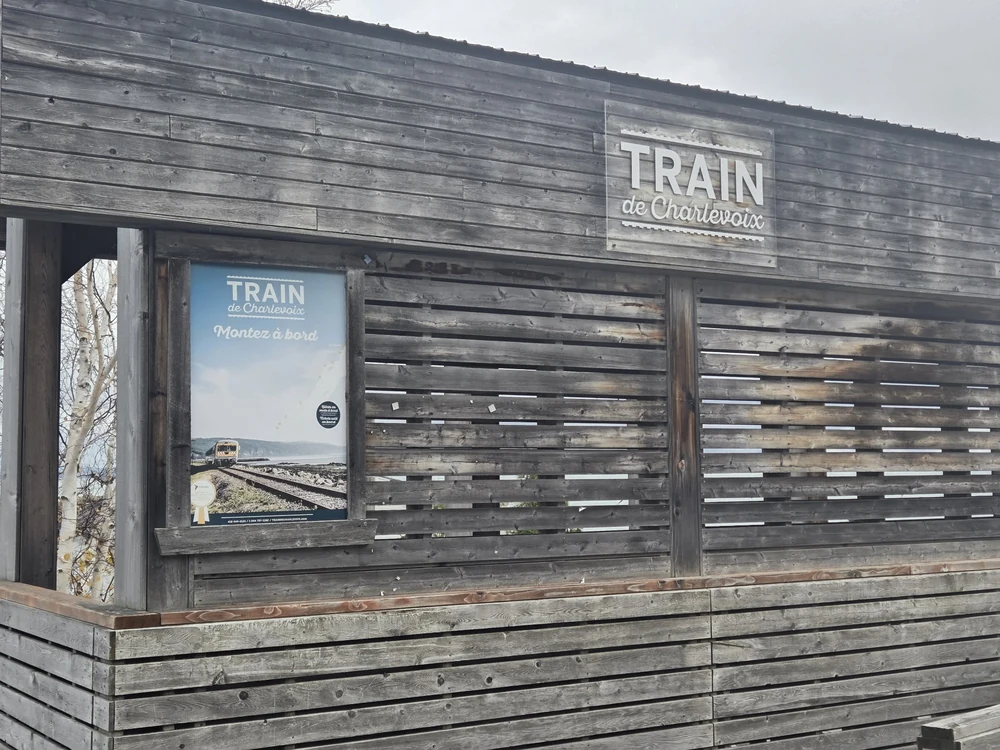
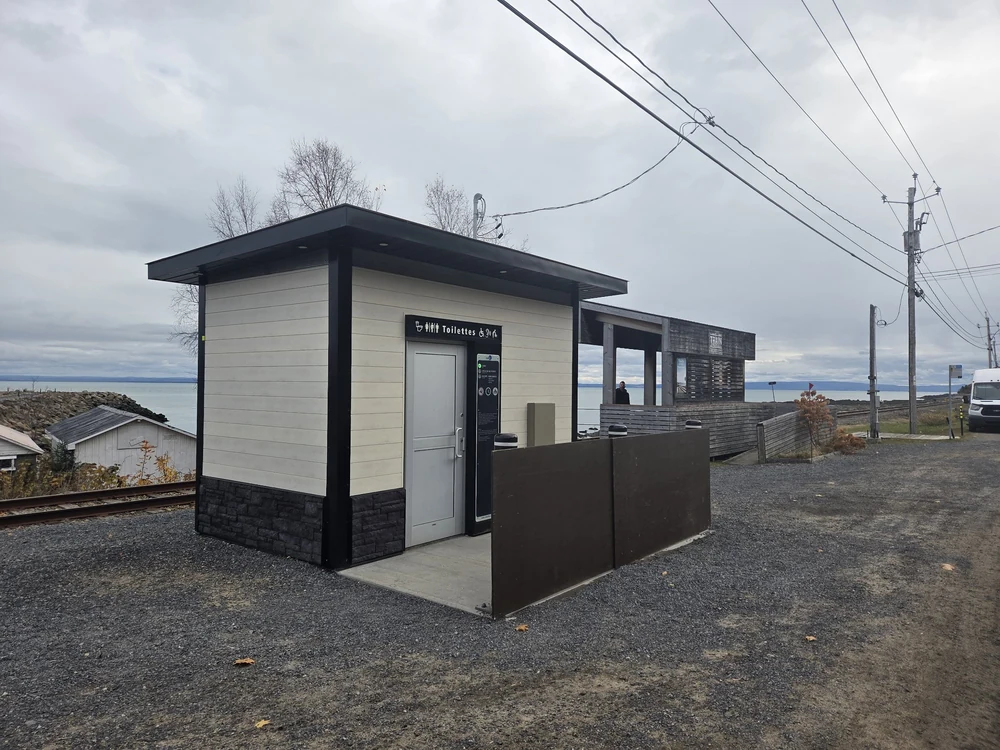
The station itself is as modest as a station can be: a weathered wooden shelter with slatted walls, a poster that simply says “Montez à bord” — climb aboard — and, right beside it, a brand-new public toilet building. There is no ticket office; you buy your ticket before you come. What the stop lacks in size it repays in setting: the platform stands directly across from the jetty, with the whole bay opening behind it.
One honest caution, because this line has lived a complicated life: the train runs seasonally, roughly June to early November, and it once announced a full shutdown before returning under a new partnership. So treat it the way locals do — check the official Train de Charlevoix site before you plan a day around it. The village, happily, is worth the drive either way.
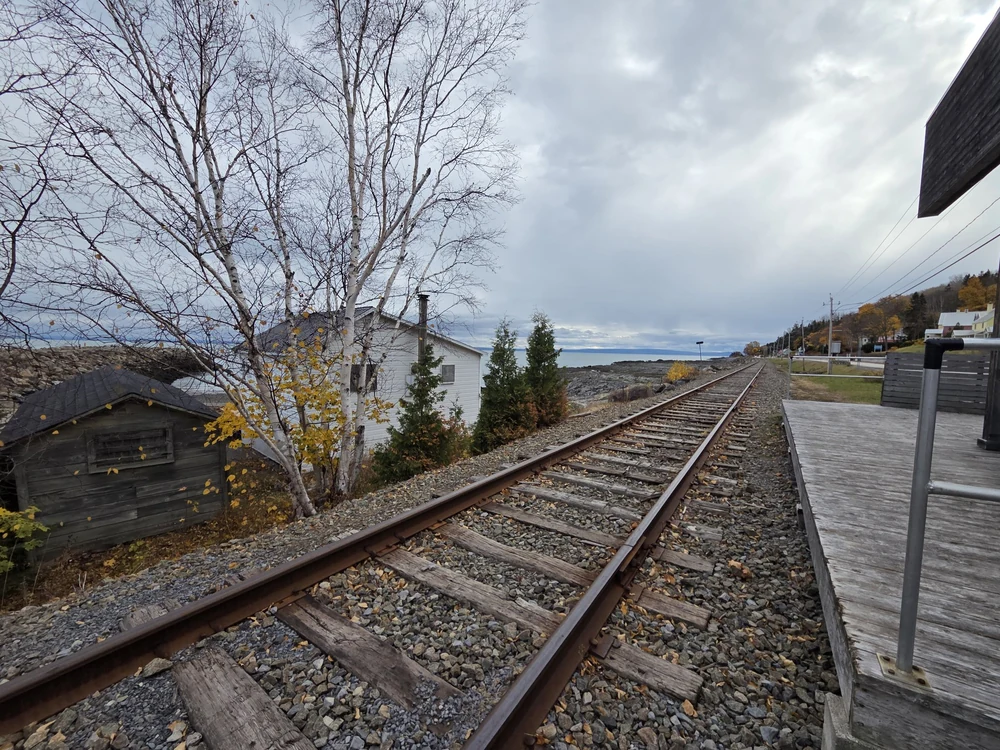
⚓ Jetée des Capelans: the red buoy and the little fish
Cross the tracks from the station and you are at the village’s front porch: the Jetée des Capelans. It began life as a working wharf — local history credits Rodolphe Forget, the same name we will meet again on the hill, with building the original quay. Decades ago a repair wrapped it in rock armour; the armouring made it tough enough for the river’s big waves, but impossible for boats to dock at. A wharf that can no longer take ships became, by happy accident, a breakwater you can walk on. View on Google Maps
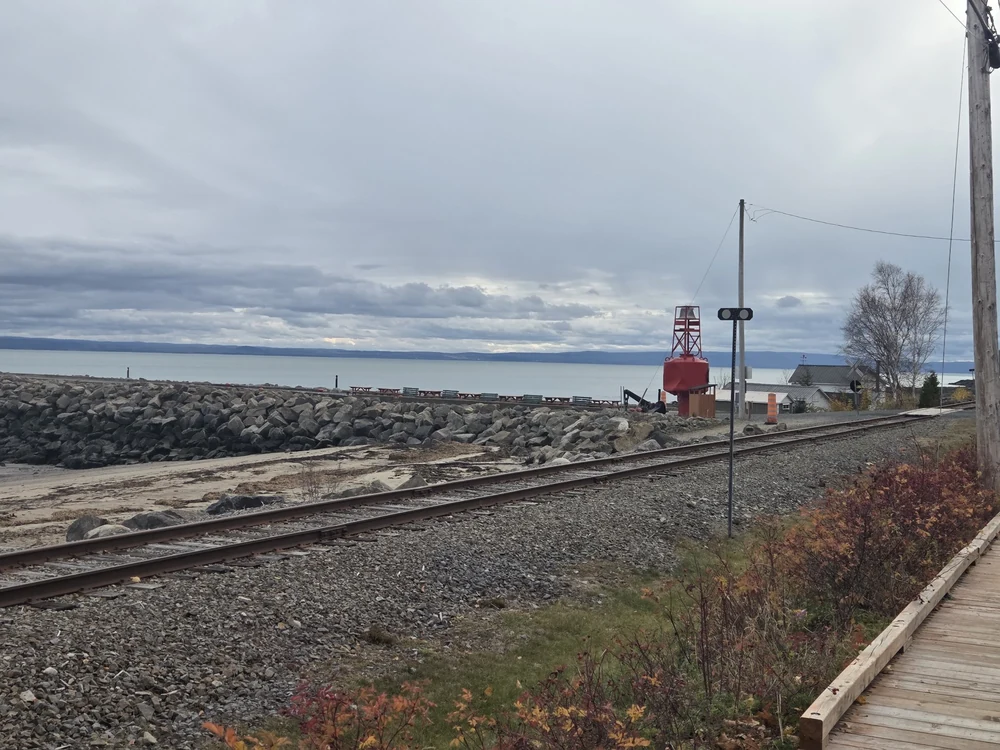
The red is a retired navigation buoy, planted at the jetty’s entrance like a lighthouse that retired to the shore. Its plaque reads “Jetée des Capelans — site patrimonial”: the beach and the old wharf together are a listed heritage site. Nobody seems to have published the buoy’s own biography, so I will simply report that it has become the jetty’s unmistakable signature — you can read its sign from the train platform.
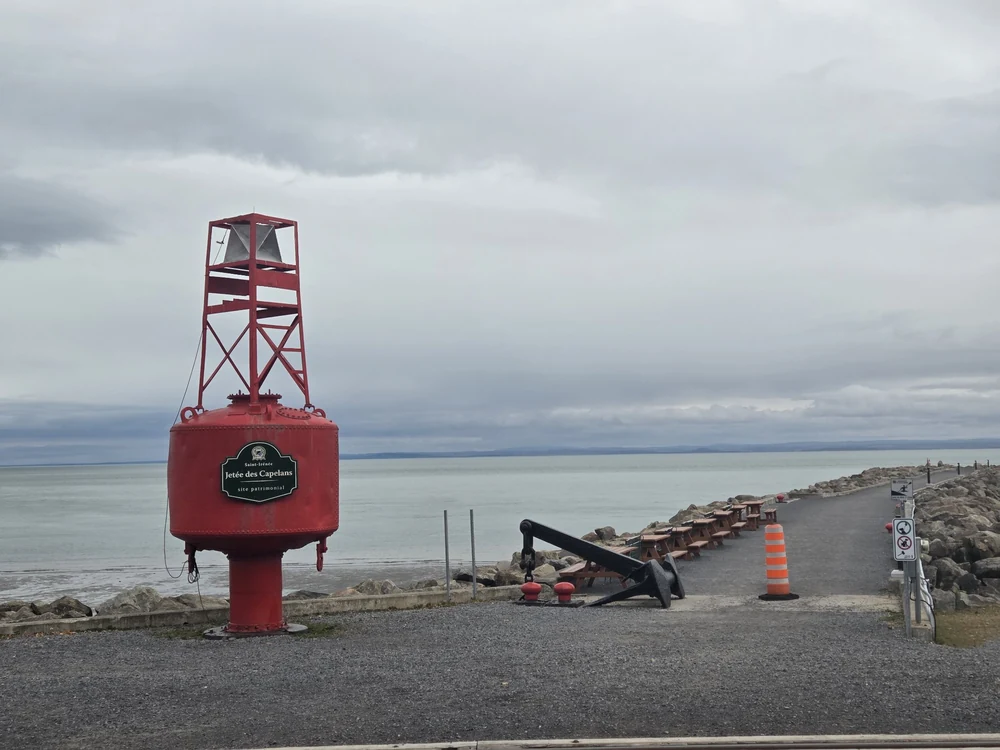
And the name? Capelans are capelin, the small fish that roll onto this beach on spring nights to spawn. For generations the villagers caught them in fascine traps, sold them across the region and spread them on the fields as fertilizer. The fish became so central to life here that “Les Capelans” is still the villagers’ nickname — and the jetty’s name was made official in 2013. Today the breakwater is a public place in the best sense: picnic tables in a row, an anchor for a monument, and, in summer, even outdoor concerts linked to the Domaine Forget. View on Google Maps
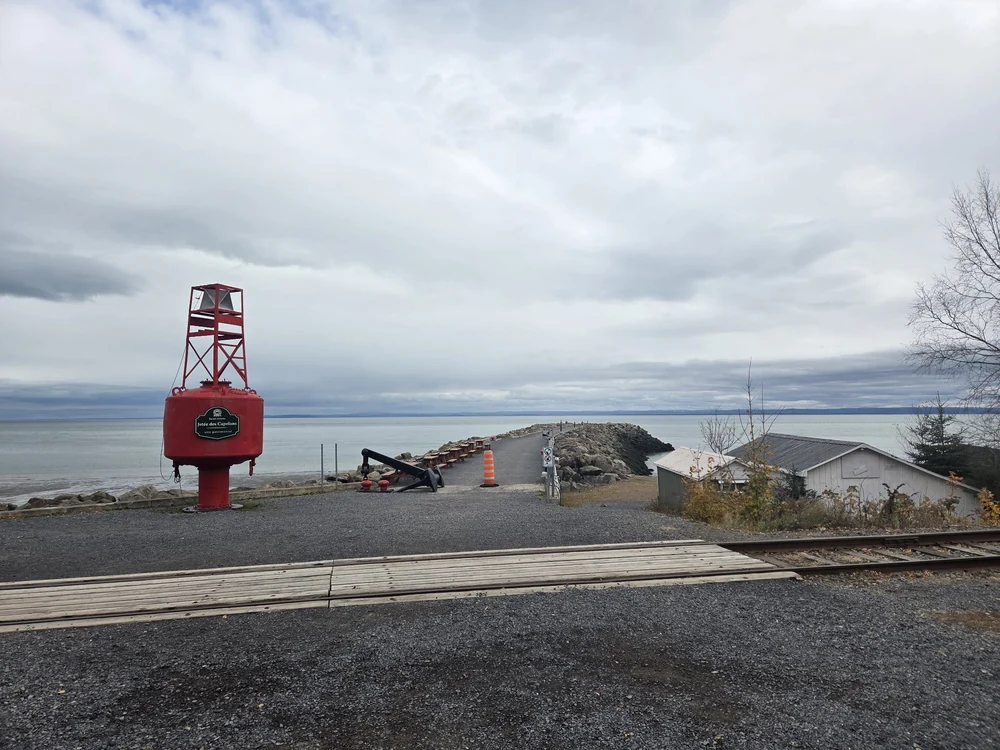
🌾 The boardwalk shore: rails, flats and pretty inns
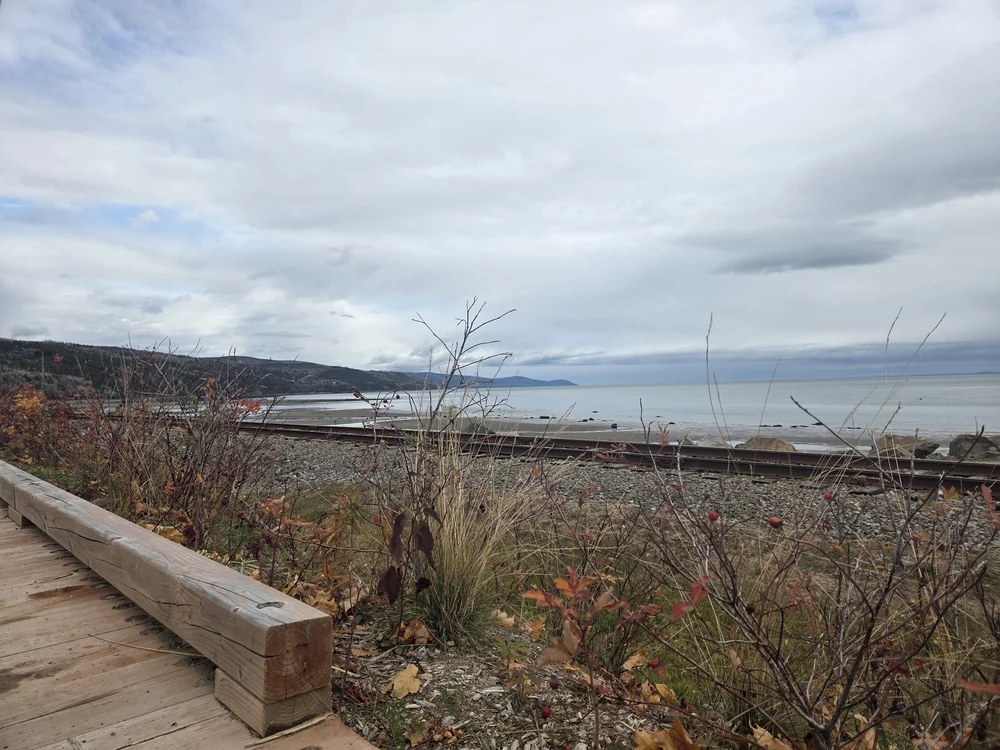
East of the jetty, the beach takes over. For about a kilometre along the chemin des Bains, Saint-Irénée is one long sand beach served by wooden boardwalk decks — three access points, free parking, public toilets, and room for kayaks and paddleboards (the municipality’s beach page lists them all). The water, be warned, is the St. Lawrence at its most bracing; the village’s old resort-era name, Saint-Irénée-les-Bains, came from an age that believed in the virtues of cold salt water. View on Google Maps
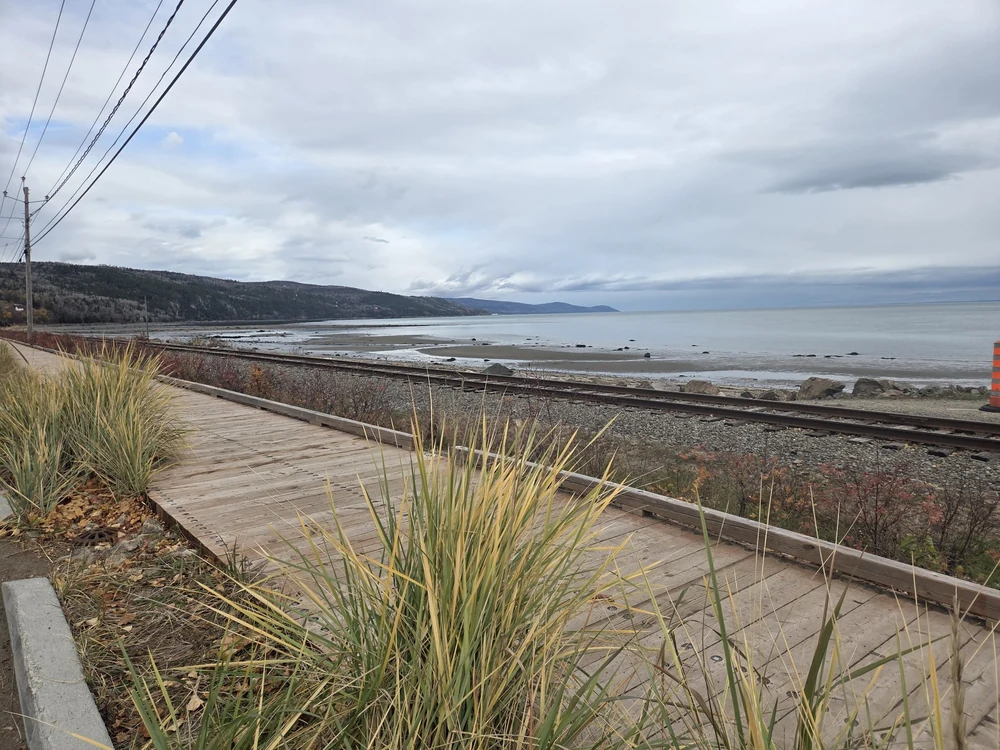
What struck me most, driving through, is how the whole village arranges itself along this single shore line: the road, the rails, and then one pretty inn after another facing the water. Saint-Irénée has been a resort village since the days when wealthy families built summer estates here, and the shore still wears that elegance lightly — gîtes and auberges with their windows turned to the bay, in a village of fewer than 700 residents.
🎻 Domaine Forget: a music academy on a hill of old estates
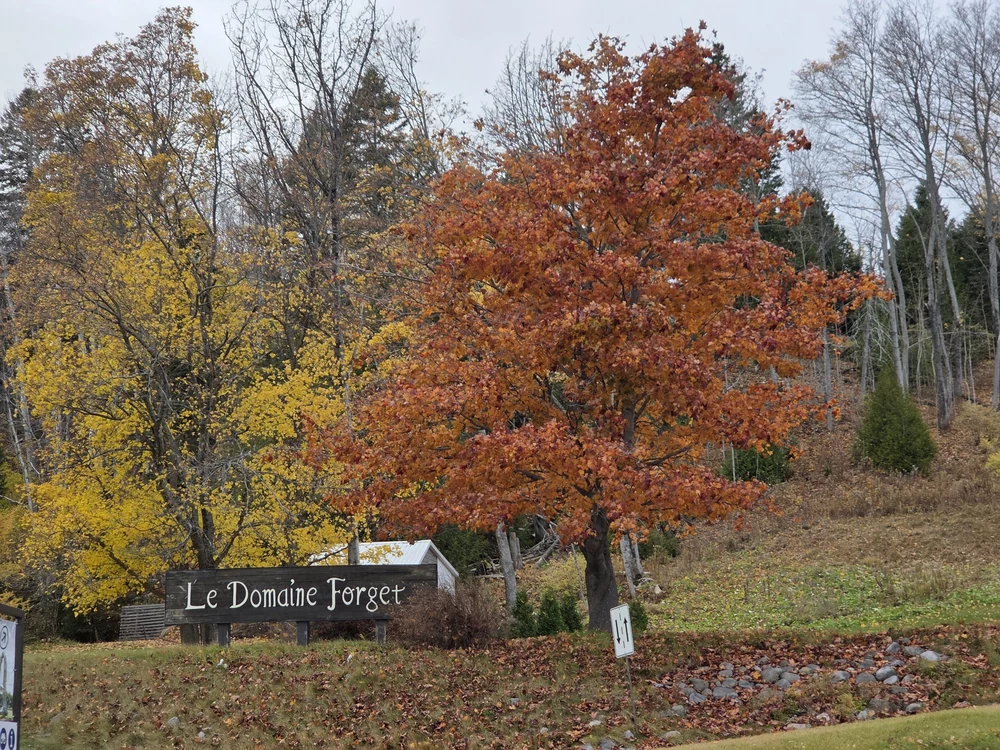
Turn inland from Route 362 and climb the rang Saint-Antoine, and the wooden sign appears under the maples: Le Domaine Forget. The “MONTEZ!” board at the gate — “come up, come breathe the great art” — also carries the two words that define this whole post: accès gratuit, free access.
The hill was once a row of grand summer estates. The greatest of them, Gil’Mont, was built in 1901 for Rodolphe Forget — financier, federal MP, and the man who pushed the railway and the wharf into this region. A neighbouring estate, Hauterive, belonged to Judge Adolphe-Basile Routhier, who wrote the French words to “O Canada.” After a generation as a nuns’ school, the estate was bought in 1977 and reborn in 1978 as the Domaine Forget: an international music and dance academy that hosts some 500 young musicians every summer, with a festival of dozens of concerts in a concert hall praised for its acoustics (the Domaine Forget’s own site tells the estate’s story in full).
🏹 La Flèche: a 27-metre arrow in the ground
You actually meet the Domaine’s boldest resident before you reach the gate. Standing on the slope beside Route 362 is a black arrow — not a sign, a sculpture — 27 metres tall, driven point-first into the earth. La Flèche (2022), by the French artist Jean Pierre Raynaud, is steel and aluminium, and it does the job the Domaine asks of it: nobody drives past this hill without looking up.
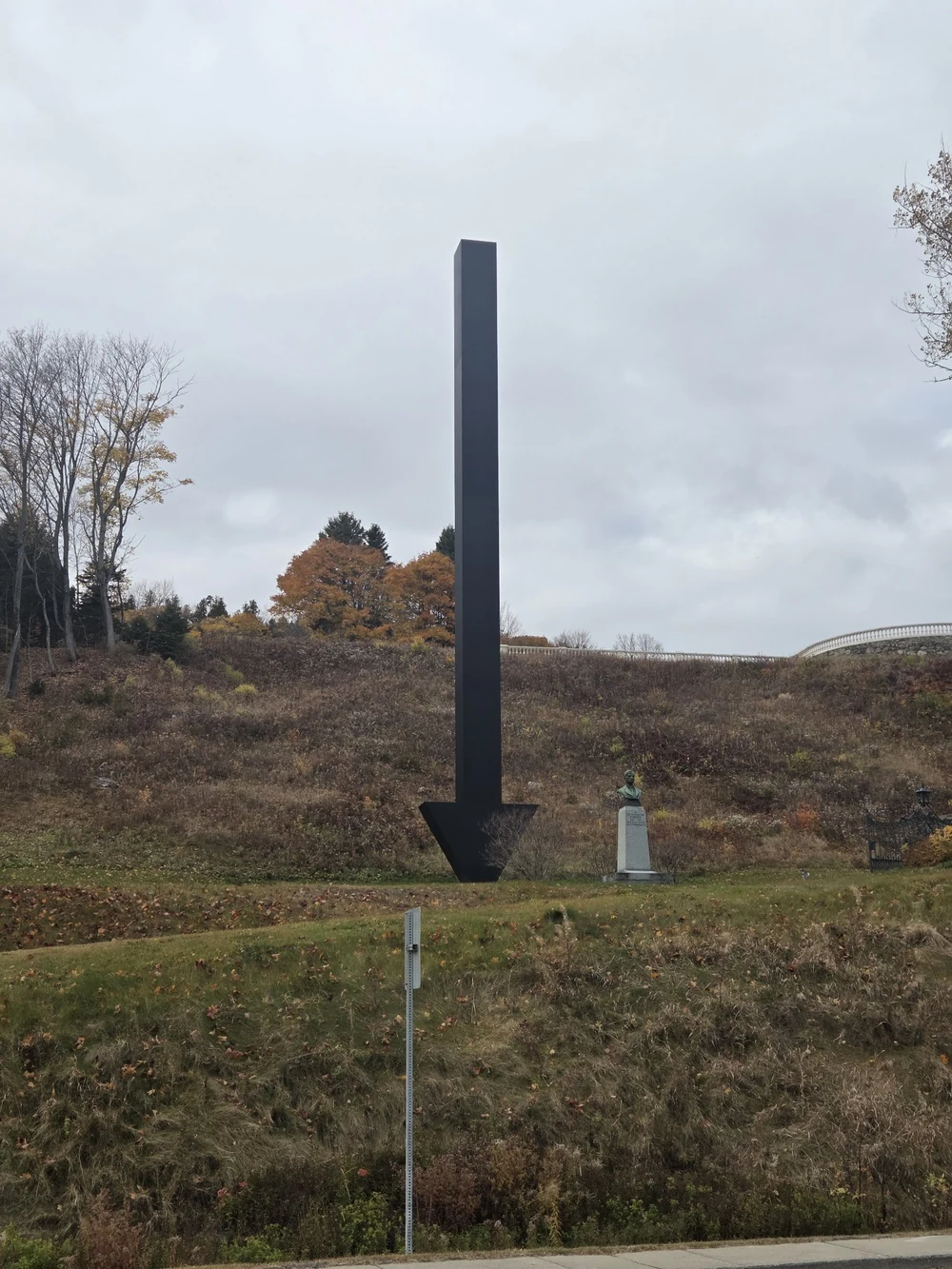
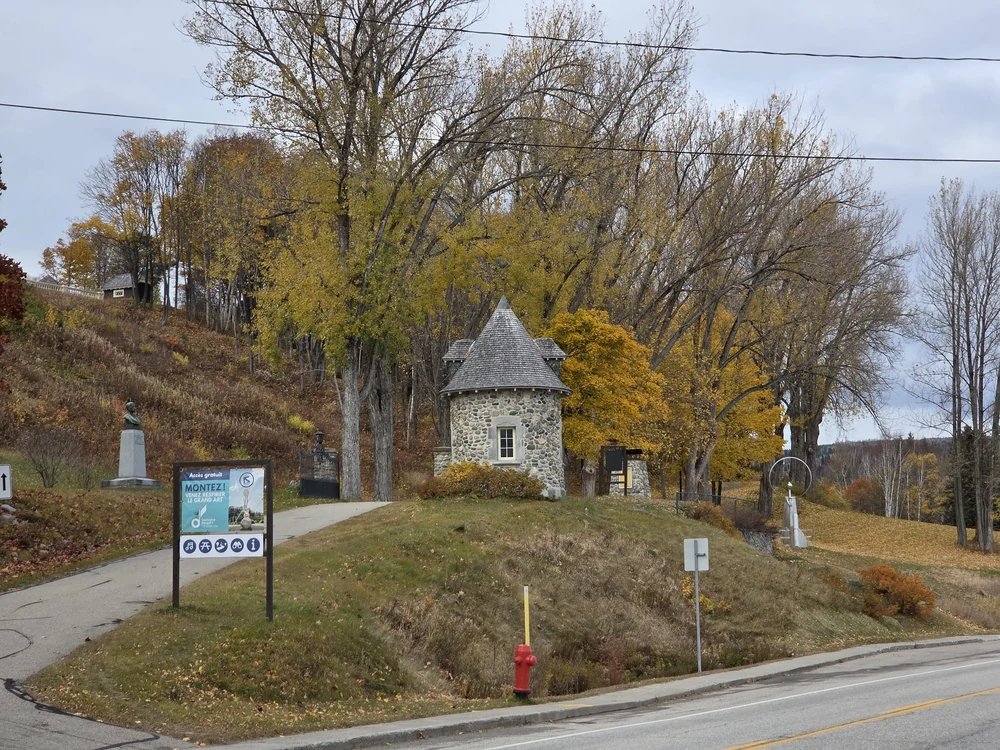
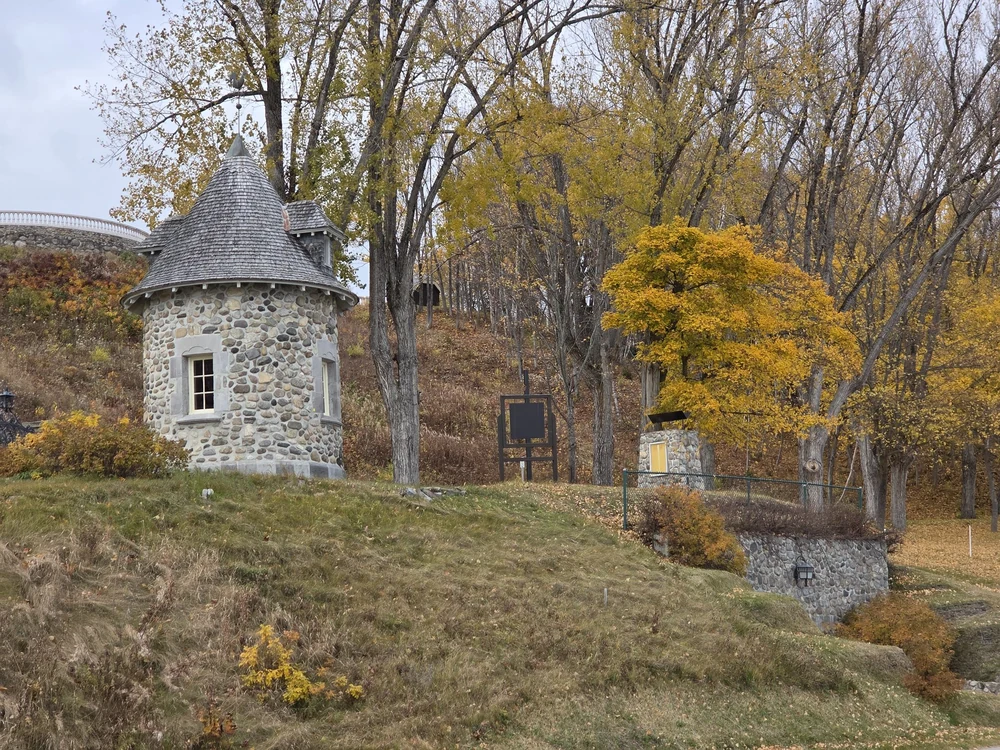
The arrow is the newest landmark of the Jardin harmonique de sculptures, a garden of roughly 25 monumental works laid out along the estate’s paths. The part I want to underline for this series is the price: the sculpture garden is free, all year, self-guided with an interactive map. Concert tickets are for summer evenings; the art on the hill asks nothing but your time. Beside the arrow stands a small bronze bust on a stone pedestal — Rodolphe Forget again, erected in 1923 by, as the inscription says, his grateful electors. And at the gate, the village’s most photographed small building: a round stone turret with a pointed shingle roof, known simply as la guérite.
🧺 Saint-Irénée without spending much: the practical notes
This is the part of the series where I add up what the day costs. In Saint-Irénée, the honest total for everything in this post — the jetty, the beach, the boardwalk, the sculpture garden — is zero dollars. Your only real decisions are timing and transport. 💡 My one planning tip: pair the village with the previous episode — Saint-Joseph-de-la-Rive and Saint-Irénée share one shore road, about 15 kilometres apart, and make a single unhurried day.
| Getting there | By car: Route 362 (the Route du Fleuve), about 15 km east of Les Éboulements · By train: Train de Charlevoix, Saint-Irénée stop, between Les Éboulements and La Malbaie |
|---|---|
| Don’t miss | Jetée des Capelans and its red buoy · the boardwalk beach · Domaine Forget’s free sculpture garden · La Flèche and the guérite at the gate |
| Free | Sculpture garden (all year) · jetty and beach (free parking) · boardwalk · the view from everywhere |
| Worth knowing | The station has no ticket office — buy train tickets in advance · the train is seasonal (about June to early November) and its schedule has changed before: verify on the official site |
| Best moment | Low tide on the boardwalk, when the flats shine and the far shore turns blue |
💡 J’s Tips
💡 Tip 1 — Start at the station, even if you came by car. The shelter, the jetty and the beach line up in a single glance from the platform. It is the village’s whole story in one frame, and it orients everything after.
💡 Tip 2 — Walk the jetty first, then the boardwalk. The breakwater gives you the wide view back at the village and its inns; the boardwalk then slows you down to rosehips, dune grass and tide pools.
💡 Tip 3 — Save the Domaine for the end of the day. The sculpture garden is free all year and never locks you into a schedule. Climb up when the light softens: the arrow against the sky, then the paths among the big works.
💡 Tip 4 — Check the train before you promise yourself a ride. The Charlevoix train is seasonal and once nearly disappeared for good. Confirm the current season on the official site — and if it is running, this is one of the prettiest short rail rides in Québec.
❓ FAQ
How do I get to Saint-Irénée?
By car, follow Route 362 — the Route du Fleuve — about 15 km east of Les Éboulements; the village lines the shore between the road and the river. By train, the Train de Charlevoix stops at Saint-Irénée between Les Éboulements and La Malbaie. From Montréal, take VIA Rail to Québec City, the shuttle to Chute-Montmorency station, then the Charlevoix train. The Saint-Irénée station has no ticket office, so buy tickets in advance.
Is the Domaine Forget sculpture garden really free?
Yes. The Jardin harmonique de sculptures — roughly 25 large-scale works along the paths of the Domaine Forget estate in Saint-Irénée — is open free of charge all year, as a self-guided visit with an interactive map. The summer festival concerts and academy events are the ticketed part of the Domaine.
When does the Train de Charlevoix run?
Seasonally — roughly from June to early November, daily in season, along 125 km between Chute-Montmorency (Québec City) and La Malbaie. The service once announced it would shut down and later resumed under a new partnership, so always confirm the current season and timetable on the official Train de Charlevoix site before planning around it.
Why is the jetty called Jetée des Capelans?
Capelans are capelin, the small fish that roll onto Saint-Irénée’s beach to spawn on spring nights. Villagers once caught them in fascine traps, sold them across the region and used them as fertilizer — the fish became the villagers’ nickname, Les Capelans, and the jetty’s name was made official in 2013. The beach and jetty together form a listed heritage site.
Quick question before you go: if a village offered you a free sculpture garden, a walkable jetty and a beach boardwalk — all in one stop — would you get off the train? Tell me below — I read every answer.
📚 You May Also Like
- Saint-Joseph-de-la-Rive: A Charlevoix Village Worth the Stop — the previous episode in this series
- 5 Free Ferries in Québec: Cars, Islands & a Hovercraft
- Isle-aux-Coudres: Free Ferry & the 23 km Island Loop
Happy wandering 💛
— J.
Take care, and see you at the next station.
Get the Free Canada Savings Checklist
Join the newsletter — get the free PDF checklist and weekly Canada savings tips in your inbox.
Read Next

Some links in this post are referral or affiliate links. If you sign up or buy through them, I may receive a bonus or commission at no extra cost to you. It helps keep this blog running — thank you!