Canada National Parks Pass Guide — Discovery Pass Prices, Quebec’s 21 Sites & How It Compares to Sépaq
Bonjour! It’s J. —
Picture this: you pull up to a park gate in Quebec, hold out your annual pass, and hear, “Sorry, that pass doesn’t work here.” Same words on the sign — national park — but a different operator, and a different pass.
That’s the Quebec quirk this guide untangles. If you read my Sépaq annual pass guide first, this is its federal twin: the Parks Canada Discovery Pass. Here’s when Quebec residents actually need one, how the two passes divide the province, and how to make sure you never pay twice at a gate.
📅 Current as of November 2026, with 2026 fees confirmed against Parks Canada’s official pages. Prices and rules can change, so double-check the latest fees on the Parks Canada passes page before you go.
Quick Take
- Quebec has two kinds of national parks — federal Parks Canada sites and provincial Sépaq parks — and the passes don’t cross over; the overlap is exactly zero.
- The Discovery Pass costs $83.50 per adult and $167.50 for a family or group (one vehicle, up to 7 people), valid for 12 months from purchase.
- New permanent residents and new citizens get one year free through the Canoo app — check your eligibility before you buy anything.
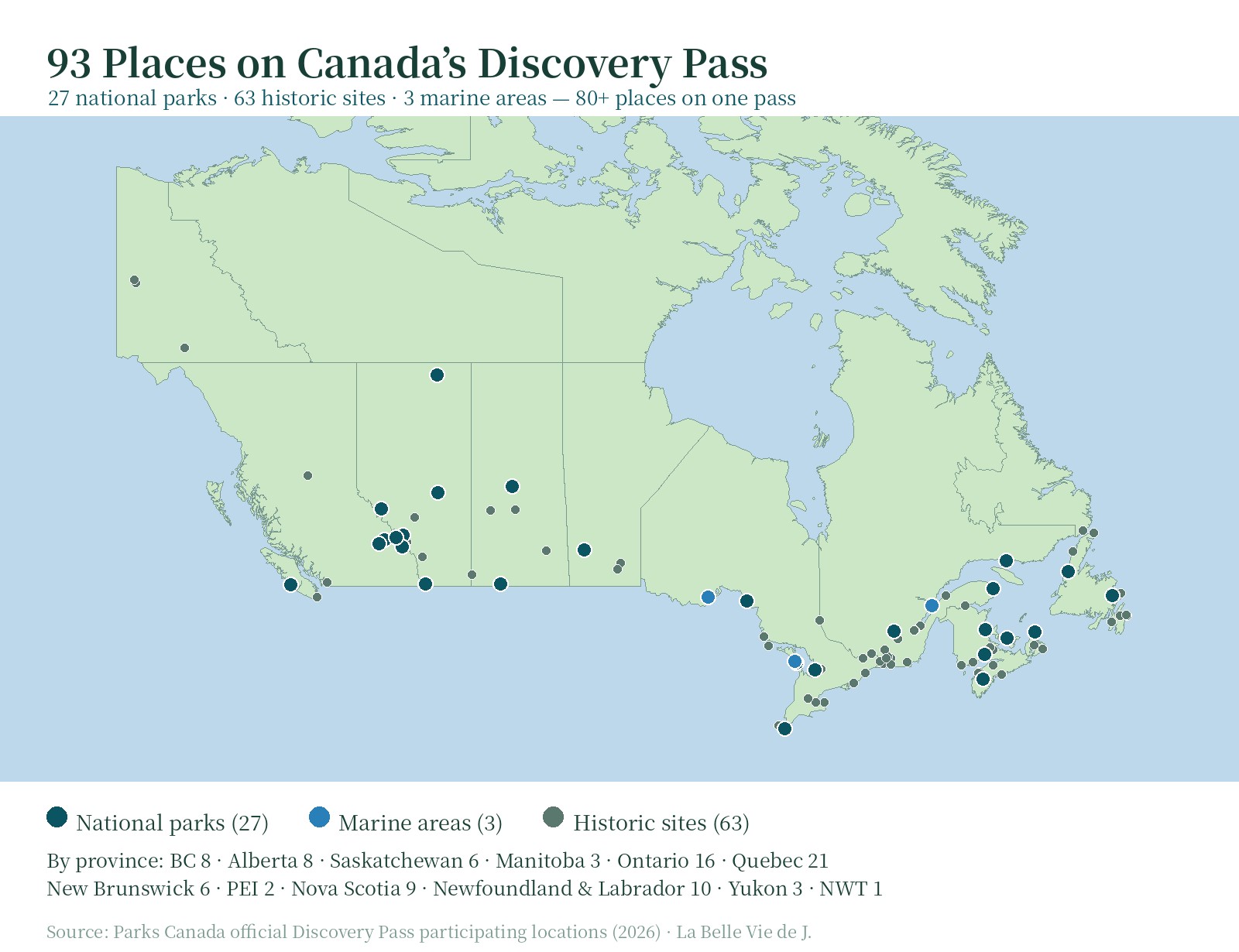
- It works at 21 places inside Quebec alone: 3 national parks, 1 marine park and 17 national historic sites.
- Break-even is day 7 at Banff, but day 9 at La Mauricie — there, the park’s own season pass may win first.
- Visitors aged 17 and under are always free.
🧭 1. Why Canada Has Two Kinds of National Parks
Two different governments run “national parks” in Quebec. Parks Canada operates the federal national parks, national historic sites and marine conservation areas. Most of the parks Quebecers visit day to day — Oka, Mont-Tremblant and the rest — are run by Sépaq, an agency of the Quebec government. In French, both are called a “parc national,” which is exactly where the confusion starts.
The critical part: the passes are not interchangeable. A Discovery Pass does not work at Sépaq parks, and a Sépaq annual pass does not work at federal parks or historic sites. Not one location accepts both. Oka and Mont-Tremblant belong to Sépaq; Forillon and La Mauricie are federal. Pick your pass by the park’s name alone and you can end up paying admission twice at the gate. Verifying who runs your destination is the real starting point of this guide.
The easiest check is the official page of the place you’re visiting, before you book or drive out. If Parks Canada runs it, you need the federal pass; if Sépaq runs it, you need Sépaq admission. Never assume two places with “national park” in the name share a pass.
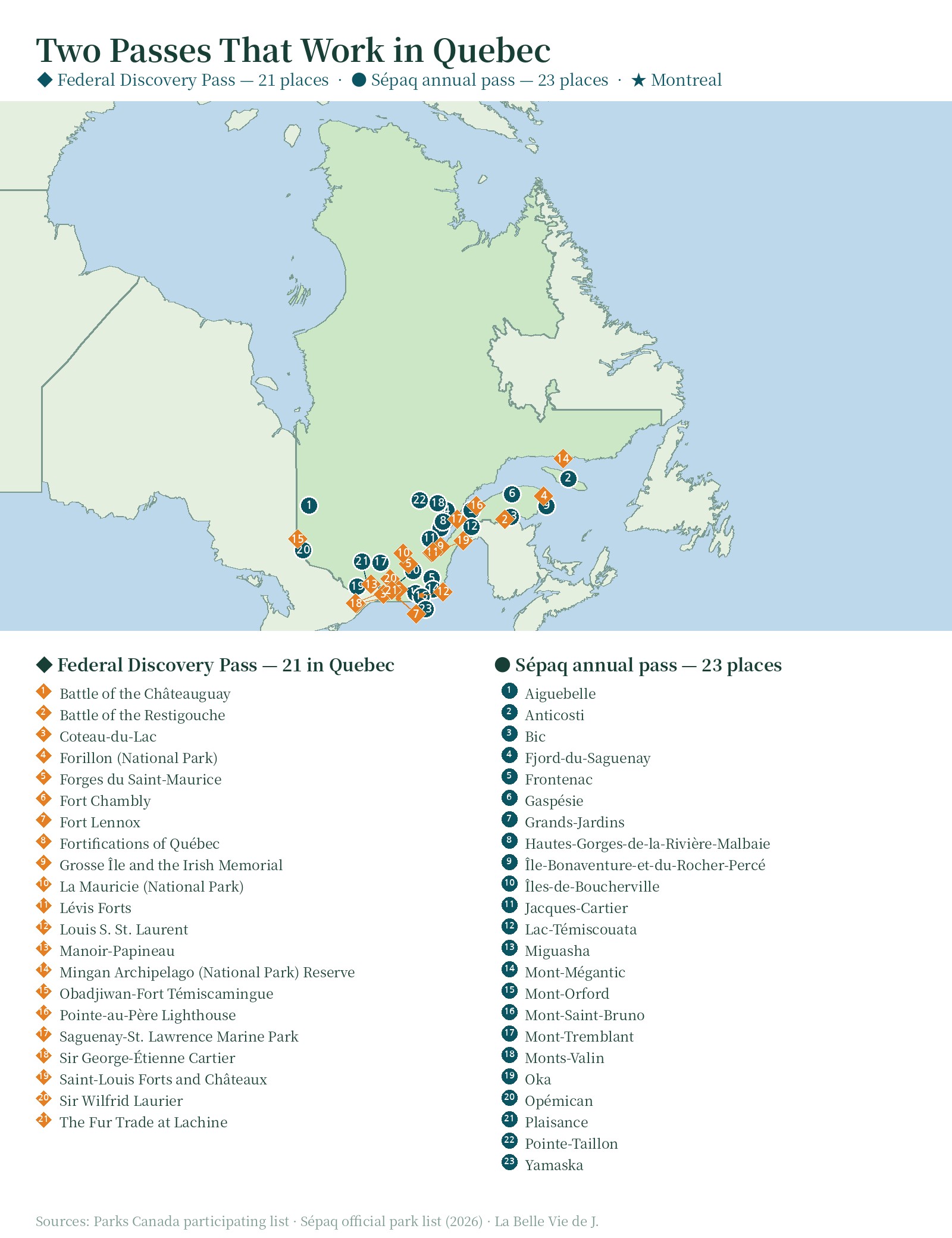
On the map, the two systems split Quebec between them: 23 Sépaq parks on one side, 21 federal parks and historic sites on the other. So for a Quebec resident, the question is never “which pass is better?” It’s “which map are the places I actually go to on?”
New to Quebec’s provincial parks? Start with the twin guide → Sépaq National Parks — One Annual Pass for 23 Quebec Parks: Prices, Perks and Break-Even Math
💳 2. Discovery Pass Prices and How Long It Lasts
The Discovery Pass bundles a full year of admission to more than 80 Parks Canada national parks, national historic sites and marine conservation areas across the country. The pricing is refreshingly simple.
| Pass type | Price | Notes |
|---|---|---|
| Adult | $83.50 | One person |
| Senior (age 65+) | $71.50 | One person |
| Family / Group | $167.50 | Up to 7 people arriving together in one vehicle |
| Youth (17 and under) | Free | No pass needed |
Validity runs 12 months from the day you buy it, and the pass is good until the last day of the month punched on its front. Buy one in November and it lasts through the end of next November. Sign the back as soon as it arrives — it is only valid once signed, it can’t be refunded or transferred, and the person who signed it has to be there when you use it.
Each park publishes the same fees on its own page, like the La Mauricie National Park fee page.
One more thing if you already own a pass: passes whose validity overlapped with the Canada Strong Pass free-admission period were automatically extended. Don’t just trust the expiry month punched on the front — check the official passes page for how your end date was recalculated.
The family/group pass is more flexible than it looks. As long as everyone arrives together in one vehicle, any mix of up to seven people — adults only, or adults and seniors together — enters on the one pass. Two adults buying individual passes pay $167.00, almost identical to the $167.50 family pass, so for two adults it hardly matters. The moment three or more adults travel in one car, the family/group pass pulls clearly ahead.
If you mostly travel solo, individual passes make more sense. And since the clock starts on the purchase date, not your first visit, there’s no benefit to buying early — time the purchase to your first park trip instead.
Before you buy, though, check one thing. If you’re a new permanent resident or a new citizen, skip ahead to section 7. You may qualify for a free year through Canoo, and not need to buy a pass at all.
🗺️ 3. The 21 Places It Covers in Quebec
“Would a federal pass even get used in Quebec?” Count them: 21 places. Three national parks — Forillon on the Gaspé Peninsula, La Mauricie in the Mauricie region, and the Mingan Archipelago, an island park you reach by boat off the Côte-Nord — plus one marine park, the Saguenay–St. Lawrence.
The other 17 are national historic sites, and they’re spread all over Quebec’s history: the Fortifications of Québec, Fort Chambly, Grosse Île and its immigration story, the fur trade post at Lachine in Montreal, and the Sir George-Étienne Cartier site downtown. The full list, province by province, is on the official Parks Canada passes page.
For Quebec residents, the practical starting point is La Mauricie. It’s the closest federal national park to Montreal, about a two-hour drive, while sites like the Quebec City fortifications slot neatly into a Quebec City trip. Even without a Rockies road trip on the calendar, there are more ways to put this pass to work inside Quebec than most people expect.
The Saguenay–St. Lawrence Marine Park protects the waters where the Saguenay River meets the St. Lawrence, and it’s the proof that this pass reaches beyond land parks and historic sites to a marine park, too.
The rest of the historic-site list is wonderfully varied: the Battle of Châteauguay site, Coteau-du-Lac, the Forges du Saint-Maurice ironworks, Fort Lennox, the Lévis Forts, Manoir-Papineau, the Louis S. St. Laurent and Sir Wilfrid Laurier historic houses, and the Pointe-au-Père Lighthouse. None is a huge destination on its own, but they sit right along the routes Quebecers drive anyway — and with a pass, stopping in costs nothing extra.
Two notes on what isn’t covered. At Mingan Archipelago, private boat operators move you between the islands, and that fare is separate. And Quebec’s five federal canals aren’t on the admission list at all — lockage and mooring permits are their own thing, so the pass doesn’t cover them.
⭐ 4. Three Places to Start With
Nobody visits all 21 in one season, so here are the three that fit a Quebec resident’s routes best. Treat the remaining historic sites as easy add-ons whenever a road trip passes one.
La Mauricie National Park
Lakes and forest in the Mauricie region, built around canoeing, hiking and fall colour. In winter it turns to cross-country skiing, and the trail fee ($11.25 a day) is charged on top of admission. Day admission is modest by federal standards — $10.00 per adult in peak season, $7.25 off-season.
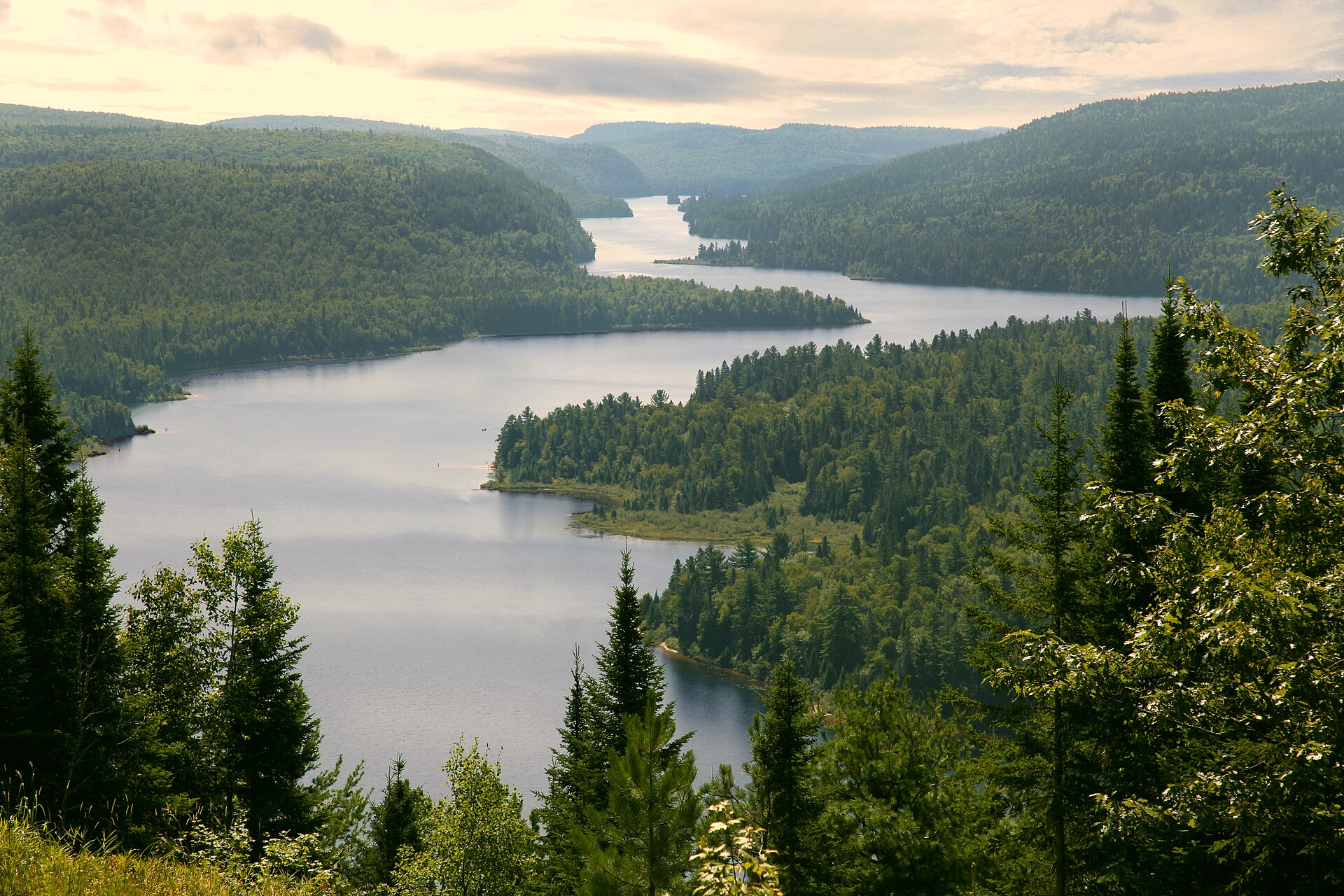
It’s the closest federal park to Montreal, works as a day trip or an overnight, and it’s the most realistic place to put a federal pass to work for the first time in Quebec.
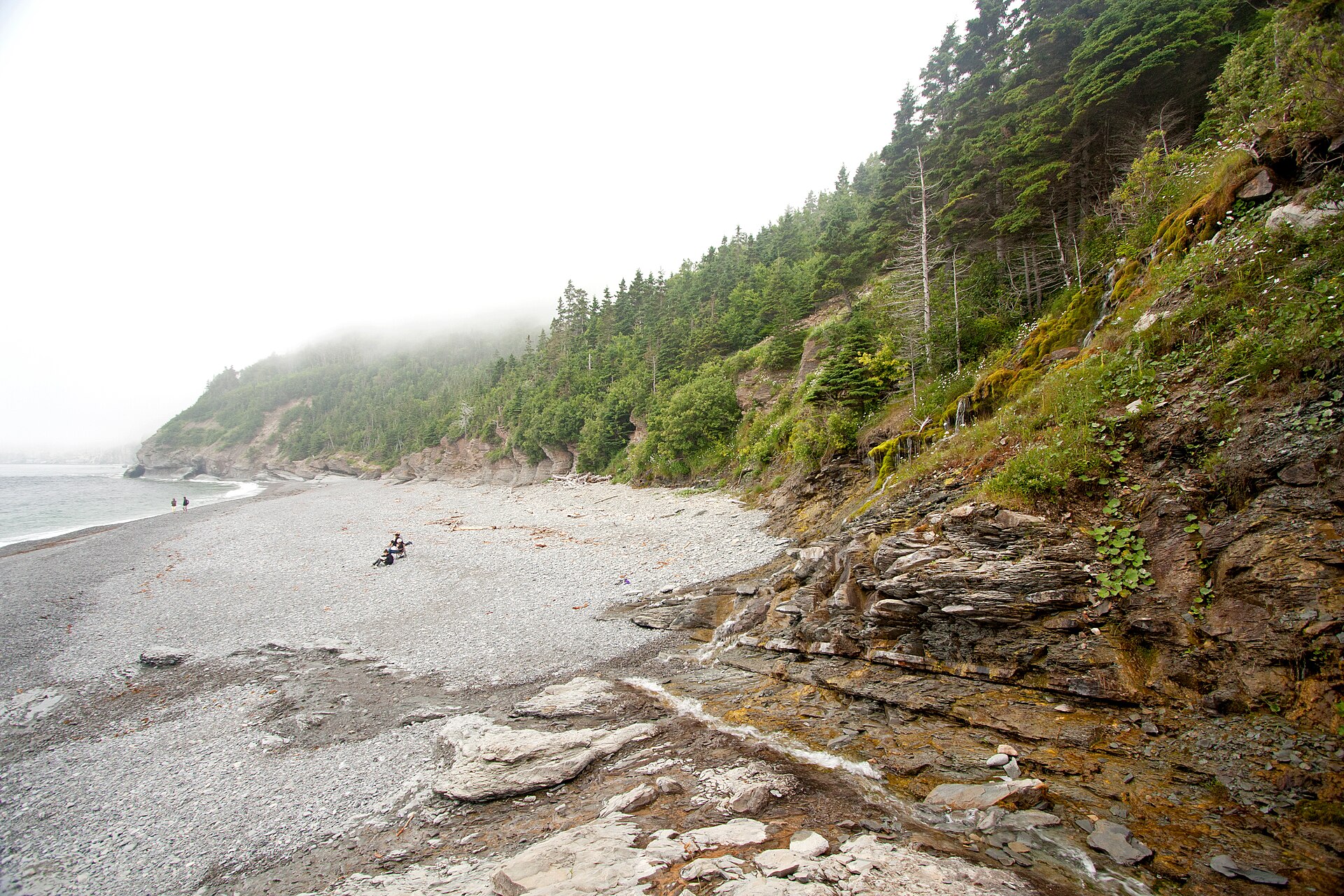
Forillon National Park
At the very tip of the Gaspé Peninsula, where sea, cliffs and mountains share a single view. Forillon is usually the final destination of a Gaspésie road trip rather than a weekend outing — it’s a long way from Montreal. Approach it as part of a planned itinerary, and pair the drive with Quebec City’s historic sites: one pass quietly tidies up the admission fees for the whole trip.
Fortifications of Québec
The walls and fortress remains wrapped around Old Quebec City. There’s no entry gate like a national park, but it’s the textbook example of a national historic site your pass covers. The Saint-Louis Forts and Châteaux site, below the famous Château Frontenac terrace, is in the same city — together they fold naturally into a day of wandering the old town.
⚖️ 5. Side by Side with the Sépaq Annual Pass
Put the two passes in one table and their roles separate cleanly.
| Item | Discovery Pass (federal) | Sépaq All-Parks Annual Pass |
|---|---|---|
| Annual pass price | Adult $83.50 · Family/Group $167.50 | $93 |
| Where it works | 80+ places nationwide (parks, historic sites, marine parks) | 23 Sépaq parks in Quebec |
| Quebec locations | 3 parks · 1 marine park · 17 historic sites = 21 | Provincial parks across Quebec |
| Sample day rates | Banff $12.25 · La Mauricie $10.00 | $10.30 |
| Age 17 and under | Free | Free |
The rule of thumb: if your weekends revolve around nearby parks like Oka, the Sépaq annual pass comes first. If a trip touches federal ground — the Rockies, the Gaspé, or the federal parks and sites inside Quebec — you need the Discovery Pass. Households that do both end up carrying both, because neither pass can ever substitute for the other.
Budget-wise, sequencing keeps it painless. If local outings are your routine and big trips are occasional, solve your local year first with the $93 Sépaq pass, then buy the Discovery Pass in the year a Rockies or Gaspé trip becomes real, timed to that trip.
If your family takes a long road trip every year, flip it: keep the federal pass year-round and hold Sépaq lightly, even as a single favourite park’s pass. Either way, kids 17 and under are free on both systems, so families only do math on the adults.
Oka, the Sépaq flagship near Montreal, gets its own deep dive → Oka National Park, Done Right — A Regular’s Guide to the Beach, Glamping, Bike Trails, Day Trips and Booking
🧮 6. How Many Days Until It Pays for Itself?
The math is simple division by the day rate. At Banff, adult admission is $12.25 a day, so the $83.50 adult pass moves ahead on day 7. Families land in the same place: $24.50 a day against the $167.50 pass also breaks even on day 7.
A Banff day pass stays valid until 4 p.m. the next day and works across eight nearby mountain parks, so for a one-night, two-day trip, day passes can genuinely be enough. The details are on the official Banff passes page.
In trip terms: three nights and four days in Banff means about four admission days, and the day-pass total stays under the pass price. The pass starts winning the moment you stretch the trip to a full week by pairing Banff with Jasper.
Inside Quebec, picture two or three La Mauricie weekends plus a few Quebec City historic sites to reach nine days of use. At that volume, you’re in the zone where the park’s own season pass and the federal pass deserve a serious side-by-side look.
If La Mauricie is the only park you’ll visit, the story changes. Its $10.00 day rate means the federal pass doesn’t break even until day 9. La Mauricie’s own season pass (adult $48.25, early-bird $38.75) gets there first — it costs roughly five days of admission, or about four at the early-bird price, so four or five visits in a season already put you ahead.
Families reach the same conclusion. At Banff’s $24.50 family day rate the pass pays off on day 7; at La Mauricie’s $19.50 family day rate, on day 9. Seniors break even on day 7 at Banff, too, at their $10.75 day rate.
Which park you’re headed to is what sets the break-even point. If you’ll repeat one Quebec park, start with that park’s season pass; if your driving crosses provinces or reaches the Rockies, that’s when the Discovery Pass earns its place.
🎁 7. Ways to Get In Free
The first item here is the one to check before anything else. New permanent residents and new citizens can enter every Parks Canada place free for one year through the Canoo app. It covers the pass holder plus up to four children under 18, so it saves the full $83.50 adult pass — and the bigger the family, the bigger the saving. If you arrived in Canada recently, start with Parks Canada’s Canoo page before buying anything.
The offer applies to first-year Canoo members, and a spouse or children 18 and older aren’t included — they’ll each need their own account.
Second, visitors aged 17 and under are always free at Parks Canada places. No pass to buy, and family trip budgets can simply leave kids’ admission out. Keep in mind that “free” covers admission only — service fees like camping or programs can still apply to kids.
Third, visitors with a disability, and the person accompanying them as a support person, get free admission.
One more item that needs a clear warning label. The much-talked-about Canada Strong Pass free admission was a limited-time program that ended on September 7, 2026. It ran in three separate periods between the summer of 2025 and the summer of 2026, and instead of issuing a pass, it simply waived admission during those windows. Regular fees are back now — don’t plan a trip around the old free-period news and get surprised at the gate.
🛒 8. How to Buy It and Use It
Online, the pass is sold through the Parks Canada reservation site. But an online order means a physical card in the mail, and delivery takes 5 to 10 business days. If your trip is coming up fast, buying at a park gate or visitor centre is the safer play. You can also order by phone at 1-888-773-8888.
Beyond gates and visitor centres, partner retailers near the parks — local tourism offices, even gas stations — sell passes in some regions.
In the parks, display the pass on your dashboard; at historic sites, show it to staff. Signing the back the moment you receive it is the last step of the purchase.
Finally, be clear about what the pass doesn’t cover. It’s an admission pass, full stop: camping fees, parking, hot springs, guided tours and backcountry stays are all charged separately. Planning to camp? Check site reservations and fees on their own.
The Rockies’ hot springs charge their own entry even with a pass in hand, and parking at the busiest parks can carry a separate fee. Treat the pass as admission-only from the start, and there won’t be any surprise spending waiting at the gate.
New to camping in Canada? Learn how campgrounds work first → KOA Campgrounds Explained — Tiers, KOA Rewards, and My Go-To Near Montreal
❓ 9. Frequently Asked Questions
Q. Does it include camping fees?
No. The Discovery Pass covers admission only. Camping and parking fees, hot springs and guided tours are all paid separately.
Q. Does it work at Sépaq parks?
It doesn’t. The two systems are run by different operators and share zero locations. Sépaq parks like Oka and Mont-Tremblant need Sépaq’s own annual pass.
Q. Is there a Banff-only annual pass?
There isn’t. For the Rockies parks like Banff and Jasper, the Discovery Pass is the only annual pass. Single-park passes exist at other locations, sold as a season pass or an annual pass for that park.
Q. Can I get a refund or transfer it?
Neither. The pass is valid only when the person who signed it is present, so buying one second-hand or lending yours doesn’t work either.
💛 — J.
Does it include camping fees?
No. The Discovery Pass covers admission only. Camping and parking fees, hot springs and guided tours are all paid separately.
Does it work at Sépaq parks?
It doesn’t. The two systems are run by different operators and share zero locations. Sépaq parks like Oka and Mont-Tremblant need Sépaq’s own annual pass.
Is there a Banff-only annual pass?
There isn’t. For the Rockies parks like Banff and Jasper, the Discovery Pass is the only annual pass. Single-park passes exist at other locations, sold as a season pass or an annual pass for that park.
Can I get a refund or transfer it?
Neither. The pass is valid only when the person who signed it is present, so buying one second-hand or lending yours doesn’t work either.
Get the Free Canada Savings Checklist
Join the newsletter — get the free PDF checklist and weekly Canada savings tips in your inbox.
Read Next
Some links in this post are referral or affiliate links. If you sign up or buy through them, I may receive a bonus or commission at no extra cost to you. It helps keep this blog running — thank you!